- Company Articles
- Industry articles
- Industry standards
- Medical Device Manufacturing: 4080B EU Standard Aluminum Profile for Cleanroom Solutions

Medical Device Manufacturing: 4080B EU Standard Aluminum Profile for Cleanroom Solutions
Related Product
4080B EU Standard Aluminum Profile
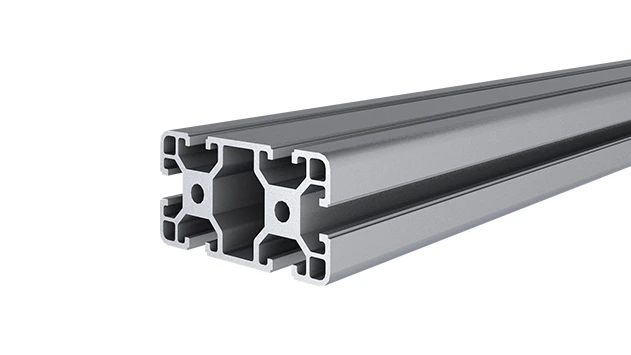
4080B is a 4.00x8.00 CM fractional 40 series square extrusion T-slot profile with two side open T-slots, each side with 4.00cm face, two side with 8.00cm face. The profile has align-a-grooves to assist in aligning connecting profiles.
The Critical Role of Cleanrooms in Medical Device Manufacturing
In the world of medical device manufacturing, precision isn't just a goal—it's a lifeline. Every scalpel, pacemaker, and diagnostic tool must meet standards so rigorous that even a single stray particle could compromise patient safety. That's where cleanrooms come in: controlled environments designed to minimize contaminants like dust, microbes, and airborne particles. But maintaining these spaces isn't just about air filtration systems or sterile gowns. The very infrastructure of the cleanroom—from workbenches to material racks—plays a silent yet vital role in upholding these standards.
Manufacturers face a dual challenge: adhering to strict regulations (think FDA guidelines, ISO 13485, and EU MDR) while keeping production efficient and adaptable. Outdated or poorly designed workspaces can become bottlenecks. Imagine a scenario where a workbench with hard-to-clean crevices traps bacteria, or a rigid material rack makes it impossible to reconfigure the line for a new device model. These issues don't just slow down production—they put compliance at risk. The solution? Choosing the right materials to build a cleanroom that's both sterile and flexible.
The Foundation of Cleanroom Design: Materials Matter
When it comes to cleanroom infrastructure, not all materials are created equal. Traditional options like wood or untreated steel often fall short. Wood is porous, making it a breeding ground for bacteria and difficult to sanitize. Steel, while strong, can rust if not properly coated, creating flaky particles that contaminate the air. Worse, both are often rigid—once installed, they're hard to modify, leaving manufacturers stuck with layouts that can't keep up with evolving production needs.
Enter aluminum profiles: a modern alternative that checks all the boxes for cleanroom excellence. Lightweight yet surprisingly durable, aluminum resists corrosion, stands up to frequent sanitization, and—most importantly—offers the modularity that modern manufacturing demands. Among the various aluminum profiles available, one stands out for medical applications: the 4080B EU Standard Aluminum Profile. Designed with precision and compliance in mind, it's become the backbone of forward-thinking cleanroom setups worldwide.

Spotlight on 4080B EU Standard Aluminum Profile: Engineered for Excellence
At first glance, the 4080B might seem like just another piece of metal. But look closer, and you'll see why it's a game-changer. Let's start with the basics: dimensions. The "4080" refers to its width and height—40mm by 80mm—making it sturdy enough to support heavy equipment (think microscopes, assembly tools, or even small automated machines) without being overly bulky. This balance is crucial in cleanrooms, where space is often limited, and every square inch must be optimized.
But the real magic lies in its design. Like many modern aluminum profiles, the 4080B features a T-slot structure—long, parallel grooves running along its length. These slots aren't just for show; they're the key to its modularity. Using simple bolts or brackets, you can attach shelves, casters, lights, or even custom tool holders anywhere along the profile—no welding, no drilling, no hassle. Need to adjust a workbench height? Loosen a few bolts, slide the shelf to the right position, and lock it down. It's that easy, which means minimal downtime when reconfiguring your space.
Compliance is non-negotiable in medical manufacturing, and the 4080B doesn't disappoint. As an EU standard profile, it meets strict CE marking requirements, ensuring it adheres to safety, health, and environmental protection standards. It's also compatible with ISO 13485, the international standard for medical device quality management systems, thanks to its smooth, non-porous surface that resists bacterial growth and is easy to disinfect. Whether you're using alcohol wipes, hydrogen peroxide fogging, or autoclaving (for compatible accessories), the 4080B holds up, ensuring your cleanroom stays compliant shift after shift.
| Feature | 4080B EU Standard Aluminum Profile | Traditional Steel Profile | Wooden Workbench |
|---|---|---|---|
| Weight | Lightweight (easy to reconfigure) | Heavy (requires tools/machinery to move) | Moderate (prone to warping over time) |
| Sanitization | Smooth, non-porous surface; resists chemicals | May rust if coating chips; hard-to-reach crevices | Porous; traps bacteria and moisture |
| Modularity | T-slot design for quick adjustments | Rigid; requires welding to modify | Fixed; cannot be easily adjusted |
| Compliance | CE marked; ISO 13485 compatible | May require additional coating for compliance | Not suitable for ISO cleanroom standards |
Aluminum Profile Accessories: Completing the System
A profile is only as good as the accessories that bring it to life, and the 4080B works seamlessly with a range of aluminum profile accessories designed to enhance functionality. Let's start with connectors—the unsung heroes of modular design. 90° aluminum profile connectors, for example, let you join two 4080B profiles at a perfect right angle in seconds, creating the frame of a workbench or flow rack. Unlike traditional fasteners, these connectors lock securely into the T-slots, ensuring stability even under heavy loads.
Then there are end caps: simple plastic or rubber covers that snap onto the ends of the profile. At first glance, they might seem trivial, but in a cleanroom, details matter. End caps prevent dust, dirt, or cleaning fluids from getting trapped inside the T-slots, where they could later dislodge as contaminants. They also smooth out sharp edges, reducing the risk of scratches on gloves or sterile garments—another small win for safety.
Hinges are another standout accessory. Imagine a workbench with a fold-down shelf that holds instruction manuals or tools. When not in use, the shelf folds up, saving precious space. Thanks to aluminum hinges designed for T-slot profiles, this isn't just a dream—it's a reality. And for mobile setups, casters with brake systems can be attached to the bottom of 4080B frames, turning a stationary workbench into a movable station that can be wheeled to different parts of the cleanroom as needed.
Integrating 4080B Profiles into Lean Systems for Optimal Workflow
In medical manufacturing, efficiency isn't just about speed—it's about doing more with less while maintaining quality. That's the philosophy behind lean systems: a methodology focused on eliminating waste, streamlining processes, and empowering workers to do their best. The 4080B profile isn't just a building material; it's a lean system enabler.
Take motion waste, for example. If a worker has to walk 20 feet to grab a component, that's time wasted—time that could be spent assembling life-saving devices. With flow racks built from 4080B profiles, this problem disappears. Flow racks use gravity to feed components directly to the workbench, so parts are always within arm's reach. The T-slot design makes it easy to adjust the angle of the rack, ensuring components glide smoothly without jamming—a critical feature for delicate medical parts.
Workbenches, too, become lean tools with 4080B. Ergonomics play a big role here: adjustable-height workbenches reduce fatigue, keeping workers focused and productive. Using sliding brackets in the T-slots, you can raise or lower the work surface to match each operator's height, turning a one-size-fits-all setup into a personalized workspace. Add a tool rail with hooks for scissors, tweezers, or torque wrenches, and suddenly, every tool has a designated spot—no more hunting through drawers, no more wasted motion.
Perhaps the biggest lean advantage is adaptability. Medical device manufacturers rarely stick to one product line; new models, materials, and regulations demand constant change. With traditional steel or wood setups, reconfiguring a line could take days (or even weeks) of downtime. With 4080B, it might take hours. Need to add a shelf for a new component? Grab a bracket, slide it into the T-slot, and lock it. Want to move a flow rack to the other side of the room? Just unlock the casters and roll it—no heavy lifting required.
Workbenches and Flow Racks: Practical Applications in Cleanrooms
Let's get concrete: how do 4080B profiles, accessories, and lean principles come together in real-world cleanrooms? Let's start with workbenches—the heart of any assembly line. A typical medical device workbench built with 4080B might include a flat aluminum top (easy to sanitize), a shelf below for storage, and a overhead light bar attached via T-slot brackets. Add an ESD (electrostatic discharge) mat to protect sensitive electronics, and you've got a setup that's both functional and compliant.
But what if you need more flexibility? Enter mobile workbenches. By adding heavy-duty casters to the 4080B frame, you can create stations that move with the workflow. Imagine a team assembling catheter components: in the morning, they might work on prepping tubes; in the afternoon, they switch to attaching connectors. With mobile workbenches, the entire team can reposition their stations to stay close to the materials, reducing unnecessary movement.
Flow racks, too, shine in practical use. Let's say you're manufacturing surgical tools. Small components like screws, washers, or blade inserts need to be readily available to assemblers. A 4080B flow rack with multiple levels (adjustable, of course, via T-slot brackets) can hold bins of each component, feeding them down to the workbench as needed. Because the rack is built with aluminum, it's easy to wipe down at the end of each shift, ensuring no cross-contamination between batches.
Customization is where the 4080B truly excels. One manufacturer might need a workbench with a built-in power strip for tools; another might require a flow rack with dividers to separate different-sized components. With aluminum profile accessories, these customizations are limited only by imagination. Need a shelf that tilts for better visibility? Add a hinge. Want to mount a barcode scanner? Use a swivel bracket. The result is a workspace that's tailored to your process, not the other way around.
Compliance and Safety: Meeting the Stringent Demands of Medical Manufacturing
In medical device manufacturing, compliance isn't optional—it's the cost of entry. The 4080B EU Standard Aluminum Profile is designed with this in mind, starting with its material composition. Aluminum is inherently resistant to corrosion, so even after repeated exposure to harsh disinfectants (like bleach or hydrogen peroxide), it won't degrade or flake. This is critical for maintaining ISO 14644 cleanroom classification, which sets strict limits on particle counts in the air.
The smooth, non-porous surface of the 4080B also plays a role in compliance. Unlike wood or even some plastics, aluminum doesn't have tiny pores that can harbor bacteria. A quick wipe with a disinfectant wipe is all it takes to keep surfaces sterile—a huge time-saver compared to scrubbing hard-to-reach crevices. For manufacturers audited by the FDA or EU regulators, this ease of cleaning translates to fewer compliance headaches and faster approval processes.
Safety, too, is built into the design. The 4080B's rounded edges reduce the risk of cuts or tears in gloves, while its load-bearing capacity (often up to 500kg per meter, depending on the setup) ensures stability even with heavy equipment. Accessories like heavy-duty split foot seats (used to anchor workbenches to the floor) prevent tipping, while anti-slip adjustable leveling feet keep stations steady on uneven surfaces—important in cleanrooms where spills or wet floors can happen during cleaning.
Case Study: Transforming a Catheter Assembly Line with 4080B
To see the impact of 4080B in action, let's look at a hypothetical (but realistic) case study. ABC Medical Devices, a mid-sized manufacturer, produces a range of catheters used in cardiac procedures. Their assembly line was struggling with two major issues: frequent contamination events during quality checks and downtime whenever they introduced a new catheter model.
Before switching to 4080B, ABC used steel workbenches with wooden shelves. The steel was prone to rust spots despite regular painting, and the wood shelves were porous, making thorough cleaning nearly impossible. When a new catheter model with a longer shaft was introduced, they had to disassemble and rebuild the entire line—taking three days of downtime and costing thousands in lost production.
The solution? A complete overhaul with 4080B profiles, aluminum profile accessories, and lean-inspired workbenches and flow racks. The results were dramatic: contamination events dropped by 40% in the first month, thanks to the easy-to-clean aluminum surfaces. When ABC launched their next catheter model, they reconfigured the line in just eight hours by adjusting the flow rack angles and sliding workbench shelves to new heights. Best of all, workers reported less fatigue, with ergonomic adjustments reducing wrist and back strain—a win for both productivity and employee satisfaction.
Conclusion: Investing in Quality for Long-Term Success
In the high-stakes world of medical device manufacturing, every decision matters. The 4080B EU Standard Aluminum Profile isn't just a material choice—it's a strategic investment in compliance, efficiency, and adaptability. Its modular design, paired with aluminum profile accessories, makes it easy to build workspaces that grow with your needs, while its compliance-friendly features ensure you're always audit-ready.
Whether you're assembling pacemakers, surgical tools, or diagnostic devices, the right infrastructure can turn challenges into opportunities. With 4080B, you're not just building workbenches or flow racks—you're building a foundation for innovation, where your team can focus on what matters most: creating medical devices that save lives.