- Company Articles
- Industry articles
- Industry standards
- Medical Device Manufacturing: Compliance Benefits of 4040E EU Standard Aluminum Profile

Medical Device Manufacturing: Compliance Benefits of 4040E EU Standard Aluminum Profile
Related Product
4040E EU Standard Aluminum Profile
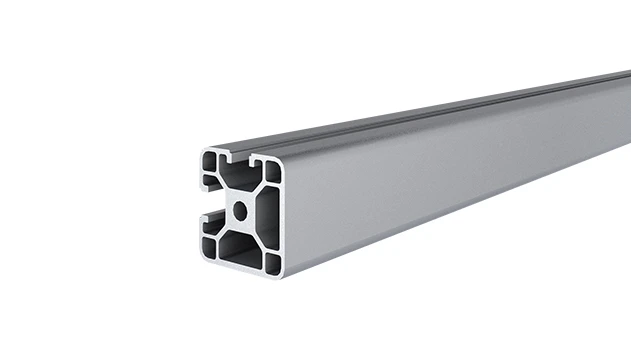
4040E is a 4.00x4.00 CM fractional 40 series square extrusion T-slot profile with two side open T-slots, two side with closed face, each side with 4.00cm face. The profile has align-a-grooves to assist in aligning connecting profiles.
In the world of medical device manufacturing, where the line between innovation and risk is razor-thin, compliance isn't just a box to check—it's the foundation of trust. Every screw, every workstation, and every production line component must align with regulations that prioritize patient safety, product reliability, and process transparency. For manufacturers navigating this complex landscape, the choice of materials can make or break their ability to meet standards like the EU Medical Device Regulation (EU MDR), ISO 13485, and Good Manufacturing Practices (GMP). Among the materials rising to this challenge is the 4040E EU standard aluminum profile—a versatile, durable, and regulation-ready solution that's transforming how medical devices are built. Let's dive into why this specific aluminum extrusion profile has become a go-to for compliant manufacturing, and how it integrates with essential tools like aluminum profile accessories, ESD workstations, and lean systems to streamline production without cutting corners.
The High Stakes of Compliance in Medical Device Manufacturing
To understand the value of the 4040E EU standard aluminum profile, it's first critical to grasp the weight of compliance in medical device production. Unlike consumer goods, medical devices—from pacemakers and surgical tools to diagnostic imaging machines—directly impact human health. A single flaw in design, material, or production can lead to device failure, patient harm, or even death. As a result, regulatory bodies like the European Medicines Agency (EMA) and the FDA have established stringent rules to govern every stage of a device's lifecycle, from raw material sourcing to post-market surveillance.
Take the EU Medical Device Regulation (EU MDR), which replaced the previous MDD in 2021. It mandates stricter clinical data requirements, enhanced post-market surveillance, and rigorous traceability for all devices sold in the EU. Similarly, ISO 13485, the international standard for medical device quality management systems, demands "process validation"—meaning manufacturers must prove their production processes consistently produce compliant products. For production floor equipment, this translates to non-negotiable requirements: materials must be non-toxic and corrosion-resistant, surfaces must withstand frequent disinfection, and components must be traceable back to their source with batch-specific documentation.
In this environment, cutting corners on materials is not just risky—it's often illegal. Many manufacturers have learned this the hard way: a 2023 FDA report cited "inadequate material control" as a top reason for medical device recalls, with non-compliant metals and plastics leading to device degradation or contamination. For small to mid-sized manufacturers, in particular, the pressure to balance compliance with cost and efficiency can feel overwhelming. This is where the 4040E EU standard aluminum profile steps in—not as a silver bullet, but as a strategic ally in meeting these demands.
What Makes 4040E EU Standard Aluminum Profile Different?
Aluminum has long been a staple in manufacturing for its strength-to-weight ratio, corrosion resistance, and recyclability. But not all aluminum profiles are created equal. The "4040E EU standard" designation is more than a model number—it's a promise of compliance, consistency, and quality. Let's break down what sets this aluminum extrusion profile apart.
Material Compliance: Built for Regulation
At its core, the 4040E is crafted from high-grade aluminum alloy—typically 6063-T6, a heat-treated alloy known for its excellent mechanical properties and corrosion resistance. But what truly distinguishes it as "EU standard" is its adherence to strict material regulations. Reputable suppliers of 4040E profiles provide documentation proving compliance with REACH (Registration, Evaluation, Authorization, and Restriction of Chemicals), which restricts the use of hazardous substances like lead, cadmium, and mercury. This is critical for medical device manufacturers, as EU MDR explicitly prohibits devices containing substances that could leach into the body or contaminate the product during manufacturing.
Additionally, 4040E profiles undergo rigorous testing for mechanical strength, ensuring they can withstand the demands of medical production environments—from the weight of heavy equipment on workbenches to the constant movement of conveyor systems. Unlike generic aluminum profiles, which may vary in alloy composition or thickness batch-to-batch, 4040E is produced with tight tolerances (often ±0.1mm for dimensional accuracy), a requirement for ISO 13485's process validation. When a manufacturer uses 4040E, they can trust that each profile will perform consistently, reducing the risk of equipment failure that could disrupt production or compromise product quality.
Modularity and Aluminum Profile Accessories: Adaptable Without Compromise
One of the 4040E's greatest strengths is its modularity, made possible by a ecosystem of compatible aluminum profile accessories. These accessories—including brackets, joints, end caps, and connectors—are designed specifically to work with 4040E profiles, ensuring a seamless fit and consistent performance. For medical device manufacturers, this modularity is a game-changer. Production needs evolve: a facility might shift from assembling syringes to diagnostic kits, or scale up production of a critical device during a health crisis. With 4040E, reconfiguring workstations, material racks, or flow racks doesn't require overhauling entire systems—simply adjust the profiles and accessories.
But here's the compliance angle: using EU-standard aluminum profile accessories ensures that the entire system (profile + accessories) remains compliant. Non-standard accessories, even if cheap, can introduce risks: a poorly fitting joint might create crevices where bacteria accumulate, violating GMP's cleanliness standards; a low-quality bracket could corrode in a humid cleanroom, contaminating products. 4040E accessories, by contrast, are tested to meet the same REACH and mechanical standards as the profiles themselves, creating a closed-loop system of compliance.
| Feature | 4040E EU Standard Aluminum Profile | Generic Aluminum Profile |
|---|---|---|
| Material Compliance | REACH, RoHS compliant; CE marked | Often lacks formal compliance documentation |
| Dimensional Accuracy | Tight tolerance (±0.1mm) | Inconsistent (±0.5mm or more) |
| Accessory Compatibility | Designed for EU-standard accessories; guaranteed fit | Limited to generic, often non-compliant accessories |
| ESD Compatibility | Can be integrated with ESD accessories for static control | Not optimized for ESD protection |
| Traceability | Batch-specific certificates; full material traceability | Minimal or no traceability documentation |
ESD Workstations: Protecting Sensitive Devices
Many medical devices, particularly electronic ones like insulin pumps or cardiac monitors, are highly sensitive to electrostatic discharge (ESD). A single static spark—often imperceptible to humans—can damage microchips or disrupt delicate circuits, rendering a device non-functional or, worse, unsafe. For manufacturers, preventing ESD isn't just about product quality; it's a compliance requirement under ISO 10605, which sets standards for ESD protection in electronic devices. This is where 4040E profiles shine as a foundation for ESD workstations.
An ESD workstation built with 4040E profiles integrates specialized accessories: conductive or dissipative mats, grounding straps, and ESD-safe connectors. The aluminum extrusion profile itself, when properly grounded, acts as a Faraday cage, channeling static charges away from sensitive components. Unlike plastic workstations, which can accumulate static, aluminum is naturally conductive, making it ideal for ESD protection. For example, a manufacturer assembling pacemaker circuit boards might use a 4040E-based workstation with ESD flooring, wrist straps, and a grounded aluminum frame. During an EU MDR audit, this setup would demonstrate proactive risk mitigation—evidence that the manufacturer takes product integrity seriously.
Lean Systems: Efficiency Meets Compliance
In medical device manufacturing, "lean" isn't just a buzzword—it's a regulatory necessity. EU MDR and ISO 13485 emphasize process efficiency to reduce waste, which in turn minimizes the risk of errors and contamination. Lean systems rely on adaptable, modular equipment that can evolve with production needs, and 4040E profiles are tailor-made for this.
Consider a facility producing surgical instruments. During peak demand, they might need additional material racks to store sterilized tools; during slower periods, those racks can be reconfigured into assembly stations. With 4040E profiles and compatible lean system accessories—like roller tracks, casters, and adjustable shelving—this reconfiguration happens in hours, not days. There's no need to purchase new equipment, reducing costs and waste. Critically, because the profiles and accessories are EU-standard, the reconfigured system still meets all compliance requirements: the roller tracks are smooth and easy to sanitize, the casters lock securely to prevent movement during assembly, and the entire setup maintains the structural integrity needed for ISO 13485 process validation.
A real-world example comes from a German medical device manufacturer specializing in diagnostic kits. Before adopting 4040E, they used fixed steel workstations that couldn't be adjusted for different kit sizes. This led to bottlenecks, as workers struggled to reach materials, and frequent audits cited "inefficient workflow" as a compliance risk. After switching to 4040E-based lean workstations, they reduced production time by 22% and passed their next EU MDR audit with zero observations—all while maintaining strict adherence to GMP cleanliness standards.

Beyond the Profile: The Role of Reputable Suppliers
While the 4040E EU standard aluminum profile itself is a compliance powerhouse, its benefits are only as strong as the supplier behind it. Medical device manufacturers must prioritize suppliers who don't just sell profiles but provide end-to-end support for compliance. This includes:
- Documentation: Material certificates (like EN 10204 3.1), batch traceability records, and compliance statements for REACH, RoHS, and CE marking.
- Quality Control: In-house testing for mechanical properties, dimensional accuracy, and surface finish to ensure consistency.
- Technical Expertise: Engineers who can help design compliant systems—whether it's an ESD workstation for pacemaker assembly or a lean material rack for surgical tools.
- Accessory Integration: A full lineup of EU-standard aluminum profile accessories, so manufacturers don't have to source components from multiple suppliers (and risk mixing compliant and non-compliant parts).
Choosing a supplier without these capabilities is a compliance gamble. For instance, a supplier offering "4040E-like" profiles at a lower cost might cut corners on material testing, leaving manufacturers vulnerable to hidden contaminants or structural weaknesses. In the event of an audit or recall, the lack of proper documentation could result in fines, production shutdowns, or loss of market access.
The Future of Medical Manufacturing: Why 4040E is Here to Stay
As medical device regulations grow stricter—with the EU MDR's periodic updates and the FDA's focus on "quality by design"—the demand for materials that simplify compliance will only increase. The 4040E EU standard aluminum profile is well-positioned to meet this demand, thanks to its unique combination of material compliance, modularity, and performance.
Looking ahead, we can expect to see even more innovation in aluminum extrusion profiles tailored to medical manufacturing. Suppliers are already developing 4040E variants with antimicrobial coatings to further reduce contamination risks in cleanrooms, and integrating smart technologies like RFID tags for enhanced traceability. These advancements will only strengthen the case for 4040E as a cornerstone of compliant production.
Conclusion: Compliance as a Competitive Advantage
In medical device manufacturing, compliance isn't just about avoiding penalties—it's about building trust. Patients, regulators, and healthcare providers rely on manufacturers to deliver safe, effective products, and every component in the production process plays a role in that promise. The 4040E EU standard aluminum profile, paired with aluminum profile accessories, ESD workstations, and lean systems, isn't just a material choice—it's a commitment to upholding that trust.
For manufacturers willing to invest in compliant materials, the payoff is clear: smoother audits, fewer recalls, improved efficiency, and the peace of mind that comes from knowing every workstation, rack, and conveyor is built to protect both patients and their bottom line. In the high-stakes world of medical device manufacturing, the 4040E EU standard aluminum profile isn't just a tool—it's a strategic advantage.