- Company Articles
- Industry articles
- Industry standards
- Medical Device Packaging Lines: 4040E EU Standard Aluminum Profile for Conveyor Systems

Medical Device Packaging Lines: 4040E EU Standard Aluminum Profile for Conveyor Systems
Related Product
4040E EU Standard Aluminum Profile
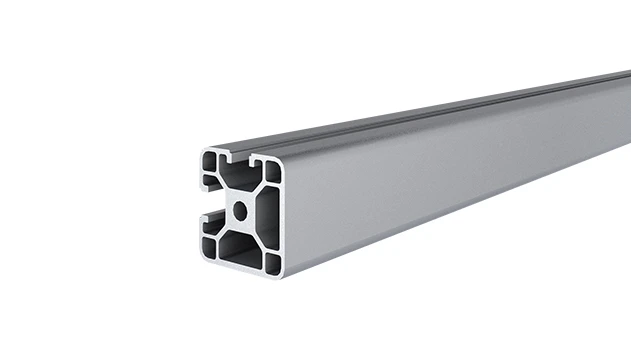
4040E is a 4.00x4.00 CM fractional 40 series square extrusion T-slot profile with two side open T-slots, two side with closed face, each side with 4.00cm face. The profile has align-a-grooves to assist in aligning connecting profiles.
In the world of medical device manufacturing, precision isn't just a goal—it's a necessity. Every component, from the smallest surgical tool to complex diagnostic equipment, must meet rigorous standards to ensure patient safety and regulatory compliance. Yet, even the most meticulously crafted devices can fail if their journey through the packaging line is compromised. That's where conveyor systems step in, serving as the silent workhorses that move products efficiently, securely, and with the care they demand. At the core of these systems lies a component so critical it's often overlooked until something goes wrong: the structural framework that holds everything together. Today, we're diving deep into one such backbone—the 4040E EU standard aluminum profile—and exploring why it's become the gold standard for conveyor systems in medical device packaging lines.
The High-Stakes World of Medical Device Packaging
Before we unpack the role of the 4040E aluminum profile, let's first understand the unique challenges of medical device packaging lines. Unlike consumer goods, medical devices face a gauntlet of regulations from bodies like the FDA, ISO, and EU Medical Devices Regulation (MDR). These rules dictate everything from sterility maintenance to traceability, and even the smallest in the packaging process can lead to costly delays, product recalls, or worse—compromised patient health.
Consider, for example, a batch of insulin pens. These devices must remain sterile from production to the moment they reach a patient. Any gap in the conveyor system that allows dust, moisture, or contaminants to enter could render an entire batch unsafe. Similarly, delicate components like pacemaker leads or endoscopic tools require gentle handling to avoid damage, meaning conveyor systems must balance speed with precision. Add to this the pressure of meeting tight production deadlines—hospitals and clinics rely on a steady supply of these devices—and it's clear: the packaging line's infrastructure can make or break a medical device manufacturer's success.
Conveyor systems in this environment can't be one-size-fits-all. They need to adapt to different device sizes, accommodate frequent cleaning protocols (often with harsh disinfectants), and integrate seamlessly with other equipment like labeling machines, sterilization units, and inspection stations. This is where the choice of structural material becomes pivotal. For decades, manufacturers experimented with steel, plastic, and even wood, but none offered the unique blend of strength, versatility, and compliance that modern medical lines demand. Enter aluminum profiles—and more specifically, the 4040E EU standard aluminum profile.
Why Aluminum Profiles? The Case for the 4040E
Aluminum has long been favored in industrial settings for its lightweight yet durable nature, but what makes the 4040E EU standard aluminum profile stand out in medical device packaging? Let's start with the basics: aluminum is inherently resistant to corrosion, a critical feature in environments where frequent washing and sanitization are non-negotiable. Unlike steel, it won't rust when exposed to water or cleaning agents, ensuring the structural integrity of the conveyor system for years to come. But corrosion resistance is just the beginning.
The "EU standard" designation is another key differentiator. For manufacturers operating in Europe or exporting to EU markets, compliance with EN standards (such as EN 10025 for structural aluminum) isn't optional—it's legally required. The 4040E profile is engineered to meet these strict guidelines, ensuring that conveyor systems built with it adhere to safety, quality, and performance benchmarks set by the European union. This not only simplifies regulatory audits but also builds trust with clients who prioritize compliance in their supply chains.
Then there's modularity. Medical device manufacturers rarely stick to a single product line. One month, they might be packaging syringes; the next, surgical trays or diagnostic test kits. The 4040E profile's T-slot design allows for quick and easy customization. Using aluminum profile accessories like brackets, connectors, and end caps, engineers can reconfigure conveyor systems in hours, not days. Need to add a new section for larger devices? Swap out a few crossbars. Want to integrate a vision inspection camera above the line? Attach a mounting bracket to the T-slot. This flexibility reduces downtime and future-proofs the packaging line against evolving product needs.
Weight is another advantage. Aluminum is approximately 30% lighter than steel, which means conveyor systems built with the 4040E profile place less strain on floors and support structures. This is especially beneficial in multi-story facilities or older plants where floor load capacities are limited. Lighter systems also require less energy to operate, contributing to lower utility costs—a win for both the bottom line and sustainability goals.

Key Specifications of 4040E EU Standard Aluminum Profile
| Specification | Details |
|---|---|
| Profile Dimensions | 40mm x 40mm (width x height), with T-slot openings (typically 8mm or 10mm) along all four sides for accessory integration. |
| Material Composition | 6063-T5 aluminum alloy, known for high strength-to-weight ratio and excellent corrosion resistance. |
| Load Capacity | Vertical load capacity of up to 500kg/m (depending on span length); ideal for supporting conveyor belts, roller tracks, and workbench surfaces. |
| Surface Treatment | Anodized finish (clear or colored), providing a smooth, non-porous surface that resists bacteria growth and simplifies cleaning. |
| Compliance Standards | Meets EN 10025 (EU structural aluminum standards), ISO 13485 (medical device quality management), and REACH (chemical safety) requirements. |
| Compatible Accessories | Includes corner brackets, T-slot nuts, end caps, hinges, and mounting plates—all designed for tool-free or minimal-tool assembly. |
Roller Track Integration: The Flow of Efficiency
A conveyor system is only as good as its ability to move products smoothly, and in medical packaging, few components are as vital to this flow as the roller track. Roller tracks consist of a series of rotating rollers mounted on a frame, allowing products to glide along the line with minimal friction. When paired with the 4040E aluminum profile, they become a powerhouse of efficiency—here's why.
First, the 4040E's T-slot design makes roller track installation a breeze. Unlike traditional steel frames, which often require welding or drilling, aluminum profile accessories like roller track placon mounts (flat or high) can be slid into the T-slots and secured with a simple bolt. This not only speeds up initial setup but also allows for easy adjustments. If a roller track needs to be repositioned to accommodate a new product size, technicians can loosen the bolts, slide the mount to the desired location, and retighten—no cutting or rewelding required.
Another benefit is weight distribution. Medical device packaging often involves varying product weights, from lightweight vials to heavier surgical kits. The 4040E profile's high load capacity ensures that even fully loaded roller tracks (with, say, 30kg diagnostic machines) remain stable and level, preventing jams or product tipping. The anodized surface also reduces friction between the roller track mounts and the profile, making adjustments smoother and extending the lifespan of both components.
Hygiene is, of course, paramount. Roller tracks in medical lines need to be disassembled periodically for deep cleaning, and the 4040E profile simplifies this process. Since accessories are bolted (not welded) to the profile, technicians can remove the entire roller track section in minutes, clean each component individually, and reassemble it without compromising structural integrity. This is a stark contrast to steel frames, where welded joints can trap bacteria and make thorough cleaning nearly impossible.
Let's take a real-world example: a manufacturer of surgical instrument trays. These trays, which can weigh up to 25kg, need to move from the sterilization unit to the packaging station, then to the labeling area, and finally to the boxing line. By integrating a 4040E-framed roller track system, the manufacturer can adjust the roller spacing to match the tray dimensions, ensuring stable transport. The aluminum profile's corrosion resistance means the system can withstand daily wipe-downs with alcohol-based disinfectants, and the modular design allows for the addition of a side guide (using aluminum guide rail A or B) to prevent trays from sliding off the track during turns.
Workbench Integration: Creating Cohesive Operator Stations
Conveyor systems don't operate in isolation—they're part of a larger ecosystem that includes operator workbenches. These workstations are where technicians inspect devices, apply labels, or manually package delicate items, and their design directly impacts productivity and operator ergonomics. Here again, the 4040E EU standard aluminum profile shines, offering a seamless bridge between conveyor lines and workbench setups.
One of the most significant advantages of using 4040E for workbenches is consistency. When both the conveyor system and workbench share the same profile, integration is effortless. For example, a workbench positioned alongside a roller track can be built with 4040E uprights, allowing for the direct attachment of accessories like tool holders, document trays, or LED task lights via T-slot connections. Even better, the workbench height can be adjusted using aluminum foot bases, ensuring operators of all sizes can work comfortably—reducing fatigue and the risk of repetitive strain injuries.
Medical device packaging often requires strict organization. Small components like labels, sterile wraps, or barcode scanners need to be within arm's reach, but cluttering the workbench surface can lead to errors. The 4040E profile solves this with its compatibility with aluminum profile accessories like overhead shelves, under-bench drawers, and side-mounted bins. These add-ons keep the workspace tidy while keeping essential tools accessible, streamlining the packaging process.
Sterility is another consideration. Many workbenches in medical lines feature stainless steel or aluminum honeycomb panels for the work surface, which are easy to clean and resistant to bacterial growth. The 4040E profile's anodized finish complements these surfaces perfectly, ensuring the entire workstation—from the frame to the—is non-porous and compatible with hospital-grade disinfectants. Unlike wooden workbenches, which can splinter or absorb liquids, aluminum profiles maintain their integrity even after years of heavy use.
Let's consider a scenario: a packaging line for glucose monitors. Operators at the workbench need to unbox the monitors, inspect them for defects, apply a sterile label, and place them back on the conveyor. Using a 4040E-framed workbench, the manufacturer can attach a barcode scanner mount to the profile's T-slot, position a small bin for rejected units under the bench, and add a LED light strip above the workspace for better visibility. The workbench can also be mounted on casters (using caster accessories like expanding stem casters) for easy repositioning if the line layout changes—all while maintaining compliance with EU safety standards.
Beyond the Basics: Customization with Aluminum Profile Accessories
What truly sets the 4040E EU standard aluminum profile apart is its ability to adapt to unique packaging line needs, thanks to a vast ecosystem of aluminum profile accessories. These accessories transform a basic frame into a fully customized conveyor system, tailored to the specific demands of medical device manufacturing. Let's explore some of the most game-changing ones.
First, joints and connectors. The 4040E profile is compatible with a range of joint types, from simple 90° aluminum profile connectors for straight corners to 135° connectors for angled sections. For more complex configurations, there are three-way or four-way connectors, allowing the profile to branch into multiple directions—ideal for conveyor lines that need to split products into different packaging lanes. Internal rotatory aluminum joints take this a step further, enabling sections of the conveyor to rotate, which is useful for accessing hard-to-reach areas during maintenance.
Casters and feet are another essential accessory. While fixed aluminum foot bases are perfect for stationary workbenches or conveyor sections, caster wheels (with or without brakes) add mobility. This is invaluable for temporary workstations or conveyor extensions that need to be moved during deep cleaning or line reconfigurations. Swivel caster wheels allow for 360° movement, making it easy to maneuver heavy sections without damaging the floor—important in facilities with polished concrete or vinyl flooring.
End caps and covers might seem minor, but they play a big role in safety and hygiene. Plastic or aluminum end caps fit snugly into the ends of the 4040E profile, preventing debris from collecting inside the T-slots and eliminating sharp edges that could scratch operators or damage products. T-slot rubber seal covers, which snap into the profile's slots when not in use, further enhance hygiene by blocking dust and moisture—critical for maintaining sterility in cleanrooms.
For specialized applications, there are even more niche accessories. Take, for example, swivel roller balls (1 inch or 0.5 inch). These small, rotating balls can be mounted on 4040E-framed workbenches or conveyor sections, allowing operators to slide heavy products with minimal effort. In a packaging line for MRI contrast agents (which come in large, glass vials), swivel roller balls reduce the risk of operator strain and vial breakage. Similarly, plastic roller track guide rails (yellow or grey) can be attached to the 4040E profile to keep products centered on the conveyor, preventing jams and ensuring consistent spacing for labeling machines.
Compliance and Quality: Why EU Standards Matter
In the medical device industry, compliance isn't just a box to check—it's a commitment to patient safety. The 4040E EU standard aluminum profile's adherence to EU regulations is therefore more than a marketing point; it's a critical factor in building trust with regulators, clients, and end-users. Let's break down what "EU standard" really means for manufacturers.
First, material safety. The 4040E profile is made from 6063-T5 aluminum alloy, which is compliant with REACH (Registration, Evaluation, Authorization, and Restriction of Chemicals) standards. REACH restricts the use of hazardous substances in materials, ensuring the profile doesn't leach harmful chemicals into the environment or contaminate medical devices. This is especially important for devices that come into contact with patients, such as IV catheters or wound dressings.
Then there's structural safety. EN 10025, the EU standard for structural aluminum, sets strict guidelines for tensile strength, yield strength, and elongation. The 4040E profile undergoes rigorous testing to meet these standards, ensuring it can withstand the stresses of daily operation without bending, warping, or failing. For manufacturers, this translates to fewer product recalls and lower liability risk—critical in an industry where a single structural failure could have life-threatening consequences.
Traceability is another key aspect of EU standards. Reputable 4040E suppliers provide material certificates (such as EN 10204 3.1) that trace the aluminum back to its origin, including the alloy composition, heat treatment process, and quality control checks. This level of transparency is essential for manufacturers undergoing ISO 13485 audits, as it demonstrates a commitment to quality at every stage of the supply chain.
Finally, sustainability. The EU's Circular Economy Action Plan encourages manufacturers to use recyclable materials, and aluminum fits the bill perfectly. The 4040E profile is 100% recyclable, and its long lifespan (often 10+ years in medical lines) reduces the need for frequent replacements. When it does reach the end of its life, it can be melted down and reused, minimizing waste—a selling point for eco-conscious clients and regulators alike.
Future-Proofing Your Packaging Line: The Long-Term Value of 4040E
Investing in a conveyor system is no small decision, and medical device manufacturers need to ensure their infrastructure can adapt to future challenges—whether that's new regulations, evolving product lines, or increased production demands. The 4040E EU standard aluminum profile offers this future-proofing in spades, thanks to its modularity, durability, and compatibility with emerging technologies.
Let's start with scalability. As a manufacturer grows, its packaging line needs to handle higher volumes. The 4040E profile's modular design makes scaling up simple: additional conveyor sections can be built using the same profile and accessories, ensuring consistency across the line. For example, a company producing 10,000 syringes per day might expand to 25,000 per day within five years. With a 4040E system, they can add a second roller track parallel to the first, connect it with a transfer station (using 90° aluminum crossing joints), and be up and running in weeks—not months.
Technological integration is another area where the 4040E shines. The rise of Industry 4.0 has brought smart manufacturing tools like IoT sensors, AI-powered inspection cameras, and automated guided vehicles (AGVs) into medical lines. These tools require mounting points, and the 4040E's T-slot design makes it easy to attach sensor brackets, camera mounts, or AGV charging stations. For instance, a manufacturer could install a vibration sensor on the conveyor frame (using a T-slot nut and bracket) to monitor for unusual movement—alerting technicians to potential jams before they occur.
Regulatory changes are inevitable in medical device manufacturing, and the 4040E profile helps manufacturers stay ahead. If, for example, the EU updates its sterility standards to require more frequent cleaning, the system's modularity allows for quick modifications—adding extra access panels or repositioning roller tracks to improve cleaning access. Similarly, if a new device requires a larger packaging size, the conveyor's width can be adjusted by adding extension brackets to the 4040E profile—no need to replace the entire frame.
Durability also plays a role in future-proofing. The 4040E profile's anodized aluminum construction is built to last, with a lifespan of 15–20 years in typical medical line conditions. This means manufacturers won't need to budget for a full conveyor system replacement every decade, freeing up capital for other investments like R&D or new product development.
Conclusion: The 4040E Profile—More Than a Frame, a Partner in Precision
In the high-pressure world of medical device packaging, every component matters. From the sterility of the products to the efficiency of the line, success hinges on infrastructure that's reliable, compliant, and adaptable. The 4040E EU standard aluminum profile isn't just a frame for conveyor systems—it's a partner in precision, offering the strength to support heavy loads, the flexibility to adapt to changing needs, and the compliance to meet the strictest global standards.
Whether paired with roller tracks for smooth product flow, integrated into workbenches for operator comfort, or customized with accessories for specialized tasks, the 4040E profile delivers value at every turn. It's a choice that reduces downtime, simplifies regulatory compliance, and future-proofs packaging lines against the unknowns of tomorrow's medical device industry.
For manufacturers looking to elevate their packaging operations—whether they're producing life-saving pacemakers or everyday syringes—the message is clear: the backbone of a world-class conveyor system starts with the right profile. And in the realm of medical device packaging, that profile is the 4040E EU standard aluminum profile.