- Company Articles
- Industry articles
- Industry standards
- Medical Equipment Stands: 3060 National Standard Profile A Custom Fabrication

Medical Equipment Stands: 3060 National Standard Profile A Custom Fabrication
Related Product
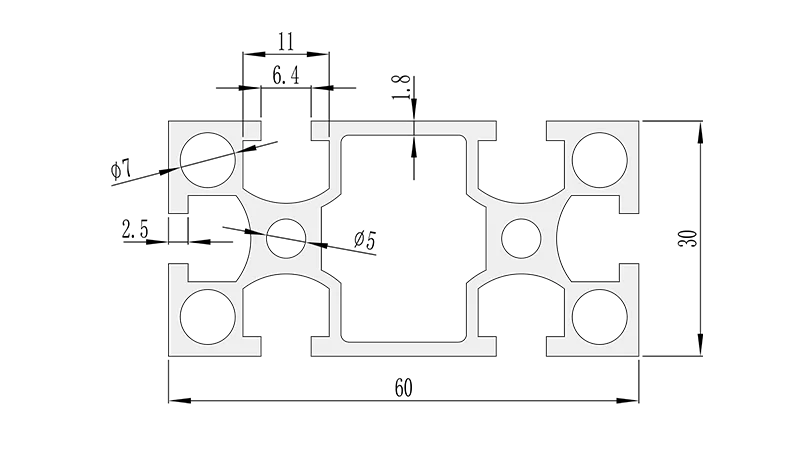
3060 National Standard Profile A
Workbench, production line, logistic rack, warehouse rack Industry: Manufacturer workshop, Automobile, Electronic, Assembling, logistic
In the fast-paced world of healthcare, every second counts. From bustling hospital corridors to quiet lab spaces, medical professionals rely on equipment that's not just functional, but also adaptable, durable, and easy to maneuver. Enter the unsung hero of medical workflow efficiency: the medical equipment stand. These seemingly simple structures hold everything from monitors and pumps to tools and samples, directly impacting how smoothly a clinic, lab, or operating room runs. But not all stands are created equal. Today, we're diving into the game-changing potential of custom fabrication using 3060 National Standard Profile A —a material that's redefining what medical equipment stands can be.
The Hidden Challenge in Medical Equipment Stands
Walk into any medical facility, and you'll notice a common thread: equipment comes in all shapes and sizes. A small clinic might need a compact stand for a portable ultrasound machine, while a large hospital's operating room requires a heavy-duty setup to hold multiple monitors and surgical tools. Standard, off-the-shelf stands often fall short here. They're rigid, one-size-fits-all solutions that can't keep up with the unique demands of different departments or evolving technology.
Consider the typical pain points: A nurse struggles to wheel a bulky stand through a narrow hallway because its fixed width doesn't account for doorframes. A lab technician can't adjust a stand's height to align with their workbench, leading to strained shoulders. A surgeon waits for a stand to be sanitized because its crevices trap germs—time that could be spent with a patient. These aren't just inconveniences; they're barriers to efficiency, safety, and ultimately, patient care.
The solution? Customization. But not just any customization—fabrication that leverages materials designed for flexibility, durability, and precision. That's where 3060 National Standard Profile A steps in. This aluminum extrusion profile isn't just a material; it's a building block for stands that adapt to your needs, not the other way around.
Why 3060 National Standard Profile A? Unpacking the Material
At first glance, aluminum might seem like a run-of-the-mill choice, but 3060 National Standard Profile A is far from ordinary. Let's break down what makes it ideal for medical equipment stands:
1. Strength Meets Lightweight Design
Aluminum extrusion profiles are engineered to be strong yet lightweight. The 3060 profile, named for its approximate dimensions (30mm x 60mm), strikes the perfect balance: it can support heavy medical devices (think 50+ kg) without feeling cumbersome. This is crucial in healthcare settings where staff often need to move stands quickly—whether responding to an emergency or reconfiguring a room for the next patient. A lighter stand reduces the risk of strain injuries and makes maneuvering in tight spaces a breeze.
2. Corrosion Resistance and Hygiene
Hospitals and labs are harsh environments. Chemical cleaners, frequent sanitization, and even moisture from steam or spills can take a toll on metal surfaces. Aluminum's natural resistance to corrosion means stands made with 3060 profile won't rust or degrade over time, even with daily cleaning. Unlike steel, which requires painting or coating to prevent rust, aluminum's smooth, non-porous surface is also easier to disinfect—no hidden crevices for bacteria to linger. For settings where sterility is non-negotiable (like operating rooms), this is a game-changer.
3. Modularity and Compatibility with Aluminum Profile Accessories
What truly sets 3060 National Standard Profile A apart is its modularity. It's designed to work seamlessly with a wide range of aluminum profile accessories —think joints, brackets, casters, and workbench attachments. This means a stand isn't just a static structure; it's a flexible system that can be modified, expanded, or repurposed as needs change. Need to add a shelf for extra tools? Screw in a bracket. Want to adjust the height for a taller monitor? Swap out a joint. This modularity reduces waste (no need to buy a new stand when equipment updates) and ensures your investment lasts for years.
4. Precision Engineering for Consistency
"National Standard" isn't just a label—it means the 3060 profile is manufactured to strict dimensional tolerances. Every piece of aluminum extrusion profile is consistent in size, shape, and strength, ensuring that when you order custom parts, they fit together perfectly. This precision is critical for medical equipment stands, where even a small wobble could compromise the safety of sensitive devices (like MRI monitors or lab centrifuges).
The Custom Fabrication Process: From Idea to Reality
Custom fabrication with 3060 National Standard Profile A isn't just about cutting metal and screwing parts together—it's a collaborative process that starts with understanding your unique needs. Let's walk through how a typical project unfolds:
Step 1: Consultation and Needs Assessment
The process begins with a conversation. A fabrication team will ask questions like: What equipment will the stand hold? (Weight, dimensions, power requirements all matter.) Where will it be used? (Operating room, lab, clinic, or patient room?) Does it need to be mobile? (If yes, what type of flooring—carpet, tile, concrete—will it roll on?) Are there specific height or width constraints? (Narrow doorways, under-shelf clearance, or ergonomic height for staff?) This step ensures the final stand isn't just "custom" in name, but truly tailored to your workflow.
Step 2: Design and Prototyping
Using 3D modeling software, the team will draft a design that incorporates 3060 National Standard Profile A as the main frame, paired with the right aluminum profile accessories . For example, if mobility is key, they might specify heavy-duty caster wheels with locking brakes to keep the stand stable during use. If the stand needs a flat surface for paperwork or tools, they might integrate a workbench top made from aluminum honeycomb panel (lightweight, durable, and easy to clean). Once the design is finalized, a prototype is often built to test functionality—does it roll smoothly? Can the height be adjusted easily? Does it fit through the door? This hands-on testing ensures no surprises when the final product arrives.
Step 3: Material Sourcing and Fabrication
With the design approved, the team sources high-quality 3060 National Standard Profile A and compatible accessories. The aluminum extrusion profiles are cut to precise lengths using CNC machines, ensuring clean edges and perfect fits. Then, using specialized joints (like 90° aluminum profile connectors or internal rotatory aluminum joints), the frame is assembled. Casters are mounted, shelves are added, and any custom features (like cable management clips or tool hooks) are installed. The result is a stand that's sturdy, functional, and built to your exact specifications.
Step 4: Quality Testing and Delivery
Before delivery, the stand undergoes rigorous testing. It's loaded to maximum capacity to check for wobbling or bending. Caster wheels are rolled across different floor types to ensure smooth mobility and secure braking. All joints and connections are tightened and inspected for durability. Once it passes, the stand is cleaned, packaged, and delivered—ready to integrate into your healthcare workflow.
Comparing Standard vs. Custom: The Case for 3060 Profile Stands
To truly understand the benefits of custom fabrication with 3060 National Standard Profile A, let's compare it to off-the-shelf medical equipment stands. The table below highlights key differences:
| Feature | Off-the-Shelf Stands | Custom Stands with 3060 National Standard Profile A |
|---|---|---|
| Size and Dimensions | Fixed sizes (often too big or too small for specific equipment). | Tailored to exact equipment dimensions and space constraints. |
| Mobility | Basic casters (poor maneuverability; brakes may slip on smooth floors). | Heavy-duty caster wheels with locking brakes; designed for specific flooring types. |
| Accessories and Add-Ons | Limited options (pre-installed shelves; no room for customization). | Compatible with hundreds of aluminum profile accessories (shelves, hooks, workbench tops, etc.). |
| Durability | Often made with cheap steel or plastic; prone to rust or cracking. | Aluminum extrusion profile: corrosion-resistant, impact-resistant, and built to last 10+ years. |
| Hygiene | Hard-to-clean crevices; paint chipping can harbor bacteria. | Smooth aluminum surface; easy to disinfect; no paint or coatings to chip. |
| Cost Over Time | Cheaper upfront, but need replacement every 2–3 years due to wear. | Higher upfront cost, but modular design allows upgrades/repairs; lasts 5–10+ years. |
As the table shows, custom stands built with 3060 National Standard Profile A offer clear advantages in flexibility, durability, and long-term value. They're not just a purchase—they're an investment in efficiency and safety.
Real-World Applications: How 3060 Profile Stands Transform Healthcare Spaces
To bring this to life, let's look at a few real-world scenarios where custom 3060 National Standard Profile A stands have made a difference:
Scenario 1: Operating Room (OR) Efficiency
In a busy OR, space is at a premium. Surgeons need quick access to monitors, tools, and suction devices, but bulky equipment stands can clutter the area and slow down procedures. A hospital in Chicago recently upgraded to custom stands built with 3060 profile. The stands feature adjustable height shelves (to align with surgeon eye level), lightweight frames (easy to reposition mid-surgery), and locking caster wheels that grip OR tile floors securely. They also integrated a small workbench top for nurses to prep tools, reducing the need for extra carts. The result? OR turnover time decreased by 15%, and staff reported less physical strain from moving equipment.
Scenario 2: Laboratory Workflow Optimization
A research lab at a university was struggling with standard stands that couldn't accommodate their mix of equipment—from microscopes to centrifuges. The fixed shelves were either too shallow (risking equipment falling) or too deep (wasting space). Using 3060 National Standard Profile A, the lab commissioned custom stands with adjustable shelves (using aluminum profile accessories like sliding brackets) and corrosion-resistant surfaces (easy to clean after chemical spills). They even added side hooks for lab coats and tool belts, keeping the workspace organized. Lab technicians now spend 20% less time searching for tools, and equipment damage due to unstable shelving has dropped to zero.
Scenario 3: Clinic Patient Care
A pediatric clinic wanted to create a more welcoming environment for young patients, but standard medical stands felt cold and industrial. They worked with a fabricator to design custom stands using 3060 profile with rounded edges (safer for kids) and colorful, removable panels (easily swapped for holidays or themes). The stands also feature locking caster wheels so they can be moved out of the way during playtime and quickly repositioned for exams. Parents noted their children seemed less anxious during visits, and staff appreciated the flexibility to adapt the space throughout the day.
The Lean System Advantage: Efficiency Meets Healthcare
At its core, custom fabrication with 3060 National Standard Profile A aligns with the principles of a lean system —eliminating waste, streamlining processes, and focusing on value. In healthcare, "waste" can mean anything from time spent adjusting ill-fitting equipment to money wasted on replacing flimsy stands. A lean approach with modular, durable stands reduces these inefficiencies:
- Reduced Downtime: Stands that fit equipment perfectly mean less time adjusting, repairing, or replacing them.
- Lower Long-Term Costs: Modular design allows stands to evolve with new equipment, avoiding the need for frequent replacements.
- Improved Staff Satisfaction: Ergonomic, easy-to-use stands reduce physical strain and frustration, boosting morale.
- Enhanced Patient Care: When staff can focus on patients (not equipment), care quality improves.
Choosing the Right Fabricator: What to Look For
Not all fabricators are created equal. To ensure your custom medical equipment stand meets healthcare standards, look for a supplier with:
- Experience in medical-grade fabrication (familiarity with hygiene and safety requirements).
- Access to high-quality 3060 National Standard Profile A and certified aluminum profile accessories .
- A collaborative design process (willing to listen to your needs and iterate on prototypes).
- Quality control measures (testing for strength, mobility, and durability).
- After-sales support (warranty, replacement parts, and modification services).
Conclusion: Investing in the Future of Healthcare Workflow
Medical equipment stands may not be the most glamorous part of healthcare, but they play a critical role in keeping facilities running smoothly, safely, and efficiently. Standard, one-size-fits-all stands simply can't keep up with the diverse needs of modern healthcare settings. That's where custom fabrication with 3060 National Standard Profile A shines.
By leveraging the strength, modularity, and compatibility of this aluminum extrusion profile—paired with the right aluminum profile accessories , caster wheels , and workbench features—you can create stands that adapt to your space, your equipment, and your staff. It's an investment in efficiency, safety, and long-term value that ultimately translates to better patient care.
So, the next time you're frustrated with a wobbly, ill-fitting equipment stand, remember: there's a better way. Custom fabrication with 3060 National Standard Profile A isn't just about building a stand—it's about building a workflow that works for you.