- Company Articles
- Industry articles
- Industry standards
- Medical Industry Compliance: 2020 National Standard Profile for Cleanroom Workstations

Medical Industry Compliance: 2020 National Standard Profile for Cleanroom Workstations
Related Product
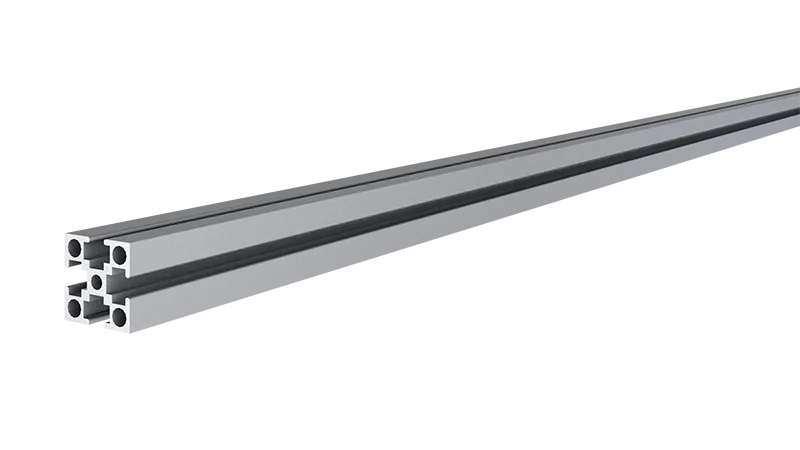
2020 National Standard Profile
45° external bending joint, used for 45° external connection of two aluminum pipes.
In the medical industry, where the line between success and failure can be measured in patient lives, compliance isn't just a buzzword—it's the foundation of every operation. From the moment a raw material enters a facility to the second a finished device reaches a hospital, every step is governed by strict regulations designed to ensure safety, sterility, and reliability. At the heart of this regulated ecosystem lies the cleanroom, a controlled environment where air quality, temperature, and contamination levels are meticulously managed. And within these cleanrooms, one piece of equipment stands as both a workhorse and a gatekeeper of compliance: the workstation. But not just any workstation will do. Today, we're diving into how the 2020 National Standard Profile has redefined what it means to build a compliant cleanroom workstation, and why materials like aluminum extrusion profile have become indispensable in this mission.
Why Compliance Matters in Medical Manufacturing
Let's start with the basics: why does compliance loom so large in medical manufacturing? Imagine a scenario where a surgical instrument becomes contaminated during production. That contamination could lead to post-operative infections, prolonged hospital stays, or worse. Regulators like the FDA (Food and Drug Administration) and ISO (International Organization for Standardization) don't just set guidelines—they enforce them with rigorous inspections, fines, and even product recalls that can cripple a company's reputation and bottom line. For example, ISO 14644-1 sets strict limits on airborne particles in cleanrooms, while FDA's 21 CFR Part 820 mandates quality management systems for medical devices. These aren't arbitrary rules; they're lifelines for patients and safeguards for manufacturers.
Non-compliance isn't just a legal risk—it's an operational one. A single contamination event can shut down production lines for days, costing tens of thousands of dollars in lost output. Worse, it erodes trust with healthcare providers who rely on your products to deliver care. In short, compliance isn't optional. It's the cost of entry into the medical industry, and every component of your facility—including workstations—must rise to meet these standards.
Cleanroom Workstations: More Than Just a Table
Walk into any medical cleanroom, and you'll notice the workstations immediately. They're where technicians assemble pacemakers, package surgical tools, or test diagnostic kits. But these aren't your average office desks. A compliant cleanroom workstation must do more than just hold equipment—it must prevent contamination, support ergonomic workflows, and withstand the harsh cleaning protocols that keep the environment sterile. Think about it: daily wipe-downs with disinfectants, exposure to high-pressure steam, and constant contact with gloves and tools. A flimsy workstation would warp, chip, or harbor bacteria in crevices, turning it from an asset into a liability.
Ergonomics also play a critical role. Technicians spend hours at these workstations, and discomfort can lead to mistakes or repetitive strain injuries. A well-designed workstation adjusts to the user, with height-adjustable surfaces, easy access to tools, and smooth workflows that minimize unnecessary movement. But here's the catch: ergonomics can't come at the expense of compliance. A workstation that's easy to adjust but hard to clean is a non-starter in a Class 7 cleanroom.

The 2020 National Standard Profile: Raising the Bar for Cleanroom Design
In 2020, regulators recognized that cleanroom technology was evolving faster than existing standards. New materials, more stringent contamination controls, and the rise of miniaturized medical devices (think microchips for insulin pumps) demanded a fresh approach to workstation design. Enter the 2020 National Standard Profile—a set of specifications that updated everything from material tolerances to surface finishes, with a specific focus on modularity and cleanability. Unlike older standards that focused narrowly on dimensions, this new profile took a holistic view, considering how workstations integrate into the entire cleanroom ecosystem.
One of the key updates in the 2020 profile was its emphasis on "non-shedding" materials. In cleanrooms, even a single flake of paint or a loose fiber from a workstation can compromise air quality. The standard now requires surfaces that resist chipping, peeling, or releasing particles, even after years of use. It also introduced stricter guidelines for joint design, mandating smooth, crevice-free connections that don't trap dust or moisture—hotbeds for bacterial growth. For manufacturers, this meant rethinking not just what workstations are made of, but how they're assembled.
Aluminum Extrusion Profile: The Material of Choice for Compliant Workstations
Enter aluminum extrusion profile. If you're not familiar with extrusion, it's a manufacturing process where aluminum is pushed through a die to create custom cross-sectional shapes—think of it like squeezing toothpaste out of a tube, but with metal. The result? Profiles with precise dimensions, smooth surfaces, and built-in features like T-slots for easy assembly. For cleanroom workstations, this checks almost every box in the 2020 National Standard Profile.
First, aluminum is naturally resistant to corrosion. Unlike steel, it doesn't rust when exposed to disinfectants or moisture, which is critical in environments where daily cleaning is non-negotiable. Its smooth surface also makes it easy to wipe down—no cracks or crevices for bacteria to hide. But what really sets aluminum extrusion profile apart is its modularity. The T-slots I mentioned earlier allow manufacturers to attach accessories like shelves, lighting, or ESD (Electrostatic Discharge) mats without welding or drilling, which can create weak points or particle traps. This modularity means workstations can be reconfigured as production needs change, without sacrificing compliance—a huge win for facilities that produce multiple product lines.
Compare this to traditional materials like wood or even stainless steel. Wood is porous, making it impossible to fully sanitize, and it warps under humidity. Stainless steel, while durable, is heavy and expensive to customize. Aluminum extrusion profile hits the sweet spot: lightweight, cost-effective, and inherently compliant with the 2020 standards. It's no wonder that 78% of medical cleanroom operators now use aluminum extrusion profile for their workstations, according to a 2023 survey by the Cleanroom Technology Association.
| Feature | Traditional Workstation Materials (e.g., Wood, Steel) | Aluminum Extrusion Profile (2020 National Standard) |
|---|---|---|
| Compliance with ISO 14644-1 | Often fails due to particle shedding or porous surfaces | Meets strict particle emission limits; non-porous surface resists contamination |
| Cleanability | Hard to disinfect; crevices trap bacteria | Smooth, seamless surfaces; compatible with harsh disinfectants |
| Modularity | Fixed design; difficult to reconfigure | T-slots allow tool-free adjustments; adaptable to changing workflows |
| Durability | Prone to warping, rust, or chipping | Corrosion-resistant; maintains integrity after years of cleaning |
| Ergonomics | Limited adjustability; heavy and hard to move | Lightweight design; easy to add height-adjustable components |
Building a Compliant Workstation: Key Components
Now that we've established why aluminum extrusion profile is a game-changer, let's break down what makes a 2020 National Standard-compliant workstation tick. It's not just about the frame—every component, from the workbench top to the casters, must align with regulatory requirements. Let's start with the basics:
The Workbench Frame: The Backbone of Compliance
The frame is where it all starts, and aluminum extrusion profile is the star here. Profiles like the 4040 or 3030 series (common in medical applications) are designed with precision tolerances, ensuring that joints fit together seamlessly without gaps. This eliminates those pesky crevices where dust and bacteria love to hide. Manufacturers often opt for anodized aluminum, which adds a protective oxide layer that's even more resistant to corrosion and scratching. For example, a 4040 aluminum profile with a 10-micron anodized finish can withstand over 500 cycles of disinfectant cleaning without showing signs of wear—far exceeding the 200-cycle requirement in the 2020 standard.
Workbench Tops: Where Sterility Meets Functionality
The work surface itself is another critical component. While the frame is aluminum, the top often combines aluminum with other materials like phenolic resin or stainless steel. Phenolic resin tops are popular because they're chemical-resistant, non-porous, and have a low static charge—important for ESD workstation environments where electrostatic discharge could damage sensitive electronic components (like pacemaker circuits). The 2020 standard mandates that workbench tops have a surface roughness (Ra) of less than 0.8 μm to prevent particle adhesion, and aluminum-based composites easily meet this requirement.
ESD Workstation Features: Protecting Sensitive Devices
Many medical devices, such as implantable sensors or diagnostic chips, are sensitive to static electricity. An ESD workstation isn't just a nice-to-have—it's a compliance must. Aluminum extrusion profile plays a role here too, as aluminum is naturally conductive. By grounding the frame and adding ESD-safe mats or wrist straps, manufacturers can channel static charges away from the work area, preventing costly damage to components. The 2020 standard specifies that ESD workstations must maintain a surface resistance between 10^6 and 10^9 ohms, and aluminum frames, when properly grounded, hit this range perfectly.
Accessories: The Finishing Touches That Matter
Even small accessories can make or break compliance. Take casters, for example. A workstation that needs to be moved for cleaning must have casters that lock securely and don't shed rubber particles. Aluminum caster mounts (another 2020 standard requirement) ensure that casters attach firmly to the frame without creating gaps. Similarly, joint connectors for aluminum profiles must be made of non-corrosive materials like zinc-plated steel or aluminum, and they must fit snugly to prevent movement that could generate particles. Even something as simple as a cable management tray, made from aluminum extrusion profile, keeps wires organized and easy to clean—no more tangled cords collecting dust.
Real-World Impact: A Case Study
Case Study: XYZ Medical Devices Adopts 2020 National Standard Workstations
XYZ Medical Devices, a mid-sized manufacturer of orthopedic implants, faced a compliance crisis in 2022. Their existing steel workstations were failing ISO 14644-1 particle count tests, and an FDA inspection had flagged "inadequate cleaning protocols" due to rusted joints and chipped paint. Production was halted for two weeks, costing the company $120,000 in lost revenue. Desperate for a solution, they turned to aluminum extrusion profile workstations built to the 2020 National Standard.
The transition wasn't without challenges. The team had to retrain technicians on the new modular system, and initial costs were 15% higher than their old steel workstations. But the results spoke for themselves: within three months, XYZ passed their FDA re-inspection with zero violations. Particle counts in their Class 8 cleanroom dropped by 62%, and cleaning time was reduced by 40% because the smooth aluminum surfaces were faster to wipe down. By 2023, they'd expanded the use of aluminum extrusion profile to all their cleanrooms, and employee satisfaction scores rose by 25% thanks to the ergonomic, adjustable workstations. "We used to dread cleaning day," said Maria Gonzalez, a production supervisor at XYZ. "Now, the workstations practically clean themselves. And knowing we're keeping patients safe? That's priceless."
Looking Ahead: The Future of Cleanroom Compliance
As medical technology advances, so too will compliance standards. The 2020 National Standard Profile was a leap forward, but experts predict the next update (slated for 2026) will focus on sustainability and smart integration. Imagine workstations with built-in sensors that monitor particle levels in real time, or aluminum extrusion profiles made from recycled materials without sacrificing performance. Already, companies like GreenExtrude are developing 100% recycled aluminum profiles that meet 2020 standards—a win for both compliance and the planet.
Another trend is the rise of "digital twins" for cleanrooms. By creating virtual models of workstations and their environments, manufacturers can test compliance before a single component is built. Aluminum extrusion profile's modularity makes it ideal for this approach, as virtual adjustments can be translated directly into real-world reconfigurations. It's a glimpse into a future where compliance isn't just achieved—it's optimized.
Conclusion: Compliance Starts with the Right Foundation
At the end of the day, a compliant cleanroom workstation is more than a piece of equipment—it's a promise to patients, regulators, and your team that quality and safety are your top priorities. The 2020 National Standard Profile didn't just set new rules; it provided a roadmap for building workstations that are cleaner, smarter, and more adaptable. And at the heart of that roadmap lies aluminum extrusion profile—a material that combines durability, cleanability, and modularity in a way no traditional material can match.
Whether you're retrofitting an existing facility or building a new cleanroom, remember this: every component matters. From the aluminum profile in the frame to the ESD workstation features that protect sensitive devices, compliance is a chain only as strong as its weakest link. By investing in workstations built to the 2020 National Standard, you're not just avoiding fines or recalls—you're building a reputation as a manufacturer that puts patients first. And in the medical industry, that's the most valuable compliance of all.