- Company Articles
- Industry articles
- Industry standards
- Medical Industry Compliance: Chrome Four Way Straight Lean Pipe Joints for FDA-Approved Areas

Medical Industry Compliance: Chrome Four Way Straight Lean Pipe Joints for FDA-Approved Areas
Related Product
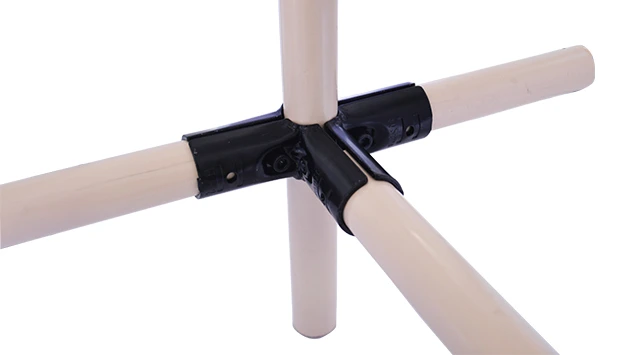
Four Way Straight Lean Pipe Joint
Four way lean pipe joint for 4 pcs 28MM lean pipe connection in straight angle, which used widely in workbench, flow rack, hand trolley frame connection.
The High Stakes of Compliance in Medical Manufacturing
Walk into any medical manufacturing facility, and you'll immediately sense the weight of responsibility in the air. Every surface, every tool, every movement is calibrated to one unyielding standard: compliance. In an industry where a single misstep can compromise patient safety, regulatory bodies like the FDA don't just recommend best practices—they enforce them with rigorous audits, strict documentation, and zero tolerance for shortcuts. From the sterile production of surgical instruments to the precise assembly of life-saving devices, the rules aren't just guidelines; they're the foundation of trust between manufacturers, healthcare providers, and the patients who rely on their products.
But here's the challenge: compliance isn't static. As medical technology evolves—think smaller, more complex devices, faster production timelines, and the need to adapt to global health crises—so do the demands on manufacturing spaces. Fixed, one-size-fits-all workstations and rigid material handling systems quickly become liabilities. They're hard to clean thoroughly, impossible to reconfigure for new products, and often fail to meet the nuanced requirements of modern FDA regulations, like 21 CFR Part 820, which mandates that equipment be "designed to facilitate operations necessary for compliance with good manufacturing practice."
This is where the conversation shifts from "meeting the rules" to "designing for compliance." Today's medical facilities need systems that are not just compliant on day one, but adaptable enough to stay compliant as regulations, products, and processes change. Enter lean pipe systems—a modular, flexible approach to workspace design that's quietly revolutionizing how medical manufacturers balance precision, cleanliness, and efficiency. And at the heart of this revolution? Components like the chrome four way straight lean pipe joint, a small but mighty tool that's proving indispensable in FDA-approved areas.
Lean Principles Meet Medical Precision: Why Modular Workspaces Matter
Lean manufacturing has long been celebrated for its focus on eliminating waste, streamlining workflows, and maximizing value. But in medical settings, "lean" takes on a deeper meaning. It's not just about cutting costs or speeding up production—it's about creating environments where precision and compliance are built into the very structure of the workspace. Traditional fixed workbenches and welded steel racks, while sturdy, often fall short here. They're difficult to sanitize (those hard-to-reach corners become breeding grounds for bacteria), impossible to adjust for new device sizes, and expensive to replace when regulations update.
Modular lean pipe systems, by contrast, are designed to be agile. They use lightweight, durable pipes and joints to create customizable workbenches, flow racks, and material handling solutions that can be assembled, disassembled, and reconfigured in hours—no welding, no specialized tools, no disruption to production. This flexibility is a game-changer for medical manufacturers. Need to scale up production of a critical device? Rearrange the flow rack to accommodate more materials. Switching to a smaller, more intricate product? Reconfigure the lean pipe workbench to add specialized tool holders. All while maintaining the strict cleanliness and structural integrity required by the FDA.
But what makes these systems truly compliant isn't just their flexibility—it's the materials and design of their components. Take, for example, the chrome four way straight lean pipe joint. At first glance, it might seem like a simple connector, but in reality, it's a masterclass in regulatory-friendly engineering. Let's dive into why this unassuming component is becoming a cornerstone of FDA-approved workspaces.

The Unsung Hero: Chrome Four Way Straight Lean Pipe Joints Explained
Imagine trying to build a stable, adaptable structure with parts that only connect in two directions. You'd end up with wobbly frames, limited design options, and a system that can't keep up with changing needs. That's where the four way straight lean pipe joint comes in. As the name suggests, this joint connects four pipes at once—up, down, left, right—creating a central hub that forms the backbone of modular workspaces. But what sets the chrome four way straight lean pipe joint apart, especially in medical settings, is its material, design, and attention to compliance-critical details.
Material Matters: Chrome Plating for Cleanliness and Durability
First, let's talk about the chrome. In medical manufacturing, where surfaces are subject to daily sanitization with harsh chemicals (think alcohol, hydrogen peroxide, or quaternary ammonium compounds), material choice is everything. Chrome plating isn't just for shine—it's a protective barrier. Unlike raw steel, which can rust or corrode when exposed to cleaning agents, chrome-plated joints resist chemical damage, ensuring they won't degrade over time. This is crucial for maintaining compliance with FDA's Good Manufacturing Practices (GMP), which require equipment to "withstand the conditions of intended use," including regular cleaning and sterilization.
But it's not just about resistance—it's about cleanability. Chrome plating creates a smooth, non-porous surface that leaves nowhere for bacteria, residue, or contaminants to hide. Run a disinfectant wipe over a chrome joint, and you're not just cleaning the surface; you're ensuring there are no microcrevices where pathogens could linger. In a facility producing implantable devices or sterile dressings, that level of cleanliness isn't optional—it's mandated by 21 CFR Part 820.70(c), which requires "special precautions… to prevent contamination of equipment or product."
Design Ingenuity: Four-Way Connectivity for Stability and Flexibility
Now, the "four way" design. In medical manufacturing, workspace layouts are rarely static. A line producing pacemakers might need to shift to ventilator components overnight during a crisis; a lab assembling diagnostic kits might need to expand to accommodate new testing protocols. The four way joint's ability to connect pipes in multiple directions means manufacturers can build structures that grow, shrink, or reorient with minimal effort. Need a taller lean pipe workbench for ergonomic assembly? Add vertical pipes using the top and bottom ports of the joint. Want to expand a flow rack to hold more inventory? Extend horizontal pipes from the left or right ports. No need for custom fabrication—just adjust, tighten, and go.
Stability is another key factor. Medical devices are often delicate, and a wobbly workstation or a sagging material rack isn't just inefficient—it's dangerous. The four way joint's design distributes weight evenly across all connected pipes, reducing stress on individual components. Most models can support loads of up to 200kg per joint, making them sturdy enough for heavy equipment like microscopes, ultrasonic cleaners, or automated assembly tools. And because the joints are tightened with a simple hex key (no welding, no adhesives), there's no risk of weak points from uneven heating or bonding failures—critical for maintaining structural integrity during FDA inspections.
Assembly Advantages: Tool-Free (or Minimal-Tool) Setup for Clean Environments
In a cleanroom or sterile production area, bringing in power tools or welding equipment is a logistical nightmare. These tools generate dust, require electrical connections that can complicate ESD (electrostatic discharge) control, and often leave behind residue that's hard to clean. The chrome four way straight lean pipe joint solves this problem with its tool-minimal assembly. Most joints can be tightened by hand or with a standard hex key, eliminating the need for heavy machinery. This not only speeds up setup and reconfiguration but also reduces the risk of contamination during installation—a win for both efficiency and compliance.
Disassembly is just as straightforward. If a component needs to be replaced or a workspace reconfigured, the joint can be loosened, pipes removed, and parts sanitized individually. This level of accessibility is a boon during FDA audits, where inspectors may request to see cleaning procedures for hard-to-reach areas. With a modular system, there are no "hard-to-reach" areas—every part can be taken apart, cleaned, and put back together with ease.

Building Compliant Workspaces: Beyond the Joint
While the chrome four way straight lean pipe joint is a star player, it rarely works alone. To create a fully compliant workspace, it teams up with other modular components, each designed to meet specific FDA requirements. Let's explore two common partners: the lean pipe workbench and the flow rack —and how they leverage the joint's flexibility to enhance compliance.
Lean Pipe Workbenches: Sterile Surfaces for Critical Tasks
At the heart of most medical assembly lines is the workbench—the surface where technicians handle everything from raw materials to nearly finished devices. A lean pipe workbench, built using chrome four way joints and aluminum or steel pipes, is far more than just a table. It's a customizable platform engineered for compliance. For starters, the work surface itself is often made of stainless steel or chemical-resistant laminate, both of which are easy to sanitize and non-reactive with medical-grade materials. But the real magic is in how the frame is built.
Using four way joints, manufacturers can add accessories like overhead tool rails (to keep instruments within reach but off the work surface), under-shelf storage (for clean towels or sanitizing wipes), and even ESD mats (critical for assembling electronics like pacemakers, where static electricity can damage sensitive components). The height of the bench is also adjustable—no more stooping or stretching, which reduces the risk of human error and improves ergonomics, a key factor in maintaining consistent product quality (and happy, efficient teams).
Perhaps most importantly, lean pipe workbenches are designed with "no dead space" in mind. Traditional wooden or fixed steel benches often have hollow legs, crevices between the top and frame, or hard-to-reach corners where dust and debris accumulate. A modular bench, built with chrome joints and smooth pipes, eliminates these traps. Every surface is exposed, every joint is accessible, and cleaning becomes a quick, thorough process—exactly what FDA inspectors look for when evaluating compliance with GMP's "cleanability" standards.
Flow Racks: Streamlining Material Handling with Minimal Contamination Risk
Material handling is another compliance hot spot in medical manufacturing. How do you move components from storage to assembly without exposing them to contaminants? How do you ensure traceability (a key FDA requirement) when parts are constantly in motion? Enter the flow rack, a gravity-fed system that uses roller tracks to glide materials smoothly from one workstation to the next. And yes—you guessed it—chrome four way joints are the backbone of these racks, too.
A typical flow rack consists of multiple levels of roller tracks, each sloped slightly to allow materials to "flow" forward as items are removed from the front. This "first in, first out" (FIFO) system reduces the risk of expired or outdated components being used, a critical aspect of traceability under 21 CFR Part 820.184. But the rack's structure is just as important as its function. Using four way joints, manufacturers can build racks with adjustable shelf heights (to accommodate different container sizes), vertical dividers (to separate materials by lot number), and even integrated label holders (for easy tracking). And because the joints are chrome-plated, the entire structure is easy to wipe down, ensuring that dust or debris from moving parts doesn't contaminate sensitive components.
One medical device manufacturer in California recently shared how switching to a lean pipe flow rack system with chrome four way joints transformed their compliance posture. Previously, they used fixed wooden shelves that were difficult to clean and often led to "backstock" items being forgotten (and occasionally expired). After installing modular flow racks, they reduced expired inventory by 65% and passed their next FDA audit with zero findings related to material handling—all while cutting down on cleaning time by 30%.
Aligning with FDA Standards: How These Components Measure Up
It's one thing to say a component is "compliant," but it's another to prove it. Let's break down exactly how chrome four way straight lean pipe joints, lean pipe workbenches, and flow racks align with specific FDA requirements. For medical manufacturers, this isn't just about checking boxes—it's about building a culture of compliance that withstands scrutiny.
21 CFR Part 820.70: Production and Process Controls
FDA's Quality System Regulation (QSR) under 21 CFR Part 820.70 outlines requirements for "production and process controls," including equipment design and maintenance. Specifically, §820.70(a) states that "equipment used in the manufacture, processing, packing, or holding of a device shall be designed, constructed, placed, and installed to facilitate operations necessary for compliance with this part." Chrome four way joints meet this by being designed for easy cleaning (smooth surfaces), constructed with durable materials (chrome plating), and placed/installed in a way that allows for reconfiguration (modular design). No more tearing out walls or rebuilding workstations—just adjust the joints and pipes to fit the process.
§820.70(c) goes further, requiring "special precautions… to prevent contamination of equipment or product." The non-porous, chemical-resistant nature of chrome joints and lean pipe workbenches directly addresses this. There's no wood to absorb spills, no porous metal to harbor bacteria, and no hard-to-clean crevices to trap contaminants. It's a proactive defense against contamination, not a reactive one.
21 CFR Part 820.120: Records
Traceability is a cornerstone of FDA compliance, and modular lean pipe systems simplify record-keeping in unexpected ways. When you build a workstation or flow rack using standardized components like chrome four way joints, you can document the exact configuration (pipe lengths, joint positions, accessory types) and update it digitally as changes are made. This creates a clear audit trail for inspectors, showing that workspace modifications were intentional, documented, and validated for compliance. Traditional fixed systems, by contrast, often lack this level of detail—making it harder to prove that changes didn't introduce new contamination risks.
| FDA Requirement | How Chrome Four Way Joints & Modular Systems Address It | Benefit to Manufacturers |
|---|---|---|
| Cleanability (21 CFR 820.70(c)) | Smooth, non-porous chrome surfaces; no crevices for debris | Faster, more thorough cleaning; reduced audit findings |
| Equipment Design (21 CFR 820.70(a)) | Modular, tool-minimal assembly; adjustable for process changes | Lower costs for reconfiguration; faster adaptation to new products |
| Traceability (21 CFR 820.120) | Standardized components with documented configurations | Clear audit trails; easier validation of workspace changes |
| Durability (21 CFR 820.70(c)) | Chrome plating resists chemicals and corrosion; high weight capacity | Longer equipment lifespan; reduced replacement costs |
Real-World Impact: Case Studies in Compliance and Efficiency
Theory is one thing, but real-world results speak volumes. Let's look at two examples of medical manufacturers that adopted chrome four way straight lean pipe joints and modular systems—and the difference it made for their compliance and bottom line.
Case Study 1: Surgical Instrument Manufacturer Cuts Audit Findings by 75%
A mid-sized manufacturer of laparoscopic instruments was struggling with recurring FDA audit findings related to workspace cleanliness. Their fixed steel workbenches had hollow legs that collected dust, and their wooden material racks were difficult to sanitize thoroughly. After switching to lean pipe workbenches built with chrome four way joints and aluminum pipes, they saw immediate changes. The new workbenches had open frames with no hidden spaces, and the chrome joints wiped clean in seconds. During their next FDA inspection, the number of observations related to workspace design dropped from 12 to 3—a 75% improvement. "We used to spend 2 hours a day cleaning workbenches," said the facility manager. "Now it takes 30 minutes, and we're more confident the job is done right."
Case Study 2: Diagnostic Kit Producer Scales Production Without Sacrificing Compliance
During the height of the COVID-19 pandemic, a diagnostic kit manufacturer needed to triple production capacity overnight. Their fixed assembly lines couldn't keep up, and building new ones would have taken months—time they didn't have. Instead, they invested in modular flow racks and lean pipe workbenches using chrome four way joints. Within a week, they'd reconfigured existing spaces to add 10 new assembly stations, each built with the same standardized components. Because the systems were easy to clean and document, they maintained compliance with FDA's emergency use authorization (EUA) requirements, all while increasing output by 220%. "We didn't just meet demand—we did it without cutting corners on safety," noted the production director.
The Bottom Line: Why Chrome Four Way Joints Are Worth the Investment
At this point, you might be wondering: Are these modular systems with chrome four way joints more expensive than traditional fixed setups? The short answer is: initially, maybe. But the long-term ROI—both in compliance savings and operational efficiency—makes them a smart investment for medical manufacturers.
- Reduced Audit Risk: Fewer findings mean less time and money spent on corrective actions, documentation, and follow-up inspections.
- Faster Reconfiguration: Adapting to new products or processes takes days, not months, cutting downtime and lost revenue.
- Lower Cleaning Costs: Thorough cleaning takes less time and fewer resources, freeing up staff for higher-value tasks.
- Improved Ergonomics: Adjustable workbenches reduce worker strain, lowering injury rates and boosting productivity.
- Sustainability: Modular components are reusable, reducing waste from demolished fixed structures.
In an industry where compliance is non-negotiable and adaptability is survival, the chrome four way straight lean pipe joint isn't just a component—it's a strategic asset. It's proof that compliance and efficiency don't have to be at odds; with the right tools, they can work hand in hand.
Looking Ahead: The Future of Compliant Workspaces
As medical technology continues to advance—think AI-driven assembly, personalized medicine, and miniaturized devices—the need for flexible, compliant workspaces will only grow. Chrome four way straight lean pipe joints and modular lean systems are poised to lead this evolution, offering a foundation that can scale, adapt, and innovate alongside the industry. Whether it's integrating with IoT sensors for real-time cleanliness monitoring or supporting automated guided vehicles (AGVs) in material transport, these systems are more than just "workbenches and racks"—they're the building blocks of the next generation of medical manufacturing.
At the end of the day, compliance in medical manufacturing isn't about checking boxes. It's about protecting patients, building trust, and ensuring that every product that leaves the facility is safe, effective, and reliable. The chrome four way straight lean pipe joint, as it may seem, plays a vital role in that mission. It's a small part, but in the world of medical compliance, small parts often make the biggest difference.