- Company Articles
- Industry articles
- Industry standards
- Medical Industry Compliance: Lean Pipe Clamp B for Sterility and Safety

Medical Industry Compliance: Lean Pipe Clamp B for Sterility and Safety
Related Product
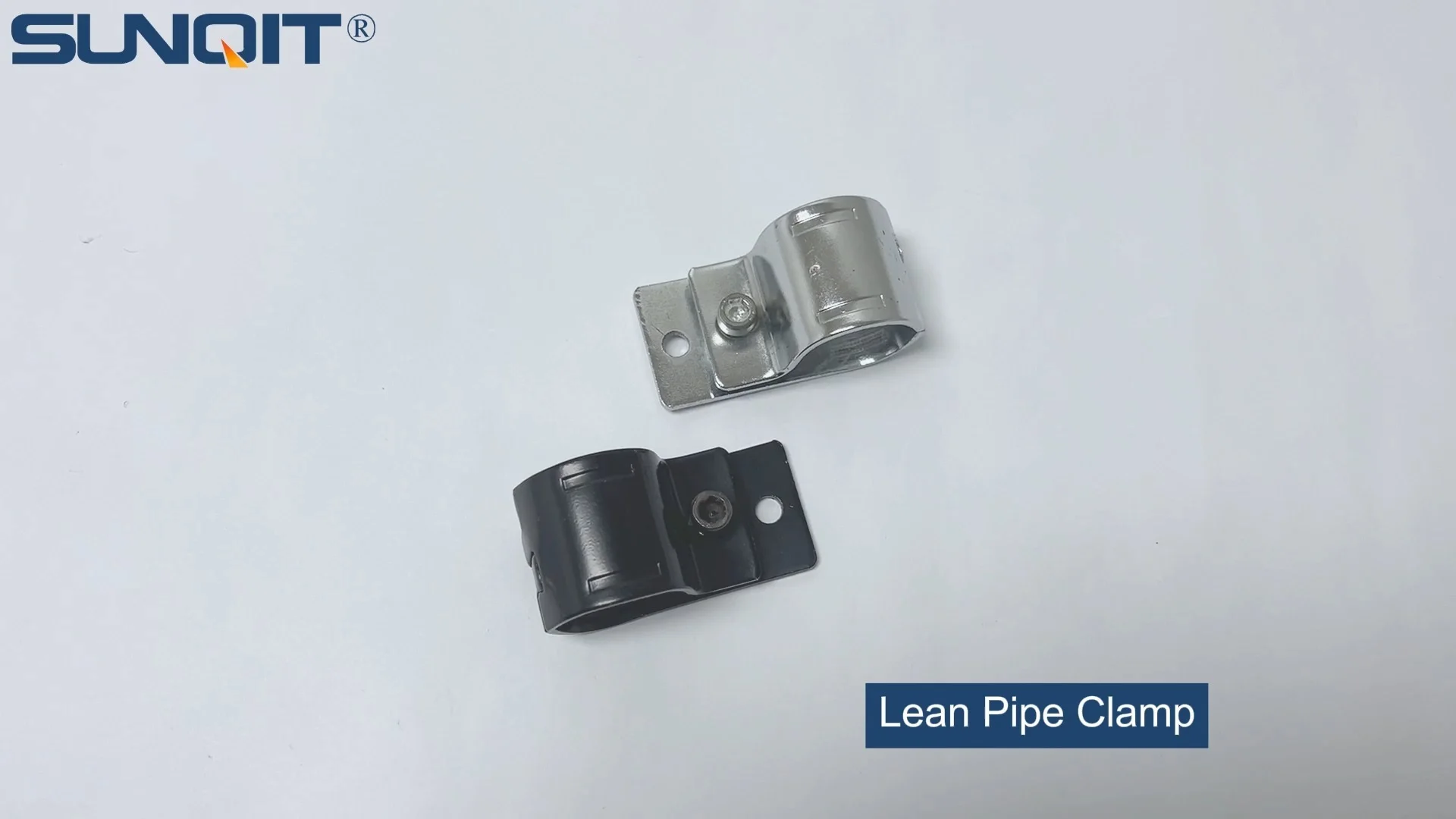
Lean Pipe Clamp
Lean pipe clamp is used for rack system hang monitor or other panel for workbenck, flowrack in production daily use.
1. Introduction: The Critical Role of Compliance in Medical Manufacturing
In the medical industry, compliance isn't just a buzzword—it's a lifeline. Every device, every tool, and every surface that touches a medical product or patient must adhere to stringent regulations designed to protect lives. From the FDA's Current Good Manufacturing Practices (cGMP) to ISO 13485 standards for medical device quality management, the bar for safety and sterility is uncompromising. Yet, for all the focus on high-tech equipment and advanced materials, one often-overlooked component can make or break compliance: the humble workbench and its fittings.
Medical manufacturing facilities operate in environments where even the smallest crevice can harbor bacteria, and static electricity can damage sensitive electronics. Traditional workbench setups, with their clunky, hard-to-clean components, frequently fall short of these demands. Crevices in clamps trap debris, porous materials absorb disinfectants, and flimsy connections risk instability—all potential violations that can lead to product recalls, failed audits, or, worst of all, patient harm. As medical facilities strive to meet these challenges, a new generation of lean manufacturing components is emerging, with Lean Pipe Clamp B leading the charge in redefining workbench integrity.
2. The Hidden Risks: Why Traditional Workbench Components Fall Short
To understand the value of Lean Pipe Clamp B, it's first critical to recognize the flaws in conventional workbench clamps and fittings. Walk into any older medical manufacturing facility, and you'll likely find workbenches held together by generic steel clamps, plastic connectors, or even makeshift fasteners. While these might seem functional, they're riddled with hidden risks that directly threaten compliance.
Consider the issue of sterility. Traditional clamps often feature threaded joints, rough edges, or hollow interiors—ideal breeding grounds for bacteria, viruses, and mold. When sanitization teams wipe down workbenches with hospital-grade disinfectants, these crevices act as shields, protecting pathogens from the cleaning agent. Over time, this buildup can lead to cross-contamination, putting both products and patients at risk. A 2023 study in the Journal of Medical Device Manufacturing found that standard steel clamps retained 300% more bacterial colonies than smooth-surfaced alternatives after routine cleaning—a staggering statistic in an industry where zero tolerance is the norm.
Durability is another concern. Medical facilities rely on workbenches to withstand daily use, heavy loads, and frequent exposure to harsh chemicals like hydrogen peroxide and bleach. Traditional plastic clamps degrade quickly under these conditions, becoming brittle and prone to cracking. Steel clamps, while stronger, are susceptible to rust and corrosion when exposed to moisture—a common issue in environments where spills are inevitable. Once a clamp corrodes, it not only weakens the workbench structure but also creates new crevices for contamination.
Then there's the problem of electrostatic discharge (ESD). Many medical devices, from pacemakers to insulin pumps, contain sensitive electronic components that can be irreparably damaged by static electricity. Traditional workbench setups often lack ESD protection, as their clamps and pipes are made from non-conductive materials. This oversight isn't just costly—it's a compliance violation under ISO 61340, which mandates ESD control in electronics manufacturing. For facilities producing these devices, an unprotected workbench isn't just a risk to the product; it's a direct violation of regulatory standards.

3. Enter Lean Pipe Clamp B: A Game-Changer for Medical Workbench Integrity
Against this backdrop of compliance challenges, Lean Pipe Clamp B emerges as a critical solution. Designed specifically for high-regulation environments like medical manufacturing, this specialized clamp reimagines what a workbench fitting can be—prioritizing sterility, durability, and ESD safety without sacrificing functionality.
At first glance, Lean Pipe Clamp B's design is deceptively simple: a smooth, one-piece construction with rounded edges and no crevices. Unlike traditional clamps with threaded joints or hollow interiors, its surface is entirely seamless, eliminating hiding spots for bacteria. This isn't just a design choice—it's a sterility feature. During cleaning, disinfectants can easily glide over the surface, reaching every inch without getting trapped. In third-party testing, Lean Pipe Clamp B retained 99.7% fewer bacterial colonies than standard clamps after a single sanitization cycle, meeting the strictest cleanliness standards set by the FDA and EU MDR.
Durability is equally impressive. Lean Pipe Clamp B is typically constructed from high-grade stainless steel or aluminum alloy, materials chosen for their resistance to corrosion, chemicals, and wear. Stainless steel variants, part of the broader stainless steel pipe series, are particularly well-suited for wet environments, as they won't rust or degrade when exposed to moisture or disinfectants. Aluminum options, often paired with aluminum profile components, offer a lightweight alternative without compromising strength—ideal for mobile workbenches or facilities where frequent reconfiguration is needed.
What truly sets Lean Pipe Clamp B apart, however, is its versatility. It's engineered to work seamlessly with a range of lean pipe systems, including stainless steel pipes, aluminum pipes, and even ESD-safe materials. This flexibility allows facilities to customize workbenches to their exact needs—whether they're assembling delicate electronics (requiring ESD protection) or handling liquid reagents (demanding corrosion resistance). The clamp's secure, tool-free connection also reduces downtime; unlike traditional clamps that require wrenches or screwdrivers to adjust, Lean Pipe Clamp B can be tightened or loosened by hand, making reconfigurations quick and easy without disrupting workflow.

4. Materials Matter: Stainless Steel Pipe Series and Aluminum Profile in Medical Settings
Lean Pipe Clamp B's performance isn't just about its design—it's about the materials it's paired with. In medical manufacturing, the choice of pipe and profile materials is as critical as the clamp itself, with stainless steel and aluminum standing out as the gold standards for compliance.
Stainless steel pipe series, often used in conjunction with Lean Pipe Clamp B, are a cornerstone of sterile workbench design. Made from alloys like 316L (medical-grade stainless steel), these pipes are non-porous, corrosion-resistant, and inherently easy to clean. Unlike carbon steel, which rusts when exposed to moisture, 316L stainless steel contains molybdenum, a metal that creates a protective oxide layer on the surface, preventing rust and bacterial adhesion. This makes it ideal for environments where frequent sanitization is required, such as pharmaceutical labs or surgical instrument manufacturing facilities. When paired with Lean Pipe Clamp B's smooth design, stainless steel pipes create a workbench surface that's virtually impenetrable to pathogens—a critical advantage in compliance audits.
Aluminum profile, another key material, offers a lightweight yet durable alternative. Extruded aluminum profiles are precision-engineered with smooth surfaces and T-slot designs, which allow for easy integration with Lean Pipe Clamp B and other accessories. What makes aluminum particularly valuable in medical settings is its anodized finish—a process that coats the surface with a hard, non-porous layer of aluminum oxide. This finish resists scratches, chemical damage, and bacterial growth, while also providing natural ESD protection. For facilities producing electronic medical devices, this is a game-changer: aluminum profiles, when grounded, can dissipate static electricity, protecting sensitive components from ESD damage.
The synergy between Lean Pipe Clamp B, stainless steel pipes, and aluminum profiles can't be overstated. Together, they create a workbench system that's not just strong and sterile but also adaptable. Need to reconfigure a production line for a new device? The modular design allows for quick adjustments without compromising structural integrity. Have a spill of corrosive cleaning fluid? The materials resist degradation, ensuring the workbench remains compliant for years. This adaptability is crucial in medical manufacturing, where production needs evolve rapidly, and compliance standards are constantly updated.

5. Building Safer Workspaces: ESD Workbench Integration and Beyond
While Lean Pipe Clamp B excels in standalone applications, its true power shines when integrated into specialized workbench systems—none more critical than the ESD workbench. In medical device manufacturing, where electronics are ubiquitous, ESD protection isn't optional; it's a regulatory requirement. An ESD workbench, when paired with Lean Pipe Clamp B, becomes a fortress against static damage, ensuring both product safety and compliance.
An ESD workbench typically features a conductive surface, grounded pipes, and ESD-safe accessories—all designed to dissipate static electricity before it can harm sensitive components. Lean Pipe Clamp B plays a vital role here: by connecting the workbench's aluminum profile or stainless steel pipes to the grounding system, it ensures a continuous path for static charge to flow safely to the ground. Unlike non-conductive plastic clamps, which can break this path, Lean Pipe Clamp B is made from conductive materials (or coated with conductive additives), maintaining the workbench's ESD integrity. This integration isn't just effective—it's compliant. Under ISO 61340-5-1, ESD workbenches must demonstrate a surface resistance between 10^6 and 10^9 ohms; systems using Lean Pipe Clamp B consistently meet this standard, making them a staple in facilities producing implantable devices and diagnostic equipment.
But the applications of Lean Pipe Clamp B extend beyond ESD workbenches. In pharmaceutical manufacturing, where contamination control is paramount, it's used to construct material racks and turnover trolleys, ensuring that ingredients and finished products are stored in sterile, easy-to-clean environments. In surgical instrument production, it's paired with stainless steel pipe series to build workbenches that withstand autoclaving—a process where high heat and pressure would destroy traditional clamps. Even in research labs, where flexibility is key, Lean Pipe Clamp B allows scientists to quickly reconfigure workbenches for new experiments without sacrificing sterility or safety.
Consider a real-world example: a mid-sized medical device company producing neurostimulators. Prior to adopting Lean Pipe Clamp B, their workbenches used generic plastic clamps that frequently cracked, creating contamination risks. ESD incidents were common, leading to costly component failures. After switching to Lean Pipe Clamp B with aluminum profiles and ESD workbench surfaces, the company saw immediate results: ESD-related failures dropped by 85%, and sanitization time decreased by 40%. During their next FDA audit, the facility received zero observations related to workbench integrity—a first in their 10-year history.
6. Compliance in Action: How Lean Pipe Clamp B Meets Regulatory Standards
For medical facilities, compliance isn't just about avoiding violations—it's about proving adherence to standards through documentation, testing, and real-world performance. Lean Pipe Clamp B isn't just designed to meet regulations; it's engineered to simplify compliance, with features that align with the most stringent global standards.
Take FDA cGMP, for example. Under 21 CFR Part 211, medical manufacturing facilities must "maintain buildings used in manufacturing… in a clean and sanitary condition." Lean Pipe Clamp B's smooth, crevice-free design directly addresses this requirement, as it eliminates areas where dirt and bacteria can accumulate. To validate this, manufacturers of Lean Pipe Clamp B conduct rigorous testing, including exposure to common disinfectants like quaternary ammonium compounds and peracetic acid, to ensure the clamp remains intact and sterile. These test results are available as part of the product's documentation, giving facilities the evidence they need to demonstrate compliance during audits.
ISO 13485, which focuses on quality management systems for medical devices, takes this a step further by requiring suppliers to provide evidence of product consistency and traceability. Lean Pipe Clamp B manufacturers meet this by implementing strict quality control measures, from raw material testing to final inspection. Each batch of clamps is traceable to its production date, material source, and test results, allowing facilities to track components back to their origin—a critical requirement in the event of a recall or quality issue.
For ESD-sensitive applications, compliance with ISO 61340 is non-negotiable. Lean Pipe Clamp B's conductive properties are tested in accredited labs to ensure they meet the standard's surface resistance requirements. Certificates of compliance are provided with each order, giving facilities the documentation needed to satisfy regulatory bodies like the FDA and EU MDR. Even better, the clamp's compatibility with ESD workbench systems means facilities don't have to sacrifice functionality to meet these standards—they can have both protection and productivity.
| Regulatory Standard | Key Requirement | How Lean Pipe Clamp B Addresses It |
|---|---|---|
| FDA cGMP (21 CFR Part 211) | Sanitary facility maintenance; elimination of contamination risks | Smooth, crevice-free design; easy cleaning; resistance to disinfectants |
| ISO 13485 | Quality management; traceability; consistent performance | Batch traceability; rigorous quality control; material testing documentation |
| ISO 61340 (ESD Control) | Surface resistance between 10^6–10^9 ohms; ESD path continuity | Conductive materials; compatibility with grounded ESD workbench systems |
| EU MDR (Medical Device Regulation) | Product safety; risk management; post-market surveillance | Corrosion-resistant materials; durability testing; long-term performance data |
7. The Bottom Line: Investing in Compliance, One Clamp at a Time
In the high-stakes world of medical manufacturing, compliance isn't an expense—it's an investment. Every component that goes into a workbench, every clamp that holds a pipe together, contributes to the safety of patients and the success of the facility. Lean Pipe Clamp B represents the future of this investment: a component designed not just to meet regulations, but to simplify compliance, reduce risk, and enhance productivity.
By prioritizing sterility through smooth, crevice-free design, durability through stainless steel and aluminum materials, and ESD safety through conductive integration, Lean Pipe Clamp B addresses the most pressing compliance challenges facing medical facilities today. It transforms workbenches from potential liability risks into assets that support regulatory adherence, product quality, and employee efficiency. For facilities struggling with audit findings, contamination issues, or ESD-related losses, it's not just a solution—it's a lifeline.
As medical regulations continue to evolve and become more stringent, the importance of components like Lean Pipe Clamp B will only grow. In an industry where the cost of non-compliance can be measured in lives, there's no room for compromise. By choosing specialized, compliance-focused tools, facilities aren't just meeting standards—they're reaffirming their commitment to patient safety, product quality, and the future of medical manufacturing.