- Company Articles
- Industry articles
- Industry standards
- Medical Industry Compliance: Two Way Lean Pipe Joint for Cleanroom Workstations

Medical Industry Compliance: Two Way Lean Pipe Joint for Cleanroom Workstations
Related Product
Two Way Lean Pipe Joint
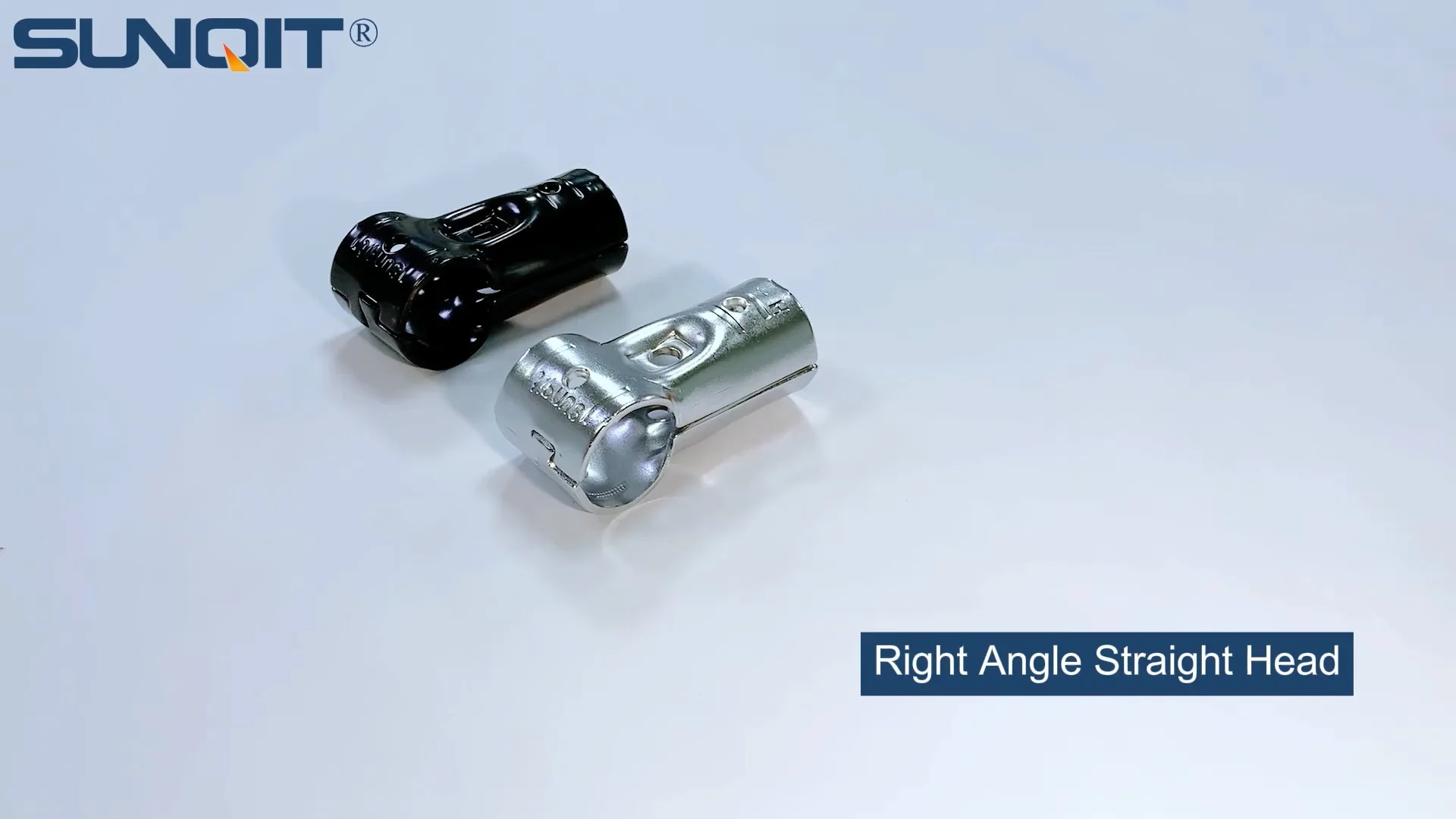
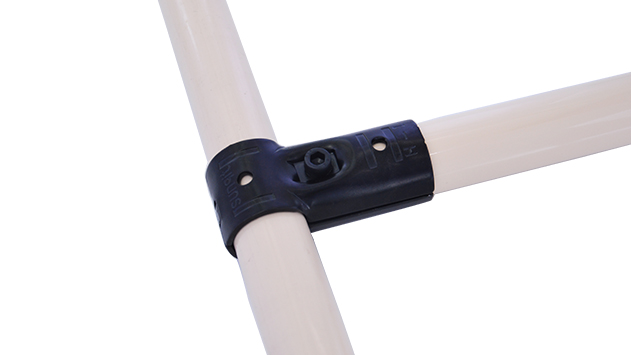
Two way lean pipe joint for 2 pcs 28MM lean pipe connection in straight angle, which used widely in workbench, flow rack, hand trolley frame connection.
The Stakes of Compliance in Medical Manufacturing
In the medical industry, compliance isn't just a box to check—it's the foundation of patient safety. Every tool, workstation, and material handling system in a medical cleanroom must adhere to rigorous standards, from ISO 13485 for quality management to FDA regulations governing medical device production. Even the smallest oversight—like a static discharge damaging a pacemaker component or a hard-to-clean workstation harboring bacteria—can have life-altering consequences. For manufacturers, this means balancing efficiency with precision, adaptability with sterility, and innovation with reliability.
Nowhere is this balance more critical than in cleanroom workstations. These are the hubs where life-saving devices are assembled, where lab technicians test samples, and where sensitive equipment is prepped for surgery. A workstation that fails to meet compliance standards isn't just a regulatory headache; it's a risk to the end user. That's why forward-thinking medical facilities are turning to modular, lean solutions—systems built to evolve with changing protocols, maintain strict sterility, and simplify the compliance journey. At the heart of these solutions lies a deceptively simple component: the two way lean pipe joint .
Nowhere is this balance more critical than in cleanroom workstations. These are the hubs where life-saving devices are assembled, where lab technicians test samples, and where sensitive equipment is prepped for surgery. A workstation that fails to meet compliance standards isn't just a regulatory headache; it's a risk to the end user. That's why forward-thinking medical facilities are turning to modular, lean solutions—systems built to evolve with changing protocols, maintain strict sterility, and simplify the compliance journey. At the heart of these solutions lies a deceptively simple component: the two way lean pipe joint .
Cleanroom Workstations: The Hidden Challenge in Compliance
Walk into any medical cleanroom, and you'll notice the meticulous attention to detail: HEPA filters humming, technicians in head-to-toe coverings, surfaces wiped down with hospital-grade disinfectants. But what about the workstations themselves? Traditional fixed workbenches, often made of heavy steel or wood, present hidden compliance risks. They're hard to disassemble for deep cleaning, impossible to reconfigure when processes change, and prone to harboring microbes in cracks and crevices. Worse, many lack built-in electrostatic discharge (ESD) protection—a critical flaw when handling sensitive electronics like MRI machine components or implantable sensors.
Consider a scenario: A medical device manufacturer switches from assembling glucose monitors to producing a new line of surgical robots. Their old workstations, bolted to the floor and designed for smaller parts, can't accommodate the larger tools and longer assembly processes required. Retrofitting them would mean shutting down production for weeks, missing tight regulatory deadlines. Meanwhile, ESD-related failures in their old setup have already led to two product recalls. The message is clear: Static, rigidity, and poor cleanability are the silent enemies of compliance.
Consider a scenario: A medical device manufacturer switches from assembling glucose monitors to producing a new line of surgical robots. Their old workstations, bolted to the floor and designed for smaller parts, can't accommodate the larger tools and longer assembly processes required. Retrofitting them would mean shutting down production for weeks, missing tight regulatory deadlines. Meanwhile, ESD-related failures in their old setup have already led to two product recalls. The message is clear: Static, rigidity, and poor cleanability are the silent enemies of compliance.
Lean Solutions: The Answer to Compliance Flexibility
Enter lean manufacturing principles, reimagined for the medical industry. Lean isn't just about cutting costs—it's about creating systems that adapt to human needs, reduce waste, and prioritize safety. In cleanrooms, this translates to modular workstations and material handling systems built with
aluminum lean pipe
and compatible components. Unlike traditional fixed structures, aluminum lean pipe systems are lightweight, corrosion-resistant, and infinitely customizable. They're also inherently ESD-safe: Aluminum's conductive properties dissipate static electricity, protecting sensitive components from damage.
But what makes these systems truly revolutionary is their connectivity. Every shelf, every tool holder, every extension relies on joints that hold the structure together while allowing for quick adjustments. Among these, the two way lean pipe joint stands out as a linchpin. It's the component that turns a simple pipe into a fully functional workstation, a static-safe assembly line, or a sterile material transport rack. Let's take a closer look at why this unassuming joint is becoming a staple in compliant medical facilities.
But what makes these systems truly revolutionary is their connectivity. Every shelf, every tool holder, every extension relies on joints that hold the structure together while allowing for quick adjustments. Among these, the two way lean pipe joint stands out as a linchpin. It's the component that turns a simple pipe into a fully functional workstation, a static-safe assembly line, or a sterile material transport rack. Let's take a closer look at why this unassuming joint is becoming a staple in compliant medical facilities.

Two Way Lean Pipe Joint: Designing for Compliance
At first glance, a two way lean pipe joint might seem like little more than a metal connector. But in reality, its design is a masterclass in compliance-focused engineering. Let's break down its key features:
Material Matters: Most two way lean pipe joints are made from high-grade aluminum or stainless steel—materials chosen for their resistance to corrosion and easy sanitization. Unlike plastic connectors, which can degrade under harsh disinfectants, aluminum joints withstand daily wipe-downs with isopropyl alcohol, hydrogen peroxide, and other medical-grade cleaners. This is non-negotiable in cleanrooms, where surfaces must be sterile at all times.
Tool-Less Assembly: Traditional workbenches require drills, screws, and adhesives—all of which create tiny gaps where bacteria can hide. Two way lean pipe joints, by contrast, lock into place with a simple twist or clamp. This tool-less design eliminates crevices, reduces assembly time, and makes reconfiguration a breeze. For a lab technician, this means adjusting a workstation's height in minutes to accommodate a new protocol, not hours.
ESD Continuity: In ESD-sensitive environments, every component must contribute to a static-dissipative path. Aluminum lean pipe and two way joints form a continuous conductive network, ensuring static electricity flows harmlessly to the ground instead of building up on work surfaces. This aligns with ANSI/ESD S20.20 standards, a critical requirement for handling electronics in medical device manufacturing.
Modularity: The "two way" in the name refers to the joint's ability to connect pipes at 90-degree angles, but many models offer adjustable angles (30°, 45°, 180°) for even greater flexibility. This means a single joint can be used to build a flat work surface, a vertical shelf, or a sloped flow rack—all without replacing components. For facilities with evolving needs (like scaling production for a new vaccine), this adaptability reduces downtime and ensures compliance during transitions.
Material Matters: Most two way lean pipe joints are made from high-grade aluminum or stainless steel—materials chosen for their resistance to corrosion and easy sanitization. Unlike plastic connectors, which can degrade under harsh disinfectants, aluminum joints withstand daily wipe-downs with isopropyl alcohol, hydrogen peroxide, and other medical-grade cleaners. This is non-negotiable in cleanrooms, where surfaces must be sterile at all times.
Tool-Less Assembly: Traditional workbenches require drills, screws, and adhesives—all of which create tiny gaps where bacteria can hide. Two way lean pipe joints, by contrast, lock into place with a simple twist or clamp. This tool-less design eliminates crevices, reduces assembly time, and makes reconfiguration a breeze. For a lab technician, this means adjusting a workstation's height in minutes to accommodate a new protocol, not hours.
ESD Continuity: In ESD-sensitive environments, every component must contribute to a static-dissipative path. Aluminum lean pipe and two way joints form a continuous conductive network, ensuring static electricity flows harmlessly to the ground instead of building up on work surfaces. This aligns with ANSI/ESD S20.20 standards, a critical requirement for handling electronics in medical device manufacturing.
Modularity: The "two way" in the name refers to the joint's ability to connect pipes at 90-degree angles, but many models offer adjustable angles (30°, 45°, 180°) for even greater flexibility. This means a single joint can be used to build a flat work surface, a vertical shelf, or a sloped flow rack—all without replacing components. For facilities with evolving needs (like scaling production for a new vaccine), this adaptability reduces downtime and ensures compliance during transitions.

Integration with ESD Workstations: Protecting Sensitive Components
Electrostatic discharge (ESD) is a silent threat in medical manufacturing. A static charge as small as 3000 volts can damage a microchip, while 10,000 volts can destroy a pacemaker's circuit board—all without the technician even noticing. That's why
ESD workstations
are mandatory in cleanrooms handling electronics, and the two way lean pipe joint plays a starring role in their construction.
Here's how it works: An ESD workstation typically includes a conductive work surface, grounded tools, and a static-dissipative floor mat. The aluminum lean pipe frame, connected via two way joints, acts as the backbone, grounding the entire structure. Because aluminum is conductive, any static charge on the work surface travels through the pipes, into the joints, and down to the facility's grounding system. There are no breaks in the path—no plastic parts to block the flow—thanks to the joint's all-metal design.
For example, consider a technician assembling a neurostimulation device. The device's circuit board is sensitive to ESD, so the workstation must maintain a charge below 100 volts. With a traditional wooden workbench, static could build up as the technician moves, potentially frying the board. But with an aluminum lean pipe workstation connected via two way joints, the charge dissipates instantly. The result? Zero ESD-related failures, and a workstation that passes compliance audits with ease.
Here's how it works: An ESD workstation typically includes a conductive work surface, grounded tools, and a static-dissipative floor mat. The aluminum lean pipe frame, connected via two way joints, acts as the backbone, grounding the entire structure. Because aluminum is conductive, any static charge on the work surface travels through the pipes, into the joints, and down to the facility's grounding system. There are no breaks in the path—no plastic parts to block the flow—thanks to the joint's all-metal design.
For example, consider a technician assembling a neurostimulation device. The device's circuit board is sensitive to ESD, so the workstation must maintain a charge below 100 volts. With a traditional wooden workbench, static could build up as the technician moves, potentially frying the board. But with an aluminum lean pipe workstation connected via two way joints, the charge dissipates instantly. The result? Zero ESD-related failures, and a workstation that passes compliance audits with ease.
Flow Racks: Streamlining Material Handling Without Compromise
Compliance isn't just about workstations—it's about the entire workflow. In medical facilities, materials must move from storage to assembly to packaging without contamination or delays. This is where
flow racks
come in, and again, the two way lean pipe joint is key to their success.
Flow racks use gravity to move materials along roller tracks, reducing the need for manual lifting and minimizing contact with surfaces. In a compliant cleanroom, they must be easy to clean, static-safe, and adaptable to different material sizes. Aluminum lean pipe flow racks, built with two way joints, check all these boxes. The joints allow for adjustable shelf heights and angles, ensuring vials, syringes, or surgical tools glide smoothly without jamming. They're also easy to disassemble for deep cleaning—critical when switching between different product lines (e.g., moving from IV bags to catheter components).
Take a pharmaceutical lab producing injectable medications. Their flow rack must hold sterile vials upright to prevent spills, while allowing technicians to access them quickly. With two way lean pipe joints, the rack can be customized with angled shelves and side rails, ensuring vials stay secure during transport. When the lab introduces a larger vial size, the joints make reconfiguring the rack a 30-minute task, not a full-day project. This agility keeps production on track while maintaining compliance with FDA guidelines for material handling.
Flow racks use gravity to move materials along roller tracks, reducing the need for manual lifting and minimizing contact with surfaces. In a compliant cleanroom, they must be easy to clean, static-safe, and adaptable to different material sizes. Aluminum lean pipe flow racks, built with two way joints, check all these boxes. The joints allow for adjustable shelf heights and angles, ensuring vials, syringes, or surgical tools glide smoothly without jamming. They're also easy to disassemble for deep cleaning—critical when switching between different product lines (e.g., moving from IV bags to catheter components).
Take a pharmaceutical lab producing injectable medications. Their flow rack must hold sterile vials upright to prevent spills, while allowing technicians to access them quickly. With two way lean pipe joints, the rack can be customized with angled shelves and side rails, ensuring vials stay secure during transport. When the lab introduces a larger vial size, the joints make reconfiguring the rack a 30-minute task, not a full-day project. This agility keeps production on track while maintaining compliance with FDA guidelines for material handling.
Workbench Customization: Building for the Human Factor
At the end of the day, compliance is about people. Technicians, nurses, and lab workers spend hours at their workstations, and a poorly designed setup can lead to errors, fatigue, and even non-compliance (e.g., skipping cleaning steps because the workstation is too hard to reach). Two way lean pipe joints address this by putting customization in the hands of the people who use the workstations.
Imagine a dental implant manufacturer where technicians alternate between sitting and standing during shifts. With a traditional fixed-height workbench, this would require two separate stations—a waste of space and resources. But with aluminum lean pipe and two way joints, the same workstation can be adjusted in minutes. Need a higher shelf for tools when standing? Loosen the joint, move the pipe, and lock it back in place. Want a lower surface for detailed assembly when sitting? The joint allows for that, too.
Accessories like tool hooks, document holders, and ESD wristband ports can also be added via two way joints, keeping the workspace organized and reducing clutter (another compliance win, as clutter increases contamination risk). And because the joints are reusable, components can be repurposed when workflows change. A shelf from an old assembly line might become part of a new testing station—reducing waste and aligning with lean principles.
Imagine a dental implant manufacturer where technicians alternate between sitting and standing during shifts. With a traditional fixed-height workbench, this would require two separate stations—a waste of space and resources. But with aluminum lean pipe and two way joints, the same workstation can be adjusted in minutes. Need a higher shelf for tools when standing? Loosen the joint, move the pipe, and lock it back in place. Want a lower surface for detailed assembly when sitting? The joint allows for that, too.
Accessories like tool hooks, document holders, and ESD wristband ports can also be added via two way joints, keeping the workspace organized and reducing clutter (another compliance win, as clutter increases contamination risk). And because the joints are reusable, components can be repurposed when workflows change. A shelf from an old assembly line might become part of a new testing station—reducing waste and aligning with lean principles.
Key Benefits of Two Way Lean Pipe Joint in Medical Cleanrooms
| Compliance Aspect | How Two Way Lean Pipe Joint Delivers |
|---|---|
| ESD Protection | All-metal design ensures continuous grounding, meeting ANSI/ESD S20.20 standards. |
| Sterility | Smooth, crevice-free surfaces resist bacterial growth and withstand harsh disinfectants. |
| Adaptability | Tool-less reconfiguration allows quick adjustments for new protocols or product lines. |
| Durability | Aluminum/stainless steel construction resists corrosion and wear, ensuring long-term reliability. |
| Audit Readiness | Modular design simplifies documentation of workstation setups and cleaning protocols. |
Case Study: MediTech Innovations Streamlines Compliance with Lean Pipe Systems
MediTech Innovations, a manufacturer of surgical robots, was struggling with compliance challenges in their cleanroom. Their old steel workstations were heavy, hard to clean, and couldn't be adjusted for new robot models. ESD failures were costing them $50,000 per recall, and FDA audits flagged their rigid flow racks as a "risk of cross-contamination."
The solution? A complete overhaul with aluminum lean pipe systems, anchored by two way lean pipe joints. They installed ESD workstations with adjustable heights, flow racks for tool transport, and modular shelving for component storage. Within six months, the results spoke for themselves:
- ESD failures dropped to zero , thanks to the continuous grounding provided by aluminum pipes and joints. - Cleaning time decreased by 40% , as the smooth surfaces of the joints and pipes were easier to wipe down. - Audit preparation time cut in half , since reconfiguring workstations for new protocols no longer required engineering approvals.
"The two way joints were a game-changer," said Sarah Lopez, MediTech's Quality Assurance Manager. "Our technicians can now adjust their workstations on the fly, and I no longer lose sleep over ESD risks. Compliance used to feel like a burden—now it feels like a natural part of how we work."
The solution? A complete overhaul with aluminum lean pipe systems, anchored by two way lean pipe joints. They installed ESD workstations with adjustable heights, flow racks for tool transport, and modular shelving for component storage. Within six months, the results spoke for themselves:
- ESD failures dropped to zero , thanks to the continuous grounding provided by aluminum pipes and joints. - Cleaning time decreased by 40% , as the smooth surfaces of the joints and pipes were easier to wipe down. - Audit preparation time cut in half , since reconfiguring workstations for new protocols no longer required engineering approvals.
"The two way joints were a game-changer," said Sarah Lopez, MediTech's Quality Assurance Manager. "Our technicians can now adjust their workstations on the fly, and I no longer lose sleep over ESD risks. Compliance used to feel like a burden—now it feels like a natural part of how we work."
Conclusion: Compliance, Simplified by Design
In the medical industry, compliance is about more than following rules—it's about protecting patients, empowering technicians, and building trust. Modular lean solutions, centered on components like the two way lean pipe joint, aluminum lean pipe, ESD workstations, and flow racks, are redefining what compliance looks like. They're proving that flexibility and safety can coexist, that adaptability doesn't mean cutting corners, and that the right tools can turn compliance from a headache into a competitive advantage.
As medical technology advances and regulations evolve, the need for adaptable, human-centered workspaces will only grow. The two way lean pipe joint, in its simplicity and versatility, is more than just a connector—it's a symbol of how thoughtful design can make compliance feel less like a barrier and more like a foundation for innovation. For medical facilities ready to embrace the future, it's not just a component; it's a commitment to putting safety, efficiency, and people first.
As medical technology advances and regulations evolve, the need for adaptable, human-centered workspaces will only grow. The two way lean pipe joint, in its simplicity and versatility, is more than just a connector—it's a symbol of how thoughtful design can make compliance feel less like a barrier and more like a foundation for innovation. For medical facilities ready to embrace the future, it's not just a component; it's a commitment to putting safety, efficiency, and people first.