- Company Articles
- Industry articles
- Industry standards
- Medical Industry Workstations: 4040E EU Standard Aluminum Profile for Hygienic Designs

Medical Industry Workstations: 4040E EU Standard Aluminum Profile for Hygienic Designs
Related Product
4040E EU Standard Aluminum Profile
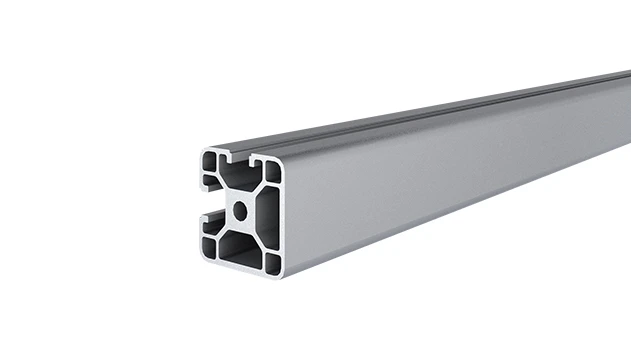
4040E is a 4.00x4.00 CM fractional 40 series square extrusion T-slot profile with two side open T-slots, two side with closed face, each side with 4.00cm face. The profile has align-a-grooves to assist in aligning connecting profiles.
In the fast-paced world of healthcare, where every second counts and precision is non-negotiable, the workstations that power labs, pharmacies, and patient care areas are more than just furniture—they're the silent partners in saving lives. These spaces demand a unique blend of hygiene, durability, and adaptability: surfaces that withstand relentless sanitization, structures that protect sensitive equipment from static, and layouts that flex with shifting needs. Enter the 4040E EU Standard Aluminum Profile—a material engineered to meet these challenges head-on, transforming medical workstations from mere tools into catalysts for safer, more efficient care.
The Unique Challenges of Medical Workstations
Medical environments are unforgiving in their demands. Unlike office desks or factory workbenches, medical workstations face a daily onslaught of requirements that can make or break operational success:
Hygiene: Beyond "Clean" to "Sterile-Ready"
From lab benches where blood samples are analyzed to pharmacy counters handling medication, surfaces must resist bacteria, viruses, and fungi. Frequent wipe-downs with harsh chemicals—alcohol, bleach, and industrial disinfectants—are non-negotiable. Porous materials or those with crevices become breeding grounds for pathogens, while delicate surfaces risk degradation under repeated cleaning. A single overlooked spot could compromise an entire batch of tests or expose patients to infection.
ESD Sensitivity: Protecting the Invisible
Static electricity, often dismissed as a minor annoyance, poses a critical threat in medical settings. Sensitive equipment like MRI machines, electronic lab analyzers, and even surgical tools rely on precise electrical components that can be fried by an electrostatic discharge (ESD) as small as 250 volts. An ESD workstation isn't a luxury here—it's a necessity to shield both equipment and the data (or lives) they support.
Adaptability: Keeping Pace with Change
A hospital lab might process COVID-19 samples in the morning and genetic tests in the afternoon; a pharmacy counter needs to shift from filling prescriptions to administering vaccines overnight. Rigid, one-size-fits-all workstations create bottlenecks, forcing staff to waste time adjusting to fixed layouts instead of focusing on patients. The ability to reconfigure shelves, adjust heights, or add mobile carts can mean the difference between smooth operations and chaos.
Durability: Built for 24/7 Use
Medical facilities run around the clock. Workstations must support heavy equipment—microscopes, centrifuges, medication dispensers—without warping or collapsing. They endure constant contact with tools, spills, and the wear of staff rushing to meet emergencies. A flimsy structure doesn't just need replacement; it risks costly downtime or, worse, accidents.
Why 4040E EU Standard Aluminum Profile Stands Out
Amid these challenges, the 4040E EU Standard Aluminum Profile emerges as a game-changer. Part of the EU's rigorous standard for aluminum extrusions, this profile is designed with modularity and performance in mind. Crafted from high-grade aluminum alloy, it undergoes a precision extrusion process that creates uniform, smooth surfaces and consistent structural integrity. But what truly sets it apart is how it addresses the unique pain points of medical environments.
Lightweight yet surprisingly strong (it can support up to 150kg per linear meter when properly installed), the 4040E profile balances mobility with stability—critical for workstations that need to move but never wobble. Its corrosion-resistant properties mean it stands up to daily sanitization without pitting or discoloration, while its non-porous surface leaves nowhere for bacteria to hide. And because it's part of a modular system, it's infinitely adaptable: add a shelf here, swap a worktop there, or reconfigure an entire lab layout in hours, not days.

Hygienic Design at Its Core
Hygiene isn't an afterthought with the 4040E profile—it's engineered into every millimeter. Let's start with its surface: unlike wood, which harbors germs in grain lines, or plastic, which can develop micro-scratches over time, aluminum's smooth, non-porous finish is a nightmare for bacteria. Wiping it down with disinfectant isn't just easy; it's effective, as there are no crevices for pathogens to cling to.
The extrusion process further enhances cleanliness. Sharp edges are rounded to prevent dust buildup, and joints (when paired with compatible aluminum profile accessories like end caps) create seamless connections that resist debris. Even in high-moisture areas like sterile processing departments, the 4040E profile won't rust or degrade, ensuring long-term hygiene without compromising structural integrity.
Consider a typical scenario: a lab technician spills a vial of reagent on their workstation. With a 4040E-based bench, they can grab a disinfectant wipe, swipe the surface, and return to work—no scrubbing, no worrying about stains, and no hidden residue. This isn't just convenient; it's a direct line to reducing infection risks and keeping workflows on track.
ESD Workstation Compatibility: Protecting Sensitive Equipment
Static electricity is a silent threat in medical settings. A single electrostatic discharge can damage a $10,000 lab analyzer or corrupt a patient's test results. That's where the 4040E profile shines as a foundation for ESD workstations. Aluminum, by nature, is conductive, but when paired with specialized ESD accessories—like grounding straps, anti-static mats, or conductive casters—it becomes a barrier against static buildup.
In practice, this means a workstation built with 4040E can safely house sensitive equipment like PCR machines or electronic pipettes. The aluminum frame acts as a pathway, channeling static charges away from delicate components and into the ground. For pharmacies compounding IV medications, where even tiny static sparks could ignite volatile substances, this isn't just a safety feature—it's a regulatory requirement.
One hospital lab in Germany reported a 40% reduction in equipment malfunctions after switching to 4040E-based ESD workstations, citing fewer instances of "mysterious" analyzer errors. As one lab manager put it: "We used to lose hours troubleshooting static-related glitches. Now, we barely think about it—we just focus on the samples."
Lean System Integration: Streamlining Healthcare Workflows
Lean principles—reducing waste, optimizing flow, and empowering teams—have revolutionized healthcare, and 4040E profiles are the perfect partners in this mission. A lean system thrives on adaptability, and the 4040E's modular design makes reconfiguration effortless. Need to add a shelf for new testing kits? Snap on an aluminum profile accessory. Want to lower a workbench to accommodate a seated technician? Adjust the height with telescoping joints. Need a mobile cart to transport supplies between exam rooms? Add casters, and you're ready to go.
Take a busy pharmacy, for example. During flu season, demand for vaccines spikes, requiring extra counter space for preparation. With a 4040E-based workstation, staff can quickly attach an extension arm and a lightweight aluminum honeycomb panel, creating instant workspace. When the season ends, the setup collapses back to its original size, freeing up room for other tasks. This flexibility doesn't just save space—it reduces the "waste" of time spent searching for tools or rearranging fixed furniture, letting staff focus on patients.
In operating rooms, where layouts change with each procedure, 4040E-based instrument carts adapt in minutes. Surgeons no longer waste precious time reaching for tools placed out of arm's reach; the cart moves with them, ensuring everything is exactly where it needs to be. It's lean healthcare in action—powered by a material that bends to the rhythm of care, not the other way around.
Aluminum Profile Accessories: Enhancing Functionality
The 4040E profile is only as versatile as the accessories that complement it, and the ecosystem of aluminum profile accessories transforms it from a simple frame into a fully customized workstation. Let's break down the essentials:
- End Caps: These plastic or rubber caps snap onto the ends of 4040E profiles, covering sharp edges to prevent cuts and blocking dust from accumulating inside the extrusion. In pediatric clinics, they're a safety must; in sterile labs, they're critical for maintaining particle-free environments.
- Hinges and Joints: Adjustable hinges allow work surfaces to fold up when not in use, while swivel joints let shelves rotate 360 degrees—perfect for accessing supplies from multiple angles without straining.
- Caster Wheels: Lockable casters turn static workstations into mobile units, ideal for transporting meds, lab samples, or equipment between departments. Heavy-duty models can support up to 80kg per wheel, ensuring stability even with loaded carts.
- Workbench Tops: Paired with aluminum honeycomb panels or ESD-safe laminates, 4040E frames create work surfaces that are lightweight, impact-resistant, and easy to sanitize. Some tops even feature built-in cable management channels to keep cords organized and out of the way.
In a genetics lab in France, technicians use 4040E profiles with adjustable-height legs and swivel joints to position microscopes at eye level, reducing neck strain during long hours of sample analysis. "We used to have to hunch over or stand on stools," one technician noted. "Now, the workstation adapts to us—not the other way around."
Comparing Materials: Why 4040E Beats the Alternatives
To truly appreciate the 4040E profile, it helps to see how it stacks up against common workstation materials. The table below compares key factors for medical environments:
| Material | Hygiene | ESD Compatibility | Durability | Customization | Weight |
|---|---|---|---|---|---|
| 4040E Aluminum Profile | Non-porous, chemical-resistant, easy to sanitize | Compatible with ESD accessories (grounding kits, mats) | Corrosion-resistant, withstands 24/7 use | Modular; endless configurations with accessories | Lightweight (3.2kg/m) |
| Stainless Steel | Highly hygienic, but prone to fingerprints | Requires specialized coatings for ESD | Durable, but heavy and hard to reconfigure | Limited; welding often required | Heavy (8kg/m) |
| Wood | Porous; harbors bacteria, warps with moisture | Not ESD-safe | Poor; scratches and stains easily | Fixed; difficult to modify | Moderate (5kg/m) |
| Plastic | Non-porous, but scratches over time | Limited ESD options | Weak; cracks under heavy loads | Basic; few accessory options | Light (2.5kg/m) |
The 4040E profile's balance of hygiene, adaptability, and strength makes it the clear choice for medical workstations. It combines the best of stainless steel's cleanliness with plastic's lightness, minus the drawbacks of either.
Future-Proofing Medical Workstations
As healthcare evolves—with telemedicine, AI-driven diagnostics, and stricter infection control standards—the 4040E profile is poised to keep pace. Its modularity means it can integrate new technologies: add a monitor arm for telehealth consultations, attach charging ports for portable devices, or incorporate smart sensors to track equipment usage. And as sustainability becomes a priority, aluminum's recyclability (it can be recycled indefinitely without losing quality) aligns with hospitals' goals to reduce their carbon footprint.
In a world where medical workstations are no longer just surfaces but hubs of care, the 4040E EU Standard Aluminum Profile isn't just a material—it's a commitment to safer, smarter healthcare. It's the difference between a workstation that struggles to keep up and one that leads the way.
Conclusion: Building a Foundation for Better Care
Medical workstations are the unsung heroes of healthcare, and their design directly impacts patient outcomes, staff well-being, and operational efficiency. The 4040E EU Standard Aluminum Profile rises to the challenge, offering a rare combination of hygiene, ESD protection, lean adaptability, and durability. When paired with the right aluminum profile accessories, it transforms into a workbench, a cart, or a lab station—whatever the moment demands.
In the end, healthcare is about people: the technicians analyzing samples, the pharmacists filling prescriptions, the nurses rushing to a patient's side. By choosing materials that work as hard as they do, we don't just build better workstations—we build better care.