- Company Articles
- Industry articles
- Industry standards
- Medical Logistics: 4040r EU Standard Aluminum Profile for Transport Systems

Medical Logistics: 4040r EU Standard Aluminum Profile for Transport Systems
Related Product
4040R EU Standard Aluminum Profile
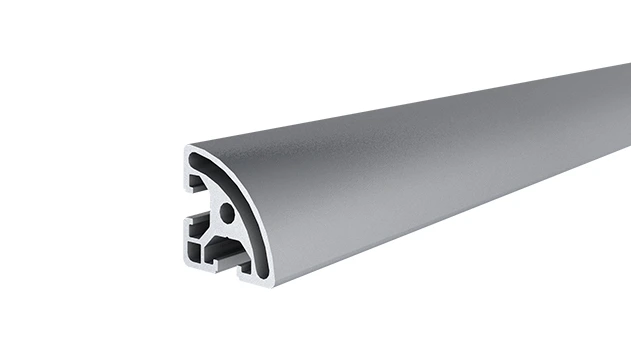
4040R is a 4.00x4.00 CM fractional 40 series square extrusion T-slot profile with two side open T-slots, each side with 4.00cm face,the other side is round face. The profile has align-a-grooves to assist in aligning connecting profiles.
In the high-stakes world of healthcare, every second counts. Whether it's a vial of life-saving medication rushing to an emergency room, a tray of sterile surgical tools being prepped for an operation, or a batch of lab samples needing precise temperature control en route to analysis, the efficiency and reliability of medical logistics can mean the difference between life and death. Yet, behind the scenes of these critical missions lies a silent hero: the infrastructure that moves these essential items seamlessly through hospitals, labs, and clinics. Today, we're diving into one such cornerstone of modern medical logistics—the 4040r EU Standard Aluminum Profile—and how it's transforming transport systems to meet the demands of 21st-century healthcare.
The Hidden Challenge in Medical Logistics: Why Infrastructure Matters
Walk into any busy hospital, and you'll notice the hustle: nurses darting between wards, doctors reviewing charts, and patients moving to appointments. What you might not see is the intricate web of logistics that keeps this chaos organized. From the moment a delivery truck unloads supplies at the loading dock to the second a nurse retrieves a medication from a unit cart, every step relies on transport systems that are fast, sterile, adaptable, and error-proof .
Traditional logistics setups in healthcare often struggle with these demands. Heavy steel racks rust in humid storage rooms, rigid conveyor belts can't be reconfigured when a new vaccine needs rushed distribution, and clunky workbenches make sorting delicate samples a tedious, error-prone task. Worse, non-sterile surfaces or hard-to-clean corners become breeding grounds for pathogens—putting patients and staff at risk. For logistics managers, the pressure is immense: balance cost, compliance with strict EU medical regulations, and the need for systems that can pivot at a moment's notice (think pandemic surges or sudden equipment shortages).
Enter aluminum profiles—a material that's been quietly revolutionizing industries from automotive to aerospace, and now, healthcare. Lightweight yet surprisingly strong, resistant to corrosion, and infinitely customizable, aluminum profiles offer a solution that checks all the boxes for medical logistics. And among these, the 4040r EU Standard Aluminum Profile stands out as a workhorse, designed to tackle the unique challenges of moving sensitive medical goods.
Meet the 4040r EU Standard Aluminum Profile: More Than Just Metal
At first glance, the 4040r might look like just another piece of industrial hardware—a sleek, silver extrusion measuring 40mm by 40mm. But that "r" in its name tells a crucial story: "rounded edges." In medical settings, sharp corners are a hazard. A stray elbow bumping a rack could send glass vials crashing, or a lab technician's glove catching on a jagged edge might tear, compromising sterility. The 4040r's smooth, rounded edges eliminate these risks, making it safer for both workers and the fragile items they handle.
But safety is just the start. What truly sets the 4040r apart is its adherence to EU standards. In healthcare, compliance isn't optional—regulations like ISO 13485 (for medical devices) and EN 1090 (for structural steel and aluminum) demand materials that meet strict quality, durability, and traceability benchmarks. The 4040r is manufactured from high-grade 6063-T5 aluminum alloy, known for its excellent mechanical properties and corrosion resistance. This isn't just about ticking boxes; it's about ensuring that a transport system built today will still be reliable five years from now, even in the humid, temperature-fluctuating environments of hospitals.
Another hidden strength? Its T-slot design. Running along the length of the profile are grooves (or "T-slots") that act as universal attachment points. This means you can bolt on accessories, adjust components, or reconfigure the entire system without welding or drilling new holes. For a hospital that suddenly needs to expand its vaccine cold storage or rearrange a pharmacy's picking area, this flexibility is game-changing. As one logistics manager at a Berlin hospital put it: "With traditional steel systems, changing a shelf height meant calling a contractor. With the 4040r, my team can do it in an hour with an Allen wrench. That's the difference between adapting to a crisis and falling behind."

Building Blocks of Success: Aluminum Profile Accessories for the 4040r
A profile is only as good as the accessories that bring it to life. The 4040r's versatility shines when paired with a range of aluminum profile accessories, each designed to solve specific logistical challenges. Let's break down the essentials:
| Accessory Type | Function | Material | Why It Matters in Medical Logistics |
|---|---|---|---|
| 90° Aluminum Profile Connector | Joins two 4040r profiles at a right angle, forming stable corners for racks, workbenches, or frames. | Aluminum Alloy (6061-T6) | Creates rigid, wobble-free structures—critical for preventing spills when transporting liquids like blood samples or reagents. |
| 4040 Aluminum Profile End Cap | Covers the open ends of the profile to block dust, debris, and moisture. | Food-Grade Nylon | Seals off T-slots to maintain sterility; prevents small particles from contaminating sterile zones in operating rooms. |
| T-Slot Rubber Seal Cover | Fits into T-slots to create a smooth, sealed surface; available in medical-grade silicone. | Antimicrobial Silicone | Eliminates crevices where bacteria could hide; easy to wipe clean with disinfectants, reducing infection risks. |
| Gusset Alp 4040 | Triangular bracket that reinforces joints, increasing load capacity. | Galvanized Steel | Supports heavy loads like MRI machine parts or bulk medication cartons without bending—vital for long-term durability. |
| Adjustable Foot Base | Attaches to the bottom of profiles to level racks or workbenches on uneven floors. | Aluminum with Rubber Pad | Prevents wobbling in transport carts, ensuring IV bags or fragile lab slides stay secure during movement. |
Take, for example, the T-slot rubber seal cover. In a lab handling COVID-19 samples, even a tiny dust particle in a T-slot could compromise test accuracy. By sealing these slots with antimicrobial silicone, hospitals can maintain ISO 7 cleanroom standards without sacrificing the profile's adaptability. Similarly, the adjustable foot base ensures that roller tracks—another key component of transport systems—stay perfectly level, so samples glide smoothly without tipping, even on the slightly uneven concrete of older hospital corridors.
Roller Tracks: The "Conveyor Belt" of Modern Medical Transport
If the 4040r is the backbone of medical logistics infrastructure, then roller tracks are the muscles that move the load. These systems—composed of wheels or rollers mounted on aluminum frames—turn static storage into dynamic transport lines, allowing items to flow effortlessly from point A to point B with minimal manual effort. And when paired with 4040r profiles, they become a match made in efficiency heaven.
Imagine a pharmacy in a large hospital. Each day, hundreds of medication orders need to be filled and delivered to patient wards. In the past, a technician might spend hours pushing heavy carts up and down corridors, risking delays or medication mix-ups. With a 4040r-based roller track system, however, the process is transformed: labeled medication bins slide down a gently inclined track from the pharmacy counter to a dispatch area, where a nurse simply grabs the bin and heads to the ward. The rollers reduce friction, so even a fully loaded bin glides with a light push—saving time and reducing staff fatigue.
But roller tracks in medical settings aren't one-size-fits-all. For delicate items like blood vials, soft rubber wheels prevent jostling. For heavier loads, like surgical instrument trays, steel rollers with ball bearings ensure smooth movement without squeaking (a must in noise-sensitive areas like ICUs). The 4040r's T-slots make it easy to mount these tracks at custom angles—whether a steep 15-degree incline for quick dispatch or a gentle 5-degree slope for fragile samples. And because the tracks are modular, adding an extra section during flu season (when medication demand spikes) is as simple as bolting on a new 4040r segment and attaching rollers.
Perhaps the most critical advantage? Sterility. Unlike fabric belts or plastic conveyors that trap dirt, roller tracks built with 4040r profiles and aluminum accessories can be wiped down with hospital-grade disinfectants daily. No more hidden corners for bacteria to lurk—just smooth, clean surfaces that meet the strictest hygiene standards. As one infection control nurse noted: "We used to spend hours disassembling old conveyor belts to clean under them. Now, with the aluminum roller tracks, a quick wipe with a Clorox wipe does the job. It's one less thing to worry about during a shift."
Workbenches: Where Precision Meets Ergonomics
Beyond transport, the heart of medical logistics lies in the workstations where items are sorted, labeled, packed, and inspected. Here, the 4040r shines as the foundation for custom workbenches—ergonomic, sterile, and tailored to the unique needs of healthcare tasks.
Consider a lab technician preparing PCR tests. Their workbench needs to be at the perfect height to avoid hunching, stable enough to prevent during pipetting, and organized to keep reagents, pipettes, and sample tubes within arm's reach. A 4040r-based workbench ticks all these boxes. The aluminum frame is lightweight enough to adjust (height, width, depth) but sturdy enough to support heavy lab equipment like centrifuges or microscopes. Add a laminate top with a heat-resistant, chemical-proof surface, and you've got a workstation that can handle everything from boiling water baths to spilled ethanol.
But customization doesn't stop there. T-slots along the workbench's backrail let technicians add accessories like tool hooks for lab coats, LED task lights to reduce eye strain, or even small roller tracks to slide sample racks from one station to the next. In a pharmacy, a 4040r workbench might include built-in drawers for medication storage, while in a surgical prep room, it could have hanging rails for sterile instrument packs. The key is adaptability—no two healthcare tasks are the same, and neither should their workbenches be.
Ergonomics, too, plays a starring role. Repetitive strain injuries are a silent epidemic among healthcare staff, with nurses and lab technicians often suffering from back pain or carpal tunnel syndrome due to poorly designed workspaces. A 4040r workbench, however, can be fine-tuned to each user: adjustable height via telescoping legs, tilting surfaces to reduce neck strain, and footrests to promote better posture. "I used to go home with a sore back every night from leaning over my old steel workbench," says a lab tech in Amsterdam. "Now, my 4040r bench adjusts to my height, and I can even tilt the surface when I'm pipetting for hours. It's like night and day."
Lean System Integration: Doing More with Less
In healthcare, resources are always tight. Budgets are stretched, staff are overworked, and space is at a premium. This is where lean system principles—focused on eliminating waste and maximizing value—come into play. And the 4040r is a natural fit for lean medical logistics.
Lean systems thrive on three principles: flow (minimizing delays), pull (producing only what's needed), and perfection (continuous improvement). The 4040r supports all three. Take "flow," for example: roller tracks built with 4040r profiles ensure that items move directly from storage to point of use, eliminating unnecessary steps (like storing supplies in a distant warehouse). "Pull" is enabled by modularity—if a ward needs more bandages, the roller track system can be adjusted to send only the required amount, reducing overstock and waste. And "perfection"? The ability to reconfigure workbenches or tracks based on feedback means the system gets better over time.
A real-world example: A children's hospital in Madrid was struggling with delayed surgical tool deliveries. The old system involved tools being sterilized in a central decontamination room, then stored in a distant closet until needed. By installing a 4040r roller track from the decontamination room directly to each OR prep area, and adding a 4040r workbench at the OR entrance for final inspection, the hospital cut delivery times by 45%. Staff no longer wasted time walking to the closet—tools arrived "just in time" via the track. The result? Surgeries started on schedule, and nurses reported feeling less stressed about last-minute scrambles for missing instruments.
Waste reduction is another lean win. Traditional steel systems are often "overbuilt"—heavy, fixed, and impossible to repurpose. When a hospital upgrades its layout, old steel racks end up in landfills. The 4040r, however, is 100% recyclable, and its modular design means components can be repurposed elsewhere. A rack from a closed ward might become a storage system in the lab, or a roller track segment from the pharmacy could be reused in the ER. This not only saves money but aligns with healthcare's growing focus on sustainability—a win for both the planet and the bottom line.
The Human Impact: When Infrastructure Supports Care
At the end of the day, medical logistics isn't just about moving things—it's about supporting people. Every minute saved by a faster roller track, every error prevented by a well-organized workbench, and every infection avoided by a sterile surface translates to better care for patients and less burnout for staff.
Consider Maria, a nurse in a busy pediatric ward. Before her hospital upgraded to 4040r-based transport systems, she spent 2 hours each shift fetching medications from the pharmacy—a round trip that took her away from her young patients. Now, with a roller track delivering medication bins directly to the ward, she spends that time comforting scared kids, answering parents' questions, and monitoring vital signs. "It sounds small, but those two hours mean the world," she says. "I didn't become a nurse to push carts. I became one to care for kids. Now, the system lets me do that."
Or take Dr. Raj, a lab director overseeing COVID-19 testing during the pandemic. When cases surged, his lab needed to triple its testing capacity overnight. Thanks to the 4040r workbenches and roller tracks, his team reconfigured the lab layout in a single weekend, adding extra workstations and streamlining sample flow. "We went from processing 200 tests a day to 600 without missing a beat," he recalls. "The aluminum system didn't just keep up—it adapted with us. That's how we saved lives."
These stories highlight a truth often overlooked: great healthcare depends on great infrastructure. The 4040r EU Standard Aluminum Profile might not make headlines, but it's the quiet partner that empowers healthcare workers to do their best work. It's the reason a medication arrives on time, a sample stays intact, and a nurse can focus on what matters most—their patients.
Looking Ahead: The Future of Medical Logistics with Aluminum Profiles
As healthcare evolves, so too will the demands on medical logistics. From AI-driven inventory management to drone deliveries of emergency supplies, the next decade promises exciting innovations. And the 4040r is poised to be at the center of this transformation.
One emerging trend is "smart" transport systems, where sensors embedded in 4040r profiles and roller tracks monitor flow in real time. Imagine a roller track that alerts staff when a medication bin is stuck, or a workbench with built-in weight sensors that automatically reorder supplies when stock runs low. With the 4040r's T-slots, adding these smart components (like IoT sensors or RFID readers) is as simple as attaching a new accessory—no need for costly overhauls.
Sustainability will also take center stage. As hospitals aim to reduce their carbon footprints, the recyclability of aluminum profiles will become even more critical. Manufacturers are already exploring ways to make 4040r profiles from recycled aluminum, further lowering their environmental impact. And with energy costs rising, the lightweight nature of aluminum will reduce the energy needed to move transport carts and adjust systems—another win for green healthcare.
Finally, global health crises (like the COVID-19 pandemic) have underscored the need for agile logistics. When a new variant emerges or a natural disaster disrupts supply chains, hospitals need to adapt quickly. The 4040r's modularity makes it the ideal platform for rapid response—whether setting up a temporary vaccine clinic in a parking lot or reconfiguring a lab to test for a new pathogen. As one disaster response coordinator put it: "We can't predict the next crisis, but we can build systems that flex with it. The 4040r gives us that flexibility."
Conclusion: The Unsung Hero of Healthcare Logistics
In the grand scheme of healthcare, the 4040r EU Standard Aluminum Profile may seem like a small detail. But in the daily grind of hospitals and labs, it's the difference between chaos and order, delay and timeliness, error and precision. It's the material that builds systems that don't just move goods—but support lives.
From its rounded edges that protect fragile supplies to its T-slots that enable endless customization, from its compatibility with roller tracks that speed up delivery to its role in lean systems that eliminate waste, the 4040r embodies the qualities healthcare demands: reliability, adaptability, and a relentless focus on improvement. It's not just a profile; it's a promise—that the infrastructure behind medical logistics will always rise to meet the challenge of caring for others.
So the next time you walk through a hospital, take a moment to notice the racks, the tracks, and the workbenches. Chances are, you'll spot the sleek silver lines of aluminum profiles hard at work. And remember: behind every patient healed, every test run, and every life saved, there's a system built on innovation—one 4040r profile at a time.