- Company Articles
- Industry articles
- Industry standards
- Medical Storage Racks: 4040r EU Standard Aluminum Profile Compliance Standards

Medical Storage Racks: 4040r EU Standard Aluminum Profile Compliance Standards
Related Product
4040R EU Standard Aluminum Profile
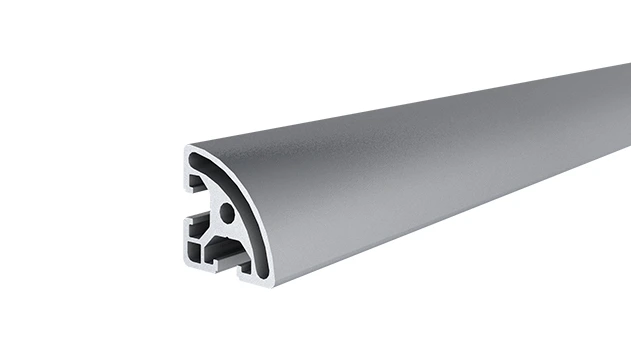
4040R is a 4.00x4.00 CM fractional 40 series square extrusion T-slot profile with two side open T-slots, each side with 4.00cm face,the other side is round face. The profile has align-a-grooves to assist in aligning connecting profiles.
Walk into any hospital, clinic, or lab, and you'll quickly realize that storage isn't just about tucking things away—it's the backbone of daily operations. From life-saving medications to sterile surgical tools, every item needs a home that's safe, accessible, and compliant with strict regulations. That's where medical storage racks come in, and not just any racks—those built with precision, using materials that meet the highest standards. Today, we're diving deep into one such material that's revolutionizing medical storage: the 4040r EU standard aluminum profile. Let's unpack why compliance matters here, what makes this profile stand out, and how it shapes the storage systems that keep healthcare spaces running smoothly.
Why Compliance Isn't Just a "Nice-to-Have" in Medical Storage
Let's start with the obvious: in healthcare, cutting corners isn't an option. A misplaced vial, a contaminated instrument, or a rack that buckles under the weight of supplies can have dire consequences—for patients, staff, and the facility itself. That's why regulatory bodies like the EU's Medical Device Regulation (MDR) and ISO 13485 set strict rules for everything from how supplies are stored to the materials used in storage systems. Compliance here isn't just about avoiding fines; it's about ensuring patient safety, reducing errors, and maintaining the integrity of medical processes.
Think about it: medical storage racks are in constant contact with sensitive items. They need to resist corrosion from cleaning agents, withstand frequent sanitization, and avoid sharp edges that could tear sterile packaging. They also need to be adaptable—healthcare needs change, and a storage system that can't grow or reconfigure with those needs becomes a liability. This is where the right materials make all the difference, and why the 4040r EU standard aluminum profile has become a go-to choice for forward-thinking healthcare facilities.
The 4040r EU Standard Aluminum Profile: What Makes It a Game-Changer?
First things first: what *is* a 4040r aluminum profile? Let's break down the name. "4040" refers to its dimensions—40mm by 40mm, a versatile size that balances strength with flexibility. The "r" stands for "rounded," meaning the edges are curved (unlike sharp, angular profiles), which is a small detail with big implications for safety. No more snags on gloves or sterile wraps, and easier cleaning since there are no hard-to-reach corners where bacteria could hide. But the real magic is in the "EU standard" part—this profile isn't just designed for function; it's engineered to meet rigorous European standards for quality, safety, and performance.
Standards That Matter: EN 1090, ISO 13485, and Beyond
The 4040r profile doesn't just *claim* compliance—it's tested and certified against standards that leave no room for ambiguity. Take EN 1090, for example, which sets requirements for structural steel and aluminum components in construction. For medical storage, this ensures the profile can handle the weight of heavy items (think stacks of medication boxes or bulk medical devices) without warping or failing. Then there's ISO 13485, the gold standard for quality management systems in medical device manufacturing. Even if the rack itself isn't a "medical device," its role in storing devices means it must align with these standards to prevent contamination or damage.
But compliance goes beyond strength and safety. EU standards also focus on sustainability and hygiene. Aluminum is naturally resistant to rust and corrosion, which is critical in environments where racks are wiped down with harsh disinfectants daily. Unlike steel, it doesn't require painting or coating to stay protected, reducing the risk of chipping (and thus, contamination from flaking paint). Plus, aluminum is fully recyclable, aligning with the EU's push for eco-friendly healthcare practices—a win for both the planet and facility budgets long-term.
| Standard | Key Requirements | How 4040r Profiles Meet Them |
|---|---|---|
| EN 1090 | Structural integrity, load-bearing capacity, material traceability | Engineered with high-grade aluminum alloys; tested for static/dynamic loads; batch numbers ensure full traceability. |
| ISO 13485 | Hygienic design, resistance to cleaning agents, low contamination risk | Rounded edges prevent bacterial buildup; corrosion-resistant surface withstands frequent sanitization. |
| EU MDR (2017/746) | Compatibility with medical devices, risk mitigation for storage-related errors | Stable, non-reactive material ensures no chemical transfer to stored items; modular design reduces misplacement risks. |
| EN ISO 11135 | Compatibility with ethylene oxide (EtO) sterilization | Aluminum does not absorb EtO residues; maintains structural integrity post-sterilization cycles. |

Designing for Healthcare: How 4040r Profiles Shape Practical, Patient-Centric Storage
Compliance is the foundation, but what makes the 4040r profile truly indispensable is how it translates standards into real-world usability. Let's talk about modularity—healthcare spaces are rarely "one-size-fits-all." A busy ER might need tall, narrow racks for quick access to trauma supplies, while a lab might require shorter, wider units for delicate samples. The 4040r profile, with its T-slot design, makes customization a breeze. Attach a shelf here, add a divider there, or even integrate a workbench for prepping surgical kits—all without welding or complex tools. This flexibility means facilities can adapt their storage as needs change, whether that's scaling up for a flu season or reconfiguring after a renovation.
Aluminum Profile Accessories: The Unsung Heroes of Compliance
A profile is only as good as the accessories that bring it to life. That's where aluminum profile accessories step in—think connectors, end caps, and brackets, all designed to work seamlessly with the 4040r system. Take end caps, for example: they snap onto the ends of profiles to cover sharp edges (though the "r" in 4040r already minimizes this risk) and prevent dust or debris from collecting inside the T-slots. Then there are the connectors—lightweight but strong, they lock profiles together without compromising the material's integrity. Even something as simple as a bracket for mounting a flow rack (yes, flow racks!) becomes compliance-friendly when it's made from the same EU-standard aluminum, ensuring the entire system meets the same safety benchmarks.
Flow racks, by the way, are a perfect example of how this profile enhances efficiency. In pharmacies, for instance, medications need to be rotated so the oldest stock is used first (FIFO—first in, first out). A flow rack built with 4040r profiles and roller tracks lets boxes glide forward as the front one is removed, reducing the chance of expired meds and cutting down on staff time spent rearranging. And because the roller tracks and connectors are part of the same aluminum system, there's no risk of mismatched parts weakening the structure or creating gaps where dust (or worse, bacteria) can hide.
Workbenches: Where Storage Meets Action
Storage racks don't exist in isolation—they're often paired with workbenches where staff prep supplies, assemble kits, or label medications. Here again, the 4040r profile shines. A workbench frame built with these profiles is sturdy enough to support heavy equipment (like centrifuges or compounding tools) but light enough to reposition if needed. Add a non-porous aluminum top, and you've got a surface that's easy to sanitize between tasks, reducing cross-contamination risks. Some workbenches even integrate small storage shelves or bins, all attached via those same T-slots, creating a cohesive workspace where everything has its place.
From Theory to Practice: How Clinics Are Using 4040r Racks Today
Let's ground this in a real scenario. Imagine a mid-sized hospital pharmacy that was struggling with disorganized medication storage. Their old steel racks were rusting at the corners, shelves were warping under heavy pill bottles, and staff spent 20 minutes each shift just hunting for the right meds. After switching to 4040r aluminum profile racks with flow rack attachments, here's what changed: first, the rust disappeared—no more worrying about corrosion from daily cleaning. Second, the flow racks made FIFO a breeze; nurses now grab the front box without rummaging, cutting prep time by 15%. And third, the modular design let them add dividers for different drug classes (antibiotics, painkillers, etc.), reducing mix-ups. During their next regulatory audit, the pharmacy sailed through—no citations for non-compliant storage, just praise for their "exemplary organization."
Another example: a surgical unit that needed storage for sterile instruments. The 4040r racks, paired with aluminum honeycomb panels for shelving, provided a smooth, non-porous surface that could withstand autoclaving (high-heat sterilization) without warping. The rounded edges meant no snags on sterile packaging, and the lightweight design made it easy to move racks closer to operating tables during procedures. It's these small, practical wins that add up to safer, more efficient care.
Choosing the Right Partner: Why Your Aluminum Profile Supplier Matters
So, you're sold on the 4040r profile—now what? The next step is finding a supplier who doesn't just sell aluminum, but understands healthcare compliance. Look for suppliers who can provide certificates of conformity (CoC) for their 4040r profiles, proving they meet EN 1090 and ISO 13485 standards. Ask about their quality control processes: do they test each batch for strength and corrosion resistance? Can they help customize a rack system that fits your specific space, whether that's a narrow corridor or a high-ceilinged storage room?
A good supplier will also offer more than just profiles—they'll have a full lineup of aluminum profile accessories, from brackets to casters, ensuring every part of your storage system is compliant. And don't overlook after-sales support. If a shelf needs adjusting or a connector wears out, you want a supplier who can quickly send a replacement that matches the original specs. After all, compliance is an ongoing commitment, not a one-time checkmark.
Wrapping Up: Compliance, Care, and the Role of the Right Materials
At the end of the day, medical storage racks are more than metal and shelves—they're a promise to patients that their care is built on safety, precision, and attention to detail. The 4040r EU standard aluminum profile embodies that promise, blending compliance with practicality to create storage systems that don't just meet regulations, but elevate how healthcare spaces operate. From its rounded edges to its corrosion-resistant surface, from its modular design to its recyclable nature, every aspect is engineered with one goal in mind: making healthcare better.
So, the next time you walk into a clinic and see a neat row of labeled shelves, or a nurse quickly grabbing a medication from a flow rack, take a moment to appreciate the materials behind it. Chances are, there's a 4040r profile in there, quietly doing its job—keeping supplies safe, staff efficient, and patients healthy. And in healthcare, that's the highest compliance standard of all.