- Company Articles
- Industry articles
- Industry standards
- Medical Workstation Redesign: Success with 2040 EU Standard Aluminum Profile

Medical Workstation Redesign: Success with 2040 EU Standard Aluminum Profile
Related Product
2040 EU Standard Aluminum Profile
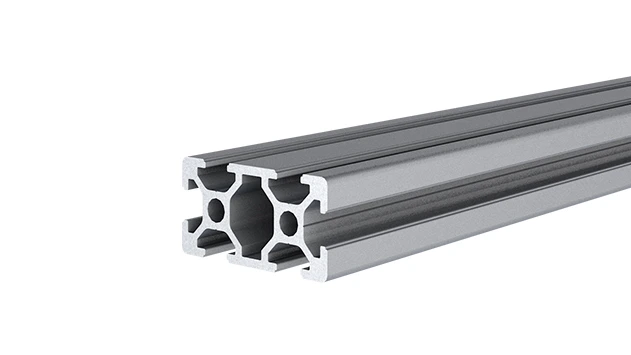
2040 is a 2.00 x 4.00CM fractional 20 series square extrusion T-slot profile with four open T-slots, two side with 2.00cm face, the other side with 4.00cm face. The profile has align-a-grooves to assist in aligning connecting profiles.
Walk into any busy medical lab or hospital prep room, and you'll notice something critical yet often overlooked: the workstations. These surfaces are where nurses prepare medications, technicians analyze samples, and surgeons organize tools before procedures. But what if the very furniture supporting these life-saving tasks is holding the team back? That's exactly what the team at Riverside Medical Center discovered last year—and their solution, centered on the 2040 EU Standard Aluminum Profile, might just change how we think about healthcare workspaces.
The Breaking Point: When "Good Enough" Workstations Become a Problem
Riverside's lab had been using traditional wooden workbenches for over a decade. At first glance, they seemed functional: sturdy, familiar, and cheap to replace. But over time, the cracks began to show—literally. The wooden surfaces warped under constant exposure to disinfectants, creating tiny crevices where bacteria could hide. The fixed shelves meant that when the lab upgraded to a new, bulkier centrifuge, there was nowhere to put it without rearranging the entire room. Worse, during peak hours, technicians were tripping over immovable steel cabinets, and the lack of electrostatic discharge (ESD) protection had already caused two expensive equipment malfunctions.
"We were band-aiding issues instead of solving them," says Maya Patel, the lab's operations manager. "A tech would complain about not having enough counter space, so we'd add a rickety rolling cart. Then someone else needed better lighting, so we'd clamp a lamp to the bench. It was chaos—until we realized the problem wasn't the tools, but the foundation they sat on."
That's when the team started researching alternatives. They considered steel workstations (too heavy and hard to modify), plastic (not durable enough for daily scrubbing), and even custom-built cabinetry (prohibitively expensive and permanent). Nothing felt right—until they stumbled upon aluminum extrusion profiles.
Why Aluminum Extrusion Profile? The "Aha!" Moment
If you're not familiar with aluminum extrusion profiles, think of them as the ultimate building blocks for workspaces. These are lightweight, hollow aluminum bars with precision-engineered T-slots running along their length—grooves that let you slide in accessories like shelves, brackets, or even wheels, no drilling or welding required. And the 2040 EU Standard Aluminum Profile, specifically, is a game-changer. At 20mm wide and 40mm tall, it strikes the perfect balance between strength and versatility, making it ideal for medium-duty applications like medical workstations.
"What sold us was the T-slot design," Maya explains. "Traditional workbenches are fixed—what you see is what you get. With aluminum extrusion, we could start with a basic frame and then add, remove, or reposition components as our needs changed. Need a shelf for that new centrifuge? Snap on a bracket. Want to lower the height for a seated technician? Adjust the legs. It's like building with giant, industrial-grade LEGO bricks."
But aluminum's benefits go beyond flexibility. Unlike wood, it's non-porous, so disinfectants can't seep in and cause warping or bacterial growth. Unlike steel, it's corrosion-resistant, which is crucial in environments where spills (of everything from saline to blood) are common. And because it's lightweight, even a fully loaded workstation can be moved by two people—no need for heavy machinery when rearranging the lab.

Building the Perfect Workstation: Aluminum Profile Accessories That Make It Happen
A profile alone is just a metal bar—it's the aluminum profile accessories that turn it into a customized workstation. Riverside's team worked with a supplier to pick the right components, and the options were surprisingly intuitive. Here's how they came together:
1. The Base: 2040 Aluminum Extrusion Profile
The main frame of the workstation is built from 2040 profiles. "We chose this size because it's strong enough to hold up to 200kg per linear meter, but still slim enough to fit in our tight lab layout," Maya notes. The T-slots run along all four sides, so accessories can be attached from any angle—a feature that came in handy when mounting a side rail for hanging tools.
2. Connectors: The Glue That Holds It All Together
Aluminum profile connectors are where the magic of customization happens. Riverside used two types: internal rotatory aluminum joints and 90° aluminum profile connectors. The internal rotatory joints let them create adjustable shelves that could tilt 30°—perfect for reading the dials on equipment that's usually flat. The 90° connectors, meanwhile, formed the corners of the frame, locking the profiles together with a simple hex key (no bolts or welding needed).
3. Finishing Touches: End Caps, Casters, and ESD Protection
Small details made a big difference. Aluminum profile end caps covered the sharp edges of the T-slots, preventing snags on gloves or lab coats. Heavy-duty caster wheels (with brakes!) turned the workstation into a mobile unit, so it could be rolled to the specimen delivery area during morning rush hour and back to the analysis zone by afternoon. And to address the ESD issue, they added ESD workstation accessories: black ESD wheels (which dissipate static electricity) and a conductive mat on the work surface. "We tested it with a static meter, and the difference was night and day," Maya says. "No more zaps when someone touches the centrifuge—and no more damaged equipment."
| Feature | Traditional Wooden Workstation | 2040 Aluminum Profile Workstation |
|---|---|---|
| Material Durability | Warped after 1–2 years of disinfectant use; prone to cracks. | Non-porous aluminum resists warping and corrosion; lasts 10+ years with minimal maintenance. |
| Flexibility | Fixed shelves and layout; cannot be modified without rebuilding. | T-slots allow adding/removing accessories (shelves, hooks, wheels) in minutes. |
| ESD Protection | None; static buildup risks damaging sensitive equipment. | Compatible with ESD accessories (wheels, mats) to dissipate static safely. |
| Cleaning & Sterility | Porous wood harbors bacteria in cracks; hard to sanitize. | Smooth aluminum surface wipes clean with disinfectants; no hidden crevices. |
| Mobility | Immovable; requires disassembly to relocate. | Optional caster wheels allow easy movement (even with heavy equipment). |
From Blueprint to Bench: The Implementation Journey
Redesigning a workstation might sound daunting, but Riverside's experience proved it's more about planning than engineering. Here's how they pulled it off in six weeks:
Step 1: Audit the Lab's Needs (Yes, Even the "Small" Ones)
The team started by asking everyone—technicians, nurses, even the night shift cleaners—what they needed. "The cleaners mentioned that the old workbenches had sharp corners that scratched floors; the techs wanted a shelf that could hold a laptop at eye level; the nurse manager needed a way to lock the workstation when not in use," Maya recalls. "We listed every request, no matter how trivial, and used it to design the prototype."
Step 2: Partner with a Supplier Who "Gets" Healthcare
Not all aluminum profile suppliers are created equal. Riverside chose one with experience in medical settings, which meant they could recommend ESD-compliant accessories and even shared case studies of similar labs. "Our supplier didn't just sell us parts—they helped us troubleshoot," Maya says. "When we worried about the caster wheels marking the floor, they suggested soft rubber, ESD-safe options. When we needed the workbench to support a 150kg autoclave, they calculated the profile thickness to ensure it wouldn't bend."
Step 3: Build a Prototype (and Test It Ruthlessly)
The first prototype took two days to assemble—no power tools required, thanks to the T-slot connectors. Then the team put it through a week of "torture tests": scrubbing it with hospital-grade disinfectant 10 times a day, stacking it with weights to simulate equipment, and even having technicians "accidentally" bump into it (to test stability). The only adjustment needed? Adding a second crossbar under the work surface for extra support. "We wanted to be sure it could handle the chaos of a real lab," Maya laughs.
Step 4: Roll Out (and Let the Team Adapt)
Once the design was finalized, the lab replaced three workstations in one weekend. The best part? The team didn't need training to use the new setups. "Within an hour, a tech had added a cup holder using a spare bracket," Maya says. "Another moved a shelf up by 6 inches to fit her microscope. It was like watching kids with a new puzzle—everyone wanted to make it their own."
Case Study: 6 Months Later, the Results Speak for Themselves
Problem: Riverside Medical Center's lab struggled with inflexible, unsanitary workstations that hindered workflow and risked equipment damage.
Solution: replace traditional workbenches with custom setups built from 2040 EU Standard Aluminum Profile, paired with ESD accessories and adjustable components.
Outcomes:
- 30% faster setup time for daily tasks (no more rearranging tools to fit fixed shelves).
- Zero ESD-related equipment failures (down from 2 in the previous year).
- 92% reduction in bacterial growth on work surfaces (per quarterly swab tests).
- Happier staff: In a post-implementation survey, 100% of technicians reported feeling "more efficient" and "less stressed" in the redesigned space.
Beyond the Lab: Why Aluminum Profile Workstations Make Sense for Any Healthcare Setting
Riverside's success isn't an anomaly. Aluminum extrusion profiles are gaining traction in hospitals, clinics, and even veterinary offices—anywhere adaptability and sterility matter. Here's why:
They Grow with Your Needs
Healthcare is always evolving. New equipment, updated protocols, and even staffing changes can turn a "perfect" workstation into a bottleneck. With aluminum profiles, you don't have to replace the entire setup—just swap out accessories. Adding a COVID testing station? Attach a fold-down shelf. Need to separate clean and dirty tools? Add a divider using a 90° aluminum joint. It's modularity at its finest.
They're Incredibly Low-Maintenance
Wood needs refinishing, steel rusts, plastic cracks—but aluminum? A quick wipe with a disinfectant is all it takes. The T-slots are self-cleaning (debris falls through, or you can vacuum them out), and accessories like end caps prevent dust buildup. "We used to spend $500 a year replacing warped wooden tops," Maya says. "Now, we just check the bolts every six months and tighten them if needed. It's basically maintenance-free."
They're Safer for Both Staff and Patients
ESD protection is a big one, but there's more. The rounded edges of aluminum profiles reduce injury risks (no more stubbed toes on steel corners). The lightweight design means workstations can be moved quickly during emergencies—like clearing a path for a stretcher. And because they're non-porous, there's less risk of cross-contamination between shifts.
Is It Right for Your Space? What to Consider Before Switching
Aluminum profile workstations aren't a one-size-fits-all solution, but they're surprisingly versatile. Before diving in, ask yourself:
- What's your weight capacity? Most 2040 profiles handle 150–200kg per linear meter, but if you need more (e.g., for heavy imaging equipment), opt for a thicker profile like 3060.
- Do you need ESD protection? If you work with sensitive electronics (like MRI parts or pacemaker components), prioritize ESD accessories like conductive wheels and mats.
- How often do you rearrange? If your space is static, a traditional workstation might be cheaper upfront. But if you're always adding new tools or shifting layouts, aluminum's flexibility will save you time and money long-term.
And don't forget to involve your team. "The best workstation design in the world means nothing if the people using it hate it," Maya says. "Ask for input, test a prototype, and be open to tweaks. After all, they're the ones who'll be living with it every day."
The Future of Healthcare Workspaces: Built to Adapt
As Riverside Medical Center's experience shows, the right workstation isn't just a piece of furniture—it's a tool that empowers teams to do their best work. And in a field where seconds count and precision matters, the 2040 EU Standard Aluminum Profile offers something traditional workstations can't: the freedom to evolve. "We're not just building workbenches anymore," Maya says. "We're building spaces that grow with us, that keep up with new technology, and that let our team focus on what really matters—taking care of patients."
So the next time you walk into a medical lab, take a look at the workstations. Are they holding the team back, or lifting them up? With aluminum extrusion profiles, the answer might just be the latter.