- Company Articles
- Industry articles
- Industry News
- Multi-Angle Fixed Aluminum Joint Environmental Impact: Recyclability

Multi-Angle Fixed Aluminum Joint Environmental Impact: Recyclability
Related Product
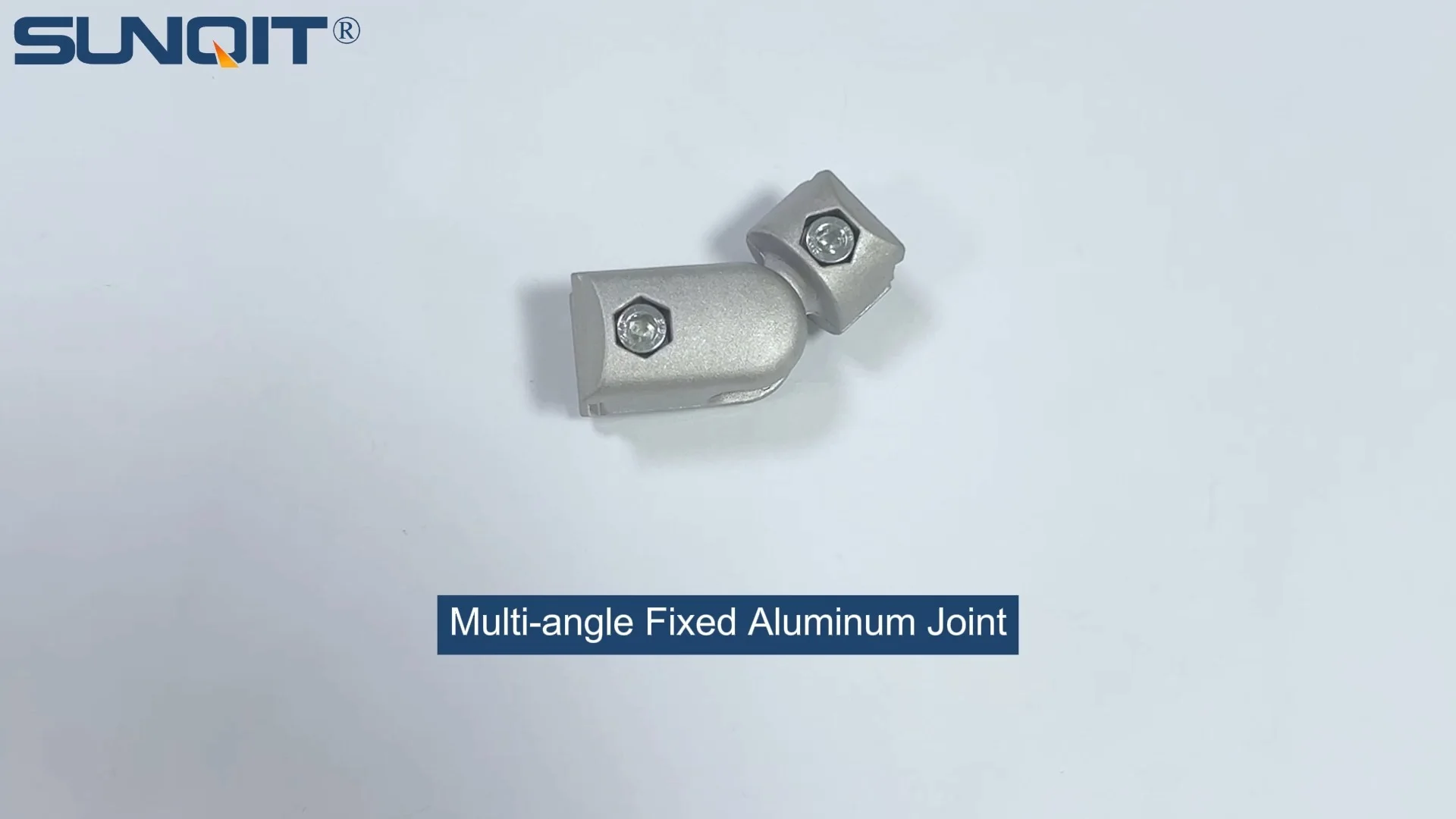
Multi-angle Fixed Aluminum Joint
Aluminum joint pipe connection for two pipe connection and work in mutiple angle.
Walk into any modern factory, warehouse, or even a tech startup's workshop, and you'll likely spot a common theme: sleek, modular structures that seem to adapt and evolve with the space. From workbenches that adjust to worker heights to material racks that reconfigure as inventory changes, these systems are the backbone of efficient, flexible operations. But have you ever stopped to wonder what holds these structures together? More importantly, what happens to them when they're no longer needed? Today, we're diving into a component that's quietly revolutionizing sustainable manufacturing: the multi-angle fixed aluminum joint. Let's unpack why this unassuming piece matters for the planet, and how its recyclability is reshaping the way we build, use, and reuse industrial equipment.
Aluminum: The Unsung Hero of Sustainable Materials
Before we zoom in on the multi-angle fixed aluminum joint itself, let's take a step back and talk about the material it's made from: aluminum. If sustainability had a mascot, aluminum might just wear the crown—and for good reason. Unlike materials like plastic, which can take centuries to decompose, or even steel, which loses quality with each recycling cycle, aluminum is infinitely recyclable. That means a soda can you toss in the recycling bin today could become part of a workbench tomorrow, then a conveyor system next year, and so on—without losing an ounce of its strength or durability.
But the real magic of aluminum lies in its energy efficiency. Producing aluminum from raw bauxite ore is energy-intensive, no doubt. However, recycling aluminum requires just 5% of the energy needed to make it from scratch. Let that sink in: 95% less energy. That's not just a win for your utility bill; it's a massive reduction in greenhouse gas emissions, air pollution, and resource depletion. In a world scrambling to cut carbon footprints, aluminum's recycling potential is nothing short of a game-changer.
Now, aluminum doesn't work alone. To build those modular systems we mentioned earlier, you need components that can connect aluminum pipes, beams, and panels securely. Enter aluminum extrusion profiles—long, uniform pieces of aluminum shaped through a process called extrusion, which allows for precise, consistent designs. These profiles are the building blocks, but they need joints to hold them together. And that's where the multi-angle fixed aluminum joint comes into play.
What Exactly Is a Multi-Angle Fixed Aluminum Joint?
Let's keep it simple: a multi-angle fixed aluminum joint is a connector designed to link aluminum extrusion profiles at various angles—think 90 degrees, 45 degrees, or even custom angles—while keeping the structure stable and rigid. Unlike welded joints, which are permanent and tricky to disassemble, or plastic connectors that degrade over time, these aluminum joints are engineered for both strength and flexibility. They're the reason you can take apart a workbench at the end of a project and rebuild it into a material rack the next day.
But here's what makes the multi-angle fixed version stand out: its design prioritizes both functionality and end-of-life recyclability. Most of these joints are made from high-grade aluminum alloys, which means they're not just strong enough to support heavy loads (we're talking hundreds of pounds, in some cases) but also 100% compatible with standard aluminum recycling processes. No glues, no mixed materials, no hidden components that complicate recycling—just pure, recyclable aluminum through and through.
To put this in context, consider traditional steel joints. Steel is strong, sure, but it's prone to rust if not coated, and recycling it often requires separating it from other metals or coatings, which adds steps and energy to the process. Plastic joints? Many are made from non-recyclable polymers or mixed with additives that make them impossible to break down. The multi-angle fixed aluminum joint, by contrast, is a model of simplicity: it does its job brilliantly during use, then steps aside gracefully when it's time to be reborn.

The Recyclability Journey: From Workshop to Melting Pot
So, what happens to a multi-angle fixed aluminum joint when the workbench it's holding together is retired? Let's walk through the recycling journey step by step—it's more fascinating than you might think.
Step 1: Collection and Disassembly
First, the joint is collected. In a well-run facility, this starts with disassembly. Because multi-angle fixed aluminum joints are typically secured with bolts or pins (no welding or adhesives!), workers can easily unscrew them from the aluminum extrusion profiles they're connecting. This is a critical first step: by separating the joints from other components early, you avoid contamination—like mixing aluminum with plastic or steel—which can derail the recycling process.
Imagine a factory upgrading its production line. Instead of sending the old workbench to the landfill, the team takes it apart, sorts the aluminum profiles from the joints, and sends both to a recycling center. This "design for disassembly" is a hallmark of modern sustainable manufacturing, and the multi-angle fixed aluminum joint embodies it perfectly.
Step 2: Sorting and Cleaning
At the recycling center, the joints join a pile of other aluminum scrap—everything from old window frames to car parts. Here, they're sorted by type (aluminum alloys have different compositions, and some are better suited for certain applications than others). Since multi-angle fixed aluminum joints are often made from high-purity alloys (like 6061 or 6063, which are common in structural applications), they're easy to identify and separate from lower-grade aluminum.
Next, the joints are cleaned. Any dirt, grease, or small bits of non-aluminum material (like a stray plastic washer) are removed. This might involve washing with hot water and detergent or using mechanical processes to scrape off debris. The cleaner the aluminum, the higher the quality of the recycled material will be.
Step 3: Melting and Purification
Once sorted and cleaned, the joints are shredded into smaller pieces (think aluminum confetti) to speed up melting. They're then loaded into a furnace and heated to around 660°C (1,220°F)—the melting point of aluminum. As they melt, impurities like dirt or small amounts of other metals rise to the surface, where they're skimmed off. What's left is pure, molten aluminum, ready to be cast into new forms.
Here's where the energy savings kick in again. Remember that 95% figure? Melting recycled aluminum uses a fraction of the energy of mining and processing bauxite. For a single multi-angle fixed aluminum joint, that might not seem like much, but multiply it by thousands (or millions) of joints across factories worldwide, and the impact adds up fast.
Step 4: Remanufacturing into New Components
The molten aluminum is then poured into molds to create new products. It could become part of a new multi-angle fixed aluminum joint, an aluminum extrusion profile for a conveyor system, or even something entirely different—like bicycle frames or smartphone cases. The point is, there's no limit to how many times this cycle can repeat. A joint that held together a workbench in 2023 might, in 2030, be part of a solar panel frame, then a laptop stand in 2040, and so on.

Lifecycle Assessment: Beyond Recyclability
Recyclability is a big part of the sustainability story, but it's not the whole picture. To truly understand the environmental impact of the multi-angle fixed aluminum joint, we need to look at its entire lifecycle—from production to use to disposal. Let's break it down:
Production: Using Recycled Content from the Start
Many manufacturers of multi-angle fixed aluminum joints now use recycled aluminum as the base material for production. This means even before the joint leaves the factory, it's already contributing to a circular economy. For example, a joint made with 70% recycled aluminum reduces the need for virgin ore mining, cuts energy use during production, and lowers emissions. Some leading suppliers even track the recycled content of their products, letting customers know exactly how much of their purchase is "secondhand" aluminum—transparency that's becoming increasingly important for companies aiming for net-zero goals.
Use Phase: Durability That Reduces Waste
Aluminum joints are built to last. Unlike plastic joints, which can crack under stress or degrade when exposed to heat or chemicals, aluminum joints hold up in harsh industrial environments. They're resistant to corrosion (especially when treated with anodization or other coatings), so they don't need frequent replacement. This durability means fewer joints end up in landfills over time. Think about it: if a plastic joint needs to be replaced every 2-3 years, but an aluminum joint lasts 10+ years, that's a 70% reduction in waste over a decade. Multiply that by every joint in a factory, and the savings are enormous.
End-of-Life: Closing the Loop
As we've already explored, the end-of-life phase is where aluminum joints shine brightest. Because they're 100% recyclable, they don't become permanent waste. Even if a joint is damaged beyond repair during use (say, it's bent in an accident), it can still be recycled—no need to toss it in the trash. This closed-loop system is the gold standard for sustainability: nothing goes to waste, and resources are kept in circulation indefinitely.

How Does It Stack Up? Comparing Aluminum Joints to Alternatives
To really appreciate the environmental impact of multi-angle fixed aluminum joints, let's compare them to two common alternatives: steel joints and plastic joints. We'll focus on recyclability, energy use, and lifecycle waste to see how aluminum measures up.
| Feature | Multi-Angle Fixed Aluminum Joint | Steel Joint | Plastic Joint |
|---|---|---|---|
| Recyclability | Infinitely recyclable; 100% material recovery | Recyclable but loses quality over cycles; often downcycled | Mostly non-recyclable; ends up in landfills or incinerators |
| Energy to Recycle | 5% of energy needed for virgin production | 25-30% of energy needed for virgin production | Not typically recycled; energy used in incineration releases emissions |
| Lifecycle Durability | 10+ years in industrial use | 10+ years but prone to rust without coatings | 2-5 years; degrades with heat/chemical exposure |
| End-of-Life Waste | Zero waste (fully recycled) | Some waste from coating removal; lower-quality recycled product | 100% waste (non-biodegradable) |
The table tells a clear story: aluminum joints outperform steel and plastic across the board when it comes to sustainability. Steel, while durable, requires more energy to recycle and loses quality each time it's processed, meaning it eventually reaches a point where it can't be reused for structural applications. Plastic joints, on the other hand, are often single-use items, destined for landfills where they'll persist for centuries. Aluminum joints? They're the only option that offers infinite recyclability, minimal energy use, and zero permanent waste.
Real-World Impact: A Case Study in Manufacturing
Let's ground this in a real example. Take a mid-sized electronics manufacturer based in the U.S. that recently switched from steel and plastic joint systems to aluminum extrusion profiles with multi-angle fixed aluminum joints. The company had 50 workbenches, 20 material racks, and 10 conveyor systems—all using a mix of steel brackets and plastic connectors. When it came time to upgrade their facility, they faced a choice: dispose of the old systems or try to recycle them.
With steel and plastic, recycling was a headache. The steel brackets were welded to the frames, making disassembly nearly impossible. The plastic connectors were brittle from years of use and couldn't be recycled locally. In the end, 70% of the old system ended up in a landfill, costing the company $12,000 in disposal fees and leaving a significant carbon footprint.
Fast forward five years: the company is upgrading again, but this time, all their structures use aluminum extrusion profiles and multi-angle fixed aluminum joints. Disassembly took a fraction of the time—workers simply unscrewed the joints, sorted the profiles from the connectors, and sent everything to a local aluminum recycler. The recycler paid the company $3,500 for the scrap aluminum (yes, recycled aluminum has value!), and the energy saved by recycling instead of producing new aluminum was equivalent to taking 12 cars off the road for a year. Plus, the new system was built using 65% recycled aluminum, further reducing the company's environmental impact.
This isn't an isolated case. Across industries—automotive, aerospace, logistics, even healthcare—companies are reporting similar results after switching to aluminum joint systems. The key takeaway? Sustainability doesn't have to mean sacrificing performance. In fact, aluminum joints often outperform their alternatives in terms of durability and flexibility, making them a win-win for both the planet and the bottom line.
Challenges and Innovations in Aluminum Joint Recycling
Of course, no sustainability solution is without its challenges. While multi-angle fixed aluminum joints are highly recyclable, there are still hurdles to overcome to maximize their environmental benefits. Let's tackle the biggest ones—and the innovations addressing them.
Challenge 1: Contamination During Recycling
One of the biggest threats to aluminum recycling is contamination. If a joint is mixed with steel bolts, plastic washers, or other non-aluminum materials, it can lower the quality of the recycled aluminum. In some cases, contaminated scrap might even be rejected by recyclers, sending it to landfills instead.
Innovators are addressing this with smarter design. Some manufacturers now produce "mono-material" joints—meaning every part of the joint (including fasteners) is aluminum. No more steel screws or plastic inserts; just pure aluminum. This makes sorting at recycling centers a breeze and ensures the joint is 100% recyclable. Other companies are adding color-coded labels or RFID tags to joints, letting recyclers quickly identify the material type and separate it correctly.
Challenge 2: Recycling Infrastructure Gaps
In some regions, especially in developing countries, access to aluminum recycling facilities is limited. This means even if a company wants to recycle its aluminum joints, there might not be a local recycler equipped to process them. As a result, joints may end up in landfills simply due to logistics.
To combat this, some aluminum suppliers are stepping in to create closed-loop recycling programs. For example, a supplier might offer to pick up old joints from customers, transport them to a partner recycler, and then use the recycled aluminum to produce new joints. This "take-back" model ensures that even in areas with poor infrastructure, joints don't become waste. It also gives suppliers more control over the quality of recycled material, ensuring their new products meet strict standards.
Challenge 3: Design for Disassembly Education
Even with easy-to-disassemble joints, some workers may not know how to properly take apart aluminum structures for recycling. Old habits die hard—if someone is used to cutting through welded steel, they might not think to unscrew an aluminum joint. This can lead to damage to the joint (making it harder to recycle) or improper sorting.
Manufacturers are responding with better documentation and training. Many now include "recycling guides" with their joint systems, showing workers step-by-step how to disassemble and sort components. Some even offer on-site training sessions, teaching teams how to maximize recycling rates. It's a small investment that pays off in higher recycling rates and lower waste.
The Future: Where Aluminum Joints and Sustainability Meet
So, what's next for multi-angle fixed aluminum joints and their role in sustainability? The future looks bright—and increasingly circular. Here are a few trends to watch:
1. Higher Recycled Content Standards
As consumers and regulators demand more transparency, expect to see suppliers competing to offer joints with higher recycled content. Some may even hit 100% recycled aluminum in the next decade, using advanced sorting and purification technologies to ensure the material meets structural requirements. This could make aluminum joints not just recyclable, but "cradle-to-cradle" certified—meaning every part of their lifecycle is sustainable.
2. Smart Joints for Lifecycle Tracking
Imagine a joint with a tiny QR code or NFC chip that stores its entire history: when it was made, what percentage of recycled aluminum it contains, where it's been used, and how to recycle it properly. This "digital passport" could help track the joint's journey from factory to recycling center, ensuring it's processed correctly and maximizing its recycled potential. Companies like IBM and Google are already exploring blockchain technology for supply chain transparency, and aluminum joints could be next in line.
3. Integration with the Circular Economy
More manufacturers are moving beyond "take-make-dispose" models to circular economy systems, where products are designed to be reused, repaired, or recycled from the start. Aluminum joints fit perfectly into this model, as they can be reused in multiple configurations before finally being recycled. We may even see rental or leasing programs for joint systems, where suppliers retain ownership and take responsibility for recycling at the end of the lease—further incentivizing durability and recyclability.
Conclusion: Small Joints, Big Impact
At first glance, a multi-angle fixed aluminum joint might seem like just another piece of hardware. But when you dig deeper, it's clear this small component is a linchpin in the fight for a more sustainable industrial world. Its infinite recyclability, energy efficiency, and durability make it a model for how we should design all products: with the end in mind.
As we move toward a future where climate action is no longer optional, every choice matters—including the joints that hold our factories, workplaces, and supply chains together. Aluminum joints prove that sustainability doesn't have to be a trade-off; it can be built into the very structures we rely on. So the next time you walk past a modular workbench or a material rack, take a closer look. The silver connectors holding it all together might just be quietly changing the world—one recycled joint at a time.
In the end, it's not just about recycling aluminum. It's about rethinking how we build, use, and reuse everything. And if a simple joint can lead the way, imagine what else we can achieve.