- Company Articles
- Industry articles
- Industry standards
- Multi-Angle Fixed Aluminum Joint Maintenance Schedule: Industry Standards

Multi-Angle Fixed Aluminum Joint Maintenance Schedule: Industry Standards
Related Product
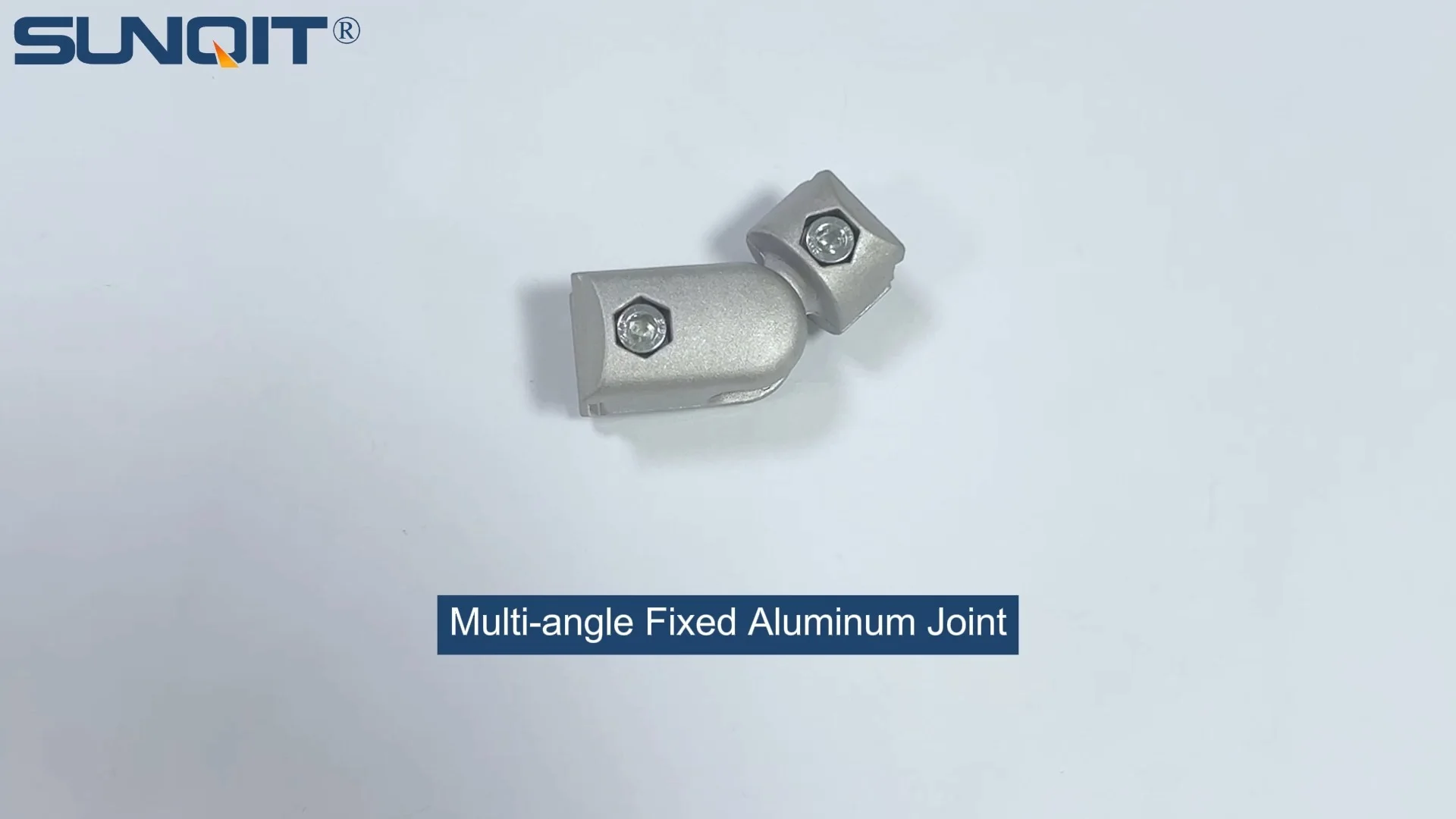
Multi-angle Fixed Aluminum Joint
Aluminum joint pipe connection for two pipe connection and work in mutiple angle.
Introduction: The Backbone of Lean Systems
In the fast-paced world of manufacturing and production, every component plays a role in keeping operations running smoothly. Among these, the multi-angle fixed aluminum joint might not always grab the spotlight, but it's the unsung hero holding together critical equipment like aluminum workbenches, material racks, and conveyor systems. These joints are the connective tissue of lean systems, enabling the flexibility and adaptability that modern production floors rely on. But like any hardworking component, they demand regular care to prevent breakdowns, maintain safety, and extend their lifespan.
Imagine a busy assembly line where a loose joint causes an aluminum workbench to wobble, delaying production. Or a material rack that sags under load because its joints weren't inspected—costing time, money, and potentially risking employee safety. These scenarios are avoidable with a structured maintenance schedule. This article dives into the why, what, and how of maintaining multi-angle fixed aluminum joints, aligning with industry standards to keep your lean system in peak condition.
Understanding Multi-Angle Fixed Aluminum Joints
Before diving into maintenance, let's clarify what these joints are and why they matter. Multi-angle fixed aluminum joints are engineered to connect aluminum pipes, profiles, and tubes at various angles (90°, 45°, 135°, etc.), providing stability while allowing for custom configurations. Unlike rigid joints, their "multi-angle" design offers flexibility in building workbenches, flow racks, or turnover trolleys that fit unique production needs. They're typically made from high-grade aluminum alloy, chosen for its lightweight strength, corrosion resistance, and compatibility with other aluminum components like aluminum profile accessories.
Key features include:
-
Material Composition:
Aluminum alloy (often 6063 or similar) for durability and weight savings.
-
Design:
Fixed-angle connections with internal or external fasteners (screws, bolts) to secure aluminum pipes.
-
Applications:
Integral to aluminum workbenches, material racks (like the 3-row, 3-floor Material Rack B), conveyor roller tracks, and even caster-mounted trolleys.
-
Accessories:
May include washers, gaskets, or locking mechanisms to enhance stability and prevent loosening under vibration.
Note:
While aluminum is naturally corrosion-resistant, joints in high-moisture or chemical-exposed environments (e.g., near cleaning stations) may still require extra protection. Always check the manufacturer's specs for your specific joint model.

Key Components to Maintain
A multi-angle fixed aluminum joint isn't a standalone part—it works in tandem with other components. To maintain the joint effectively, you must inspect and care for its "team":
- The Joint Body: The aluminum casting or extrusion that forms the angle connection. Prone to wear at contact points with pipes.
- Fasteners: Screws, bolts, or nuts that secure the joint to aluminum pipes or profiles. Can loosen over time due to vibration.
- Aluminum Pipes/Profiles: The connected parts (e.g., basic aluminum tube or aluminum extrusion profile). Cracks or deformation at the joint interface can compromise the entire structure.
- Accessories: Gaskets (to prevent metal-on-metal friction), washers (to distribute load), or plastic end caps (to seal pipe ends and prevent debris buildup).
Each component has unique maintenance needs, but they all share a common goal: ensuring the joint remains rigid, aligned, and capable of supporting its rated load.

Daily Inspection Checklist
Daily inspections are quick, visual checks to catch obvious issues before they escalate. They take 5–10 minutes per workbench or rack and should be part of your team's pre-shift routine. Use the table below as a guide:
| Task | Frequency | What to Look For | Action If Issue Found |
|---|---|---|---|
| Visual inspection of joint body | Daily | Cracks, dents, or corrosion (white/greenish buildup) | Tag the joint for repair; remove from service if structural damage is suspected. |
| Check fasteners (screws/bolts) | Daily | Loose, missing, or stripped fasteners | Tighten with a torque wrench (follow manufacturer specs); replace stripped/missing fasteners immediately. |
| Test joint stability | Daily | Wobbling or movement when gentle pressure is applied to the connected aluminum pipe | Retighten fasteners; if instability persists, schedule a deeper inspection. |
| Clear debris | Daily | Dirt, dust, or production waste (e.g., metal shavings) around the joint | Brush or wipe away debris; use compressed air for hard-to-reach areas. |
| Check alignment | Daily | Pipes/profiles that are misaligned (e.g., a workbench shelf that's level) | Adjust joint angles if possible; if misalignment is severe, inspect for bent pipes or damaged joints. |
Pro Tip:
Assign daily inspections to operators who use the equipment regularly—they're most likely to notice subtle changes in stability or alignment.

Weekly Maintenance Tasks: Preventive Care
Weekly tasks go beyond visuals, focusing on tightening, cleaning, and minor adjustments. These take 15–20 minutes per unit and are critical for preventing wear. Here's what to include:
1. Torque Fasteners to Spec
Daily checks might tighten loose screws, but weekly torqueing ensures fasteners are at the manufacturer's recommended tension. Over-tightening can strip threads or warp the joint; under-tightening leads to loosening. Use a calibrated torque wrench (set to 8–12 Nm for most aluminum joints, but confirm with your supplier). Pay extra attention to joints on mobile equipment like turnover trolleys, where vibration is more intense.
2. Clean Joint Interfaces
Debris trapped between the joint and aluminum pipe can cause friction, leading to wear or corrosion. Use a soft-bristle brush to dislodge dirt, then wipe with a lint-free cloth dampened with mild detergent (e.g., dish soap mixed with water). Avoid abrasive cleaners or steel wool—they scratch the aluminum surface, making it prone to corrosion. For greasy residues (common in machine shops), use isopropyl alcohol, then dry thoroughly.
3. Inspect Pipe-Joint Fit
Check that the aluminum pipe fits snugly into the joint. If there's play (e.g., the pipe rotates or slides within the joint), it may indicate worn internal components (like a cracked sleeve) or a mismatched pipe size. replace the joint if fit is compromised—loose pipes increase stress on the joint and risk failure.
Monthly Deep Cleaning & Lubrication
Monthly maintenance is more thorough, focusing on long-term protection. Allocate 30–45 minutes per joint, and schedule it during low-production periods to avoid downtime.
1. Disassemble (If Needed)
For joints in high-wear areas (e.g., near conveyor roller tracks), periodic disassembly helps inspect hidden components. Remove fasteners, separate the joint from the aluminum pipe, and check for wear on internal surfaces (e.g., stripped threads, pitted metal). If disassembly isn't feasible, use a flashlight to peer into crevices for debris or corrosion.
2. Lubricate Moving Parts (If Applicable)
While "fixed" joints don't have moving parts, some models (e.g., those with adjustable angles) may have pivot points or threaded sections that benefit from lubrication. Use a silicone-based lubricant (avoid petroleum-based products, which can degrade aluminum over time) and apply sparingly—excess lube attracts dust. Wipe away any overflow with a clean cloth.
3. Treat for Corrosion
Even aluminum can corrode in humid or chemical-rich environments. After cleaning, apply a thin coat of aluminum protectant (e.g., a clear acrylic spray or anti-corrosion gel) to the joint body and fasteners. Focus on areas where the joint meets the pipe, as moisture can collect there.
Quarterly Structural Integrity Checks
Quarterly checks are about ensuring the joint can handle its intended load and stress over time. These should be performed by a maintenance technician or supervisor with knowledge of structural engineering basics.
1. Load Testing
Every joint has a rated load (e.g., 50kg, 100kg). Test by gradually applying weight up to 120% of the rated load (use sandbags or calibrated weights) and monitoring for bending, creaking, or shifting. If the joint deforms or fails, replace it immediately. For example, a joint on a 3-row material rack should support the weight of three fully loaded shelves without strain.
2. Check for Fatigue
Aluminum can develop "fatigue cracks" from repeated stress (e.g., daily loading/unloading of a workbench). Use a magnifying glass to inspect the joint's edges and fastener holes for tiny cracks. If found, the joint must be replaced—cracks weaken the structure and can lead to sudden failure.
3. Verify Alignment with Aluminum Profiles
Misaligned joints can cause stress on connected aluminum profiles, leading to warping. Use a level to check that the joint holds pipes/profiles at the correct angle (e.g., 90° for a workbench leg). If alignment is off, adjust the joint or replace it—misalignment shortens the lifespan of both the joint and the profile.
Annual Professional Servicing
Even with diligent in-house maintenance, an annual professional inspection is critical. A certified technician can:
- Use ultrasonic testing to detect internal cracks invisible to the naked eye.
- Calibrate torque tools to ensure fasteners are tightened to manufacturer specs.
- Recommend upgrades (e.g., switching to heavy-duty joints for high-load applications).
- Review maintenance records to identify recurring issues (e.g., frequent loosening in a particular area) and adjust the schedule accordingly.
Work with your aluminum pipe supplier to schedule these inspections—they'll have the expertise to assess their products and recommend genuine replacement parts if needed.
Troubleshooting Common Issues
Even with regular maintenance, issues can arise. Here's how to diagnose and fix the most common problems:
Issue 1: Loose Fasteners
Cause:
Vibration from machinery, thermal expansion/contraction, or improper initial torque.
Solution:
Retighten with a torque wrench. If fasteners loosen repeatedly, apply thread-locking compound (e.g., Loctite) to the threads before tightening. Avoid over-tightening, as this can strip the aluminum.
Issue 2: Corrosion
Cause:
Exposure to moisture, chemicals, or salt (in coastal facilities).
Solution:
Clean with a vinegar-water solution (50/50 mix) to remove corrosion, then apply anti-corrosion protectant. For severe cases (pitting or deep corrosion), replace the joint.
Issue 3: Joint Failure (Bending/Cracking)
Cause:
Overloading, fatigue, or manufacturing defects.
Solution:
Immediately remove the joint from service. Investigate why it failed (e.g., was the load exceeded?) and replace with a joint of higher rated capacity if needed.
Industry Standards & Best Practices
Maintaining multi-angle fixed aluminum joints isn't just about preventing breakdowns—it's about complying with industry standards to ensure safety and quality. Key standards include:
ISO 9001: Quality Management
ISO 9001 requires organizations to have documented maintenance procedures and records. Keep logs of inspections, repairs, and replacements to demonstrate compliance. For example, note the date a joint was lubricated, who performed the task, and any issues found.
OSHA Safety Standards
OSHA mandates that "all tools, equipment, and machinery shall be maintained in safe working condition" (29 CFR 1910.269). A loose joint on a workbench or conveyor could lead to a fall or struck-by hazard, so regular inspections are critical for OSHA compliance.
Manufacturer Guidelines
Your aluminum pipe supplier or joint manufacturer will provide specific maintenance recommendations (e.g., torque specs, compatible lubricants). Always follow these—deviating (e.g., using a steel bolt instead of aluminum) can void warranties and compromise safety.
Conclusion: Invest in Maintenance, Reap the Rewards
Multi-angle fixed aluminum joints are the quiet workhorses of your lean system, but their reliability depends on your commitment to maintenance. A daily visual check, weekly tightening, monthly deep cleaning, and quarterly structural tests—paired with annual professional inspections—will keep these joints strong, safe, and efficient. By following this schedule, you'll reduce downtime, extend equipment life, and ensure your production floor runs like a well-oiled machine.
Remember: Maintenance isn't an expense—it's an investment. A $50 joint replacement today prevents a $500 production delay tomorrow. So grab your torque wrench, schedule those inspections, and keep your aluminum workbenches, racks, and conveyors standing strong for years to come.