- Company Articles
- Industry articles
- Industry standards
- Multi-Angle Fixed Aluminum Joint Safety Standards: Compliance Checklist

Multi-Angle Fixed Aluminum Joint Safety Standards: Compliance Checklist
Related Product
Multi-angle Fixed Aluminum Joint
Aluminum joint pipe connection for two pipe connection and work in mutiple angle.
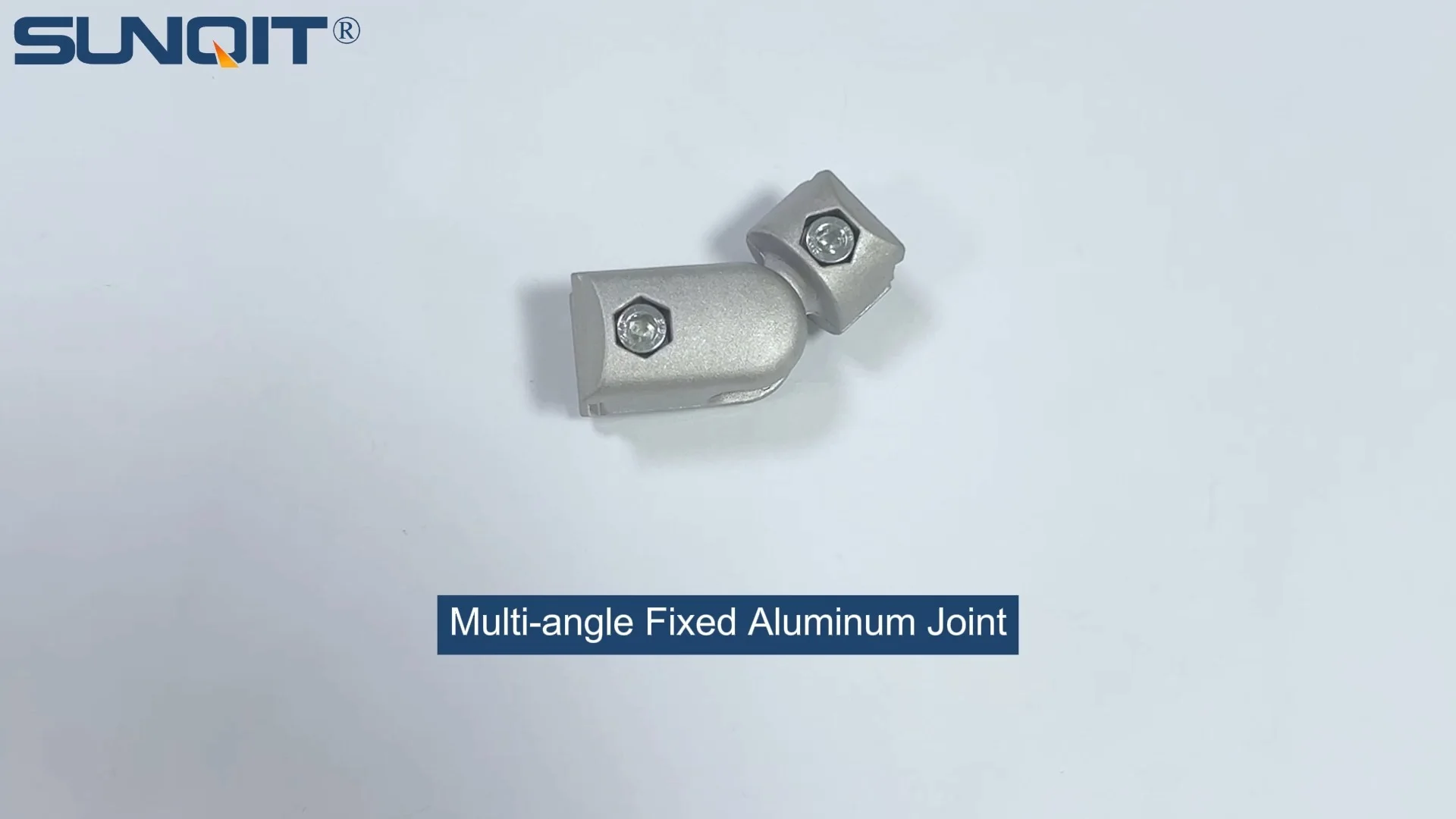
Walk into any bustling manufacturing facility, and you'll notice a silent hero holding everything together: the structures that keep production flowing. From the workbenches where assemblers piece together components to the flow racks that shuttle materials across the floor, these systems rely on precision, durability, and – above all – safety. At the heart of many of these structures lies a component that's easy to overlook but impossible to replace: the multi-angle fixed aluminum joint. These unassuming connectors are the glue that transforms aluminum lean pipe, aluminum profile accessories, and other parts into sturdy, reliable workspaces and material handling systems. But with great responsibility comes great need for standards. In this article, we'll dive into the safety standards that govern multi-angle fixed aluminum joints, why compliance matters, and provide a practical checklist to ensure your operations meet the mark.
The Role of Multi-Angle Fixed Aluminum Joints in Modern Workspaces
Before we jump into standards, let's take a moment to appreciate what these joints do. Multi-angle fixed aluminum joints are designed to connect aluminum lean pipes (or aluminum profiles) at various angles – 30°, 45°, 90°, 135°, and more – creating rigid frameworks for everything from simple workbenches to complex flow racks. Unlike flexible joints, these "fixed" connectors lock into place, ensuring the structure remains stable even under heavy loads. Think of them as the backbone of modular industrial furniture: without strong, reliable joints, the entire system risks wobbling, sagging, or even collapsing.
Consider a typical production line. A workbench E (single deck-without caster) might be used for intricate assembly work, where precision is key. The frame of this workbench, built from aluminum lean pipe and connected by multi-angle fixed joints, must stay steady to prevent errors. Nearby, a material rack B (3 row and 3 floor) holds boxes of components, each tier stacked with weight that the joints must distribute evenly. Down the line, a roller track system – lined with plastic roller track guide rail yellow or grey – moves products from station to station, its stability dependent on joints that keep the track aligned. In each case, the joints aren't just parts; they're safety critical.
Why Safety Standards for Multi-Angle Fixed Aluminum Joints Matter
You might be wondering: "Aren't aluminum joints just metal pieces? How dangerous can they be?" The answer lies in the consequences of failure. A loose or substandard joint in a workbench could cause tools to slip, leading to cuts or bruises. A failing joint in a flow rack might send boxes crashing to the floor, injuring workers or damaging inventory. In worst-case scenarios, a structural collapse could trap employees or halt production for days. Beyond physical harm, non-compliance with safety standards can lead to fines, legal liabilities, and reputational damage. For manufacturers, warehouses, and distribution centers, safety isn't just a box to check – it's the foundation of efficient, sustainable operations.
Moreover, aluminum brings unique properties to the table. It's lightweight, corrosion-resistant, and easy to assemble, which is why it's a favorite in industrial settings. But these benefits come with trade-offs: aluminum is softer than steel, so its joints must be engineered to compensate for lower tensile strength. Without clear standards, there's a risk of using joints that can't handle the load, or that degrade prematurely in harsh environments (like humid warehouses or factories with chemical exposure).

Key Safety Standards Governing Multi-Angle Fixed Aluminum Joints
Safety standards for multi-angle fixed aluminum joints aren't arbitrary. They're developed by organizations like the International Organization for Standardization (ISO), the Occupational Safety and Health Administration (OSHA), and industry bodies to ensure consistency, reliability, and worker protection. Let's break down the most critical standards and what they cover.
1. Material Standards: Ensuring the Joints Are Built to Last
The first line of defense is the material itself. Multi-angle fixed aluminum joints are typically made from aluminum alloys (often 6061 or 6063, known for their strength and weldability) or aluminum with a protective coating. Standards like ISO 6060 specify the mechanical properties of aluminum and aluminum alloys, including tensile strength, yield strength, and elongation. For joints, this means ensuring the material can withstand the stress of holding together aluminum lean pipe and supporting the intended load without deforming or breaking.
Additionally, standards may address corrosion resistance. Aluminum naturally forms a protective oxide layer, but in high-moisture or chemical environments, extra protection (like anodizing or powder coating) may be required. OSHA's guidelines for workplace safety include provisions for equipment durability, which extends to ensuring joints don't degrade over time, even in challenging conditions.
2. Design Standards: Geometry and Load Capacity
A joint's design is just as important as its material. Standards here focus on geometry (angle precision, wall thickness, thread strength) and load capacity (how much weight the joint can support without failing). For example, a 90° fixed joint must maintain that angle under load – if it flexes to 95°, the entire structure could become unstable. ISO 10245, which covers aluminum structural components, provides guidelines for dimensional tolerances, ensuring joints fit snugly with aluminum lean pipe and accessories.
Load capacity is perhaps the most critical design factor. Manufacturers of multi-angle fixed joints must test their products to determine maximum static load (weight held stationary) and dynamic load (weight in motion, like materials sliding on a roller track). These values are often published in product specifications, and standards like ASME B30.20 (for below-the-hook lifting devices) may reference similar testing protocols for material handling equipment.
3. Installation Standards: Getting It Right the First Time
Even the best joint will fail if installed incorrectly. Installation standards cover everything from torque specifications for bolts to alignment checks. For instance, when attaching a multi-angle joint to aluminum lean pipe, the bolt must be tightened to a specific torque to ensure a secure fit – too loose, and the joint wobbles; too tight, and the aluminum pipe could crack. OSHA's General Duty Clause (Section 5(a)(1)) requires employers to "furnish to each of his employees employment and a place of employment which are free from recognized hazards that are causing or are likely to cause death or serious physical harm," which includes proper installation of structural components.
Alignment is another key factor. A joint that's slightly off-angle during installation can create uneven stress across the structure. Over time, this stress can weaken the joint or the aluminum pipe, leading to failure. Standards may recommend using jigs, levels, or laser alignment tools to ensure joints are set at the exact angle specified in the design.
4. Maintenance and Inspection Standards: Keeping Joints in Top Shape
Safety doesn't end after installation. Multi-angle fixed aluminum joints require regular inspection and maintenance to stay compliant. Standards like ISO 9001 (quality management systems) emphasize the need for preventive maintenance schedules, while OSHA's recordkeeping requirements mandate documenting inspections and repairs. Common maintenance tasks include checking for loose bolts, signs of corrosion, or deformation in the joint itself. For example, a joint that's been overloaded might show cracks around the bolt holes, or the aluminum might appear bent – both red flags that require immediate attention.

Compliance Checklist: Ensuring Your Multi-Angle Fixed Aluminum Joints Meet Safety Standards
Now that we understand the "why" behind the standards, let's get practical. Below is a compliance checklist to help you evaluate your multi-angle fixed aluminum joints, whether you're installing new structures or auditing existing ones. This checklist covers material, design, installation, and maintenance standards, with actionable steps to ensure safety.
| Checklist Item | Description | Compliance Requirement |
|---|---|---|
| Material Certification | Verify that the multi-angle fixed aluminum joints and aluminum lean pipe are made from certified materials. | Request material certificates (e.g., ISO 6060 compliance) from suppliers. Ensure aluminum alloys meet specified tensile strength (minimum 200 MPa for structural use). |
| Load Capacity Verification | Confirm that joints are rated for the intended load (static and dynamic). | Check product datasheets for load ratings. For custom structures (e.g., material rack B with heavy loads), conduct third-party load testing if needed. |
| Angle Precision | Ensure joints maintain their specified angle (e.g., 90° ± 1°) under load. | Use a protractor to measure angles post-installation. For critical structures (e.g., roller track systems), conduct stress tests to check for angle deflection. |
| Corrosion Resistance | Inspect joints for signs of corrosion (pitting, discoloration) or inadequate protective coatings. | Joints in humid or chemical-exposed areas must have anodized, powder-coated, or plated finishes. replace corroded joints immediately. |
| Installation Torque | Check that bolts securing joints are tightened to manufacturer-specified torque. | Use a calibrated torque wrench during installation. Torque values typically range from 8-15 Nm for M8 bolts; follow supplier guidelines. |
| Alignment Check | Ensure joints are aligned to prevent uneven stress on the structure. | Use a spirit level or laser alignment tool to confirm straightness. For roller tracks, check that the plastic roller track guide rail is parallel and level. |
| Visual Inspection for Defects | Look for cracks, dents, or deformation in joints, especially around bolt holes and stress points. | replace any joint with visible defects. For used joints, magnify (10x) stress points to check for micro-cracks. |
| Maintenance Schedule | Establish regular inspection and maintenance intervals for joints. | Inspect high-load structures (e.g., workbenches with heavy equipment) monthly; low-load structures quarterly. Document inspections and repairs. |
| Worker Training | Ensure installation and maintenance teams are trained on proper joint handling. | Conduct annual training sessions on torque specifications, load limits, and defect recognition. Include OSHA's material handling guidelines (29 CFR 1910.263) in training. |
| Supplier Qualification | Evaluate suppliers for quality control and compliance with safety standards. | Choose suppliers with ISO 9001 certification. Request references from other industrial clients to verify product reliability. |
| Documentation | Maintain records of material certifications, load tests, inspections, and repairs. | Store documents for at least 5 years (per OSHA recordkeeping requirements). Digitalize records for easy access during audits. |

Real-World Applications: How Compliance Prevents Failures
To put this checklist in context, let's look at a real-world example. A mid-sized electronics manufacturer recently expanded its production line, installing 10 new workbench E units and a 50-foot roller track system with plastic roller track guide rail grey. The supplier provided multi-angle fixed aluminum joints, but during installation, the team skipped torque checks to save time. Six months later, workers noticed the workbenches wobbling, and a section of the roller track began to sag, causing products to jam. An audit revealed that 30% of the joints were under-tightened, leading to gradual loosening under vibration. The manufacturer had to halt production for two days to retighten joints and replace three that had cracked from uneven stress. The cost? Tens of thousands of dollars in lost productivity – a price that could have been avoided with proper torque checks during installation.
Another example: a warehouse using material rack B (3 row and 3 floor) to store heavy automotive parts. The racks were installed with multi-angle fixed joints rated for 500 lbs per tier. However, the team began stacking 700 lbs loads, exceeding the joint's capacity. After a month, a joint failed, causing the top tier to collapse. Fortunately, no one was injured, but the warehouse faced OSHA fines for overloading and had to replace all racks with higher-rated joints. This incident highlights the importance of load capacity verification – a key checklist item.
Going Beyond Compliance: Building a Safety Culture
While checklists and standards are essential, true safety starts with culture. Employees who understand why joints matter are more likely to report loose connections, corrosion, or other issues. Consider training sessions that walk workers through the "why" of joint safety: show them photos of failed structures, explain how torque affects stability, and empower them to stop work if something feels off. Encourage a "see something, say something" policy, where even small concerns (like a wobbly workbench) are addressed immediately.
Suppliers also play a role in fostering safety. Choose partners who prioritize compliance, provide detailed documentation, and offer technical support. A reliable aluminum profile accessories supplier, for example, should be able to answer questions about joint torque, load ratings, and material certifications. Avoid suppliers who cut corners on material quality or testing – the upfront savings aren't worth the long-term risks.
Conclusion: Safety as a Foundation, Not an Afterthought
Multi-angle fixed aluminum joints may be small, but their impact on workplace safety is enormous. From workbenches to flow racks, these connectors are the unsung heroes of efficient, secure operations. By adhering to material, design, installation, and maintenance standards – and using the checklist provided – you can ensure these joints do their job: keeping your structures strong, your workers safe, and your production line moving. Remember, compliance isn't just about avoiding fines; it's about respecting the people who rely on these structures every day. So the next time you walk past a workbench or flow rack, take a moment to appreciate the joints holding it together – and make sure they're up to the task.
In the end, safety isn't a destination; it's a journey. By prioritizing standards, investing in training, and staying vigilant, you'll build a workplace where efficiency and safety go hand in hand – one joint at a time.