- Company Articles
- Industry articles
- Industry standards
- 2020 EU Standard Aluminum Profile: Compatibility with Existing Manufacturing Equipment

2020 EU Standard Aluminum Profile: Compatibility with Existing Manufacturing Equipment
Related Product
2020 EU Standard Aluminum Profile
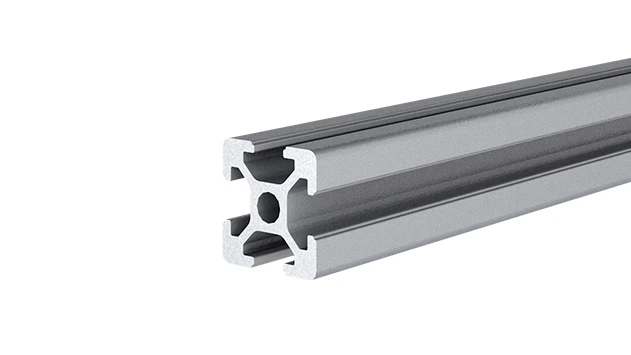
2020 is a 2.00 x 2.00CM fractional 20 series square extrusion T-slot profile with four open T-slots, one on each 2.00 face. The profile has align-a-grooves to assist in aligning connecting profiles.
The Manufacturing Flexibility Crisis: Why Compatibility Matters Now More Than Ever
Walk into any mid-sized factory today, and you'll likely find a patchwork of equipment: workbenches from the early 2000s, roller track systems added during a 2015 expansion, and material racks cobbled together with whatever parts were on hand. For years, this "make-do" approach worked. But in 2025, with consumer demands shifting faster than ever—custom orders, shorter production runs, and sudden design changes—rigid, mismatched setups are becoming a liability. The problem? Upgrading everything at once is financially out of reach for most manufacturers. The solution? Finding components that play nice with what's already there. Enter the 2020 EU standard aluminum profile: a modular, adaptable building block designed to bridge the gap between old and new.
Manufacturers today aren't just looking for tools—they're looking for partners in flexibility. A single production line might need to switch from assembling smartphones to smart home devices in a week, or reconfigure a workbench to accommodate a new robot arm. When equipment is incompatible, this kind of agility becomes impossible. Welding steel frames, drilling custom holes, or replacing entire conveyor systems every time needs change eats into profits and slows growth. The 2020 EU standard aluminum profile wasn't created in a vacuum; it was built to address this exact pain point: how to upgrade incrementally, reuse what works, and future-proof operations without breaking the bank.
What Exactly Is the 2020 EU Standard Aluminum Profile?
Let's start with the basics. The "2020" in its name refers to its cross-sectional dimensions: 20mm by 20mm. Unlike older steel pipes or non-standard aluminum extrusion profiles, this EU-standardized profile features a uniform T-slot design along its length—a simple groove that acts as a universal connection point for accessories. Made from high-grade aluminum extrusion profile (typically 6063-T5 aluminum), it's lightweight (about 1.2kg per meter) but surprisingly strong, supporting up to 80kg per linear meter when properly mounted. Its anodized finish resists corrosion, making it suitable for both indoor workshops and semi-outdoor warehouses.
But what truly sets it apart is standardization. EU regulations ensure that any 2020 aluminum profile, regardless of the supplier, will have the same slot dimensions, wall thickness, and accessory compatibility. That means a 2020 profile from a lean pipe supplier in Germany will fit seamlessly with aluminum profile accessories from a supplier in Poland. No more guessing if a bracket will clamp on or if a connector will align—consistency is baked in. For manufacturers juggling multiple equipment vendors, this standardization alone is a game-changer.

Aluminum Profile Accessories: The Glue That Holds Compatibility Together
A profile is only as useful as the accessories that connect to it, and here's where the 2020 EU standard truly shines. Aluminum profile accessories—think brackets, connectors, end caps, and hinges—are designed with the T-slot in mind. Take the 90° aluminum profile connector, for example: a simple, lightweight piece that slides into the T-slot and locks with a hex key, instantly joining two profiles at a right angle. No welding, no drilling, no special tools. Even better, many of these accessories are backward-compatible with older systems. A 2020 profile can connect to a steel workbench using a heavy-duty split foot seat, or attach to a wooden shelf with a plastic pipe sleeve. The accessories act as translators, speaking the "language" of both old and new equipment.
Consider the 2020 aluminum profile end cap—a small, unassuming part that plugs the end of the profile to prevent dust buildup and protect workers from sharp edges. But it's also a microcosm of the system's philosophy: practical, universal, and designed to work with minimal fuss. Similarly, the aluminum hinge allows for adjustable angles on workbenches or material racks, while the nylon handle adds mobility to turnover trolleys. These accessories aren't just add-ons; they're the reason the 2020 profile can integrate with almost anything in your factory.
Real-World Example: The Auto Parts Supplier's Accessory Hack
A mid-sized auto parts manufacturer in Spain was struggling with a mix of old steel workbenches and newer aluminum racks. Their biggest headache? Material racks built with non-standard aluminum profiles couldn't connect to the steel workbenches, forcing workers to carry parts 10 feet between stations. By adding 2020 EU standard aluminum profiles as "bridges" using 90° aluminum profile connectors and aluminum profile fixed clamp, they linked the racks directly to the workbenches. Total cost? €300 in profiles and accessories. Result? A 25% reduction in time spent moving parts, and zero need to replace existing equipment.
Workbench Retrofitting: Breathing New Life Into Old Stations
Workbenches are the backbone of any production floor, but they're also one of the most overlooked when it comes to upgrades. Many factories still use solid wood or steel workbenches that are heavy, immobile, and impossible to reconfigure. Replacing them with new workbenches can cost €500–€1,000 each—a prohibitive expense for a factory with 50 stations. The 2020 EU profile offers a smarter alternative: retrofitting.
Retrofitting a workbench with 2020 profiles is surprisingly straightforward. Start by mounting aluminum profile accessories like adjustable leveling feet to stabilize the existing bench. Then, add vertical 2020 profiles along the edges to create a frame for shelves, tool holders, or LED task lights. Use parallel rotatory aluminum joints to attach fold-down extensions, turning a fixed-width bench into one that expands by 30% when needed. For ESD-sensitive environments (like electronics assembly), add an ESD workbench top using aluminum profile rubber strips to secure it to the 2020 frame. The best part? If the bench itself is still sturdy, you're only replacing the "extras," not the entire structure.
Take the example of a consumer electronics plant in Hungary. They had 30 steel workbenches that were structurally sound but lacked storage and flexibility. By retrofitting each with 2020 EU profiles, aluminum shelves, and tool hooks, they added 150 sq. ft. of storage space per bench and cut the time to reconfigure for new products from 8 hours to 45 minutes. Total cost per bench? €120, compared to €800 for a new ESD workstation. Over 30 benches, that's a savings of €20,400—money that went straight back into hiring more workers.
Roller Track Systems: Smooth Transitions Without Overhauling Everything
Roller track systems—those conveyor-like setups that move parts from station to station—are another area where compatibility issues run rampant. Older systems might use steel rails, plastic tracks, or non-standard aluminum guides, making upgrades a logistical nightmare. A single bent rail or misaligned connector can bring an entire line to a halt. The 2020 EU profile simplifies this by acting as a universal base for roller track components, working with everything from plastic roller track guide rails (yellow or grey) to aluminum guide rail A and B systems.
The key here is the roller track placon mount—a family of brackets designed to attach roller tracks directly to 2020 profiles. Whether you need a flat mount (roller track placon mount for aluminum profile flat) for a low-profile setup or a high mount (roller track placon mount for aluminum profile high) to clear obstacles, these mounts ensure a secure, aligned connection. Even better, they work with existing roller track guide rails. A factory using old plastic yellow guide rails can reuse those rails by mounting them to new 2020 profiles, saving the cost of replacing the entire track.
Consider a food packaging facility in France. Their roller track system, installed in 2010, used custom steel rails that were prone to rust and difficult to adjust. By replacing the steel rails with 2020 EU profiles and reusing the existing plastic roller track guide rails (grey), they eliminated rust-related jams and cut adjustment time from 2 hours to 15 minutes. The roller track placon mount center support bracket added stability, allowing them to increase the load per track from 20kg to 40kg. Total investment? €2,000 for 50 meters of profile and mounts. ROI? Achieved in 3 months through reduced downtime.
Compatibility Comparison: 2020 EU Standard vs. Other Profiles
To truly understand the 2020 EU profile's compatibility edge, let's compare it to two common alternatives: national standard 2020 profiles and older steel pipes. The table below breaks down key features that matter most to manufacturers:
| Feature | 2020 EU Standard Aluminum Profile | National Standard 2020 Aluminum Profile | Older Steel Pipe (20mm Diameter) |
|---|---|---|---|
| Dimensions | 20x20mm (uniform across all suppliers) | 20x20mm (varies by country; slot size may differ) | 20mm diameter (no standardized slots) |
| Accessory Compatibility | Works with all EU-standard aluminum profile accessories (hinges, brackets, mounts) | Limited to accessories from the same country; may not fit EU parts | Requires custom clamps or welding; no universal accessories |
| Integration with Existing Equipment | Connects via standard mounts (e.g., roller track placon mount, aluminum profile fixed clamp) | May require adapters for non-national accessories | Requires drilling, welding, or custom fabrication |
| Load Capacity (per linear meter) | Up to 80kg (with proper support) | Similar (60–80kg), but varies by manufacturer | Higher (100–120kg), but heavier and harder to adjust |
| Cost (per meter) | €8–€12 (varies by supplier) | €7–€10 (cheaper, but limited accessory availability) | €5–€8 (cheaper upfront, but higher long-term modification costs) |
The 2020 EU profile's standout feature is its accessory compatibility. While national standard profiles might be cheaper upfront, the lack of universal accessories often leads to higher long-term costs. Steel pipes, meanwhile, offer raw strength but zero flexibility—every change requires a trip to the workshop. For manufacturers prioritizing adaptability, the 2020 EU profile's balance of cost, compatibility, and performance is hard to beat.
Long-Term Benefits: Beyond the Initial Upgrade
Compatibility is just the starting point. The 2020 EU profile's modular design delivers long-term benefits that grow with your business. For starters, it's infinitely reconfigurable. A material rack B (3 row and 3 floor) built with 2020 profiles can be disassembled and rebuilt as a turnover trolley next month, then converted into a workbench E (single deck-without caster) the month after. No other material offers this level of flexibility without sacrificing structural integrity.
Durability is another plus. Aluminum extrusion profile is resistant to rust, dents, and corrosion, even in humid or dusty environments. Unlike steel, it won't require repainting or rust treatment, reducing maintenance costs. And when it finally reaches the end of its life, aluminum is 100% recyclable, aligning with sustainability goals that are increasingly important to customers and regulators.
Then there's the supplier network. As a globally recognized standard, 2020 EU profiles are supported by a vast network of lean pipe suppliers, aluminum profile suppliers, and accessory manufacturers. Need a custom bracket? Chances are, a supplier already makes it. Stuck on a retrofitting project? Most suppliers offer technical support to help integrate the profile with your existing equipment. This ecosystem of support turns a simple piece of aluminum into a reliable partner for growth.
Future-Proofing Your Factory: Why 2020 EU Profiles Are an Investment, Not an Expense
In manufacturing, the only constant is change. New technologies emerge, customer demands shift, and regulations evolve. Investing in equipment that can't adapt is like building a house on sand. The 2020 EU standard aluminum profile isn't just a tool for today—it's a foundation for tomorrow. By choosing a profile that works with existing equipment, integrates with new technologies (like IoT sensors or collaborative robots), and supports endless reconfigurations, you're not just upgrading your factory—you're future-proofing it.
So, what's the first step? Start small. Pick a single pain point—a workbench that's always too cluttered, a roller track that jams, or a material rack that's impossible to adjust—and retrofit it with 2020 profiles and aluminum profile accessories. Measure the results: time saved, reduced frustration, increased output. Chances are, you'll be hooked. Then, expand gradually, prioritizing areas where compatibility issues cause the most headaches. Before long, you'll have a factory that's not just efficient, but ready to tackle whatever the future throws at it.
In the end, the 2020 EU standard aluminum profile isn't about aluminum—it's about freedom. The freedom to adapt, to reuse, to grow without being held back by incompatible equipment. For manufacturers ready to embrace flexibility, it's not just a profile. It's a revolution in how factories work.