- Company Articles
- Industry articles
- Industry standards
- 2020 EU Standard Aluminum Profile: Core Compliance Requirements for Industrial Use

2020 EU Standard Aluminum Profile: Core Compliance Requirements for Industrial Use
Related Product
2020 EU Standard Aluminum Profile
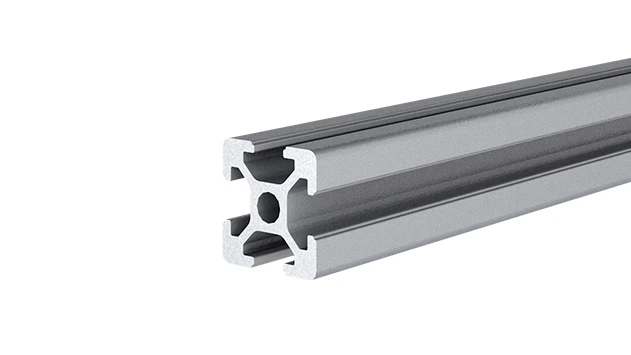
2020 is a 2.00 x 2.00CM fractional 20 series square extrusion T-slot profile with four open T-slots, one on each 2.00 face. The profile has align-a-grooves to assist in aligning connecting profiles.
Introduction: The Backbone of Modern Industry
Walk into any manufacturing plant, warehouse, or tech facility today, and you'll likely spot them: sleek, sturdy structures holding up assembly lines, organizing tools, or supporting delicate machinery. These are aluminum profiles—unassuming yet indispensable components that form the skeleton of industrial operations. From automotive factories to electronics workshops, their versatility, lightweight nature, and durability make them a go-to choice for engineers and plant managers alike. But behind every reliable aluminum profile lies a set of standards designed to ensure safety, quality, and consistency. In Europe, the 2020 EU Standard for aluminum profiles stands as the gold benchmark, setting strict guidelines that manufacturers and suppliers must meet to thrive in the competitive industrial landscape.
Why does this standard matter? For starters, non-compliant profiles can compromise workplace safety—imagine a poorly constructed workbench collapsing under heavy equipment, or a corroded profile failing in a critical production line. Beyond safety, compliance drives efficiency: profiles that meet EU standards fit together seamlessly, reduce downtime, and minimize waste. And in an era where sustainability and regulatory scrutiny are paramount, adhering to the 2020 update isn't just a legal obligation—it's a mark of trust between suppliers, businesses, and end-users. In this article, we'll dive deep into the core compliance requirements of the 2020 EU Standard, exploring what makes these profiles tick, why each requirement matters, and how they impact day-to-day industrial operations.
Understanding the 2020 EU Standard: A Step Forward in Industrial Excellence
The 2020 EU Standard for aluminum profiles didn't emerge in a vacuum. It builds on decades of industry feedback, technological advancements, and evolving priorities like environmental sustainability and worker safety. Prior to 2020, European standards for aluminum extrusion profiles focused primarily on dimensional accuracy and basic mechanical properties. The 2020 update expanded this scope, integrating stricter controls on material purity, surface treatments, and even the environmental impact of production processes. Its core objectives? To raise the bar for product reliability, reduce the risk of workplace accidents, and align with the EU's broader goals of a circular economy and reduced carbon footprint.
One of the key drivers behind the 2020 revision was the rise of complex industrial applications. As manufacturers adopted more automated systems and precision-based workflows, the demand for profiles that could withstand higher loads, tighter tolerances, and harsher environments grew. Think of a robotic assembly line in a semiconductor plant: the aluminum frames supporting these machines must not only be rigid but also resistant to static electricity and corrosion. The 2020 standard addresses these needs by introducing more granular specifications, ensuring profiles perform consistently even in specialized settings. For suppliers and wholesalers, compliance isn't just about checking boxes—it's about proving they can keep up with the demands of modern industry.

Core Compliance Requirements: What Makes a Profile "EU Standard"?
At its heart, the 2020 EU Standard is a checklist of must-meet criteria, each designed to ensure profiles are safe, durable, and fit for purpose. Let's break down the most critical requirements and why they matter in real-world scenarios.
1. Material Composition: The Foundation of Quality
Aluminum profiles are only as good as the materials they're made from. The 2020 standard sets strict rules on alloy composition, requiring manufacturers to use high-purity aluminum (typically 99.5% or higher) blended with specific alloys like magnesium, silicon, or copper to enhance strength and workability. For example, the popular 6063 alloy—widely used in extrusion—must contain between 0.45-0.9% silicon and 0.1-0.3% magnesium to meet tensile strength benchmarks. But it's not just about what's included; it's also about what's excluded. The standard prohibits harmful substances like lead, cadmium, and mercury, aligning with EU regulations such as RoHS (Restriction of Hazardous Substances) and REACH (Registration, Evaluation, Authorization, and Restriction of Chemicals).
Why does this matter? Impure alloys or toxic additives can weaken the profile over time, leading to premature failure. In food processing facilities, for instance, a profile containing lead could contaminate products, risking consumer health and costly recalls. By enforcing strict material purity, the 2020 standard ensures profiles are not only strong but also safe for use in sensitive environments.
2. Dimensional Accuracy: Precision That Matters
Imagine ordering a set of aluminum extrusion profiles to build a workbench, only to find they're slightly warped or their cross-sections don't match the design. Frustrating, right? Dimensional accuracy is where the 2020 standard leaves no room for error. It specifies tight tolerances for key metrics: straightness (no more than 0.5mm deviation per meter), cross-sectional consistency (±0.1mm for critical dimensions), and wall thickness uniformity. For complex profiles with intricate T-slots or grooves—common in modular systems—these tolerances ensure components like aluminum profile accessories (connectors, brackets, or guides) fit snugly, eliminating gaps that could compromise stability.
In practice, this means manufacturers must invest in advanced extrusion dies and quality control tools like laser scanners to verify dimensions. For a supplier, meeting these tolerances isn't just about avoiding returns—it's about building a reputation for reliability. A plant manager relying on modular racks, for example, needs to trust that each new profile will integrate seamlessly with existing setups, saving time and reducing assembly headaches.
3. Surface Treatment: Protection and Performance
Aluminum's natural resistance to corrosion is one of its biggest advantages, but the 2020 standard takes this a step further by mandating specific surface treatments. Anodizing, a process that creates a protective oxide layer, is a common requirement—with the standard specifying minimum thickness (typically 10-20µm, depending on the application) and uniformity. For profiles used in outdoor or high-moisture environments, additional coatings like powder coating may be required, with strict rules on adhesion, color fastness, and resistance to chipping.
Consider a warehouse in a coastal area, where salt air can corrosion. A profile with subpar anodizing might start pitting within months, weakening its structural integrity. The 2020 standard's surface treatment requirements ensure profiles stand up to such conditions, extending their lifespan and reducing replacement costs. For end-users, this translates to lower maintenance and greater peace of mind.
4. Mechanical Properties: Strength You Can Rely On
Tensile strength, yield strength, and elongation—these aren't just technical terms; they're measures of a profile's ability to handle real-world stress. The 2020 standard sets minimum values for these properties, varying by alloy and application. For example, structural profiles used in load-bearing frames must have a tensile strength of at least 180 MPa (megapascals) and a yield strength of 110 MPa, ensuring they don't bend or break under heavy loads. Elongation, the measure of how much a profile can stretch before fracturing, is also critical—too low, and the profile may be brittle, prone to cracking under impact.
These requirements are tested rigorously in accredited labs, where samples are pulled, bent, and compressed to simulate years of use. For a manufacturer, passing these tests is non-negotiable; for a factory owner, it means trusting that the aluminum extrusion profile supporting a 500kg assembly line won't fail unexpectedly, preventing downtime or accidents.
The Role of Accessories: Completing the Compliance Puzzle
A profile is rarely used in isolation. From aluminum profile end caps that protect workers from sharp edges to aluminum profile rubber strips that seal gaps and dampen vibrations, accessories play a crucial role in ensuring the entire system meets EU standards. The 2020 standard doesn't overlook these components—in fact, it extends compliance requirements to them, too.
Take end caps, for example. These small plastic or metal caps fit over the ends of profiles, preventing debris from entering and reducing the risk of cuts. The 2020 standard requires them to be made from non-toxic, flame-retardant materials (meeting UL94 V-0 standards for fire safety) and to fit snugly, with no risk of dislodging during use. Similarly, rubber strips used for sealing or noise reduction must be resistant to aging, temperature extremes, and chemical exposure—ensuring they don't degrade and compromise the profile's performance over time.
For suppliers, this means vetting not just their own production processes but also those of their accessory partners. A profile might meet every requirement, but if its end caps crack under heat or its rubber strips peel off, the entire system could fail an inspection. It's a reminder that compliance is a team effort, requiring collaboration across the supply chain.
Testing and Certification: Proving Compliance
Meeting requirements on paper is one thing; proving it is another. The 2020 EU Standard mandates third-party testing by accredited laboratories, where profiles undergo a battery of assessments: chemical analysis to verify alloy composition, dimensional checks with precision tools, corrosion resistance tests (like salt spray exposure), and mechanical stress tests. Only after passing these tests can a manufacturer affix the CE mark—a symbol that the product meets all EU safety, health, and environmental requirements.
Certification isn't a one-time event, either. The standard requires ongoing quality control, with regular audits and sample testing to ensure consistency. For a supplier, this means investing in in-house quality labs and training staff to monitor production processes. For buyers, the CE mark is a quick visual cue that the product has been rigorously tested—saving them the time and cost of verifying compliance themselves.
Key Compliance Metrics: A Quick Reference Table
| Requirement Category | 2020 EU Standard Specification | Real-World Impact |
|---|---|---|
| Material Purity | ≥99.5% aluminum; RoHS/REACH compliant | Reduced risk of contamination; safer for sensitive industries (food,) |
| Dimensional Tolerance | ±0.1mm (critical dimensions); 0.5mm/m straightness | Seamless integration with modular systems; fewer assembly delays |
| Anodizing Thickness | 10-20µm (depending on application) | Enhanced corrosion resistance; longer lifespan in harsh environments |
| Tensile Strength | ≥180 MPa (structural profiles) | Safe load-bearing capacity; reduced risk of structural failure |
| Accessory Compliance | End caps: UL94 V-0 fire rating; Rubber strips: UV/chemical resistance | Safer work environments; reduced maintenance costs |
Challenges and Best Practices for Suppliers
Compliance with the 2020 EU Standard isn't without its challenges. For small to mid-sized suppliers, the cost of upgrading equipment, training staff, and conducting third-party tests can be significant. Sourcing high-quality raw materials—especially in a volatile market—can also pose hurdles, as fluctuations in alloy prices or availability may strain budgets. Additionally, keeping up with evolving regulations (like updates to REACH or RoHS) requires ongoing vigilance, with potential penalties for non-compliance ranging from fines to product recalls.
Despite these challenges, there are proven strategies for success. Many suppliers start by investing in lean manufacturing processes, reducing waste and improving efficiency to offset compliance costs. Collaborating with trusted raw material providers and accessory manufacturers also helps, ensuring consistent quality across the supply chain. Regular staff training is another key—educating workers on the importance of standards and how to spot potential issues during production. Finally, maintaining open communication with customers about compliance efforts can build trust, positioning suppliers as reliable partners in an increasingly regulated industry.
Conclusion: Compliance as a Competitive Edge
The 2020 EU Standard for aluminum profiles isn't just a set of rules—it's a roadmap for excellence. By prioritizing material quality, precision, and durability, it ensures that the profiles powering our factories, warehouses, and workshops are safe, reliable, and built to last. For suppliers, compliance is more than a legal obligation; it's a chance to stand out in a crowded market, proving to customers that they deliver products they can trust. For end-users, it's peace of mind—knowing that the aluminum extrusion profile holding their tools or supporting their assembly line meets the highest standards of quality.
As industry continues to evolve—with automation, sustainability, and precision driving innovation—the 2020 standard will remain a cornerstone of progress. It's a reminder that in manufacturing, the smallest details matter, and that compliance isn't just about avoiding penalties; it's about building a future where every component works as hard as the people who rely on it. So the next time you walk through a factory or use a modular workbench, take a moment to appreciate the aluminum profiles holding it all together—they're more than just metal; they're a testament to the power of standards.