- Company Articles
- Industry articles
- Industry standards
- 2020 EU Standard Aluminum Profile: Cost-Benefit Analysis Over Non-Compliant Materials

2020 EU Standard Aluminum Profile: Cost-Benefit Analysis Over Non-Compliant Materials
Related Product
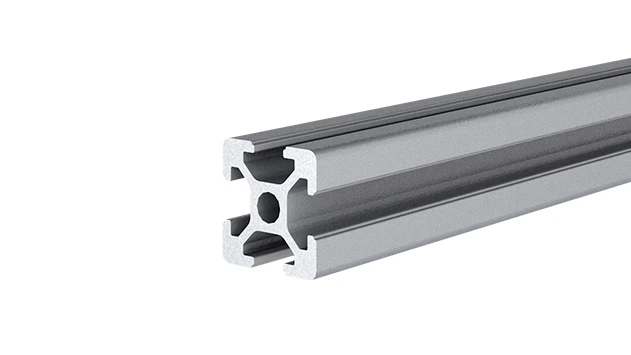
2020 EU Standard Aluminum Profile
2020 is a 2.00 x 2.00CM fractional 20 series square extrusion T-slot profile with four open T-slots, one on each 2.00 face. The profile has align-a-grooves to assist in aligning connecting profiles.
Introduction: The Hidden Costs of Cutting Corners in Material Choices
In the fast-paced world of manufacturing, every decision feels like a balancing act between quality and cost. When it comes to building workbenches, assembly lines, or storage racks, one material stands out for its versatility: aluminum. But not all aluminum profiles are created equal. Walk through any industrial supplier's catalog, and you'll find a dizzying array of options—some labeled "EU standard," others offered at rock-bottom prices with vague specifications. It's tempting to opt for the cheaper, non-compliant alternative to trim the budget. After all, a metal profile is a metal profile, right? Wrong.
The truth is, the aluminum profiles that form the backbone of your production line are more than just structural components—they're investments in your operation's efficiency, safety, and long-term profitability. This is especially true for the 2020 EU standard aluminum profile, a material engineered to meet rigorous quality and safety benchmarks. In this article, we'll dive into why choosing compliant materials like the 2020 EU standard profile isn't just a box-checking exercise, but a strategic decision that pays off in ways that go far beyond the balance sheet. We'll compare it head-to-head with non-compliant alternatives, break down the real costs of cutting corners, and show you why investing in standards today can save you from headaches (and heavy losses) tomorrow.
What Sets 2020 EU Standard Aluminum Profile Apart?
Before we jump into costs, let's clarify what makes the 2020 EU standard aluminum profile unique. This isn't just a marketing label—it's a set of strict guidelines governing everything from material composition to manufacturing precision. Developed by the European Committee for Standardization (CEN), these standards ensure that aluminum profiles meet consistent criteria for strength, durability, and safety.
At its core, the 2020 EU standard specifies the alloy composition, ensuring the aluminum contains the right blend of elements to resist corrosion, withstand heavy loads, and maintain structural integrity over time. Unlike generic profiles, which may use recycled or impure aluminum, EU-compliant profiles are made from high-grade aluminum extrusion profile, processed through controlled extrusion methods that eliminate weak points like air bubbles or uneven thickness. This precision translates to profiles that fit together seamlessly with aluminum profile accessories—think end caps, connectors, and brackets—reducing assembly time and minimizing the risk of loose or unstable structures.
Take the 2020 EU standard profile's dimensional accuracy, for example. The tolerance for width, height, and wall thickness is measured in fractions of a millimeter, ensuring that every piece works with every other piece, no matter which batch or supplier you source from. This consistency is a game-changer for manufacturers relying on modular setups, where a single misaligned profile can throw off an entire assembly line. Non-compliant profiles, by contrast, often have wildly varying dimensions, leading to frustrating gaps, wobbly joints, and the need for custom workarounds that eat into productivity.

The True Cost of Non-Compliant Aluminum Profiles
Let's talk about the elephant in the room: price tags. A non-compliant aluminum profile might cost 30% less upfront than its 2020 EU standard counterpart. On paper, that's a tempting saving—especially for small manufacturers or startups watching every penny. But here's the catch: that "saving" is often an illusion, masking a cascade of hidden costs that add up far beyond the initial purchase price.
**Short-Term Savings, Long-Term Losses**
Non-compliant profiles are typically made with lower-grade aluminum, which means they fatigue faster under stress. Imagine a workbench in an electronics factory, where technicians place heavy circuit boards and tools day in and day out. A non-compliant profile might start to bend or warp within a year, requiring costly replacements. The 2020 EU standard profile, with its higher tensile strength, could last 5–7 years under the same conditions. Do the math: replacing a workbench every year vs. once every seven years. That initial 30% savings disappears quickly when you're buying new profiles repeatedly.
**Safety Risks & Liability**
Safety is non-negotiable in manufacturing, and non-compliant profiles pose serious risks. Weakened by subpar materials, they're more likely to fail under load—whether that's a storage rack collapsing under inventory or a conveyor rail snapping mid-operation. The consequences aren't just downtime; they're potential injuries to workers, which can lead to lawsuits, workers' compensation claims, and damaged morale. In the EU, non-compliance with safety standards can also result in fines from regulatory bodies like OSHA or the European Chemicals Agency (ECHA), adding financial insult to injury.
**Maintenance Nightmares**
Even if non-compliant profiles don't outright fail, they're magnets for maintenance issues. Poorly extruded surfaces can cause aluminum profile accessories like connectors or brackets to loosen over time, requiring constant tightening. Corrosion resistance is another problem: non-compliant profiles often skip the protective coatings or anodization steps of EU-standard materials, leading to rust or pitting in humid or chemical-exposed environments. Each maintenance check, each replacement part, and each hour of downtime eats into your bottom line—costs that never appear on the initial quote for a cheap profile.
Cost-Benefit Breakdown: 2020 EU Standard vs. Non-Compliant
To truly understand the value of the 2020 EU standard aluminum profile, we need to look beyond upfront costs and examine the total cost of ownership (TCO). Let's break it down with hard numbers, using a hypothetical scenario: a manufacturer building 10 aluminum workbenches for an electronics assembly line.
The numbers speak for themselves: over seven years, the non-compliant profiles cost more than four times as much as the 2020 EU standard option. And that's not even accounting for productivity losses from downtime. A single hour of assembly line stoppage due to a failed workbench can cost thousands in lost output—something EU-compliant profiles drastically reduce the risk of.
Another hidden benefit? Productivity gains from reliable materials. Workers using sturdy, wobble-free aluminum workbenches (built with 2020 EU standard profiles) can focus on their tasks without worrying about equipment stability. This translates to faster assembly times, fewer errors, and higher overall output—benefits that boost revenue, not just cut costs.
| Factor | 2020 EU Standard Aluminum Profile | Non-Compliant Aluminum Profile |
|---|---|---|
| Initial Cost per Workbench | $350 (including aluminum profile accessories) | $245 (lower-grade materials, generic accessories) |
| Estimated Lifespan | 7 years | 2 years |
| Total Initial Investment (10 Workbenches) | $3,500 | $2,450 |
| Replacement Cost Over 7 Years | $0 (no replacement needed) | $8,575 (3 replacements: 2, 4, and 6 years) |
| Annual Maintenance Cost | $20/workbench (minimal tightening, cleaning) | $80/workbench (frequent part replacements, repairs) |
| Total Maintenance Over 7 Years | $1,400 | $5,600 |
| Potential Compliance Fines (One-Time) | $0 (fully compliant) | $5,000 (average EU fine for safety non-compliance) |
| Total Cost of Ownership (7 Years) | $4,900 | $21,625 |
Real-World Impact: Case Studies in Manufacturing
Let's ground this analysis in real-world examples. Two manufacturers—one in automotive, one in electronics—switched from non-compliant to 2020 EU standard profiles and documented the results.
**Case Study 1: Automotive Assembly Line Upgrade**
A mid-sized automotive parts manufacturer in Germany was struggling with frequent breakdowns on its transmission assembly line. The line relied on non-compliant aluminum profiles for its conveyor rails, which had begun warping under the weight of heavy gearboxes. Each breakdown caused 2–3 hours of downtime, and the company was replacing rails every 18 months at a cost of €12,000 per replacement.
In 2022, they upgraded to 2020 EU standard aluminum extrusion profile rails. The initial investment was €28,000—more than double the cost of the non-compliant rails. But the results were staggering: over two years, there were zero breakdowns, and the rails showed no signs of wear. The company estimated saving €48,000 in downtime costs alone, not counting the avoided replacement expenses. "We used to have a maintenance tech assigned to checking those rails daily," said the plant manager. "Now, he's free to work on other projects. It's like getting a full-time employee back."
**Case Study 2: Electronics Workbench Efficiency**
A Dutch electronics manufacturer producing circuit boards had 20 workbenches made with generic aluminum profiles. Workers complained that the benches wobbled, making precise soldering difficult, and the non-compliant aluminum profile accessories (like cable management brackets) kept coming loose. The company was spending €500/month on maintenance and losing an estimated 5% of daily output due to errors caused by unstable work surfaces.
They replaced the workbenches with 2020 EU standard aluminum workbench setups, complete with compatible accessories. The investment was €15,000, but within six months, maintenance costs dropped to €50/month, and output increased by 7%. "The difference is night and day," said a lead technician. "The benches feel solid, the brackets stay put, and I'm not wasting time readjusting things. It's easier to focus when your tools work like they should."
Beyond the Numbers: Intangible Benefits
While the cost-benefit table and case studies highlight the financial upside of 2020 EU standard profiles, some of the most impactful benefits are harder to quantify but equally valuable.
**Worker Confidence & Morale**
Imagine walking into a workshop where the equipment creaks, wobbles, or looks like it might give way at any moment. It's hard to feel confident in your work when you're worried about your tools. On the flip side, sturdy, well-built workbenches and racks send a message: "We care about your safety and your ability to do your job well." This boost in morale can reduce turnover and increase engagement—factors that studies show correlate with higher productivity and lower absenteeism.
**Brand Reputation & Client Trust**
In industries where quality is a selling point, using compliant materials can be a competitive advantage. When clients visit your facility and see EU-standard profiles in your production line, it signals a commitment to excellence. One electronics manufacturer we spoke to reported that a major client specifically requested proof of EU compliance for all production equipment before signing a contract. "It wasn't just about safety," the client said. "It told us they take their own processes seriously, which makes us trust their products more."
Choosing the Right Partner: Why Supplier Expertise Matters
Investing in 2020 EU standard aluminum profiles is a smart move, but it's only as effective as the supplier you choose. Not all suppliers are created equal, and even profiles labeled "EU standard" can vary in quality if the supplier cuts corners in production or sourcing.
When vetting suppliers, look for those with a proven track record in aluminum extrusion profile manufacturing and a deep understanding of EU standards. Ask for certification documents, like CE marking, which confirms compliance with health, safety, and environmental requirements. A reputable supplier should also offer guidance on aluminum profile accessories, ensuring you get brackets, connectors, and end caps that are designed to work seamlessly with the 2020 EU standard profiles. Ill-fitting accessories, even if the profile itself is compliant, can undermine the structure's integrity—so compatibility matters.
Many suppliers also provide custom cutting or machining services, which can save time and reduce waste. For example, if you need a specific length of 2020 EU standard profile for a workbench, a supplier with in-house cutting capabilities can deliver pre-cut pieces, eliminating the need for on-site sawing and reducing material waste.
Conclusion: Investing in Standards Pays Dividends
The choice between 2020 EU standard aluminum profile and non-compliant materials isn't just about following rules—it's about investing in your operation's future. While non-compliant profiles may offer short-term savings, they come with a hidden price tag: higher maintenance, frequent replacements, safety risks, and lost productivity. The 2020 EU standard profile, by contrast, delivers long-term value through durability, reliability, and compliance—benefits that translate to lower total costs, happier workers, and a stronger bottom line.
As manufacturing grows more competitive, the margin for error shrinks. Cutting corners on critical materials like aluminum profiles isn't just risky; it's a false economy. The manufacturers who thrive are those who recognize that quality materials are the foundation of efficient, safe, and profitable operations. So the next time you're comparing aluminum profile quotes, remember: the cheapest option isn't always the best deal. Sometimes, investing in standards is the smartest business decision you can make.