- Company Articles
- Industry articles
- Industry standards
- 2020 EU Standard Aluminum Profile: Custom Sizing Options for Unique Projects

2020 EU Standard Aluminum Profile: Custom Sizing Options for Unique Projects
Related Product
2020 EU Standard Aluminum Profile
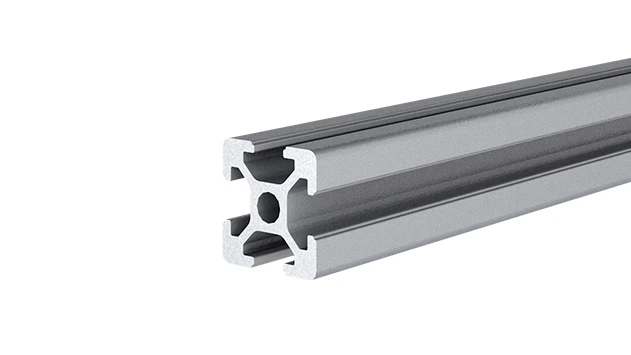
2020 is a 2.00 x 2.00CM fractional 20 series square extrusion T-slot profile with four open T-slots, one on each 2.00 face. The profile has align-a-grooves to assist in aligning connecting profiles.
Walk into any workshop, factory, or creative studio, and you'll notice something universal: projects are as unique as the people behind them. A small electronics repair shop might need a compact workbench that fits into a 6-foot corner. A car manufacturing plant could require a modular flow rack system that adjusts to different vehicle part sizes. Even a DIY enthusiast building a home robotics lab might dream of a setup that grows with their skills. The problem? Too often, the materials we rely on—rigid, one-size-fits-all metal or plastic—feel like they're working against us, not for us. That's where the 2020 EU Standard Aluminum Profile steps in. This unassuming yet versatile building block, paired with thoughtful custom sizing and the right aluminum profile accessories, is changing the game for project builders everywhere. Let's explore how it can turn your "this might not work" ideas into "look what we created."
What Is the 2020 EU Standard Aluminum Profile, Anyway?
Before we dive into custom sizing, let's get to know the star of the show: the 2020 EU Standard Aluminum Profile. If you're new to aluminum extrusion profiles, think of them as the "Lego bricks" of industrial and DIY construction—long, hollow tubes with a consistent cross-section, designed to be lightweight, strong, and infinitely configurable. The "2020" in its name refers to its dimensions: 20mm in width and 20mm in height, making it compact enough for small-scale projects but sturdy enough for industrial use. The "EU Standard" tag ensures it meets strict European guidelines for quality, safety, and sustainability—think corrosion resistance, precise tolerances, and eco-friendly manufacturing processes.
What really sets this profile apart is its T-slot design. Run your finger along its length, and you'll notice grooves (the "T-slots") that run the entire way. These slots are like built-in attachment points, allowing you to slide in bolts, brackets, or accessories without drilling holes or welding. It's this feature that makes the 2020 profile so adaptable—and why custom sizing isn't just a "nice-to-have" but a core part of its appeal. Unlike solid steel or fixed plastic, which locks you into a single shape, the 2020 profile bends (metaphorically speaking) to your project's needs. And when paired with aluminum profile accessories—things like corner connectors, end caps, or adjustable brackets—it becomes a blank canvas for creativity.
Why Custom Sizing Matters: One Size Rarely Fits All
Let's say you're building a workbench for your garage. The standard workbench kits at the hardware store are either too wide (wasting precious space) or too short (leaving you hunched over your tools). You could hack one apart, but that's time-consuming and risks weakening the structure. Now imagine ordering a 2020 EU standard aluminum profile cut to exactly 182cm—the perfect length for your space. Add a few aluminum profile accessories like adjustable feet (to level it on your uneven garage floor) and a plywood top, and suddenly you've got a workbench that feels like it was made just for you. That's the power of custom sizing.
Custom sizing isn't just about length, either. Maybe you need a profile with a thicker wall for extra strength (to hold heavy machinery) or a thinner wall for weight savings (for a mobile cart). Perhaps you need pre-drilled holes at specific intervals to mount a power strip or tool hooks. A reputable lean system supplier won't just hand you a generic 3-meter stick of aluminum—they'll work with you to tweak dimensions, wall thickness, and even surface finishes (like anodizing for extra corrosion resistance) to match your project's unique demands. This level of personalization turns "making do" into "making exactly what I need."
Another hidden benefit? Waste reduction. How many times have you bought a 4-foot board only to cut off 18 inches and toss the scraps? With custom sizing, you order only what you need, cutting down on material waste and saving money in the long run. It's a small step, but for businesses or hobbyists watching their budgets, it adds up. Plus, since aluminum is 100% recyclable, even those tiny offcuts can be repurposed—aligning with the sustainability goals many projects now prioritize.

Key Applications: Where Custom 2020 Profiles Shine
The 2020 EU Standard Aluminum Profile isn't a one-trick pony. Its custom sizing options make it a go-to for projects across industries. Let's break down a few of the most common (and creative) uses:
1. Workbenches: From DIY to Industrial
Workbenches are the backbone of any workspace, and the 2020 profile excels here. A small jewelry maker might need a 120cm-long, lightweight bench with built-in storage slots for tools. A automotive repair shop could require a 300cm behemoth with a steel top and heavy-duty casters (another great aluminum profile accessory!) to roll parts around. With custom sizing, you can adjust the height (standard workbenches are often 80cm, but maybe you need 85cm to avoid back strain), the depth (60cm for tight spaces, 90cm for sprawling projects), and even the number of shelves. Add T-slot accessories like tool holders or cable management clips, and your workbench becomes an organized, efficient hub—no more searching for lost screwdrivers or tripping over cords.
2. Lean Manufacturing Systems: Streamlining the Factory Floor
In manufacturing, "lean" is all about reducing waste—whether that's time, space, or materials. A lean system supplier will often recommend 2020 profiles for building flow racks, assembly stations, or material trolleys because they're easy to reconfigure as production needs change. For example, a food packaging plant might start with a 2-row flow rack but later need to add a third row to keep up with demand. With custom-sized 2020 profiles, they can extend the rack by 60cm and add new roller tracks (another handy accessory!) without rebuilding the entire system. It's this flexibility that makes the 2020 profile a favorite among lean system suppliers—they know their clients' needs evolve, and the profile evolves with them.
3. Retail Displays: Standing Out in a Crowded Store
Retailers are always looking for ways to make their displays pop. A clothing boutique might want a minimalist shelf that's exactly 150cm wide to fit between two windows. A tech store could need a custom-height stand for showcasing laptops, angled at 15° for better visibility. The 2020 profile, with its sleek aluminum finish and custom sizing, fits the bill. Unlike bulky wooden shelves or plastic stands that look cheap, aluminum profiles add a modern, professional touch—plus, they're lightweight enough to move around during store rearrangements. Add LED strips (mounted via T-slot brackets, of course) and you've got a display that draws customers in, not just holds products.
Aluminum Profile Accessories: The Glue That Holds Custom Projects Together
A great profile is only as good as the accessories that go with it. Aluminum profile accessories are the unsung heroes of custom projects, turning basic tubes into functional systems. Let's take a closer look at some must-haves and how they work with custom-sized 2020 profiles:
| Accessory | What It Does | Why Custom Sizing Needs It |
|---|---|---|
| Corner Connectors | Joins two profiles at angles (90°, 45°, or 135°) without welding. | Custom-length profiles often need to be joined at non-standard angles (e.g., a 135° corner for a triangular workbench). |
| T-slot Nuts & Bolts | Slides into T-slots to attach shelves, brackets, or tools. | Allows you to mount accessories anywhere along the custom-cut profile, not just at pre-drilled holes. |
| Adjustable Feet | Screws into the bottom of profiles to level uneven surfaces. | Custom-height projects (like a workbench) need to stay stable—even on floors that aren't perfectly flat. |
| End Caps | Snap or screw onto the ends of profiles to cover sharp edges. | Custom-cut profiles can have rough edges; end caps add safety and a polished look. |
| Roller Tracks | Mount along profiles to create sliding surfaces for bins or parts. | Ideal for flow racks or assembly lines where materials need to move smoothly—custom lengths ensure no gaps between tracks. |
The best part? Most aluminum profile accessories are designed to work seamlessly with the 2020 EU standard, so you don't have to worry about compatibility issues. A lean system supplier will often bundle profiles and accessories, making it easy to get everything you need in one order. And since the accessories are modular, you can start simple (just a basic frame) and add more later (like extra shelves or hooks) as your project grows.
Case Study 1: The Garage Workshop Makeover
Meet Alex, a hobbyist woodworker with a tiny 2.5m x 3m garage. He wanted a workbench, tool storage, and a shelf for his miter saw—all without tripping over his car. A standard 1.8m workbench was too long, so he ordered 2020 EU standard aluminum profiles cut to 150cm (length) and 85cm (height, to match his height). He added adjustable feet to level it on his sloped garage floor and a plywood top. For storage, he built two 60cm-wide shelves using shorter 2020 profiles and corner connectors. To save space, he mounted his miter saw on a fold-down bracket (attached via T-slot nuts) that tucks up when not in use. Total cost? Around $200—cheaper than a pre-made kit, and perfectly tailored to his space. "I used to dread working in the garage because it felt cramped," Alex says. "Now, everything has a place, and I can actually park my car without moving tools!"
Case Study 2: A Small Bakery's Lean Upgrade
Maria owns a family-run bakery that supplies local cafes. Her team was wasting 30 minutes daily moving trays of pastries from the oven to the packaging station—until she hired a lean system supplier to redesign her workflow. The supplier recommended a custom flow rack made with 2020 EU standard aluminum profiles. Instead of a generic 3-tier rack, they built a 4-tier rack (to match Maria's oven height) with 120cm-long roller tracks (custom-cut to fit her pastry trays). The rack was positioned just steps from the oven, so trays slide directly to the packaging table. They even added a small shelf (cut to 40cm) for tools like spatulas and labels. "We're now packaging 20% more pastries per hour," Maria reports. "And since the rack is made with aluminum, it's easy to wipe clean—no more crumbs getting stuck in wooden shelves!"
How to Order Custom Sizing: Tips for Working with Suppliers
So, you're sold on the 2020 EU standard aluminum profile and ready to order custom sizes. How do you ensure the process goes smoothly? Here are a few tips:
1. Measure Twice, Order Once: This might sound obvious, but it's easy to rush measurements. Use a laser measure for accuracy, and account for things like overhangs (e.g., a workbench top that extends 5cm beyond the frame). If you're building a multi-part system (like a flow rack with multiple tiers), draw a quick sketch with all dimensions—length, height, depth, and angles. Most lean system suppliers will ask for a diagram, so they can double-check your numbers.
2. Ask About Tolerances: Aluminum extrusion profiles are cut with high precision, but there's always a small margin of error (usually ±0.5mm). For most projects, this is negligible, but if you're building something with tight fits (like a sliding door), mention it to your supplier. They might adjust the cut slightly to ensure a perfect fit.
3. Bundle Accessories with Profiles: Ordering aluminum profile accessories at the same time as your custom profiles saves on shipping and ensures compatibility. A good supplier will help you pick the right accessories—for example, if you're building a mobile cart, they'll recommend locking casters that fit the 2020 profile's T-slots.
4. Think Long-Term: Will your project grow? If you're building a shelf, maybe order a few extra 2020 profiles cut to 50cm lengths—you can add them later to extend the shelf if needed. Aluminum is durable, so even extra pieces won't go to waste.
The Future of Custom Sizing: Sustainability and Innovation
As more industries prioritize sustainability, the 2020 EU standard aluminum profile is poised to become even more popular. Aluminum is 100% recyclable, and its lightweight nature reduces shipping emissions compared to steel. Custom sizing further cuts waste by ensuring you only use what you need—no more excess material ending up in landfills. Plus, as 3D printing and digital design tools become more accessible, we might soon see even more personalized options, like profiles with custom T-slot patterns or curved sections for unique shapes.
Another trend? Integration with smart technology. Imagine a 2020 profile workbench with built-in sensors (mounted via T-slots) that track tool usage or monitor temperature in a lab. Or a flow rack with LED indicators (powered through the profile's T-slots) that alert workers when parts are running low. The possibilities are endless—and it all starts with a profile that's designed to adapt.
Final Thoughts: Your Project Deserves to Be One-of-a-Kind
At the end of the day, projects are about solving problems, pursuing passions, or building something meaningful. The materials you use should support that vision, not limit it. The 2020 EU standard aluminum profile, with its custom sizing options and endless aluminum profile accessories, does just that. It's not just a piece of metal—it's a tool for turning "I wish" into "I did."
Whether you're a DIYer with a garage workshop, a small business owner streamlining your workflow, or a designer creating a one-of-a-kind retail display, this profile empowers you to build exactly what you need. And when you partner with a lean system supplier who understands your unique goals, the process becomes even easier. So, the next time you're faced with a "one-size-fits-all" solution that doesn't fit, remember: the 2020 EU standard aluminum profile is here to say, "Tell me what you need—I'll make it work."
Here's to building projects that are as unique as you are.