- Company Articles
- Industry articles
- Industry standards
- 2020 EU Standard Aluminum Profile for Flexible Production Lines: Automotive Industry Applications

2020 EU Standard Aluminum Profile for Flexible Production Lines: Automotive Industry Applications
Related Product
2020 EU Standard Aluminum Profile
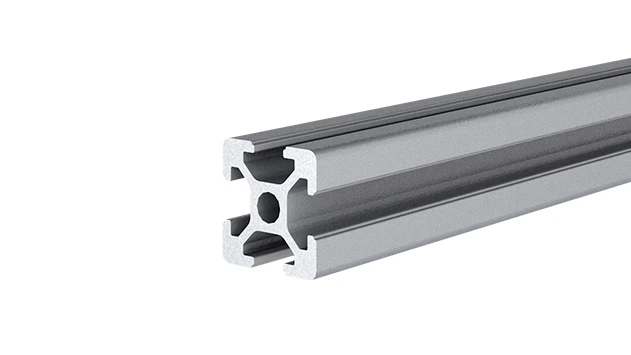
2020 is a 2.00 x 2.00CM fractional 20 series square extrusion T-slot profile with four open T-slots, one on each 2.00 face. The profile has align-a-grooves to assist in aligning connecting profiles.
Walk into any modern automotive factory, and you'll notice a quiet revolution unfolding on the shop floor. Gone are the days of clunky, fixed steel structures that take weeks to reconfigure when a new model launches or a production line needs tweaking. Instead, there's a lightweight, adaptable hero stepping into the spotlight: the 2020 EU standard aluminum profile. It's not just a piece of metal—it's the backbone of flexible manufacturing, the unsung enabler of faster production cycles, and the secret to keeping automotive plants agile in an industry that never stops evolving.
In this article, we'll dive into why this specific aluminum profile has become a game-changer for automotive production lines. We'll explore its unique features, how it integrates with essential components like aluminum profile accessories and roller tracks, and why manufacturers are swapping out old systems for this modular marvel. Whether you're a production manager looking to cut downtime or a plant engineer aiming to boost efficiency, this is the story of how a simple profile is reshaping the future of car manufacturing.
What Makes the 2020 EU Standard Aluminum Profile Special?
First, let's get the basics straight. The "2020" in its name refers to its dimensions: 20mm in width and 20mm in height. It's part of the EU standard series, which means it's designed to meet strict European manufacturing norms for precision, durability, and safety. But numbers alone don't tell the story. What really sets this profile apart is its T-slot design—a series of grooves running along its length that act like a universal connector for almost any accessory you can imagine. Think of it as a Lego brick for grown-ups, but built to withstand the rigors of a busy factory.
Made from high-grade aluminum alloy, it's surprisingly lightweight—around 0.7 kg per meter—yet strong enough to support loads up to 50 kg/m (depending on the setup). That balance is crucial in automotive plants, where heavy components like engine parts or chassis sections need stable support, but workers also need to reposition workstations without wrestling with bulky steel frames. And unlike steel, aluminum resists corrosion, so it holds up well in environments where lubricants, coolants, or even the occasional spill are part of the daily grind.
| Profile Type | Dimensions (WxH, mm) | Material Thickness (mm) | Max Load Capacity (kg/m) | Common Automotive Applications |
|---|---|---|---|---|
| 2020 EU Standard | 20x20 | 1.5–2.0 | 30–50 | Workbenches, small material racks, lightweight assembly jigs |
| 3030 EU Standard | 30x30 | 2.0–3.0 | 80–120 | Heavy-duty assembly lines, roller track frames |
| 4040 EU Standard | 40x40 | 2.5–4.0 | 150–200 | Large turnover trolleys, main conveyor supports |
From Parts to Production: How It Powers Automotive Lines
The 2020 profile doesn't work alone—it's part of an ecosystem. Pair it with aluminum profile accessories, and suddenly you can build almost anything: workbenches, material racks, tool holders, even custom assembly stations. Let's break down three key areas where it shines in automotive manufacturing.
1. Workbenches: Where Precision Meets Comfort
Ask any automotive worker what makes or breaks their day, and they'll probably mention their workbench. It's where they spend hours assembling intricate parts—think wiring harnesses, dashboard components, or sensor modules. A poorly designed bench leads to fatigue, errors, and slowdowns. The 2020 profile changes that.
With its modular design, you can build a workbench that's tailored to the task. Need a surface at elbow height for installing door handles? Adjust the legs using height-adjustable feet (a common aluminum profile accessory). Want to add a tool rail above for easy access to screwdrivers and pliers? Screw a bracket into the T-slot and clip it on. Even better, if the next shift is working on a different part, you can reconfigure the bench in minutes—no welding, no drilling, just a few twists of a hex key.
Take the "Workbench E (single deck-without caster)" from many suppliers' catalogs. It's built using 2020 profiles and a lightweight aluminum honeycomb panel top. Workers at a German auto parts plant recently switched to these benches and reported a 15% reduction in time spent reaching for tools—all because they could add custom tool holders exactly where they needed them.
2. Roller Tracks: Keeping Parts Flowing Smoothly
In automotive production, parts need to move—from the warehouse to the assembly line, from one station to the next. That's where roller tracks come in, and the 2020 profile is the perfect partner for these systems. Roller tracks are essentially pathways of rotating wheels that let bins, trays, or even small subassemblies glide along with minimal effort. But to work well, they need a stable, adjustable frame—enter the 2020 profile.
Aluminum profile accessories like "roller track placon mount for aluminum profile flat" or "aluminum guide rail A" attach directly to the T-slots of the 2020 profile, creating a sturdy base for the roller track. Whether you need a straight line, a curve, or a decline to let gravity do the work, the modularity of the profile means you can design a track that fits your exact layout. And if production needs change—say, you need to reroute parts to a new station—you can disassemble and rebuild the track in a fraction of the time it would take with a fixed steel setup.
A case in point: a Spanish car manufacturer was struggling with bottlenecks in their door panel assembly. Parts were piling up at one station because the old steel roller track was too rigid to reposition. They replaced it with a 2020 profile-based track using "plastic roller track guide rail yellow" (for high visibility) and saw parts flow improve by 30%. Workers no longer had to stop and manually move bins—everything glided right where it needed to be.
3. Lean Systems: Cutting Waste, Boosting Efficiency
At the heart of modern automotive manufacturing is the principle of lean production—eliminating waste, streamlining processes, and focusing on value. The 2020 EU standard aluminum profile is a lean system's best friend. Its flexibility means you can design production lines that adapt to demand, rather than the other way around.
For example, consider material racks. Traditional steel racks are fixed—if you need to store a new part with different dimensions, you're out of luck. But with 2020 profiles and accessories like "internal straight aluminum joints" or "90° aluminum profile connectors," you can build a rack that adjusts on the fly. Need more shelves? Add them. Need taller sections for larger parts? Extend the legs. It's all about using only what you need, when you need it—no more wasted space or unused capacity.
A Japanese automaker famous for its lean practices recently deployed 2020 profile-based "Material Rack B (3 row and 3 floor)" in their component warehouse. By adjusting the shelf heights to fit each part perfectly, they reduced the number of racks needed by 20%—freeing up floor space for a new assembly cell. That's the power of lean thinking paired with the right tools.

Beyond the Factory Floor: Why Suppliers Love It Too
It's not just manufacturers who benefit—suppliers of lean solutions are also embracing the 2020 EU standard aluminum profile. Why? Because it simplifies inventory and customization. Instead of stocking dozens of prefab steel structures, suppliers can keep a few lengths of 2020 profile and a range of aluminum profile accessories, then build exactly what the customer needs on demand. It's like a restaurant with a flexible menu—same core ingredients, endless combinations.
For example, a lean pipe supplier might get an order for a custom turnover trolley. Using 2020 profiles, swivel casters (another key accessory), and a few brackets, they can design and assemble the trolley in a day, rather than weeks of welding and painting steel. This speed to delivery is a huge win for manufacturers facing tight deadlines or sudden production changes.
The Future: Where 2020 Profiles and Automotive Innovation Meet
As automotive manufacturing moves toward electric vehicles (EVs) and more frequent model updates, flexibility will only become more critical. EVs have different component sizes and assembly requirements than traditional cars, and manufacturers can't afford to rebuild entire production lines every time a new model launches. The 2020 EU standard aluminum profile is poised to be a key player in this transition.
Imagine a factory where assembly lines reconfigure overnight to switch from producing a sedan to an SUV, or where workstations adapt automatically to the height of the worker using smart, adjustable 2020 profile frames. With advancements in aluminum profile accessories—like sensors that monitor load capacity or IoT-enabled connectors that track usage—this isn't science fiction. It's the future of manufacturing, and it's built on the foundation of modular, adaptable systems like the 2020 profile.
Final Thoughts: Why the 2020 Profile Deserves a Spot on Your Shop Floor
At the end of the day, manufacturing is about people—workers who need the right tools to do their jobs efficiently, managers who need to meet tight deadlines, and engineers who need to keep pace with an ever-changing industry. The 2020 EU standard aluminum profile isn't just a piece of aluminum; it's a tool that empowers these people to adapt, innovate, and thrive.
Whether you're building workbenches, roller tracks, or entire lean systems, this profile offers the perfect blend of strength, flexibility, and cost-effectiveness. And with a wide range of aluminum profile accessories available from suppliers worldwide, the possibilities are almost endless. So the next time you walk through your factory, take a look at those rigid, outdated structures. Could they be replaced with something better? Chances are, the 2020 EU standard aluminum profile has the answer.