- Company Articles
- Industry articles
- Industry standards
- 2020 EU Standard Aluminum Profile for Lean Management Accessories: Process Improvement

2020 EU Standard Aluminum Profile for Lean Management Accessories: Process Improvement
Related Product
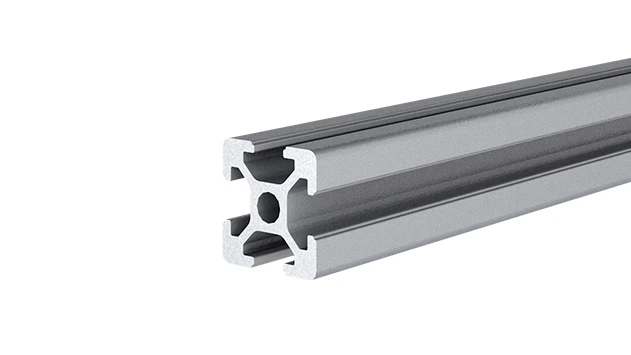
2020 EU Standard Aluminum Profile
2020 is a 2.00 x 2.00CM fractional 20 series square extrusion T-slot profile with four open T-slots, one on each 2.00 face. The profile has align-a-grooves to assist in aligning connecting profiles.
Enhancing Efficiency, Flexibility, and Sustainability in Modern Manufacturing
The Heartbeat of Lean Manufacturing: Why Your Workspace Matters
Walk into any thriving manufacturing facility today, and you'll notice a common thread: order. Tools in their place, materials flowing seamlessly from one station to the next, and teams working without the friction of clunky, outdated setups. This isn't just luck—it's the result of intentional lean management, a philosophy that hinges on eliminating waste, optimizing flow, and empowering teams to do their best work. But here's the thing: lean management isn't just about processes on paper. It's about the physical spaces where those processes come to life. And at the center of that physical ecosystem? The tools and accessories that make flexibility and efficiency possible.
For years, manufacturers have grappled with rigid, one-size-fits-all workspaces. Heavy steel racks that take days to reconfigure, wooden workbenches that warp under weight, and clunky conveyor systems that break down during peak production—these are the silent productivity killers. They slow down innovation, make it hard to adapt to changing product lines, and even contribute to workplace fatigue. But what if there was a solution that could transform your workspace from a static obstacle into a dynamic, responsive partner? Enter the 2020 EU Standard Aluminum Profile: a modular, lightweight, and endlessly adaptable building block that's redefining how lean systems are built and maintained.
The Cost of Outdated Workspace Systems: A Closer Look
Let's paint a picture. Imagine a mid-sized electronics assembly plant. Their production line relies on steel workbenches that were installed a decade ago. When a new product with different dimensions comes in, the team has to call in contractors to cut and weld the steel frames—a process that takes 48 hours and costs thousands. Meanwhile, their flow racks, made of wood, are starting to splinter, leading to scratched components and frequent replacements. The roller tracks on their conveyors? They're rusting, causing jams that halt production for 20 minutes at a time. Sound familiar?
These aren't just minor inconveniences. They add up. According to a 2023 study by the Manufacturing Efficiency Institute, outdated workspace systems account for up to 15% of unplanned downtime in average factories. That's 15% of your team's time, 15% of your energy costs, and 15% of missed deadlines—all preventable. Worse, rigid systems stifle the very adaptability that lean management demands. When your workspace can't keep up with design changes, customer demands, or new regulations, your lean goals become little more than buzzwords.
The root of the problem? Traditional materials like steel and wood are built for permanence, not flexibility. They're heavy, hard to modify, and often incompatible with modern accessories like ESD-safe components or modular roller tracks. What manufacturers need is a system that's as agile as their processes—a system where reconfiguration takes hours, not days; where durability meets lightweight design; and where every component works together seamlessly. That's where the 2020 EU Standard Aluminum Profile shines.

2020 EU Standard Aluminum Profile: The Lean Manager's Secret Weapon
So, what makes the 2020 EU Standard Aluminum Profile different? Let's start with the basics. This isn't just any aluminum extrusion. It's engineered to meet strict EU standards for quality, safety, and sustainability, with precise dimensions (typically 20mm x 20mm, though variations exist) and a T-slot design that acts as a universal connector for accessories. Think of it as the LEGO brick of manufacturing—strong enough to support heavy loads, light enough to move by hand, and infinitely combinable with hundreds of compatible parts.
But it's not just about modularity. The 2020 profile is made from high-grade aluminum alloy, which brings a host of benefits: it's corrosion-resistant, so it holds up in humid or harsh environments; it's non-magnetic, making it ideal for electronics manufacturing; and it's ESD (Electrostatic Discharge) compatible when paired with the right accessories—critical for protecting sensitive components like circuit boards. And because aluminum is lighter than steel (about 1/3 the weight), it reduces the risk of workplace injuries from heavy lifting and makes reconfigurations a one-person job.
Let's take a real-world example. A automotive parts supplier in Germany recently switched their entire assembly line to 2020 EU Standard Aluminum Profile systems. Previously, changing the layout for a new part required welding steel frames and hiring external contractors—costing €8,000 and taking 3 days. With the aluminum profile system? Their in-house team reconfigured the workbenches, flow racks, and roller tracks in just 8 hours, using nothing but hex keys and pre-made accessories. The result? They saved €7,500 per reconfiguration and cut downtime by 90%. That's the power of adaptability.
Traditional Workspace Systems vs. 2020 EU Standard Aluminum Profile Systems
| Feature | Traditional Steel/Wood Systems | 2020 EU Standard Aluminum Profile Systems |
|---|---|---|
| Assembly Time | 2–5 days (requires welding/tools) | 1–8 hours (tool-free with T-slot accessories) |
| Reconfiguration Flexibility | Low (permanent; requires cutting/welding) | High (modular; parts can be reused/rearranged) |
| Weight | Heavy (steel: ~7.85g/cm³; wood: ~0.6g/cm³ but bulky) | Lightweight (aluminum: ~2.7g/cm³; 60% lighter than steel) |
| Durability | Steel: high, but prone to rust; Wood: low, prone to warping/splintering | High (corrosion-resistant; no warping; 50+ year lifespan) |
| ESD Compatibility | Limited (requires additional coatings for steel; wood is non-conductive but not ESD-rated) | Yes (with ESD-safe accessories like black ESD wheels, conductive joints) |
| Long-Term Cost | High (frequent replacements; labor for modifications) | Low (reusable parts; minimal maintenance; energy savings from lighter weight) |
Beyond the Profile: The Accessories That Make Lean Systems Tick
A great profile is only as good as the accessories that bring it to life. The 2020 EU Standard Aluminum Profile ecosystem includes hundreds of compatible parts, each designed to solve specific lean management challenges. Let's dive into the most impactful ones and how they transform workflows.
1. Roller Tracks: The Backbone of Material Flow
In lean manufacturing, "flow" is everything. Materials should move from storage to assembly to shipping with minimal manual handling. That's where roller tracks come in—and the 2020 profile's T-slot design makes integrating them a breeze. Whether you need 40mm steel roller tracks with yellow wheels for general use, 38mm aluminum roller tracks with ESD-safe black wheels for electronics, or mini aluminum tracks for small parts, there's a solution that snaps directly into the profile's T-slots.
Take the plastic roller track guide rails, available in yellow and grey. These lightweight rails fit seamlessly with the 2020 profile and reduce friction, allowing boxes or totes to glide smoothly from one workstation to the next. For high-volume areas, the 85 staggered steel roller track is a game-changer—it prevents jams by spacing rollers unevenly, ensuring materials keep moving even when loaded with varying weights. And because all these tracks are modular, you can add curves, drops, or stops by swapping out connectors—no drilling or adhesives required.
2. Workbenches: Ergonomics Meets Efficiency
A workbench isn't just a table—it's where your team spends 8+ hours a day, so comfort and functionality directly impact productivity. The 2020 profile's workbench systems, like the "Workbench E (Single Deck—Without Caster)," are designed with ergonomics in mind. You can adjust the height by swapping out leg joints, add tool holders or monitor arms via T-slot accessories, and even integrate ESD mats to protect sensitive components.
What sets these workbenches apart is their adaptability. Need a larger surface for a new product? Add an aluminum honeycomb panel to extend the deck. Want to reduce bending? Install a roller track along the back edge to slide materials closer. And when the product line changes, you can disassemble the bench, reuse the profile and accessories, and build a new setup in under an hour. Compare that to traditional wooden workbenches, which are fixed in size and often need to be replaced entirely when needs change.
3. Flow Racks: Smart Storage That Saves Space
Storage is often the forgotten hero of lean systems. Poorly organized racks lead to wasted time searching for parts, overstocking, and clutter. The 2020 profile's flow racks—like "Material Rack B (3 Row and 3 Floor)"—solve this by combining vertical storage with gravity-fed roller tracks. Parts are loaded from the back (higher) end and slide forward as they're used, ensuring FIFO (First-In, First-Out) inventory management and eliminating the need to reach deep into shelves.
These racks are also customizable. Use stainless steel swivel roller balls (1 inch or 0.5 inch) for small, irregularly shaped parts, or aluminum guide rails for larger totes. Add dividers to separate SKUs, or mount casters (via caster accessories like the "360° swivel expanding stem casters with brake") to make the entire rack mobile for line-side replenishment. It's storage that adapts to your inventory, not the other way around.
4. Joints and Connectors: The Glue That Holds It All Together
None of this modularity would work without reliable joints and connectors. The 2020 profile ecosystem includes a staggering array of options, from 90° internal rotation aluminum joints for right-angle connections to parallel aluminum joints that hold two profiles side-by-side. The internal straight aluminum joint is a favorite for building frames—it slides into the T-slot and locks in place with a setscrew, creating a strong, rattle-free connection.
For more complex setups, the multi-angle fixed aluminum joint lets you connect profiles at 30°, 45°, 60°, or 90° angles, opening up endless design possibilities. And because these joints are made from the same aluminum alloy as the profile, they match in strength and corrosion resistance—no weak links in the chain.
From Blueprint to Reality: Implementing 2020 Aluminum Profile Systems
So, you're convinced the 2020 EU Standard Aluminum Profile is right for your facility—now what? The beauty of this system is that it's designed for incremental adoption. You don't have to overhaul your entire plant at once. Start small: maybe replace a single workbench or flow rack to test the waters. Most suppliers offer starter kits that include profiles, basic joints, and a few accessories, making it easy to experiment.
When planning your first project, involve your team. The operators who use the workspace daily often have the best insights into what works and what doesn't. Ask: Where do bottlenecks happen? What tools are hard to reach? What materials take the longest to move? Use their feedback to design a system that solves real pain points. For example, if your team spends too much time bending to reach parts, design a flow rack at waist height with roller tracks that feed directly to the workbench.
Once installed, the learning curve is minimal. Most accessories require only a hex key or Allen wrench to install, and many suppliers offer video tutorials for common setups. Within a week, your team will be reconfiguring the system on their own—adjusting a workbench height here, adding a roller track there—to fit their evolving needs. And because the system is so durable, you'll rarely need to replace parts; instead, you'll repurpose them for new projects, reducing waste and cutting costs over time.
The Future of Lean Manufacturing: Sustainability and Innovation
Lean management has always been about more than efficiency—it's about respect for people and the planet. The 2020 EU Standard Aluminum Profile aligns with this ethos in ways traditional materials can't. Aluminum is 100% recyclable, and recycling it uses just 5% of the energy required to produce new aluminum. When you invest in a modular aluminum system, you're not just buying a workspace—you're investing in a circular economy where parts are reused, not discarded.
Looking ahead, we're seeing exciting innovations in the 2020 profile ecosystem, like smart accessories with IoT sensors that track material flow or monitor workbench usage. Imagine a roller track that alerts you when it's running low on parts, or a workbench that adjusts height automatically based on the operator's preferences. These aren't science fiction—they're already in development, and they'll integrate seamlessly with the existing T-slot infrastructure.
Your Lean Journey Starts with the Right Foundation
At the end of the day, lean management is about creating a workspace that empowers your team to do their best work—one that's flexible, efficient, and built to adapt. The 2020 EU Standard Aluminum Profile isn't just a tool; it's a partner in that journey. It turns the chaos of outdated systems into the calm of a well-oiled machine, where every part has a purpose and every process flows.
So, whether you're a small workshop looking to streamline your assembly line or a large manufacturer aiming to reduce downtime, the 2020 profile and its accessories offer a path forward. It's time to stop working around your workspace—and start working with it. Your team, your bottom line, and your lean goals will thank you.