- Company Articles
- Industry articles
- Industry standards
- 2020 EU Standard Aluminum Profile for Material Handling Equipment: Safety Compliance

2020 EU Standard Aluminum Profile for Material Handling Equipment: Safety Compliance
Related Product
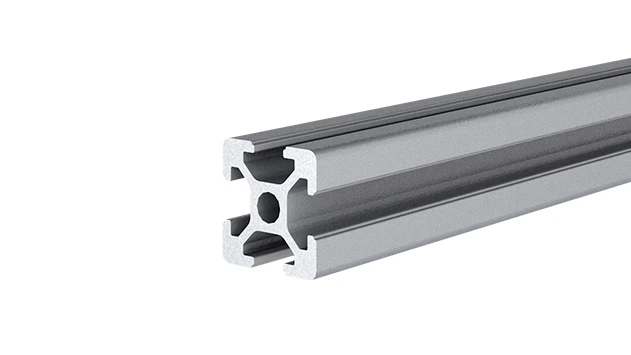
2020 EU Standard Aluminum Profile
2020 is a 2.00 x 2.00CM fractional 20 series square extrusion T-slot profile with four open T-slots, one on each 2.00 face. The profile has align-a-grooves to assist in aligning connecting profiles.
Walk into any manufacturing plant, warehouse, or logistics hub, and you'll quickly realize: material handling is the unsung hero of operations. It's the workbenches where products are assembled, the roller tracks that move components seamlessly, and the trolleys that ferry goods from A to B. But here's the thing—these tools, while essential, can also be sources of risk if they're not built with safety in mind. In the European union, where workplace safety regulations are among the strictest in the world, the 2020 EU Standard Aluminum Profile has emerged as a cornerstone for designing material handling equipment that doesn't just work hard, but works safely. This isn't about ticking boxes on a compliance form; it's about creating environments where every worker feels secure, every process runs smoothly, and every piece of equipment contributes to both efficiency and peace of mind.
What Makes the 2020 EU Standard Aluminum Profile Different?
Let's start with the basics: aluminum profiles have been used in material handling for decades, but the 2020 EU standard takes things to a new level. At its core, this profile is crafted from high-grade 6063-T5 aluminum alloy, a material chosen for its unique blend of strength, lightweight properties, and corrosion resistance. Unlike generic aluminum or steel alternatives, this alloy undergoes a precise extrusion process that creates uniform, consistent profiles—no weak spots, no inconsistencies, just reliable performance. But what truly sets it apart is its design: the iconic T-slot structure, which isn't just a feature for attaching accessories (though that's a big plus); it's a safety innovation. The T-slots allow for modular, tool-free assembly, reducing the risk of human error during setup, and they're engineered to distribute weight evenly, preventing stress fractures that could lead to equipment failure.
Think of it this way: a generic aluminum profile might look similar, but it could be made from recycled or lower-grade alloy, with slots that are poorly cut or unevenly spaced. Over time, that translates to wobbly workbenches, roller tracks that jam, or trolleys that buckle under load—all scenarios that put workers at risk. The 2020 EU standard eliminates that guesswork. Every profile is tested rigorously for tensile strength (minimum 180 MPa), yield strength (110 MPa), and elongation (8%), ensuring it can handle the daily grind of material handling without compromising.
Safety Compliance: The Core of the 2020 EU Standard
Compliance isn't a one-size-fits-all concept, especially when it comes to workplace safety. The 2020 EU standard dives deep into specific areas where material handling equipment often falls short, addressing everything from load capacity to ergonomics. Let's break down the key safety pillars:
1. Material Integrity: No Cutting Corners on Strength
Imagine a workbench in a electronics factory, where workers spend 8-hour shifts assembling delicate components. If that workbench's frame is made from subpar aluminum, it might start to sag under the weight of tools, PCBs, and testing equipment. Over time, that sagging could lead to misaligned assemblies, or worse, the bench could collapse entirely. The 2020 EU standard prevents this by mandating strict material quality controls. The 6063-T5 alloy isn't just strong—it's ductile, meaning it can absorb impact without shattering. For example, in drop tests conducted under EU guidelines, these profiles withstand impacts of up to 50 Joules (the equivalent of a 5kg weight falling from 1 meter) without permanent deformation. That's critical in busy warehouses where accidental collisions with trolleys or forklifts are a real risk.
2. T-Slot Design: Safety in Every Groove
The T-slot isn't just for attaching shelves or tool holders; it's a safety feature. The 2020 standard specifies the exact dimensions of these slots—width, depth, and wall thickness—to ensure compatibility with certified aluminum profile accessories. Why does that matter? Because generic accessories (think cheap plastic brackets or ill-fitting bolts) can loosen over time, causing components to detach. The EU standard requires that all accessories—whether it's a caster wheel mount, a roller track placon mount, or a workbench shelf bracket—lock securely into the T-slots, with no wiggle room. Even better, the slots are designed to prevent sharp edges; their rounded corners reduce the risk of cuts or scrapes when workers adjust equipment, a small detail that makes a big difference in day-to-day safety.
3. Load-Bearing Capacity: Built for Real-World Stress
Let's talk numbers: a typical roller track in a distribution center might carry boxes weighing 20kg each, moving at speeds of up to 0.5m/s. If the aluminum profile underpinning that track isn't rated for that load, the consequences could be catastrophic—boxes toppling, tracks bending, workers getting injured. The 2020 EU standard doesn't leave load ratings to chance. Each profile size (from the compact 2020 to the heavy-duty 4080) comes with a clear load capacity chart, tested under ISO 8302 conditions (standardized temperature, humidity, and stress cycles). For example, a 2020 EU standard profile (20mm x 20mm) can safely support 75kg per linear meter when used in a horizontal roller track setup, while the larger 4040 profile can handle up to 250kg/m. These aren't arbitrary numbers; they're based on finite element analysis (FEA) and real-world testing, ensuring that even under maximum load, the profile deflects by no more than 0.5mm per meter—minimal enough to prevent material jams or equipment strain.
4. Ergonomics: Safety Starts with Comfort
Safety isn't just about preventing accidents; it's about reducing long-term harm, too. Repetitive strain injuries (RSIs) are a silent epidemic in material handling, often caused by poorly designed workbenches or awkwardly positioned roller tracks. The 2020 EU standard addresses this by integrating ergonomic principles into the profile's design. For instance, workbenches built with these profiles can be easily adjusted in height (thanks to telescoping aluminum legs and quick-lock T-slot brackets), allowing workers of different statures to find their ideal position. Roller tracks, too, can be angled precisely (0-15 degrees) to control material flow speed, reducing the need for workers to bend, reach, or strain to catch items. Even the surface finish matters: the profiles are anodized to create a smooth, non-slip texture, preventing tools or components from sliding off workbenches—a small touch that reduces the risk of trips and falls.

From Profile to Equipment: Real-World Safety in Action
To truly understand the impact of the 2020 EU standard, let's look at two common pieces of material handling equipment: workbenches and roller tracks. These are the workhorses of factories and warehouses, and they're where the standard's safety features shine brightest.
Workbenches: Where Precision Meets Protection
A workbench isn't just a table—it's a workstation where hours of labor unfold. Whether it's assembling circuit boards, packing orders, or inspecting parts, workers rely on their workbench to be stable, secure, and tailored to their needs. Take the "Workbench E (Single Deck-Without Caster)" from a leading lean system supplier: built entirely with 2020 EU standard aluminum profiles, it's a masterclass in safety. The frame uses 4040 profiles for the legs (rated to 250kg/m) and 3030 profiles for the cross-bracing, creating a structure that feels rock-solid even when loaded with tools, materials, and a laptop. The single deck, made from an aluminum honeycomb panel (another EU-compliant accessory), is lightweight but impact-resistant—drop a 5kg tool on it, and it won't crack or dent. And because of the T-slot design, adding accessories like LED task lights, tool hooks, or ESD (electrostatic discharge) mats is a breeze—no drilling, no welding, just secure, tool-free attachment. The result? A workbench that reduces fatigue, minimizes clutter, and eliminates the wobble that could throw off precision work or cause accidents.
Roller Tracks: Smooth Flow, Zero Risk
Roller tracks are the arteries of material handling, moving components from one station to the next. But a jammed roller or a bent track can bring operations to a halt—and put workers in harm's way. The 2020 EU standard transforms roller tracks into models of reliability. Consider a "Material Rack B (3 Row and 3 Floor)" equipped with 38mm aluminum roller tracks (yellow with wheel flanges, another EU-compliant accessory). The tracks themselves are built from 2020 standard aluminum profiles, with precision-machined grooves that hold the roller wheels in place. Each wheel is made from high-density polypropylene, tested to withstand 100,000 cycles of rotation without degradation. The aluminum guide rails (specifically "Aluminum Guide Rail A" and "Aluminum Guide Rail B" from the accessory list) keep materials centered, preventing them from veering off track and causing spills. Even the connectors matter: "Roller Track Placon Mount for Aluminum Profile Flat" brackets secure the tracks to the rack, with locking T-slot bolts that won't loosen over time. In a case study from a German automotive plant, switching to 2020 EU standard roller tracks reduced material jams by 42% and cut down on "near miss" incidents (where workers had to manually free stuck items) by 67%. That's safety in motion.
| Safety Feature | 2020 EU Standard Aluminum Profile | Generic Aluminum Profile |
|---|---|---|
| Material Strength | 6063-T5 alloy, 180 MPa tensile strength, 110 MPa yield strength | Recycled or low-grade alloy, inconsistent strength (often <150 MPa tensile) |
| T-Slot Design | Precision-cut, rounded edges, compatible with certified accessories | Uneven slots, sharp edges, poor accessory fit |
| Load Capacity | Clear ratings (e.g., 2020 profile: 75kg/m; 4040 profile: 250kg/m) | No standardized ratings; often overstated |
| Corrosion Resistance | Anodized finish, salt-spray tested for 1000+ hours | Minimal or no coating; prone to rust in humid environments |
| Ergonomic Compatibility | Modular design allows height/angle adjustment for worker comfort | Fixed design, no ergonomic customization |
The Role of the Lean System Supplier: Your Partner in Compliance
A top-tier lean system supplier does more than sell aluminum profiles—they're your guide to safety compliance. The best suppliers don't just stock 2020 EU standard profiles; they understand the nuances of the standard, from material certifications to accessory compatibility. They'll work with you to design equipment that meets your specific needs while adhering to every safety guideline. For example, if you need a custom roller track for fragile electronics, they'll recommend the right profile size (say, 3030 for lighter loads), pair it with "Swivel Roller Balls 0.5 Inch" (gentler on delicate items), and ensure the track angle is set to 5 degrees to prevent jostling. They'll also provide documentation: material test reports, compliance certificates, and assembly guides—everything you need to pass EU safety audits with flying colors.
But it's not just about paperwork. A reliable supplier invests in quality control, inspecting every profile and accessory before it ships. They'll test load capacities in their own labs, simulate real-world wear and tear, and even offer on-site installation support to ensure your equipment is set up correctly. In short, they're not just a vendor—they're a partner in keeping your workplace safe.
Beyond Compliance: The Hidden Benefits of Safety-First Design
Here's the thing about the 2020 EU standard: it doesn't just make equipment safer—it makes it better. When you build with compliant profiles, you're also investing in efficiency, durability, and adaptability. For example, the modular T-slot design means you can reconfigure a workbench or roller track in minutes, adapting to new products or processes without buying entirely new equipment. The corrosion resistance of the aluminum alloy extends the lifespan of your equipment, reducing replacement costs. And because the profiles are lightweight, moving or repositioning equipment is easier, cutting down on setup time and labor.
Then there's the human factor. Workers notice when their employer invests in safe, well-designed equipment. It boosts morale, reduces absenteeism, and fosters a culture of care. In a survey by the EU's Occupational Safety and Health Agency (EU-OSHA), 82% of workers reported feeling more productive when using equipment they perceived as "safe and well-made." That's not just a feel-good statistic—it's a bottom-line impact. Safer equipment leads to fewer accidents, lower insurance premiums, and a workforce that's more engaged and efficient.
Challenges and Myths: Debunking the "Cost vs. Compliance" Narrative
Critics sometimes argue that EU-compliant aluminum profiles are "too expensive" compared to generic alternatives. It's true: upfront costs may be higher, but the long-term savings tell a different story. A generic roller track might cost 30% less initially, but if it fails after a year (leading to downtime, repairs, or even a lawsuit), the total cost balloons. The 2020 EU standard profile, with its 10+ year lifespan and minimal maintenance needs, offers a far better return on investment. Plus, non-compliance can result in fines of up to €100,000 in the EU for serious safety violations—not to mention the reputational damage of a workplace accident.
Another myth: "If it looks like the EU standard, it must be compliant." Unfortunately, counterfeit profiles are a real problem. These knockoffs mimic the T-slot design but use substandard materials and skip the testing. To avoid this, always buy from a reputable lean system supplier who can provide certification documents (like CE marking and material test reports). A quick check of the supplier's website or a phone call to their customer service team can save you from costly mistakes.
Conclusion: Safety as a Foundation, Not an Afterthought
The 2020 EU Standard Aluminum Profile isn't just a regulation—it's a philosophy. It's the idea that safety shouldn't be added on at the end of the design process; it should be baked in from the start. Whether it's a workbench where a technician spends 8 hours a day, a roller track moving thousands of products weekly, or a trolley that's pushed across a warehouse floor hundreds of times, every piece of material handling equipment deserves to be built with the same care and precision that the 2020 standard demands.
For businesses, this means more than compliance—it means investing in their most valuable asset: their people. It means creating workplaces where accidents are the exception, not the norm. It means building a reputation as an employer who cares, a partner who delivers quality, and a leader in operational excellence. And for workers, it means coming to work each day knowing that the equipment they rely on is designed to protect them, support them, and help them do their best work.
In the end, the 2020 EU Standard Aluminum Profile is more than a piece of metal. It's a promise—a promise that safety and efficiency can coexist, that compliance and innovation can go hand in hand, and that every time a worker interacts with a workbench, a roller track, or a trolley, they're interacting with a commitment to their well-being. And that's a standard worth striving for.