- Company Articles
- Industry articles
- Industry standards
- 2020 EU Standard Aluminum Profile for Pharmaceutical Packaging Lines: Hygiene Compliance

2020 EU Standard Aluminum Profile for Pharmaceutical Packaging Lines: Hygiene Compliance
Related Product
2020 EU Standard Aluminum Profile
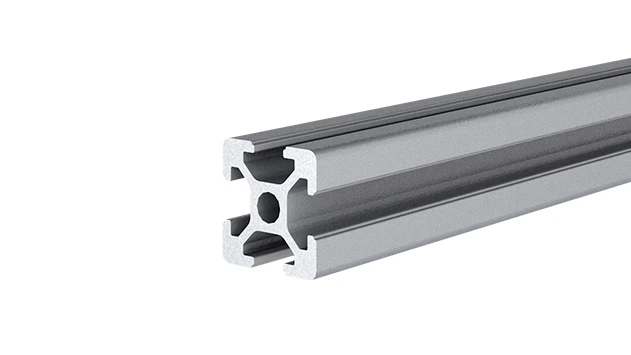
2020 is a 2.00 x 2.00CM fractional 20 series square extrusion T-slot profile with four open T-slots, one on each 2.00 face. The profile has align-a-grooves to assist in aligning connecting profiles.
How precision-engineered aluminum extrusion profiles are redefining safety and efficiency in pharmaceutical production
The Critical Intersection of Packaging and Patient Safety
In the pharmaceutical industry, every detail matters. From the moment an active ingredient is synthesized to the second a medication reaches a patient's hands, the risk of contamination lurks in unseen corners—including the very equipment used to package these life-saving products. For production managers like Maria, who oversees a pharmaceutical packaging line in Lisbon, the pressure is constant: "Last year, an audit flagged a hairline crack in our old steel workbench frame. It was tiny, but it trapped dust and bacteria. We had to shut down production for three days to sanitize and replace it. That's when I realized: the tools we build our lines with are just as critical as the drugs themselves."
This reality has pushed the industry to reevaluate production infrastructure, with a growing focus on materials that prioritize hygiene, durability, and compliance. Enter the 2020 EU standard aluminum profile —a game-changer in the world of pharmaceutical packaging. Unlike traditional materials, these profiles are engineered to meet the strictest European union regulations, designed to minimize contamination risks while streamlining operations. Let's dive into why they're becoming the backbone of modern pharma packaging lines.
Why Aluminum Extrusion Profiles? Beyond Steel and Plastic
For decades, pharmaceutical facilities relied on stainless steel or plastic for workbenches, material racks, and conveyor systems. While stainless steel is durable, it's heavy, prone to scratches that harbor pathogens, and difficult to customize. Plastic, on the other hand, lacks structural strength and can degrade under repeated exposure to harsh sanitizers. Aluminum extrusion profiles bridge these gaps—and then some.
| Material | Hygiene Performance | Durability | Customization | Compliance with 2020 EU Standards |
|---|---|---|---|---|
| Stainless Steel | Good, but scratches trap contaminants | High, but heavy and rigid | Limited; requires welding | Partial; not designed for modular sanitization |
| Plastic | Poor; porous surface absorbs chemicals | Low; degrades with sanitizers | High, but weak structural integrity | Non-compliant; fails EU 10/2011 food contact regulations |
| 2020 EU Standard Aluminum Profile | Excellent; non-porous, smooth surface resists bacteria | High; corrosion-resistant, lightweight | Exceptional; modular with aluminum profile accessories | Fully compliant; meets EU 10/2011 and ISO 13485 standards |
Aluminum extrusion profiles are created by forcing heated aluminum through a die, resulting in consistent, seamless cross-sections. This process eliminates weak points like welds or joints, which are common in steel structures. The surface is naturally smooth and non-porous, making it impossible for bacteria, dust, or residue to cling—even after thousands of sanitization cycles. "We switched to aluminum workbenches last year," says Jan, a packaging engineer in Berlin. "Our weekly ATP tests (which measure organic matter) dropped by 78%. The auditors couldn't believe the difference."

Decoding the 2020 EU Standard: What Makes These Profiles Unique?
The 2020 EU standard for aluminum profiles isn't just a set of guidelines—it's a promise of safety. Developed in response to stricter regulations on pharmaceutical production (including EU GMP Annex 1, updated in 2022), these profiles are engineered with three core principles in mind: hygienic design, material purity, and adaptability .
Hygienic Design: No Nooks, No Crannies
Traditional workbenches and racks often have hollow legs, sharp corners, or overlapping joints—perfect hiding spots for contaminants. The 2020 EU standard aluminum profile addresses this with precision: rounded edges (no sharp angles), closed-section designs (no hollow spaces), and smooth, matte finishes that resist water spots and chemical buildup. Even the aluminum profile accessories —like end caps and connectors—are designed to fit flush, leaving zero gaps. "Our old steel racks had bolt heads that protruded," Maria recalls. "We'd spend hours scrubbing around them with a toothbrush. Now, with aluminum end caps, it's a quick wipe with a sanitizing cloth. We've cut cleaning time by 40%."
Material Purity: Beyond "Just Aluminum"
Not all aluminum is created equal. The 2020 standard mandates profiles made from high-grade 6063-T6 aluminum alloy, which contains strict limits on impurities like lead, cadmium, and copper. This ensures the material won't leach harmful substances into the environment—critical for packaging lines handling oral medications or topical creams. Additionally, the alloy is anodized (a process that creates a protective oxide layer), making it resistant to corrosion from aggressive sanitizers like hydrogen peroxide or peracetic acid. "We use a 5% hydrogen peroxide spray daily," Jan notes. "After a year, the aluminum profiles still look brand new. Our old plastic racks turned brittle and yellow after six months."
Adaptability: Modular Systems for Evolving Needs
Pharmaceutical production lines are rarely static. New drug formulations, changing batch sizes, and updated packaging formats demand flexible infrastructure. The 2020 EU standard aluminum profile excels here, thanks to its modular design. Using T-slot technology, profiles can be quickly assembled, disassembled, or reconfigured with minimal tools—no welding or drilling required. This flexibility is a lifesaver for facilities adapting to market demands. "Last quarter, we launched a new pediatric syrup with a smaller bottle size," Maria explains. "We needed to adjust our conveyor guides and workbench heights. With aluminum profiles, our team reconfigured the line in four hours. With steel, it would have taken two days and a contractor."
Real-World Impact: A Case Study in Compliance
In 2023, a mid-sized pharmaceutical company in Barcelona faced a critical challenge: their packaging line for injectable vaccines was failing to meet the updated EU GMP Annex 1 requirements. The root cause? Their existing stainless steel workbenches and material racks had accumulated micro-scratches over time, leading to recurring contamination issues. After consulting with a supplier specializing in 2020 EU standard aluminum profiles, they replaced the entire line infrastructure—workbenches, flow racks, and conveyor guides—with aluminum extrusion profiles and compatible accessories.
The results were striking: within three months, contamination incidents dropped to zero, cleaning time was reduced by 55%, and the next audit resulted in a "no findings" report. Most importantly, the modular system allowed them to add a second packaging line (for a new vaccine variant) in just two weeks, without disrupting existing production. "We didn't just meet compliance—we future-proofed our operation," said the plant manager. "The aluminum profiles paid for themselves in avoided downtime alone."
Beyond the Profile: The Role of Accessories in Hygiene
A profile is only as good as its accessories. The 2020 EU standard extends to every component that touches the production line, from joints to caster wheels. Let's break down the key accessories that make these systems truly hygienic:
End Caps and Seals: Closing the Door on Contamination
Open-ended profiles are a disaster for hygiene—they collect dust, moisture, and debris inside the hollow core. 2020 EU standard aluminum profile accessories include precision-molded end caps made from food-grade polypropylene, designed to snap into place with a tight, gap-free seal. Some caps even feature vent holes to prevent pressure buildup during steam sanitization—a critical detail for lines using autoclaves.
Connectors: Strong, Smooth, and Sanitary
Traditional steel connectors often have threads or crevices that trap bacteria. Aluminum profile connectors, by contrast, are engineered with smooth, rounded surfaces and minimal contact points. Many use a cam-lock design, which tightens without protruding bolts or nuts. "We had a connector on our old steel rack that always leaked sanitizer," Maria says. "It created a sticky residue that attracted dust. The aluminum cam-lock connectors? They're sealed tight. No leaks, no residue."
Casters: Mobility Without Compromise
Mobile workbenches and trolleys are essential for flexible production, but their wheels can be a hidden source of contamination. 2020 EU standard casters feature sealed bearings (no grease leaks), non-marking rubber wheels, and easy-to-remove designs for deep cleaning. Some models even have foot brakes with stainless steel components, ensuring they won't corrode or harbor bacteria.
Choosing the Right Supplier: What to Look For
Not all suppliers claiming to offer "EU standard" aluminum profiles are created equal. To ensure compliance, production managers should ask for three critical documents:
- Material Certificates (EN 10204 3.1): Confirms the aluminum alloy meets 6063-T6 specifications and impurity limits.
- Anodization Test Reports: Verifies the oxide layer thickness (minimum 10 microns) and corrosion resistance.
- EU 10/2011 Compliance Statement: Ensures the material is safe for contact with food/pharmaceutical products.
Additionally, look for suppliers with experience in pharmaceutical applications. "We initially bought from a general metal supplier," Jan admits. "Their profiles were cheap, but the end caps didn't fit properly—there was a 0.5mm gap. We had to replace them all with parts from a pharma-specialized supplier. It was a costly mistake."
The Future of Pharma Packaging: Aluminum Profiles as a Foundation
As the pharmaceutical industry continues to evolve—with personalized medicine, biologic drugs, and stricter global regulations—demand for hygienic, flexible production infrastructure will only grow. The 2020 EU standard aluminum profile isn't just a trend; it's a foundational technology that aligns with the industry's core mission: protecting patient safety. For Maria, the choice is clear: "When I walk through our packaging line now, I don't see racks and workbenches. I see peace of mind. Every smooth surface, every flush joint—they're all working together to make sure the medication we send out is as safe as possible. And that's the best compliance report of all."