- Company Articles
- Industry articles
- Industry standards
- 2020 EU Standard Aluminum Profile: Future Trends in Industrial Applications

2020 EU Standard Aluminum Profile: Future Trends in Industrial Applications
Related Product
2020 EU Standard Aluminum Profile
2020 is a 2.00 x 2.00CM fractional 20 series square extrusion T-slot profile with four open T-slots, one on each 2.00 face. The profile has align-a-grooves to assist in aligning connecting profiles.
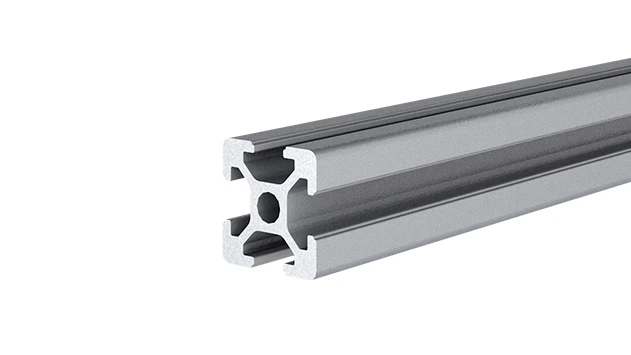
Walk into any modern factory, warehouse, or production facility today, and you'll notice a quiet revolution happening on the shop floor. The clunky, one-size-fits-all equipment of the past is making way for sleek, adaptable systems that bend to the needs of dynamic workflows. At the heart of this transformation lies a humble yet powerful component: the 2020 EU Standard Aluminum Profile. More than just a piece of metal, this aluminum extrusion profile has become the backbone of lean manufacturing, smart factories, and sustainable production—shaping how industries build, adapt, and grow. In this article, we'll dive into why this profile is more than a trend, but a cornerstone of the future of industrial design, exploring its impact on everything from workbench setups to global supply chains.
What Makes the 2020 EU Standard Aluminum Profile Stand Out?
Before we jump into trends, let's get to know the star of the show. The 2020 EU Standard Aluminum Profile is a precision-engineered aluminum extrusion profile, named for its 20mm x 20mm cross-section—a size that strikes the perfect balance between strength and versatility. But it's not just about dimensions; compliance with EU standards means rigorous testing for durability, safety, and environmental impact. Unlike generic aluminum pipes, this profile is designed with industrial needs in mind: T-slots run along its length, allowing for easy attachment of aluminum profile accessories like brackets, connectors, and panels. It's lightweight yet surprisingly strong, corrosion-resistant, and infinitely customizable—qualities that make it a favorite among manufacturers tired of rigid, wasteful systems.
Think of it as the industrial equivalent of building blocks. With the right aluminum profile accessories—like internal rotatory aluminum joints, adjustable casters, or plastic roller track guide rails—you can assemble everything from a simple workbench to a complex material handling system in hours, not days. And when your needs change? Disassemble, reconfigure, and reuse—no need to invest in entirely new equipment. This flexibility isn't just convenient; it's a game-changer for businesses looking to stay agile in a fast-paced market.
Trend 1: Sustainability—Beyond "Greenwashing" to Real Impact
Sustainability isn't just a buzzword anymore; it's a business imperative. Customers, regulators, and even employees are demanding greener practices, and the 2020 EU Standard Aluminum Profile delivers. Aluminum is one of the most recyclable materials on the planet—nearly 75% of all aluminum ever produced is still in use today. Unlike steel, which loses strength when recycled, aluminum retains its properties, making it a closed-loop resource. For manufacturers, this translates to lower raw material costs and a smaller carbon footprint, especially when compared to traditional materials like wood or plastic.
The Environmental Edge: A Closer Look
Let's break it down. Producing new aluminum from bauxite requires massive energy, but recycling aluminum uses just 5% of that energy. For a factory that relies on workbenches, material racks, and conveyor systems, switching to recycled 2020 EU Standard Aluminum Profiles can cut energy consumption for production equipment by up to 95%. And because these profiles are lightweight—about a third the weight of steel—transporting them reduces fuel usage, too. It's a win-win: lower operational costs and a greener brand image that resonates with eco-conscious consumers.
But sustainability isn't just about materials. The modular design of these profiles also reduces waste. Traditional workbenches or racks are often built to fixed specifications; if a production line changes, they end up in landfills. With 2020 EU profiles, you simply reconfigure. A material rack B (3 row and 3 floor) can be disassembled and turned into a turnover trolley with a few new aluminum profile accessories, extending its lifespan indefinitely. This "build once, use forever" approach aligns with the circular economy principles that are becoming central to industrial strategy.
Traditional vs. 2020 EU Aluminum: A Sustainability Comparison
| Material | Recyclability | Energy Use (Production) | Weight (per m) | Waste Potential |
|---|---|---|---|---|
| Steel (Traditional) | High, but loses strength | High | 7.8kg | High (fixed design) |
| Wood | Low (biodegradable, but not reusable) | Medium (harvesting, processing) | 5.0kg (pine) | High (prone to damage, rot) |
| 2020 EU Standard Aluminum Profile | High (retains 100% properties) | Low (5% of new aluminum) | 2.7kg | Low (modular, reusable) |

Trend 2: Modularity and the Rise of "Plug-and-Play" Factories
In the past, setting up a new production line meant months of planning, custom fabrication, and costly downtime. Today, manufacturers need to pivot quickly—whether to meet a sudden surge in demand, launch a new product, or adapt to supply chain disruptions. Enter the 2020 EU Standard Aluminum Profile and its ecosystem of aluminum profile accessories: the ultimate "plug-and-play" solution for industrial setups.
From Workbench to Warehouse: Building with Blocks
Imagine a small electronics manufacturer that needs to scale up production of a new smartphone component. With traditional steel workbenches, they'd have to order custom units, wait for delivery, and hire contractors to install them—weeks of delay. With 2020 EU profiles, they can assemble workbench E (single deck—without caster) in a day using basic tools, then add casters later if they need mobility. Need more storage? Material rack B (3 row and 3 floor) can be built in hours, using the same profiles and a few additional aluminum guide rails.
The magic lies in the aluminum profile accessories. Internal rotatory aluminum joints allow for 360-degree adjustments, so a workbench can be tilted, extended, or repositioned without welding. Roller track placon mounts connect plastic roller track guide rails (yellow or grey, depending on your needs) to create smooth-flowing conveyor systems that move parts from station to station. Even small details, like swivel roller balls (1 inch or 0.5 inch) for easy part sliding, snap into the T-slots of the profiles, no drilling required. This modularity reduces setup time by up to 70%, letting businesses seize opportunities faster.
Adapting to the Unexpected: Resilience in Action
The COVID-19 pandemic was a wake-up call for manufacturers worldwide. Factories that relied on rigid, fixed systems struggled to pivot to producing PPE or medical devices. Those using 2020 EU Standard Aluminum Profiles? They reconfigured their workbenches into assembly lines for masks, turned material racks into storage for sanitizing supplies, and even built temporary testing stations—all in days. This resilience isn't just about surviving crises; it's about thriving in normal times, too. A factory floor that can adapt to new products, seasonal demand, or workflow optimizations is a factory that stays competitive.
Trend 3: Integration with Lean Systems—Efficiency Redefined
Lean manufacturing—focused on minimizing waste and maximizing value—has been a guiding principle for decades, but the 2020 EU Standard Aluminum Profile takes it to the next level. Lean systems thrive on continuous improvement, and these profiles are built for iteration. Whether it's optimizing a workbench layout, streamlining a conveyor path, or reducing the time it takes to retrieve materials, the flexibility of aluminum extrusion profiles makes lean goals achievable, not just aspirational.
Workbenches: The Heart of Lean Workflows
A typical factory workbench is where the magic happens—assembly, testing, packaging. But a poorly designed workbench can lead to wasted motion, ergonomic strain, and lost productivity. The 2020 EU profile changes that. With adjustable height (thanks to aluminum foot bases and anti-slip adjustable leveling feet), workbenches can be tailored to each worker's needs, reducing fatigue and injuries. T-slots allow for custom tool holders, cable management, and even integrated lighting—keeping everything within arm's reach and eliminating time spent searching for tools.
Take a electronics assembly line, for example. Workers assembling circuit boards need easy access to small components, soldering tools, and testing equipment. A workbench built with 2020 EU profiles can have built-in plastic roller track guide rails (grey, to reduce glare) for sliding component trays, swivel roller balls (0.5 inch) for moving PCBs smoothly, and aluminum profile accessories like tool hooks that clip directly into the T-slots. The result? A 30% reduction in time per unit, as workers move less and focus more on assembly.
Flow Racks and Conveyors: Keeping Materials Moving
In lean systems, material flow is critical. Parts should arrive at the workstation exactly when they're needed—no sooner, no later. 2020 EU Standard Aluminum Profiles excel here, too. Flow racks built with these profiles, using roller track placon mounts and aluminum guide rails, ensure gravity-fed movement of parts, reducing the need for manual handling. For heavier items, conveyor systems with steel roller tracks (like 40 steel roller track yellow wheel or black ESD wheel for static-sensitive electronics) can be assembled quickly, with T-slots managing cables for motors or sensors.
The best part? These systems are easy to tweak. If a bottleneck forms at a workstation, you can adjust the angle of a flow rack by swapping out an aluminum joint, or extend a conveyor with a few more roller track sections. No need for expensive engineering overhauls—just simple, on-the-fly adjustments that keep production flowing smoothly. This is lean in action: small changes, big results.
Trend 4: Smart Manufacturing and the Internet of Things (IoT)
Industry 4.0 isn't coming—it's here. Smart factories use sensors, data analytics, and automation to optimize production, predict maintenance needs, and reduce errors. The 2020 EU Standard Aluminum Profile isn't just compatible with this revolution; it's enabling it. With its T-slots and modular design, the profile serves as the perfect platform for integrating IoT technology, turning ordinary workbenches and material racks into connected, data-generating assets.
Sensors, Cables, and Connectivity: The Smart Profile
Imagine a workbench that tracks how long each task takes, alerts managers when tools are missing, or even adjusts lighting based on worker presence. With 2020 EU profiles, this is possible. The T-slots can house sensors for temperature, humidity, or motion, while cable management channels (using aluminum profile accessories like T-slot rubber seal covers) keep wires organized and protected. A material rack B (3 row and 3 floor) can be fitted with RFID readers to track inventory in real time, automatically reordering parts when stock runs low.
Roller track systems are getting smarter, too. Plastic roller track guide rails with embedded sensors can monitor the speed of parts moving through the line, flagging jams before they cause downtime. Even casters—like 360° swivel expanding stem casters with brakes—can be equipped with position sensors, ensuring that mobile workbenches are always in the optimal location. For manufacturers, this data isn't just numbers; it's insights that drive continuous improvement, from reducing energy use to increasing product quality.
The Future of Smart Factories: Accessibility for All
One of the biggest barriers to Industry 4.0 adoption is cost. Custom smart systems can be prohibitively expensive for small and medium-sized enterprises (SMEs). But 2020 EU Standard Aluminum Profiles democratize smart manufacturing. SMEs can start small: adding a few sensors to a workbench, then scaling up as they see results. Because the profiles are modular, there's no need to invest in an entire smart system upfront—just build as you grow. This accessibility is key to ensuring that the benefits of Industry 4.0 aren't limited to large corporations.
Trend 5: Customization—Meeting the Needs of Niche Industries
Not all factories are the same. A automotive plant has different needs than a pharmaceutical lab, and a food processing facility requires different equipment than a aerospace manufacturer. The 2020 EU Standard Aluminum Profile shines in its ability to cater to these niche demands, thanks to a vast range of aluminum profile accessories and customization options.
Industry-Specific Solutions: Examples in Action
Let's take electronics manufacturing, where static electricity can destroy sensitive components. ESD (electrostatic discharge) workbenches are a must, and 2020 EU profiles deliver. By adding ESD-safe aluminum profile accessories—like black ESD wheels for roller tracks or conductive aluminum honeycomb panels for workbench surfaces—manufacturers can create static-free zones that protect microchips and circuit boards.
In the food and beverage industry, hygiene is non-negotiable. Stainless steel is often the go-to material, but it's heavy and expensive. 2020 EU Standard Aluminum Profiles, paired with stainless steel swivel roller balls (1 inch) and food-grade plastic roller track guide rails, offer a lightweight, corrosion-resistant alternative. These systems are easy to clean (no crevices for bacteria to hide) and can withstand frequent washdowns, making them ideal for packaging lines or ingredient handling.
Even the medical industry, with its strict sterilization requirements, benefits. Aluminum profiles are compatible with autoclaving (high-pressure steam sterilization), and aluminum profile accessories like nylon hinges or plastic end caps can be replaced easily if damaged. A hospital supply manufacturer, for example, can build custom workbenches for assembling surgical kits, with adjustable height and tool holders that meet FDA standards—all using off-the-shelf 2020 EU profiles.
The Road Ahead: Why 2020 EU Standard Aluminum Profiles Are Here to Stay
As industries evolve, the tools they rely on must evolve too. The 2020 EU Standard Aluminum Profile isn't just a passing trend; it's a foundational technology that addresses the biggest challenges facing manufacturers today: sustainability, agility, efficiency, and customization. Its ability to integrate with lean systems, support smart manufacturing, and reduce environmental impact makes it a cornerstone of the factories of tomorrow.
For businesses considering the switch, the benefits are clear: lower costs over time, faster adaptation to market changes, a greener footprint, and a more productive workforce. And with a growing ecosystem of aluminum profile accessories and suppliers, getting started is easier than ever. Whether you're building a single workbench or overhauling an entire factory, the 2020 EU Standard Aluminum Profile is more than a material—it's a partner in progress, helping you build a future that's efficient, sustainable, and ready for whatever comes next.