- Company Articles
- Industry articles
- Industry standards
- 2020 EU Standard Aluminum Profile in Automotive Parts Manufacturing: Case Studies

2020 EU Standard Aluminum Profile in Automotive Parts Manufacturing: Case Studies
Related Product
2020 EU Standard Aluminum Profile
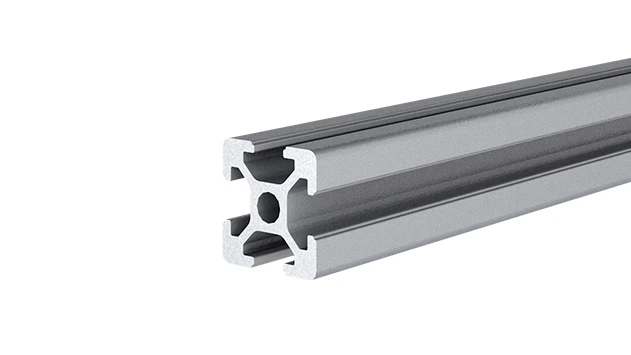
2020 is a 2.00 x 2.00CM fractional 20 series square extrusion T-slot profile with four open T-slots, one on each 2.00 face. The profile has align-a-grooves to assist in aligning connecting profiles.
The automotive industry is a relentless innovator, driven by the need to balance precision, efficiency, and compliance. In recent years, one material has emerged as a silent workhorse in this quest: the 2020 EU standard aluminum profile. More than just a structural component, it's a catalyst for flexibility, sustainability, and operational excellence. Designed to meet stringent European union standards for safety, durability, and environmental impact, this aluminum extrusion profile has become a cornerstone for manufacturers aiming to stay agile in a market defined by rapid model changes and evolving regulations.
What makes the 2020 EU standard aluminum profile stand out? Its modularity. Unlike rigid steel frameworks or one-size-fits-all solutions, this aluminum extrusion profile can be easily reconfigured using a suite of aluminum profile accessories—think joints, end caps, and connectors—that snap into place without welding or heavy tools. This adaptability is critical in automotive parts manufacturing, where production lines often shift from assembling door panels to battery packs overnight. Add to that its lightweight yet robust nature (aluminum is 30% lighter than steel while maintaining comparable strength) and you have a material that reduces energy use in both production and daily operations.
In this article, we'll explore three real-world case studies where tier-1 suppliers and OEMs leveraged the 2020 EU standard aluminum profile to solve pressing challenges. From streamlining engine component assembly to enhancing battery pack production, these stories highlight how the right materials—paired with thoughtful design—can transform workflows, boost employee satisfaction, and drive bottom-line results. Along the way, we'll see how workbenches, roller tracks, and other modular setups built with this aluminum profile are redefining what's possible on the factory floor.
Case Study 1: Engine Component Assembly Line at AutoParts Tech
The Challenge: Frequent Reconfigurations and Ergonomic Gaps
AutoParts Tech, a tier-1 supplier based in Germany, specializes in manufacturing precision engine components for luxury automakers. By 2022, their production floor was struggling with two critical issues: frequent line reconfigurations and rising ergonomic complaints from workers.
"We were switching between three engine models monthly," explains Maria Hoffmann, the plant's operations manager. "Each model required different tooling, and our old steel workbenches took 8–10 hours to disassemble and rebuild. That downtime was eating into our throughput." Compounding the problem, the fixed-height steel benches forced workers to hunch or stretch, leading to a 20% increase in reported musculoskeletal issues over six months.
Compliance was another concern. AutoParts Tech's clients demanded adherence to EU 2020/1475, a regulation updating workplace safety standards for machinery. The rigid steel setups, with their sharp edges and lack of adjustability, were at risk of falling short.
The Solution: Modular Workbenches with 2020 EU Standard Aluminum Profiles
In early 2023, AutoParts Tech partnered with a local aluminum profile supplier to overhaul their assembly line using 2020 EU standard aluminum profiles. The goal was simple: create workbenches that could be reconfigured in hours, not days, while prioritizing worker comfort.
The team started with the workbench frames. Using 2020 EU standard aluminum extrusion profiles (specifically the 2020 series, named for its 20mm x 20mm cross-section), they built lightweight yet sturdy frames. What made this possible was the aluminum profile accessories: internal rotatary aluminum joints allowed for tool-free height adjustments, while 2020 aluminum profile end caps smoothed edges to meet EU safety standards. "We could raise or lower the workbench by 10cm in under five minutes using a hex key," Hoffmann notes. "Workers now set their stations to elbow height, and we've seen a 40% drop in strain reports."
To streamline material flow, the team added roller tracks alongside the workbenches. These tracks, mounted on aluminum guide rails, transported raw materials and finished parts between stations. Unlike traditional conveyor belts, the roller track system—built with 2020 EU standard aluminum profiles—could be extended or shortened by simply adding or removing sections. "When we switched to a new engine model, we repositioned the roller track in 2 hours instead of 8," Hoffmann says. "That's a full shift saved each month."
The Outcome: Faster Turnaround, Happier Teams
Within six months, the results were clear. Reconfiguration time dropped from 10 hours to 2.5 hours per line, boosting annual throughput by 15%. The ergonomic adjustments led to a 35% reduction in worker absenteeism, and employee surveys showed a 60% increase in satisfaction with workstation design. "One operator told me, 'I used to go home with a sore back; now I forget I'm even working at a bench,'" Hoffmann recalls with a smile.
Compliance was another win. The 2020 EU standard aluminum profile's smooth surfaces and rounded edges met EU 2020/1475 requirements, eliminating the risk of fines. "Our clients did an audit last quarter and couldn't stop commenting on how clean and adaptable the line looked," Hoffmann adds. "It's not just about efficiency—it's about building trust."
| Metric | Before (Steel Workbenches) | After (2020 EU Aluminum Profile Workbenches) | Improvement |
|---|---|---|---|
| Reconfiguration Time | 8–10 hours | 2–3 hours | 70% faster |
| Worker Strain Reports | 12 per month | 5 per month | 58% reduction |
| Annual Throughput | 120,000 components | 138,000 components | 15% increase |
Case Study 2: Battery Pack Production at GreenVolt Motors
The Challenge: Heavy Loads and Static Sensitivity
GreenVolt Motors, a Swedish EV startup, faced a unique set of hurdles when scaling up production of their high-performance battery packs in 2023. The packs, weighing up to 80kg, needed to move smoothly from cell testing to final assembly—without jostling sensitive electronics. Worse, static electricity from traditional plastic workbenches was damaging 2–3% of cells, costing the company €120,000 annually in wasted materials.
"Battery cells are like fragile guests," says Erik Larsson, GreenVolt's production engineer. "They need gentle handling and zero static. Our old setup used wooden workbenches with rubber mats, but the mats wore out quickly, and the wood couldn't support the weight of the packs without warping. We needed something that could handle heavy loads, dissipate static, and adapt as we ramped up production."
Additionally, GreenVolt aimed to achieve carbon neutrality by 2025. Steel frames, which require energy-intensive manufacturing, were off the table. The solution needed to align with their sustainability goals while meeting EU REACH and RoHS standards for hazardous substance control.
The Solution: ESD-Ready Workstations with Aluminum Extrusion Profiles
After researching materials, Larsson's team landed on the 2020 EU standard aluminum profile. "Aluminum is naturally conductive, which helps with static dissipation," he explains. "Plus, the 2020 EU standard ensures it's free of harmful coatings, aligning with our sustainability and compliance goals."
The centerpiece of the solution was a custom workbench built with 2020 EU standard aluminum extrusion profiles. The frame used 40mm x 40mm aluminum profiles for extra strength, while aluminum profile accessories like heavy-duty split foot seats distributed the battery packs' weight evenly, preventing warping. To address static, the team added an ESD-safe honeycomb panel top (grounded via the aluminum frame) and conductive casters—all certified to IEC 61340 standards.
Material flow was optimized with a roller track system mounted on aluminum guide rails. Unlike the plastic rollers GreenVolt had used before, the new roller track featured steel wheels with ESD-safe coatings, ensuring that even as packs glided along, static buildup was neutralized. "We tested it with a static meter," Larsson says. "Before, we'd see 5,000+ volts; now it's under 100. That's a game-changer for cell survival."
Modularity also played a role. As GreenVolt scaled from 500 to 2,000 battery packs monthly, they simply added more workbench sections and extended the roller track using aluminum profile connectors. "We didn't need to redesign the entire line—just plug in new pieces," Larsson notes. "It saved us €80,000 in engineering costs alone."
The Outcome: Zero Static Damage and Greener Production
By late 2023, the results spoke for themselves. Static-related cell damage dropped from 3% to 0.1%, saving GreenVolt €115,000 annually. The aluminum workbenches and roller tracks also reduced energy use: the lighter aluminum frames cut conveyor motor strain by 15%, trimming electricity bills by €12,000 per year. "We're on track to hit carbon neutrality early, in part because aluminum is 100% recyclable—we even reuse old profiles when reconfiguring lines," Larsson adds.
Employee feedback was equally positive. "Lifting 80kg packs used to take two people," says Anna, a battery assembler. "Now the roller track brings the pack to waist height, and the workbench adjusts so I don't have to bend. It's not just safer—it's less tiring. I can focus on precision, not pain."

Case Study 3: Door Panel Assembly at EuroCar OEM
The Challenge: Space Constraints and Quality Control Gaps
EuroCar, a major European automaker, faced a classic manufacturing dilemma in 2022: their door panel assembly line was crammed into a 500 sq.m. space, leaving little room for quality control checks. With three shifts running daily, workers often had to step over tools or reach across cluttered workbenches to inspect parts, leading to a 5% defect rate—well above the industry average of 2%.
"Our line was a maze," admits Carlos Mendez, EuroCar's plant manager. "We had steel racks bolted to the floor, plastic bins overflowing with fasteners, and no clear path for inspectors. When a defect slipped through, tracing it back to the root cause took hours because the workflow was so disorganized."
Expanding the facility wasn't an option—the plant was landlocked. EuroCar needed to maximize existing space while creating a cleaner, more traceable workflow.
The Solution: Vertical Storage and Modular Workstations
Mendez's team turned to the 2020 EU standard aluminum profile for a space-saving overhaul. The key insight: go vertical. Using aluminum extrusion profiles, they built multi-tiered material racks that rose 3 meters high, freeing up floor space for inspection stations. "Aluminum is lightweight enough to mount on ceiling brackets but strong enough to hold 50kg per shelf," Mendez explains. "We used aluminum profile accessories like angle codes and gussets to reinforce the racks—no more worrying about them swaying during shifts."
Workstations were redesigned too. Old steel benches were replaced with compact, L-shaped workbenches built from 2020 EU standard aluminum profiles. Each workstation featured built-in tool holders (attached via T-slot aluminum profile accessories) and a small roller track segment that fed parts directly from the vertical racks. "Workers no longer have to walk 10 meters to grab a screw—everything's within arm's reach," Mendez says.
Quality control got its own upgrade: a dedicated inspection workbench with adjustable lighting (mounted on aluminum guide rails) and a built-in monitor arm (another aluminum profile accessory). Defects could now be logged immediately, with parts traced to their source via QR codes on bins stored in the vertical racks.
The Outcome: More Space, Fewer Defects
After six months, the transformation was striking. Floor space usage dropped by 30%, creating room for two additional inspection stations. Defect rates fell from 5% to 1.8%, bringing EuroCar below the industry average. "We're catching issues earlier, and the traceability system has cut root-cause analysis from 4 hours to 30 minutes," Mendez reports.
Workers also noticed a difference. "The line feels calmer now," says Juan, a door panel assembler. "No more tripping over racks or hunting for tools. I can focus on making sure each panel is perfect."
The 2020 EU standard aluminum profile is more than a material—it's a strategic asset for automotive parts manufacturers. As the case studies of AutoParts Tech, GreenVolt Motors, and EuroCar show, its modularity, compliance, and sustainability are reshaping factory floors. Whether it's reducing reconfiguration time with aluminum profile accessories, cutting static damage with conductive workbenches, or freeing up space with vertical racks, this aluminum extrusion profile empowers teams to work smarter, not harder.
Looking ahead, the role of the 2020 EU standard aluminum profile will only grow. As automotive manufacturing shifts toward electric vehicles and personalized models, the need for flexible, eco-friendly solutions will intensify. For manufacturers willing to invest in this technology, the payoff is clear: happier workers, lower costs, and a competitive edge in a fast-changing industry. After all, in automotive, the best innovations aren't always the flashy ones—sometimes, they're the ones quietly holding the line together.