- Company Articles
- Industry articles
- Industry standards
- 2020 EU Standard Aluminum Profile in Communication Equipment: Structural Support Solutions

2020 EU Standard Aluminum Profile in Communication Equipment: Structural Support Solutions
Related Product
2020 EU Standard Aluminum Profile
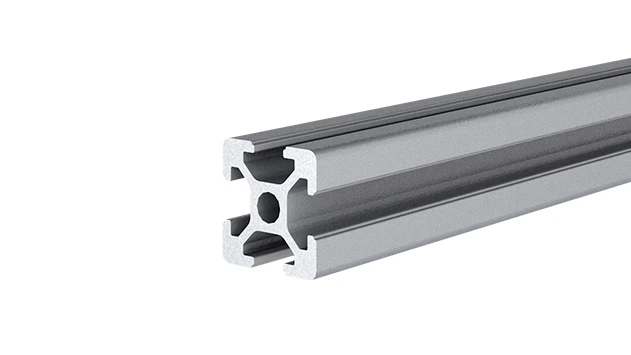
2020 is a 2.00 x 2.00CM fractional 20 series square extrusion T-slot profile with four open T-slots, one on each 2.00 face. The profile has align-a-grooves to assist in aligning connecting profiles.
The Unsung Hero Shaping Modern Telecom Infrastructure
Every time you stream a video, make a video call, or send a message, there's a silent network working behind the scenes—communication equipment that relies on robust, flexible structural support to function flawlessly. From the routers in data centers to the base stations powering 5G networks, these systems demand more than just "strong" frames; they need solutions that balance durability, adaptability, and efficiency. Enter the 2020 EU standard aluminum profile —a material that's quietly revolutionizing how communication equipment is built, assembled, and maintained.
Gone are the days of one-size-fits-all steel frames or clunky plastic enclosures. Today's telecom industry moves fast: new technologies emerge yearly, equipment sizes shrink while performance grows, and sustainability becomes non-negotiable. This is where aluminum extrusion profiles, particularly the 2020 EU standard, step in. Lightweight yet surprisingly strong, modular by design, and engineered for precision, it's the backbone that keeps communication infrastructure agile and future-ready.
What Makes 2020 EU Standard Aluminum Profile Stand Out?
First things first: What exactly is the "2020 EU standard"? In simple terms, it's a specific type of aluminum extrusion profile defined by its cross-sectional dimensions (20mm x 20mm) and compliance with European union manufacturing standards. But its significance goes far beyond measurements. EU standards ensure strict adherence to quality benchmarks—think material purity (typically 6063-T5 aluminum alloy), dimensional accuracy (to within ±0.1mm), and safety certifications (CE marking, RoHS compliance for lead-free production).
Why does this matter for communication equipment? Let's break down its key advantages:
- Strength-to-Weight Ratio: At just 0.4kg per meter (depending on wall thickness), it's 30% lighter than steel but retains 80% of the structural rigidity—critical for reducing load on ceiling mounts or mobile equipment carts.
- Corrosion Resistance: Natural aluminum oxide layer, plus optional anodized finishes, protects against humidity and chemical exposure—perfect for data centers with strict climate control or outdoor base stations.
- Modularity: The T-slot design (a groove running along its length) lets you attach aluminum profile accessories —brackets, hinges, panels, or cable management clips—without welding or drilling. Need to add a shelf? Screw in a bracket. Reposition a component? Slide it along the slot. It's like building with digital Legos, but for industrial use.
- Thermal Conductivity: Aluminum dissipates heat 4x faster than steel, helping cool sensitive electronics like servers or transceivers—no need for extra ventilation systems.
These features make it more than a "material"; it's a design philosophy. For communication equipment manufacturers, that translates to faster prototyping, easier customization, and lower long-term maintenance costs.
Where It Shines: 2020 EU Profile in Communication Equipment
Let's take a walk through a typical telecom equipment manufacturing facility. Everywhere you look, the 2020 EU profile is hard at work, often in ways you might not notice at first glance.
1. Workbenches: The Heart of Assembly Lines
A workbench in a communication equipment plant isn't just a flat surface. It's where technicians assemble circuit boards, test signal strength, and package finished routers. Using 2020 EU profiles, these workbenches become ergonomic powerhouses:
- Adjustable Heights: Profiles paired with telescopic legs let workers set heights from 70cm to 90cm, reducing back strain during long shifts.
- Integrated Tool Storage: T-slots attach tool holders, cable organizers, or LED task lights—no more fumbling for screwdrivers or tangled wires.
- Static Control: Anodized or powder-coated finishes can be ESD (electrostatic discharge) rated, protecting sensitive microchips from static damage during assembly.
One leading telecom manufacturer reported a 22% reduction in assembly errors after switching to these workbenches, citing better organization and reduced tool retrieval time.
2. Equipment Racks & Enclosures
Data centers are the "brains" of communication networks, and their server racks need to maximize space while keeping equipment accessible. 2020 EU profiles excel here:
- Customizable Depth/Width: Mix 2020 profiles with larger 3030 or 4040 profiles to build racks that fit 1U, 2U, or non-standard equipment sizes.
- Quick Access Panels: Hinged doors attached via T-slot hinges swing open 180°, making it easy to swap out faulty components without disassembling the entire rack.
- Cable Management: Vertical and horizontal cable trays, built from 2020 profiles, route Ethernet and power cords neatly—no more "spaghetti tangles" that slow down maintenance.
Case in point: A European telecom provider upgraded its data center racks to 2020 EU profiles and saw a 15% increase in server density (more equipment per square meter) and 40% faster repair times.
3. Lean System Integration: Streamlining Production
Modern manufacturing thrives on lean system principles—eliminating waste, optimizing workflow, and responding quickly to demand changes. 2020 EU profiles are a lean manager's dream:
- Just-In-Time (JIT) Assembly: Pre-cut profiles and snap-on accessories let teams build workstations or racks in hours, not days. No more storing excess inventory—order parts as needed.
- Kaizen-Ready: "Continuous improvement" is easier when you can reconfigure a production line overnight. A 5G router assembly line, for example, might start with 3 workstations; as demand grows, add 2 more using the same profiles and accessories.
- Waste Reduction: Aluminum is 100% recyclable, and offcuts from profile cutting can be melted down and reused—aligning with sustainability goals (ESG metrics are increasingly important for telecom clients).

How It Stacks Up: 2020 EU Profile vs. Alternatives
| Feature | 2020 EU Aluminum Profile | Steel (1mm Wall) | Plastic Extrusions | 3030 Aluminum Profile |
|---|---|---|---|---|
| Weight (kg/m) | 0.4–0.6 | 1.8–2.0 | 0.3–0.5 | 0.8–1.0 |
| Tensile Strength (MPa) | 210 | 350 | 45–60 | 210 |
| Corrosion Resistance | High (anodized) | Low (needs painting) | High (UV-resistant options) | High (anodized) |
| Accessory Compatibility | Extensive (T-slot) | Limited (weld/braze only) | Basic (snap-fit only) | Extensive (T-slot) |
| Cost (€/m) | 8–12 | 5–8 | 4–6 | 12–15 |
*Data based on industry averages for 2023; costs vary by supplier and order volume.
Case Study: How a Telecom OEM Cut Costs with 2020 EU Profiles
Let's look at a real example: a mid-sized original equipment manufacturer (OEM) in Germany producing fiber optic transceivers. Before 2021, they used steel frames for their assembly workbench and wooden shelves for material storage. Here's what changed when they switched to 2020 EU standard aluminum profiles:
- Assembly Time: Building a workbench went from 4 hours (welding steel) to 45 minutes (bolting profiles and accessories). Annual labor savings: €36,000.
- Space Efficiency: 30% slimmer material racks freed up 120 sq.m. of floor space—enough for 2 new assembly lines, boosting production capacity by 15%.
- Repairs & Upgrades: When they launched a new transceiver model (10% larger), they modified existing racks by adding 2020 extension profiles—no need to buy new furniture. Savings: €12,000 in new equipment costs.
- Worker Satisfaction: Ergonomic, adjustable workbenches reduced reported back pain by 40%, lowering absenteeism.
The OEM's CFO summed it up: "We didn't just buy aluminum profiles—we invested in a system that grows with us. The ROI came in 8 months, and we're now using it for everything from packaging stations to shipping carts."
Looking Ahead: The Future of 2020 EU Aluminum Profiles in Telecom
As communication technology races toward 6G, IoT, and edge computing, the demands on structural support will only grow. Here's how 2020 EU profiles are evolving to keep up:
- Smart Integration: Embedded RFID tags in profiles let factories track inventory via IoT—scan a rack to see which components are installed, or monitor structural stress with built-in sensors.
- Sustainability Upgrades: Recycled aluminum content (currently 30% in most profiles) is expected to hit 50% by 2025, lowering carbon footprints for telecom giants aiming for net-zero goals.
- Miniaturization: Thinner walls (0.8mm vs. 1.0mm) for ultra-light applications, like drone-mounted 5G antennas, without sacrificing strength.
In short, it's not just a material for today's equipment—it's a foundation for tomorrow's innovations.
Why 2020 EU Standard Aluminum Profile is the Backbone of Modern Communication
Communication equipment is the nervous system of our connected world, and like any nervous system, it needs a strong, flexible spine. The 2020 EU standard aluminum profile isn't just that spine—it's a catalyst for efficiency, innovation, and sustainability. Its blend of lightweight strength, modularity, and EU-certified quality makes it the go-to choice for manufacturers who refuse to compromise on performance or adaptability.
Whether you're building a workbench for assembling routers, a rack for data center servers, or a custom enclosure for outdoor antennas, it's more than a component. It's a promise: that your communication infrastructure can keep up with the speed of connection—today, tomorrow, and for years to come.