- Company Articles
- Industry articles
- Industry standards
- 2020 EU Standard Aluminum Profile in Conveyors: Enhancing Logistics Efficiency

2020 EU Standard Aluminum Profile in Conveyors: Enhancing Logistics Efficiency
Related Product
2020 EU Standard Aluminum Profile
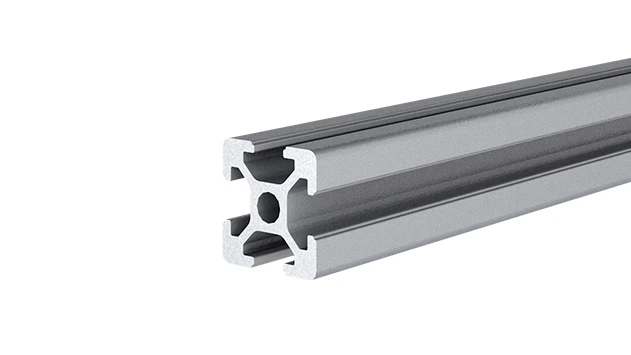
2020 is a 2.00 x 2.00CM fractional 20 series square extrusion T-slot profile with four open T-slots, one on each 2.00 face. The profile has align-a-grooves to assist in aligning connecting profiles.
In the fast-paced world of manufacturing and distribution, logistics isn't just about moving goods—it's about keeping the heartbeat of your business steady. Every delay in material flow, every breakdown in equipment, or every rigid system that can't adapt to new demands chips away at productivity, profits, and customer trust. For years, many operations have relied on traditional conveyor setups—often heavy, slow to modify, or prone to wear—to keep materials moving. But as industries evolve, so too must the tools that power them. Enter the 2020 EU standard aluminum profile : a game-changer in conveyor design that's redefining what efficient, adaptable logistics looks like.
This isn't just another piece of metal. The 2020 EU aluminum profile, paired with innovations like roller tracks and modular accessories, is quietly revolutionizing how businesses build, use, and maintain their conveyor systems. Whether you're running a small warehouse or a large-scale production line, understanding how this profile enhances logistics efficiency could be the key to staying competitive in a market where speed and flexibility reign supreme.
The Hidden Costs of Outdated Conveyor Systems
Before diving into the solution, let's talk about the problem. Traditional conveyor systems often come with a set of hidden costs that add up over time. Take steel conveyors, for example: they're durable, but their weight makes installation and reconfiguration a nightmare. Need to adjust the conveyor path to accommodate a new product line? You'll likely need a team of engineers and hours (if not days) of downtime. Then there's maintenance—steel rusts, especially in humid environments, leading to jams, squeaky rollers, and frequent part replacements. Plastic conveyors, on the other hand, might be lighter, but they lack the strength to handle heavy loads, leading to cracks or warping under stress.
Rigidity is another pain point. Many older systems are built as "one-and-done" solutions, meaning they can't grow or change with your business. If you need to add a new workbench at the end of the line or redirect materials to a different packaging station, you're looking at costly overhauls or even buying entirely new equipment. And let's not forget about efficiency: clunky, misaligned components or rollers that stick can slow material flow to a crawl, turning what should be a smooth process into a bottleneck.
What Makes 2020 EU Standard Aluminum Profile Stand Out?
At first glance, aluminum profiles might seem like just another building material, but the 2020 EU standard variant is in a league of its own. Let's break down what makes it special:
Built for Precision and Compliance
The "2020" in its name refers to its dimensions: 20mm in width and 20mm in height, creating a compact yet robust framework. What truly sets it apart, though, is its adherence to EU standards. This means strict quality controls on material purity (high-grade aluminum alloy), corrosion resistance (thanks to anodized or powder-coated finishes), and structural integrity (tested to withstand consistent loads without bending or warping). For businesses operating in the EU or exporting to European markets, this compliance eliminates the hassle of navigating varying regional regulations—your conveyor system is already up to code.
Lightweight Strength That Defies Expectations
Aluminum is naturally lighter than steel, but the 2020 profile takes this advantage further. Weighing in at roughly 1.2kg per meter (depending on wall thickness), it's easy to handle during installation—no need for heavy machinery or extra labor. Yet, don't let its lightness fool you: this profile can support up to 50kg per linear meter when properly mounted, making it more than capable of handling boxes, components, and even small pallets common in logistics workflows. This balance of lightness and strength translates to lower energy costs (less strain on conveyor motors) and easier reconfiguration when your layout needs to change.
Modularity at Its Core
Here's where the magic happens: the 2020 profile's T-slot design. Running along its length are precision-cut slots that act as universal attachment points for aluminum profile accessories —think brackets, connectors, roller track mounts, and even workbench surfaces. No welding, no drilling, no messy adhesives. With simple fasteners like T-nuts and bolts, you can attach a roller track in minutes, add a side guide to keep materials centered, or mount a sensor bracket to track flow. This modularity turns your conveyor from a fixed asset into a flexible tool that adapts as your needs evolve.

Integrating 2020 Aluminum Profiles with Roller Tracks: A Match Made for Efficiency
Conveyors are only as good as their ability to move materials smoothly, and that's where roller tracks come into play. When paired with 2020 EU aluminum profiles, roller tracks become more than just a series of spinning wheels—they become a customizable, low-friction pathway that keeps materials flowing at optimal speeds. Let's see how this integration works in practice.
Seamless Assembly, Minimal Downtime
Traditional roller tracks often require custom brackets or welding to attach to conveyor frames, a process that's time-consuming and error-prone. With 2020 aluminum profiles, it's a different story. Aluminum profile accessories like "roller track placon mount for aluminum profile flat" or "roller track connector" slide into the T-slots and lock in place with a simple turn of a wrench. This means you can assemble a 10-meter conveyor line in a fraction of the time it would take with steel—reducing installation downtime from days to hours, and getting your system up and running faster.
Smooth Material Flow, Reduced Friction
The precision of EU-standard manufacturing ensures that roller tracks mounted on 2020 profiles stay aligned, even under constant use. Misaligned rollers are a common culprit of jams and slowdowns, but the 2020 profile's consistent dimensions and rigid structure keep tracks straight and true. Whether you're using plastic roller tracks for lightweight packages or steel roller tracks for heavier loads, the result is smoother material flow—fewer stops, less product damage, and a conveyor line that keeps up with your production pace.
Adapting to Your Workflow, Not the Other Way Around
Logistics needs change. A seasonal spike might require adding a parallel conveyor line; a new product might demand a steeper incline; or a shift to automation might call for integrating sensors or robotic arms. With 2020 aluminum profiles, these changes aren't just possible—they're straightforward. Need to extend a conveyor? Cut a new section of profile, attach it with a connector, and add more roller track. Want to reroute materials to a new workbench ? Loosen the bolts, pivot the frame, and lock it into place. This flexibility means your conveyor system grows with your business, eliminating the need for costly replacements every time your operations evolve.
The Efficiency Boost: Real-World Impact
Numbers tell the story best. Let's look at how businesses are benefiting from 2020 EU standard aluminum profile conveyors:
| Metric | Traditional Steel Conveyor | 2020 Aluminum Profile Conveyor | Improvement |
|---|---|---|---|
| Installation Time (10m line) | 2–3 days | 4–6 hours | 70–80% faster |
| Maintenance Frequency | Monthly (rust, alignment checks) | Quarterly (minor lubrication) | 66% less downtime |
| Reconfiguration Cost | $5,000+ (custom parts, labor) | $500–$1,000 (modular accessories) | 80–90% cost reduction |
| Material Flow Speed | 0.5–0.8 m/s (due to friction/jams) | 1.0–1.2 m/s (smooth roller alignment) | 25–50% faster throughput |
Take the example of a mid-sized electronics manufacturer in Germany. They previously used a steel conveyor system that took 3 days to install and required monthly maintenance to fix rusted rollers. After switching to a 2020 aluminum profile conveyor with roller tracks, they assembled the new line in just 5 hours, reduced maintenance to once a quarter, and saw material flow speed increase by 40%. Best of all, when they launched a new product line 6 months later, they reconfigured the conveyor in a single day using leftover aluminum profile accessories—no new frame needed.
Beyond Conveyors: Building a Unified Logistics Ecosystem
The beauty of 2020 EU standard aluminum profiles is that they're not limited to conveyors. They form the backbone of a unified logistics ecosystem, integrating seamlessly with other tools like workbenches, material racks, and turnover trolleys. Imagine a workflow where components roll off a 2020-profile conveyor directly onto a matching aluminum workbench for assembly, then onto a trolley (also built with 2020 profiles) for transport to packaging. This consistency reduces friction between processes, as everything from height to attachment points is standardized, making material handling smoother and more intuitive for your team.
Why Now? The Case for Upgrading
If you're still on the fence, consider this: in today's market, efficiency isn't just a competitive advantage—it's a survival necessity. Customers expect faster delivery times, and competitors are constantly finding ways to cut costs. A conveyor system built with 2020 EU standard aluminum profiles isn't just an expense; it's an investment in agility, durability, and long-term savings. It's about spending less time fixing problems and more time growing your business.
Plus, the modular nature of these profiles means you don't have to replace your entire system at once. Start small—upgrade a single conveyor line or add a new section with 2020 profiles—and scale as you see results. Many suppliers even offer starter kits with basic aluminum tubes, joints, and roller track accessories to help you dip your toes in without overcommitting.
Final Thoughts: Logistics Efficiency, Redefined
Logistics efficiency isn't about working harder—it's about working smarter. The 2020 EU standard aluminum profile, with its lightweight strength, modular design, and seamless integration with roller tracks and accessories, is redefining what "smart" looks like for conveyor systems. It's a solution that grows with you, adapts to your needs, and keeps your materials moving smoothly—so you can focus on what matters most: delivering value to your customers.
In a world where every second counts, isn't it time your conveyor system kept up?