- Company Articles
- Industry articles
- Industry standards
- 2020 EU Standard Aluminum Profile in Flow Racks: Streamlining Inventory Management

2020 EU Standard Aluminum Profile in Flow Racks: Streamlining Inventory Management
Related Product
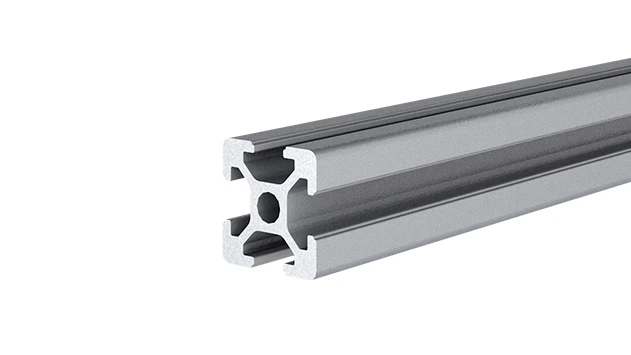
2020 EU Standard Aluminum Profile
2020 is a 2.00 x 2.00CM fractional 20 series square extrusion T-slot profile with four open T-slots, one on each 2.00 face. The profile has align-a-grooves to assist in aligning connecting profiles.
How the right materials turn chaotic warehouses into hubs of productivity
The Hidden Cost of Clunky Inventory Systems
Let's start with a scenario we've all seen (or lived through): A warehouse floor where workers weave through mismatched racks, pausing every few steps to hunt for a specific part. Pallets teeter on wobbly shelves, labels peel off cardboard boxes, and that "quick" order pick? It turns into a 20-minute scavenger hunt. Sound familiar? If so, you're not just losing time—you're losing money. Studies show that inefficient inventory management eats up 20-30% of a warehouse's operational budget, and much of that waste traces back to one root cause: outdated, rigid storage systems that weren't built for adaptability.
Here's the thing: Inventory management isn't just about storing stuff. It's about keeping your business moving—fast. When parts flow smoothly from shelf to assembly line, when workers can grab what they need in seconds, and when your space adapts as your product line grows, everything changes. That's where flow racks come in. And not just any flow racks—ones built with 2020 EU standard aluminum profile that's designed to turn chaos into order.
Flow Racks: The Unsung Heroes of Efficient Inventory Flow
Before we dive into the magic of aluminum profiles, let's talk about why flow racks matter. Imagine a shelf where products "flow" forward automatically—no pushing, no pulling, just gravity doing the work. That's a flow rack. They're the backbone of FIFO (First-In, First-Out) systems, ensuring older stock gets used first, reducing waste, and keeping your inventory fresh. But not all flow racks are created equal. Traditional steel models are heavy, hard to reconfigure, and prone to rust in humid environments. They're like that old sofa in your basement—sturdy, maybe, but impossible to move when you need to rearrange the room.
Enter the modern flow rack: lightweight, modular, and built to grow with your business. And at the heart of this transformation? Aluminum profile. It's not just a material upgrade—it's a mindset shift. Let's break down why aluminum is changing the game.

Why Aluminum Profiles? The Game-Changer in Flow Rack Design
Steel has long been the default for industrial racks, but aluminum brings three unbeatable advantages to the table:
- Lightweight, but tough as nails : Aluminum is 30% lighter than steel, making installation a one-person job instead of a crew effort. Yet it's strong enough to handle heavy loads—think 500+ kg per shelf. That means you can build taller racks without reinforcing your warehouse floor.
- Corrosion-resistant, low-maintenance : Unlike steel, aluminum doesn't rust. In humid warehouses or food processing facilities, that's a game-changer. No more repainting, no more replacing rusted joints—just wipe it down and it looks brand new.
- Modular by design : Aluminum profiles come with pre-cut T-slots, making it easy to add shelves, adjust heights, or swap out components. Need to add a new layer for smaller parts? Screw in a new bracket. Expanding your product line? Extend the rack with a few extra aluminum profile accessories like joints and connectors. It's like building with giant Lego blocks—intuitive, flexible, and endlessly customizable.
The 2020 EU Standard Aluminum Profile: Setting the Bar for Quality
Not all aluminum profiles are created equal, though. That's where the 2020 EU standard comes in. This isn't just a label—it's a promise of consistency. Developed by the European Committee for Standardization (CEN), the 2020 standard sets strict guidelines for everything from material thickness (1.5mm minimum for structural profiles) to finish (anodized coating for scratch resistance) and dimensional accuracy (tolerances of ±0.1mm). Why does this matter? Because when you're building a flow rack, every millimeter counts.
Picture this: You order 100 aluminum tubes from a supplier, and half are slightly shorter than advertised. Suddenly, your racks wobble, your roller track doesn't align, and that "modular" system becomes a jigsaw puzzle with missing pieces. With EU-standard profiles, that doesn't happen. Every tube, every bracket, every joint fits together perfectly—because they're made to the same exact specs. For warehouse managers, that means less time troubleshooting and more time focusing on what matters: getting orders out the door.
Inside the Flow Rack: Components That Make the Magic Happen
A flow rack is more than just aluminum tubes—it's a symphony of parts working together. Let's zoom in on the stars of the show:
1. 2020 EU Standard Aluminum Profile: The Backbone
The profiles themselves are the skeleton of the rack. Typically 20mm x 20mm (hence "2020"), they're lightweight but rigid, with T-slots running the length to attach accessories. Think of them as the rails on a train track—everything else slots into place.
2. Roller Track: The "Flow" in Flow Rack
No flow rack works without roller track . These are the plastic or metal rollers that let products glide forward. With aluminum profiles, roller tracks attach seamlessly via T-slot brackets, so you can adjust the angle (and thus the speed of flow) with a few turns of a wrench. Need faster flow for heavy boxes? Tilt the track up slightly. Slower flow for delicate electronics? Flatten it out. It's customization at your fingertips.
3. Aluminum Profile Accessories: The Glue That Holds It All Together
Joints, brackets, end caps, and connectors—these small parts are what make aluminum profiles truly modular. Take the 90° aluminum profile connector : a simple, sleek piece that locks two profiles at a right angle without welding. Or the roller track placon mount , which secures the roller track to the profile with zero wobble. Even the little things matter: plastic end caps that prevent snags on packaging, or rubber feet that keep the rack stable on uneven floors. With EU-standard accessories, you never have to worry about mismatched parts—they're designed to work as a team.
Real-World Impact: How One Manufacturer Cut Pick Time by 40%
Let's put this into perspective with a story. A mid-sized electronics manufacturer in Germany was struggling with slow order picks. Their old steel flow racks were bolted to the floor, so when they added a new product line, they had to squeeze in extra shelves that blocked walkways. Workers spent 15 minutes per order hunting for parts, and errors were common. Then they switched to flow racks built with 2020 EU standard aluminum profiles.
Here's what happened next:
- Installation in a day : The old steel racks took a crew of 4 two days to remove. The new aluminum racks? Two workers installed 10 bays in 8 hours—no heavy machinery needed.
- Customizable on the fly : When they launched a smaller component line, they added a third shelf to each rack using extra aluminum profiles and brackets—done in 30 minutes.
- Faster picks, fewer errors : With smoother roller tracks and clearly labeled, flowing inventory, pick time dropped from 15 minutes to 9 minutes per order. Errors? Down by 60%.
The result? They saved €24,000 in labor costs in the first year alone. And because the aluminum racks are corrosion-resistant, they expect them to last 15+ years—double the lifespan of their old steel ones.
Traditional vs. Aluminum Profile Flow Racks: A Clear Winner
| Feature | Traditional Steel Flow Racks | 2020 EU Standard Aluminum Profile Flow Racks |
|---|---|---|
| Weight | Heavy (requires 2+ people to move) | Lightweight (1 person can assemble a bay) |
| Customization | Limited (bolted/welded, hard to reconfigure) | Unlimited (T-slots and modular accessories) |
| Durability | Prone to rust; 7-10 year lifespan | Corrosion-resistant; 15+ year lifespan |
| Installation Time | 4-6 hours per bay (with crew) | 1-2 hours per bay (single worker) |
| Maintenance | Regular painting/repair for rust | Minimal (wipe clean, replace parts as needed) |
Choosing the Right Supplier: What to Look for in EU Standard Aluminum Products
Not all aluminum profile suppliers are created equal. To avoid headaches, look for these red flags (and green lights):
- Certification is non-negotiable : Ask for proof of 2020 EU standard compliance. Reputable suppliers will have certificates from CEN or ISO, confirming their profiles meet thickness, tolerance, and material purity standards.
- Accessories matter as much as profiles : A supplier that only sells profiles but skimps on accessories (or uses cheap, non-standard joints) will leave you with a rack that wobbles. Look for suppliers who offer a full line of EU-standard accessories—from rollers to connectors.
- Technical support isn't optional : Even the best products need guidance. Does the supplier offer design help? Can they walk you through custom configurations? A good supplier acts like a partner, not just a vendor.
Pro tip: Ask for a sample kit. Most suppliers will send a small profile, a joint, and a roller track so you can test the fit and feel. If the parts don't snap together smoothly, move on.
Future-Proofing Your Inventory: Why Aluminum Profiles Are Here to Stay
Warehouses are changing. Automation, IoT sensors, and AI-driven inventory tools are becoming the norm. And guess what? Rigid steel racks can't keep up. But aluminum profiles? They're built for the future. Imagine adding IoT sensors to track stock levels directly to your ERP system—with T-slots, you can mount sensors anywhere. Or integrating with collaborative robots (cobots) that need precise, stable shelving. Aluminum's lightweight design even makes it easier to add mobile bases, turning fixed racks into movable units that follow your production line.
Sustainability matters too. Aluminum is 100% recyclable, and EU-standard profiles are made with high recycled content. For businesses aiming to cut their carbon footprint, that's a win-win: you're streamlining operations and doing right by the planet.
Streamlining Inventory Starts with the Right Foundation
At the end of the day, inventory management isn't about racks and rollers—it's about people. It's about the worker who no longer dreads "picking day." The manager who stops losing sleep over missed deadlines. The business owner who watches profits rise as waste falls. And that transformation starts with choosing tools that work with your team, not against them.
2020 EU standard aluminum profiles in flow racks aren't just a "nice-to-have." They're a strategic investment in your business's efficiency, adaptability, and future. So the next time you look at your warehouse floor, ask yourself: Are my racks holding me back, or propelling me forward? The answer might just be a few aluminum profiles away.