- Company Articles
- Industry articles
- Industry standards
- 2020 EU Standard Aluminum Profile in Home Appliance Production: Aesthetic & Functional Design

2020 EU Standard Aluminum Profile in Home Appliance Production: Aesthetic & Functional Design
Related Product
2020 EU Standard Aluminum Profile
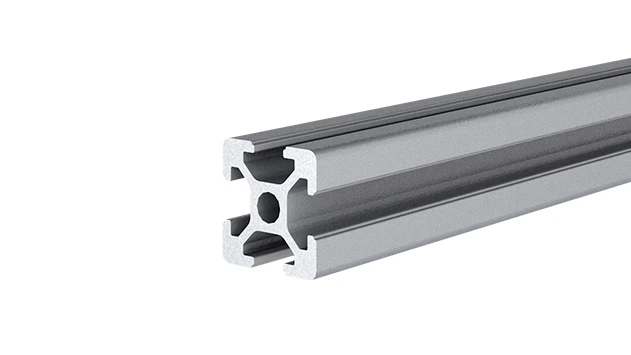
2020 is a 2.00 x 2.00CM fractional 20 series square extrusion T-slot profile with four open T-slots, one on each 2.00 face. The profile has align-a-grooves to assist in aligning connecting profiles.
In the fast-paced world of home appliance manufacturing, where consumer demands for sleek design and high performance collide with the need for efficient, adaptable production lines, one material has emerged as a silent hero: the 2020 EU standard aluminum profile. Far more than just a structural component, this aluminum extrusion profile has redefined how manufacturers balance aesthetic appeal with operational functionality. From the clean lines of a modern refrigerator door to the modular workbenches that streamline assembly, the 2020 EU standard aluminum profile—and its aluminum profile accessories—has become the backbone of a industry that refuses to compromise on either form or function.
The Aesthetic Revolution: Why Looks Matter in Production and Products
Walk into any modern kitchen, and you'll notice a trend: home appliances are no longer just utilitarian tools. They're design statements. A stainless steel oven, a minimalist microwave, a sleek dishwasher—each piece is crafted to blend into (or elevate) the room's decor. But what many consumers don't see is that the same focus on aesthetics extends to the factories where these appliances are born. A cluttered, outdated production line doesn't just hinder efficiency; it can compromise the quality of the final product. This is where the 2020 EU standard aluminum profile shines.
Unlike traditional steel frames, which often feel bulky and industrial, aluminum extrusion profiles offer a refined, contemporary look. Their smooth surfaces, precision-engineered edges, and customizable finishes (from matte silver to anodized black) make them ideal for creating production environments that feel organized and intentional. Imagine a workbench where the frame isn't a jumble of welded steel, but a clean grid of 2020 EU standard aluminum profiles, accented by matching aluminum profile accessories like end caps and rubber strips. Such a setup doesn't just look better—it feels better to work with, boosting employee morale and attention to detail.
But the aesthetic benefits don't stop at the factory floor. Many home appliance components, from the internal racks of a refrigerator to the support structures of a washing machine, now use aluminum profiles to reduce visual bulk. The 2020 EU standard's strict tolerances ensure that these profiles fit together seamlessly, eliminating gaps or rough edges that could mar the appliance's interior. When a customer opens their new dryer and sees a smooth, uniform drum support frame made from aluminum extrusion profiles, it reinforces the perception of quality—a subtle but powerful selling point in a competitive market.
Functionality Redefined: How Modularity Drives Efficiency
While aesthetics grab attention, functionality keeps manufacturers coming back. The 2020 EU standard aluminum profile isn't just pretty—it's a workhorse, designed to adapt to the ever-changing needs of home appliance production. At the heart of this adaptability is its modularity, made possible by a wide range of aluminum profile accessories that turn basic profiles into fully customized solutions.
Consider the workbench, a staple of any assembly line. Traditional workbenches are often fixed in size and shape, forcing workers to adapt their processes to the furniture. With 2020 EU standard aluminum profiles, that dynamic flips. Using accessories like internal rotary aluminum joints and adjustable brackets, manufacturers can build workbenches that grow, shrink, or reconfigure in hours—not weeks. Need to add a shelf for tools? Snap on a few brackets. Want to lower the height for ergonomic seating? Swap out the leg profiles for shorter ones. This flexibility is a game-changer in an industry where product lines change frequently (think seasonal appliance models or new feature updates).
Another area where functionality shines is material handling. Home appliance production involves moving heavy components—motors, steel drums, glass doors—across the factory floor. Using 2020 EU standard aluminum profiles, manufacturers can construct lightweight yet durable flow racks and turnover trolleys. These structures, equipped with roller tracks and swivel casters (another set of aluminum profile accessories), make it easy for workers to slide components from station to station, reducing physical strain and speeding up assembly times. Unlike steel racks, which rust over time and require heavy lifting to reposition, aluminum profiles resist corrosion and are light enough to be moved by a single person—saving both time and maintenance costs.
Traditional Materials vs. 2020 EU Standard Aluminum Profile
| Feature | Traditional Steel | Plywood | 2020 EU Standard Aluminum Profile |
|---|---|---|---|
| Weight (kg/m) | 7.8 – 8.0 | 0.6 – 0.8 | 2.7 – 2.9 |
| Customization | Limited (requires welding) | Moderate (cuts easily, but weakens structure) | High (modular with accessories) |
| Corrosion Resistance | Low (prone to rust) | Low (swells with moisture) | High (natural oxide layer) |
| Aesthetic Appeal | Industrial (requires painting) | Warm but prone to scratches | Sleek, uniform (custom finishes available) |
| Long-Term Cost | High (maintenance, replacement) | High (frequent replacement) | Low (durable, reusable) |

Lean Systems Integration: Reducing Waste, Boosting Productivity
Home appliance manufacturers are increasingly adopting lean systems to eliminate waste and streamline processes—and the 2020 EU standard aluminum profile has become an integral part of this shift. Lean manufacturing relies on principles like "just-in-time" production and continuous improvement, both of which demand flexibility and visibility. Aluminum profiles deliver on both fronts.
Take "5S" (Sort, Set in Order, Shine, Standardize, Sustain), a lean methodology focused on workplace organization. With aluminum profile accessories like labeled tool holders and color-coded brackets, manufacturers can create visual workspaces where every tool and component has a designated spot. This reduces time wasted searching for items and minimizes clutter, making it easier to spot inefficiencies. For example, a workbench built with 2020 EU standard aluminum profiles might include yellow plastic roller track guide rails to signal where incoming components should be placed, and grey rails for outgoing parts—simple visual cues that keep the line moving smoothly.
Another lean principle, "kaizen" (continuous improvement), thrives with aluminum profiles. Because they're easy to disassemble and reconfigure, teams can experiment with new layouts or processes without investing in new equipment. A manufacturer producing blenders might test a new assembly sequence by rearranging their aluminum profile workbenches and adding a short conveyor made from roller tracks and aluminum guide rails. If the new sequence works, the setup becomes permanent; if not, the profiles are repurposed for another project. This "fail fast, adapt faster" approach is crucial in an industry where production cycles are getting shorter and innovation is key.
Sustainability: The Hidden Benefit of Aluminum Profiles
In an era where consumers and regulators alike demand eco-friendly practices, the 2020 EU standard aluminum profile offers a sustainability advantage that's hard to ignore. Aluminum is 100% recyclable, with no loss in quality during the recycling process. This means that at the end of a production line's life, the aluminum profiles and accessories can be melted down and reused to make new profiles—reducing reliance on virgin materials and cutting carbon footprints.
Additionally, aluminum's lightweight nature reduces transportation costs and energy use. A truckload of aluminum profiles can carry far more material than a truckload of steel, lowering fuel consumption during delivery. In the factory, lighter equipment (like aluminum workbenches and trolleys) requires less energy to move, further shrinking the manufacturer's environmental impact. For home appliance brands aiming to market themselves as "green," using 2020 EU standard aluminum profiles isn't just a production choice—it's a branding opportunity.
Case Study: How a Major Appliance Brand Transformed Its Line
To put these benefits into perspective, consider the case of a leading European home appliance manufacturer that switched to 2020 EU standard aluminum profiles in 2023. Prior to the switch, the company used steel workbenches and wooden material racks, which were heavy, prone to rust, and difficult to reconfigure. Assembly line changeovers for new product models took up to three days, and employee complaints about ergonomic discomfort were common.
After transitioning to aluminum extrusion profiles and accessories, the results were striking. The company's workbenches were now adjustable, with height settings tailored to individual workers—reducing reported back pain by 40%. Material racks, built with lightweight aluminum and roller tracks, were reconfigured in under four hours for new models, cutting changeover time by 80%. Perhaps most notably, the sleek, uniform look of the aluminum profiles improved the factory's appearance, leading to a 15% increase in employee satisfaction scores in internal surveys. "It feels like we're working in a modern facility now, not a warehouse," one assembly line worker noted in feedback.
Financially, the switch paid off too. The manufacturer reported a 25% reduction in maintenance costs (thanks to aluminum's corrosion resistance) and a 10% increase in production speed, as workers spent less time moving heavy equipment and more time assembling appliances. Within a year, the initial investment in aluminum profiles and accessories was fully recouped.
The Future: What's Next for Aluminum Profiles in Home Appliance Production?
As home appliances become smarter and more connected, the role of 2020 EU standard aluminum profiles is set to grow. Innovations like aluminum profiles with built-in channels for wiring (to support IoT sensors on the factory floor) and heat-resistant coatings (for use near high-temperature components like ovens) are already in development. Additionally, advances in aluminum extrusion technology are making it possible to create even more complex profiles, opening up new design possibilities for both appliance interiors and production equipment.
Perhaps most exciting is the potential for "digital twins"—virtual replicas of production lines built using 3D models of aluminum profiles and accessories. Manufacturers can test new layouts or processes in the virtual world before physically reconfiguring their lines, reducing downtime and errors. With the 2020 EU standard's precise dimensions, these digital models are highly accurate, making the transition from virtual to physical seamless.
Conclusion: More Than a Material—A Strategic Investment
The 2020 EU standard aluminum profile has proven itself to be more than just a building material in home appliance production. It's a bridge between aesthetics and functionality, a driver of efficiency, and a tool for sustainability. By combining sleek design with modular flexibility, supported by a robust ecosystem of aluminum profile accessories, it empowers manufacturers to create products that delight consumers while keeping their production lines agile and cost-effective.
As the home appliance industry continues to evolve, one thing is clear: the brands that thrive will be those that embrace materials like the 2020 EU standard aluminum profile—materials that don't just meet today's needs, but adapt to tomorrow's challenges. In the end, it's not just about building better appliances; it's about building better ways to build them. And with aluminum extrusion profiles leading the way, the future looks both beautiful and bright.