- Company Articles
- Industry articles
- Industry standards
- 2020 EU Standard Aluminum Profile in Lean Tube Systems: Design Guidelines

2020 EU Standard Aluminum Profile in Lean Tube Systems: Design Guidelines
Related Product
2020 EU Standard Aluminum Profile
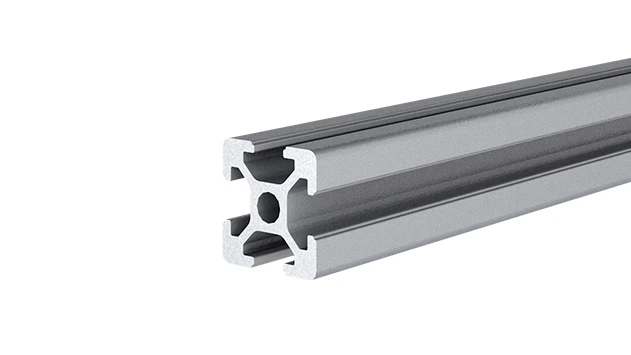
2020 is a 2.00 x 2.00CM fractional 20 series square extrusion T-slot profile with four open T-slots, one on each 2.00 face. The profile has align-a-grooves to assist in aligning connecting profiles.
In the fast-paced world of manufacturing, where efficiency and adaptability can make or break a production line, lean systems have become the backbone of modern operations. At the heart of these systems lies a seemingly simple yet incredibly versatile component: the aluminum profile. But not all aluminum profiles are created equal. For businesses operating within the European union, the 2020 EU standard aluminum profile has emerged as a game-changer, offering a perfect blend of precision, durability, and modularity. Whether you're designing a workbench for assembly lines, a material rack for inventory management, or a custom conveyor system, understanding how to leverage this specific profile can transform your lean tube system from functional to exceptional. Let's dive into the design guidelines that will help you unlock its full potential.
What Makes the 2020 EU Standard Aluminum Profile Unique?
Before we jump into design principles, let's clarify what exactly the 2020 EU standard aluminum profile is—and why it matters. First, the "2020" refers to its cross-sectional dimensions: 20mm in width and 20mm in height. This compact size might seem unassuming, but it's intentional. In lean manufacturing, where space optimization is key, a smaller profile allows for tighter layouts without sacrificing structural integrity. The "EU standard" label ensures compliance with strict European regulations, including EN 755 (aluminum extrusions) and ISO 9001 (quality management), guaranteeing consistency in material composition, tolerances, and performance across suppliers.
Unlike generic aluminum tubes, the 2020 EU standard profile features a T-slot design along its length. These slots are not just for show—they're the secret to its modularity. By using aluminum profile accessories like brackets, connectors, and end caps, you can assemble, disassemble, and reconfigure structures in minutes, eliminating the need for welding or permanent fasteners. This flexibility aligns perfectly with lean principles, where adaptability to changing production needs is critical. Whether you need to adjust a workbench height, add a shelf to a material rack, or modify a conveyor path, the T-slot system makes it possible with minimal downtime.
Key Design Principles for Lean Tube Systems
Designing with the 2020 EU standard aluminum profile isn't just about slapping together tubes and joints. To create a lean system that truly enhances efficiency, you need to adhere to four core principles: structural stability, modularity, ergonomics, and sustainability. Let's break down each one and how the 2020 profile supports them.
1. Structural Stability: Balancing Strength and Weight
At first glance, a 20x20mm profile might raise eyebrows: "Can it really support the weight of tools, materials, or even workers?" The answer is a resounding yes—when designed correctly. The 2020 EU standard profile is typically extruded from 6063-T5 aluminum alloy, a material known for its high strength-to-weight ratio. This means it's lightweight enough for easy handling during assembly but strong enough to withstand daily wear and tear in industrial environments.
To maximize structural stability, start by calculating the load your system will bear. For example, a basic workbench might need to support 50kg of tools and components, while a material rack could require 100kg per shelf. The 2020 profile's load capacity depends on several factors: wall thickness (usually 1.2mm to 2mm), span between supports, and the type of joints used. As a general rule, shorter spans (e.g., 600mm between vertical supports) increase load capacity, while longer spans may require reinforcement with cross-bracing or thicker profiles.
Joints are another critical factor. The 2020 profile works best with matching aluminum connectors, such as 90° angle brackets, internal rotary joints, or T-slot nuts. Avoid mixing and matching with non-standard accessories, as this can create weak points. For high-load applications, consider using gusset plates or corner braces to distribute weight evenly across joints. Remember: a stable structure isn't just about preventing collapse—it's about minimizing vibration, which can affect precision work on a workbench or damage sensitive components on a conveyor.
2. Modularity: Building for Change
Lean manufacturing thrives on continuous improvement, and your physical infrastructure should reflect that. A modular design ensures your system can evolve as your processes do. The 2020 EU standard profile excels here, thanks to its T-slot system and compatibility with a wide range of accessories. Let's say you initially design a workbench for assembling small electronics, but six months later, you need to retool for larger components. With modularity in mind, you could add extension arms, adjust the height using telescopic tubes, or even convert part of the workbench into a temporary material staging area—all without replacing the entire structure.
When planning modularity, start with a "base frame" that can serve multiple purposes. For example, a simple 2020 profile frame with adjustable feet can function as a standalone workbench, a shelving unit, or a trolley base with the addition of casters. Choose aluminum profile accessories that are reusable across different setups: quick-release brackets, sliding nuts, and snap-on covers. Avoid custom-made parts unless absolutely necessary, as they limit future reconfiguration.
Compatibility is also key. Ensure the 2020 profile and accessories you choose are compatible with other EU standard profiles, such as 3030 or 4040. This way, you can scale up by integrating larger profiles where needed (e.g., using 4040 for heavy-duty shelving) while keeping the 2020 for lighter, more compact sections. Most suppliers provide compatibility charts, so don't hesitate to ask—this small step can save hours of frustration later.
3. Ergonomics: Designing for People, Not Just Processes
A lean system isn't just about efficiency—it's about creating a workspace that supports worker well-being and productivity. Poor ergonomics leads to fatigue, errors, and absenteeism, all of which undermine lean goals. The 2020 EU standard profile's adjustability makes it easy to design ergonomic solutions tailored to your team's needs.
Take workbenches, for example. The ideal height for a standing workbench is typically between 800mm and 900mm, but this varies based on worker height and task (e.g., precision assembly vs. heavy lifting). With the 2020 profile, you can build adjustable-height workbenches using telescopic legs and locking pins, allowing each operator to set their optimal height. Add a footrest bar at 200mm from the floor, and you've reduced lower back strain during long shifts.
Material flow is another ergonomic consideration. In a lean system, tools and components should be within easy reach (the "golden zone" between shoulder and knee height). Using 2020 profile material racks with inclined shelves or roller tracks ensures workers don't have to bend, stretch, or twist to access items. For example, a 3-row, 3-floor material rack (similar to "Material Rack B" in supplier catalogs) can be positioned alongside a workbench, with frequently used parts on the middle shelf and less common items on the top and bottom. The 2020 profile's lightweight nature also makes it easy to mount racks on casters, creating mobile stations that can be moved directly to the assembly line, reducing walking time.
4. Sustainability: Lean Manufacturing Meets Environmental Responsibility
Sustainability is no longer a buzzword—it's a core business value, and lean systems are uniquely positioned to support it. The 2020 EU standard aluminum profile aligns with green manufacturing goals in three key ways: recyclability, durability, and energy efficiency.
Aluminum is 100% recyclable without loss of quality, and recycling it requires just 5% of the energy needed to produce primary aluminum. When a 2020 profile structure reaches the end of its useful life, it can be disassembled, sorted, and recycled, reducing waste sent to landfills. This is a stark contrast to wooden or plastic structures, which often end up as waste after minor damage.
Durability also plays a role. The 2020 EU standard profile's corrosion resistance (thanks to its anodized finish) and scratch-resistant surface mean it lasts longer than untreated steel or plastic, reducing the need for frequent replacements. In high-moisture environments, you can even opt for stainless steel accessories to further extend lifespan.

Design Guidelines: Step-by-Step Implementation
Now that we've covered the principles, let's put them into practice with actionable design guidelines. Whether you're building a simple workbench or a complex conveyor system, these steps will ensure your 2020 EU standard aluminum profile setup is efficient, safe, and aligned with lean goals.
Step 1: Define Requirements and Constraints
Start by asking: What problem is this system solving? For example, if you need a workbench for electronics assembly, requirements might include ESD (electrostatic discharge) protection, a flat surface, and integrated tool storage. Constraints could be space (e.g., maximum footprint of 1200mm x 600mm) and budget. Document these clearly—they'll guide every design decision.
Step 2: select the Right Profile and Accessories
Not all 2020 EU standard profiles are identical. Choose a wall thickness based on load: 1.2mm for light-duty (e.g., shelving for small parts), 1.5mm for medium-duty (e.g., workbenches), and 2.0mm for heavy-duty (e.g., material racks). Pair it with compatible accessories: use internal rotary joints for angled connections, flat brackets for straight joins, and T-slot nuts for attaching shelves or panels. For ESD-sensitive environments, look for conductive aluminum profiles or add ESD mats and grounding kits.
Step 3: Sketch the Design and Validate Load Capacity
Sketch your design on paper or use 3D modeling software (e.g., SketchUp, SolidWorks). Include dimensions, joint positions, and accessory types. Then validate load capacity using supplier data or engineering calculators. Most suppliers provide load charts for their 2020 profiles—for example, a 1.5mm wall 2020 profile with supports 600mm apart can typically handle 75kg per linear meter. If your design exceeds this, add more supports or upgrade to a thicker profile.
Step 4: Assemble and Test
Assembly is where the 2020 profile's modularity shines. Start with the base frame, tightening joints finger-tight first to allow for adjustments. Use a level to ensure the structure is plumb and square, then fully tighten all connections. Once assembled, test it under realistic conditions: load the workbench with tools, simulate material flow on roller tracks, or have workers perform test tasks to check ergonomics. Make adjustments as needed—this is lean, after all!
Comparing Aluminum Profiles: How 2020 Stacks Up
To better understand where the 2020 EU standard profile fits in, let's compare it to other common EU standard profiles. The table below highlights key differences in dimensions, load capacity, and typical applications.
| Profile Type | Dimensions (WxH) | Max Load Capacity (600mm span) | Common Applications | Key Advantage |
|---|---|---|---|---|
| 2020 EU Standard | 20mm x 20mm | 75kg/m (1.5mm wall) | Workbenches, small material racks, mobile trolleys, machine guards | Compact size, high modularity, ideal for tight spaces |
| 3030 EU Standard | 30mm x 30mm | 150kg/m (1.5mm wall) | Medium-duty shelving, conveyor frames, assembly fixtures | Higher load capacity, still lightweight |
| 4040 EU Standard | 40mm x 40mm | 250kg/m (2.0mm wall) | Heavy-duty racks, production line frames, automated systems | Industrial-grade strength for large loads |
As the table shows, the 2020 profile is the most compact and versatile, making it perfect for small to medium-duty applications where space and flexibility are priorities. It's not meant to replace larger profiles but to complement them—for example, using 4040 profiles for a conveyor frame and 2020 profiles for the side guides or tool holders attached to it.
Real-World Applications: Bringing Lean Design to Life
To illustrate how these guidelines come together, let's walk through two common applications of the 2020 EU standard aluminum profile in lean systems: a modular workbench and a mobile material rack.
Application 1: Modular Workbench for Electronics Assembly
An electronics manufacturer needs a workbench for assembling circuit boards. Requirements: ESD protection, adjustable height, tool storage, and space for a small testing station. Using the 2020 EU standard profile:
- Frame: 2020 profile with 1.5mm wall, assembled into a 1200mm (L) x 600mm (W) x 850mm (H) base frame. Telescopic legs allow height adjustment from 800mm to 900mm.
- Top Surface: ESD laminate top (1200x600mm) attached to the frame using T-slot nuts and bolts.
- Tool Storage: A 2020 profile shelf above the workbench (400mm high) with dividers for screwdrivers, pliers, and tweezers. Small drawers mounted under the top surface for components.
- Testing Station: A side extension (300mm wide) using 2020 profile, holding a power supply and multimeter. The extension is removable for reconfiguration.
- Accessories: ESD wrist strap grounding point, LED task light mounted on a flexible 2020 profile arm, and a cup holder attached to the frame.
Result: A workbench that adapts to different operators, protects sensitive components from ESD, and keeps tools organized—all while fitting into a 1200x600mm footprint.
Application 2: Mobile Material Rack for Automotive Parts
An automotive supplier needs a mobile rack to transport small parts (e.g., screws, washers) from the warehouse to the assembly line. Requirements: 3 shelves, capacity for 50kg per shelf, easy maneuverability, and compatibility with roller tracks for quick part retrieval.
- Frame: 2020 profile with 1.5mm wall, assembled into a 800mm (L) x 500mm (W) x 1200mm (H) frame. Four swivel casters (two with brakes) for mobility.
- Shelves: Three 800x500mm shelves made from 2020 profile frames with plywood inserts. Each shelf is inclined at 5° to allow parts to slide forward as they're used.
- Roller Tracks: Plastic roller track guide rails (yellow, from the keyword list) mounted on the shelves to facilitate smooth part flow.
- Label Holders: 2020 profile brackets with clear plastic pockets for part labels, ensuring quick identification.
Result: A mobile rack that reduces walking time by 40%, keeps parts organized, and can be reconfigured with additional shelves or roller tracks as part types change.
Conclusion: The 2020 EU Standard Profile—A Lean Designer's Best Friend
The 2020 EU standard aluminum profile is more than just a building material—it's a catalyst for lean transformation. Its compact size, modular design, and compliance with EU standards make it the ideal choice for creating flexible, efficient, and sustainable workspaces. By following the design guidelines outlined here—prioritizing structural stability, modularity, ergonomics, and sustainability—you can build lean tube systems that adapt to your needs, support your team, and drive continuous improvement.
Remember, lean manufacturing is about more than just cutting costs—it's about creating value for your customers, your employees, and your business. With the 2020 EU standard profile and the right design approach, you're not just building structures; you're building a foundation for long-term success. So grab your profile, your accessories, and start designing—your lean journey starts now.