- Company Articles
- Industry articles
- Industry standards
- 2020 EU Standard Aluminum Profile in Renewable Energy Manufacturing: Applications

2020 EU Standard Aluminum Profile in Renewable Energy Manufacturing: Applications
Related Product
2020 EU Standard Aluminum Profile
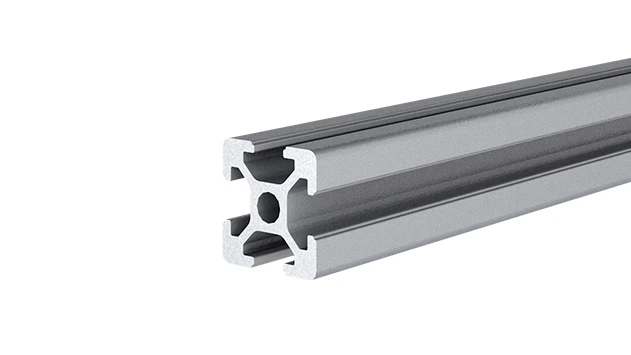
2020 is a 2.00 x 2.00CM fractional 20 series square extrusion T-slot profile with four open T-slots, one on each 2.00 face. The profile has align-a-grooves to assist in aligning connecting profiles.
The global shift toward renewable energy has transformed manufacturing floors worldwide. As solar farms, wind parks, and battery storage facilities expand, the demand for efficient, adaptable, and sustainable production tools has never been higher. At the heart of this transformation lies a material that quietly powers progress: the 2020 EU standard aluminum profile. More than just a structural component, this aluminum extrusion profile, paired with its versatile aluminum profile accessories, has become a cornerstone of modern renewable energy manufacturing. From solar panel assembly lines to wind turbine component workshops, its modular design and compliance with strict EU standards are redefining how teams build, adapt, and scale production processes. Let's dive into how this unassuming material is driving innovation across key renewable energy sectors.
Solar Panel Production: Precision Meets Adaptability
Solar panel manufacturing is a dance of precision and speed. Each panel, composed of delicate photovoltaic cells, glass layers, and aluminum frames, requires careful handling from assembly to quality control. Here, the 2020 EU standard aluminum profile shines—not just as a structural element, but as a flexible backbone that adapts to evolving production needs.
Frame Assembly Workstations
The first step in solar panel production is crafting the aluminum frame that protects the delicate inner components. Traditional frame assembly relied on fixed steel workbenches, which were heavy, hard to modify, and prone to rust in humid factory environments. Today, manufacturers are switching to workbenches built with 2020 EU standard aluminum profiles. These workbenches, often configured as Workbench E (single deck-without caster) for stationary precision tasks, offer a lightweight yet rigid surface. The aluminum extrusion profile's T-slot design allows teams to mount clamps, rulers, and even small robotic arms directly onto the frame using aluminum profile accessories like internal rotatary aluminum joints. This means workers can adjust tool positions in minutes, not hours, reducing downtime when switching between panel sizes (e.g., 60-cell vs. 72-cell panels).
Take a mid-sized solar manufacturer in Spain, for example. After upgrading to 2020 EU profile workbenches, they reported a 22% reduction in frame assembly time. The secret? The profiles' compatibility with aluminum profile accessories like plastic roller track guide rails (yellow and grey variants) allowed them to add sliding trays for holding frame components, keeping tools within arm's reach without cluttering the workspace. Plus, the aluminum's natural corrosion resistance eliminated the need for frequent repainting, cutting maintenance costs by 15% annually.
Module Testing Racks
Once assembled, solar panels undergo rigorous testing to ensure they meet efficiency and durability standards. This includes thermal cycling, humidity resistance, and power output checks. Testing stations require sturdy racks that can hold panels at specific angles while withstanding temperature fluctuations. Enter the Material Rack B (3 row and 3 floor) , a storage solution built using 2020 EU standard aluminum profiles. Unlike wooden or steel racks, which warp or corrode over time, these aluminum racks maintain their structural integrity even in the high-heat, high-humidity chambers used for testing. The 3-row, 3-floor design maximizes vertical space, allowing manufacturers to test up to 9 panels simultaneously—tripling throughput compared to single-layer steel racks.
What sets these racks apart is their adaptability. Using 2020 EU profile accessories like swivel roller balls (1 inch and 0.5 inch sizes), workers can slide panels onto the racks with minimal effort, reducing the risk of accidental damage. The roller balls' smooth rotation also ensures panels sit evenly, preventing stress on the frame during testing. A German solar testing facility noted that after installing these racks, panel breakage during testing dropped by 30%, a significant saving given the cost of a single damaged panel.
| Application | Traditional Material | 2020 EU Aluminum Profile Solution | Key Advantage |
|---|---|---|---|
| Frame Assembly Workbench | Steel | Workbench E + Aluminum Profile Accessories | Tool-free adjustments, corrosion resistance |
| Testing Racks | Wood/Steel | Material Rack B + Swivel Roller Balls | Space-efficient, damage-resistant panel handling |
| Component Storage | Fixed Plastic Bins | Aluminum Guide Rail A + Roller Track | Dynamic, sliding storage for small parts |
Wind Turbine Manufacturing: Powering Large-Scale Production
Wind turbines are engineering marvels, with components ranging from 60-meter rotor blades to intricate gearboxes. Manufacturing these giants requires tools that can handle heavy loads, withstand industrial wear, and adapt to custom component sizes. The 2020 EU standard aluminum profile, often overlooked in heavy industries, is proving to be a game-changer here—offering strength without the weight penalty of steel.
Blade Molding and Transport
Wind turbine blades are massive, often exceeding 80 meters in length for offshore models. Their manufacturing involves layering fiberglass or carbon fiber over large molds, a process that demands stable, precise work surfaces. Traditional molds were built with steel frames, which added hundreds of kilograms to the structure, making them difficult to move or adjust. Today, mold manufacturers are using 2020 EU standard aluminum profiles reinforced with aluminum honeycomb panels to create lightweight yet rigid molds. The aluminum extrusion profile's high strength-to-weight ratio means a 10-meter mold section weighs 40% less than its steel counterpart, allowing teams to reposition molds using overhead cranes without straining equipment.
Transporting finished blades from the mold shop to the assembly line is another challenge. Blades are fragile—even minor flexing can cause internal damage. To solve this, manufacturers use turnover trolleys built with 2020 EU aluminum profiles and aluminum roller track systems. The trolleys feature adjustable supports with swivel roller balls (1 inch) that cradle the blade, allowing it to "float" slightly during transport and absorb vibrations. A Danish wind manufacturer reported a 50% reduction in blade transport damage after switching to these trolleys, citing the aluminum roller track's smooth movement and the profiles' ability to withstand the constant jostling of factory floors.
Nacelle Assembly Lines
The nacelle—the "brain" of a wind turbine—houses the gearbox, generator, and control systems. Assembling these components requires a mix of heavy lifting and precise alignment. Conveyor systems play a critical role here, moving nacelle sections between workstations. Traditional steel conveyors are durable but inflexible; changing their layout to accommodate a new nacelle design can take weeks. 2020 EU standard aluminum profiles offer a better alternative: modular roller conveyors built with aluminum guide rails (A and B variants) and roller track placon mounts. These conveyors can be disassembled and reconfigured in days, thanks to the profiles' quick-connect joints. For example, when a Swedish manufacturer introduced a new 4.5 MW nacelle model, they reconfigured their assembly line in just 3 days using aluminum profile accessories like 90° aluminum pipe joints and roller track connectors—work that would have taken 2 weeks with steel conveyors.
The conveyors also integrate seamlessly with material racks built from 2020 EU profiles. These racks, often customized with 40 steel roller track yellow wheels, allow workers to slide heavy gearbox components onto the conveyor without manual lifting. This not only reduces the risk of back injuries but also speeds up component delivery to the assembly line by 30%.

Energy Storage Batteries: Cleanrooms and Precision Handling
Lithium-ion batteries, the backbone of solar and wind energy storage, require ultra-clean manufacturing environments to prevent contamination. Even a tiny dust particle can reduce battery life or cause short circuits. Here, the 2020 EU standard aluminum profile's smooth, non-porous surface and compatibility with ESD (electrostatic discharge) accessories make it ideal for cleanroom applications.
ESD Workstations for Cell Assembly
Battery cell assembly is a delicate process involving stacking electrodes, inserting separators, and filling electrolyte. Workers must wear ESD-safe clothing, and work surfaces must dissipate static electricity to avoid damaging sensitive components. ESD workbenches built with 2020 EU standard aluminum profiles address this need perfectly. The aluminum extrusion profile itself is conductive, and when paired with ESD-safe accessories like 40 steel roller track black ESD wheels and ESD workbench mats, it creates a grounded workspace that prevents static buildup. Unlike plastic workbenches, which can generate static even with anti-static coatings, aluminum profiles maintain consistent conductivity over time, reducing the risk of costly cell failures.
A battery manufacturer in Germany's Bavaria region recently replaced their plastic ESD workbenches with 2020 EU profile models. They noticed an immediate improvement: static-related cell defects dropped from 8% to 1.2%. The profiles' T-slot design also allowed them to add adjustable dividers using aluminum profile accessories, organizing tools and preventing cross-contamination between cell types (e.g., NCM vs. LFP batteries). Plus, the aluminum's easy-to-clean surface stood up to daily wipe-downs with isopropyl alcohol, a must in ISO 8 cleanrooms.
Material Handling in Cleanrooms
Moving battery components (e.g., electrode rolls, separator films) between cleanroom stations requires equipment that won't shed particles. Traditional steel carts can rust, and their wheels often leave rubber residue on floors. Enter aluminum turnover trolleys with caster wheels made from ESD-safe plastic. These trolleys, built with 2020 EU aluminum profiles, feature smooth, weld-free joints that eliminate crevices where dust can hide. The casters, paired with caster accessories like brake locks, glide quietly across cleanroom floors without marking them. A U.S.-based battery startup reported that after switching to these trolleys, their cleanroom particle counts dropped by 35%, helping them meet strict automotive industry standards for battery quality.
Sustainability: Aligning with Renewable Energy's Core Mission
Renewable energy manufacturing isn't just about making green technology—it's about doing so sustainably. The 2020 EU standard aluminum profile aligns with this mission in three key ways: recyclability, energy efficiency, and longevity.
Closed-Loop Recycling
Aluminum is 100% recyclable, and recycling it uses just 5% of the energy required to produce new aluminum. This is a boon for renewable manufacturers aiming to reduce their carbon footprint. When a 2020 EU profile workbench reaches the end of its life (after 15–20 years of use), it can be melted down and reformed into new profiles with no loss of quality. Unlike steel, which loses strength when recycled repeatedly, aluminum maintains its properties, creating a true circular economy. A Dutch solar manufacturer even tracks the "recycled content" of their profiles, using it as a selling point for eco-conscious clients.
Energy Efficiency in Production
The aluminum extrusion process for 2020 EU profiles is also becoming greener. Modern extrusion plants use renewable energy (solar, wind) to power their presses, and advances in die design reduce material waste by up to 18%. For example, a profile manufacturer in Austria runs its extrusion lines entirely on hydropower, and their 2020 EU profile dies are engineered to produce minimal scrap. This means the profiles themselves have a lower embodied carbon footprint than older aluminum or steel alternatives.
Future Trends: Where 2020 EU Profiles and Renewable Manufacturing Meet Next
As renewable energy manufacturing scales, the demand for smarter, more connected factories will grow. The 2020 EU standard aluminum profile is poised to play a role here, too. Imagine profiles with embedded RFID tags that track tool usage or monitor structural stress in real time. Or aluminum extrusion profiles with integrated sensors that detect when a workbench needs maintenance (e.g., loose joints). While these innovations are still in the prototype stage, the profiles' modular design makes them easy to upgrade—meaning today's workbenches and racks can evolve with tomorrow's technology.
Another trend is the rise of "lights-out" factories, where robots handle most production tasks. 2020 EU profiles, with their precise tolerances and compatibility with automation equipment, are ideal for building robot work cells. For example, a solar panel manufacturer could use aluminum profiles to create a cage around a robotic soldering arm, with aluminum roller tracks feeding panels into the cell. The profiles' lightweight design makes it easy to reconfigure the cell if production needs change, keeping factories agile in a fast-paced industry.
Conclusion: The Unsung Hero of Renewable Manufacturing
The 2020 EU standard aluminum profile may not grab headlines like the latest solar cell or wind turbine design, but it's an unsung hero in the renewable energy revolution. From solar panel workbenches to wind turbine nacelle conveyors, from battery cleanrooms to testing racks, these profiles and their aluminum profile accessories are making manufacturing more efficient, sustainable, and adaptable. As the world races to decarbonize, the tools we use to build green technology matter—and the 2020 EU standard aluminum profile is proving to be a tool we can rely on.