- Company Articles
- Industry articles
- Industry standards
- 2020 EU Standard Aluminum Profile: Joining Technologies for Modular Systems

2020 EU Standard Aluminum Profile: Joining Technologies for Modular Systems
Related Product
2020 EU Standard Aluminum Profile
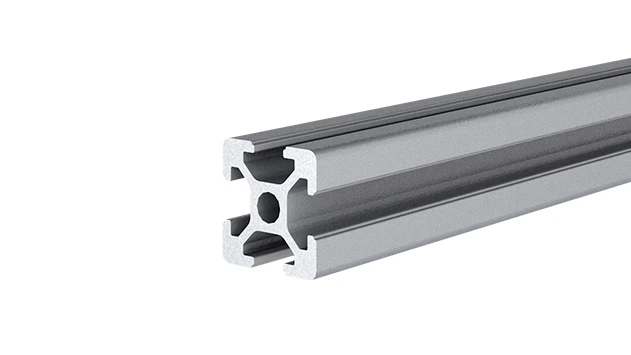
2020 is a 2.00 x 2.00CM fractional 20 series square extrusion T-slot profile with four open T-slots, one on each 2.00 face. The profile has align-a-grooves to assist in aligning connecting profiles.
In the fast-paced world of manufacturing, warehousing, and workshop design, modular systems have become the unsung heroes of efficiency. These adaptable setups—think workbenches that reconfigure in hours, material racks that grow with inventory, or conveyor lines that shift with production needs—rely on one critical component to deliver their promise of flexibility: the profiles that form their backbone. Among these, the 2020 EU Standard Aluminum Profile stands out as a cornerstone, prized for its lightweight strength, corrosion resistance, and seamless compatibility. But even the most robust profiles are only as good as the technologies that hold them together. Joining technologies, often overlooked, are the silent architects of modular systems, turning individual aluminum lengths into functional, durable structures. In this article, we'll dive deep into the world of joining technologies for 2020 EU Standard Aluminum Profiles, exploring the components, methods, and best practices that make modular magic possible.
Understanding the 2020 EU Standard Aluminum Profile
Before we jump into joining technologies, let's get to know the star of the show: the 2020 EU Standard Aluminum Profile. What makes this profile a favorite in industries ranging from automotive to electronics? Let's break it down.
First, the basics: the "2020" refers to its cross-sectional dimensions, typically 20mm x 20mm—small enough for compact applications but sturdy enough to handle moderate loads. Crafted from high-grade aluminum alloy, it strikes a rare balance between weight and strength: lighter than steel but robust enough to support workbenches, shelving, and even light-duty conveyors. Its surface is often anodized, giving it a sleek, corrosion-resistant finish that stands up to oils, chemicals, and daily wear—essential in busy industrial environments.
But what truly sets the 2020 EU Standard apart is its adherence to European standards. These standards ensure consistency in dimensions, material quality, and T-slot design (the grooves running along the profile length that enable connections). For businesses, this means profiles and accessories from different suppliers work together seamlessly—no more mismatched parts or compatibility headaches. Whether you're building a simple assembly station or a complex material handling system, this standardization is the foundation of reliability.
Common applications of 2020 EU Standard Aluminum Profiles include everything from lightweight workbenches and mobile trolleys to component racks and small-scale conveyor systems. Its versatility makes it a go-to for both permanent installations and temporary setups that need to evolve with changing workflows.
Why Joining Technologies Matter: More Than Just "Holding It Together"
At first glance, joining technologies might seem like a trivial detail—after all, isn't any bolt or bracket enough to connect two profiles? The reality is far more nuanced. In modular systems, the quality of joining directly impacts three critical factors: performance, flexibility, and safety.
Performance is non-negotiable. A workbench supporting heavy tools, a material rack stacked with inventory, or a conveyor moving parts along a production line—all rely on joints that can handle dynamic and static loads without bending, slipping, or failing. Poorly chosen joining components can lead to wobbling structures, reduced lifespan, or even catastrophic failure under stress.
Flexibility is another key driver. Modular systems are designed to be reconfigured, expanded, or repurposed. Joining technologies must allow for easy assembly and disassembly without damaging the profiles—so you can take apart a workbench today and rebuild it as a parts cart tomorrow. Rigid, permanent joints (like welding) might offer strength, but they kill the "modular" in modular systems.
Safety, too, hangs in the balance. Sharp edges from unprotected profile ends, loose connectors that create instability, or exposed T-slots that catch fingers—these are all hazards that proper joining accessories can mitigate. In busy workplaces, where every second counts, the right joining components don't just hold structures together; they protect the people using them.
In short, joining technologies are the bridge between individual profiles and functional systems. They turn potential into performance, making the 2020 EU Standard Aluminum Profile not just a piece of metal, but a building block for innovation.

Key Joining Components: The Building Blocks of Connections
Joining a 2020 EU Standard Aluminum Profile system involves a handful of core components, each with a specific role to play. Let's shine a spotlight on the most essential ones, starting with the connectors that form the joints, then moving to the accessories that enhance functionality and safety.
3.1 Connectors: The Backbone of Joints
Connectors are the unsung heroes of aluminum profile systems. These small, often unassuming parts are designed to lock profiles together at precise angles, transferring loads and maintaining structural integrity. Among the most widely used is the 90° aluminum profile connector —a workhorse for right-angle joints, the most common connection in modular setups.
So, how does a 90° aluminum profile connector work? Most designs feature a body that slides into the T-slot of one profile, with a perpendicular arm that fits into the T-slot of the second profile (positioned at a 90° angle). Once aligned, bolts or set screws are tightened to secure the connector in place, creating a rigid joint. Some variants include built-in nuts or cam levers for tool-free assembly, speeding up setup times.
Applications for 90° connectors are everywhere: the corners of a workbench frame, the vertical supports of a material rack, or the legs of a mobile trolley. They excel in scenarios where two profiles meet at a right angle and need to support vertical or horizontal loads. What makes them indispensable is their balance of strength and adjustability—tighten the bolts, and they hold firm; loosen them, and you can reposition the profiles for a new layout.
Of course, 90° connectors aren't the only option. For angled joints, 45° or 135° connectors come into play, while straight connectors link profiles end-to-end for longer spans. But for most modular systems, the 90° connector remains the go-to, offering simplicity and reliability that's hard to beat.
3.2 Aluminum Profile Accessories: Beyond the Basics
While connectors form the joints, aluminum profile accessories are the finishing touches that turn a functional system into a polished, user-friendly one. These include everything from T-slot covers to end caps, each addressing a specific need in the modular setup.
Take aluminum profile rubber strip (also known as T-slot rubber seal cover) for example. These flexible strips press into the T-slots of aluminum profiles, serving dual purposes: they protect wires or cables run through the slots from abrasion, and they reduce noise by dampening vibrations between moving parts (like tools on a workbench or materials sliding on a rack). Available in colors like black or gray, they also give the profile a cleaner, more professional look.
Then there's the 2020 aluminum profile end cap —a small but critical accessory. As the name suggests, these caps snap or screw onto the ends of 2020 profiles, covering the exposed cut edges. This might seem like a minor detail, but in practice, it's a safety essential: sharp aluminum edges can cause cuts, and end caps eliminate that risk. They also prevent dust, debris, or moisture from collecting inside the profile, extending its lifespan.
Other key accessories include gusset plates (for reinforcing joints in high-load areas), brackets (for mounting shelves or tools to profiles), and hinges (for adding doors or fold-down surfaces). Together, these components transform bare profiles into systems that are not just strong, but smartly designed for the people who use them.
Joining Methods: Choosing the Right Approach
With components in mind, let's explore the most common joining methods for 2020 EU Standard Aluminum Profiles. Each method has its strengths, making it better suited to specific applications, load requirements, and assembly needs.
4.1 Mechanical Fastening: The Tried-and-True Method
Mechanical fastening—using bolts, screws, or nuts to secure profiles via their T-slots—is the most widely used joining method. It's straightforward: insert a bolt through the T-slot of one profile, align it with a connector or a second profile, and tighten with a nut or set screw. This method offers excellent load-bearing capacity and is easy to adjust or disassemble when needed.
For example, when building a workbench with 2020 profiles, you might use M5 bolts with T-nuts (which slide into the T-slot and lock in place) to attach a plywood top to the profile frame. The T-nuts allow the top to be repositioned if you need to add a vice or tool mount later, keeping the setup flexible.
4.2 Corner Brackets: Reinforcing Right Angles
For applications where extra strength is needed at 90° joints, corner brackets are a popular choice. These metal plates feature pre-drilled holes that align with the T-slots of two perpendicular profiles. Bolts pass through the bracket and into the profiles, distributing the load across a larger surface area than a standard connector. They're ideal for heavy-duty setups like industrial workbenches or material racks holding bulky items.
4.3 Snap-Fit and Cam-Lock Connectors: Speed and Simplicity
For systems that need frequent reconfiguration—think temporary workstations or event setups—snap-fit or cam-lock connectors are game-changers. These tools-free options use spring-loaded pins or rotating cams to lock profiles together in seconds. While they may not match mechanical fastening for sheer load capacity, they excel in scenarios where speed and ease of assembly are priorities.
A Practical Guide: Comparing Joining Components
To help you choose the right components for your 2020 EU Standard Aluminum Profile system, let's compare the key joining components we've discussed, along with their best uses, pros, and cons.
| Component | Primary Function | Best For | Pros | Cons |
|---|---|---|---|---|
| 90° Aluminum Profile Connector | Joining profiles at right angles | Workbenches, racks, trolley frames | Easy to install, adjustable, strong for most loads | Requires tools for tightening; not ideal for ultra-heavy loads |
| Aluminum Profile Rubber Strip (T-slot Rubber Seal Cover) | Sealing T-slots, protecting cables, reducing noise | Any profile with exposed T-slots | Simple to install, improves safety and aesthetics | Not load-bearing; can wear over time with heavy use |
| 2020 Aluminum Profile End Cap | Covering profile ends, preventing sharp edges | All exposed profile ends | Enhances safety, prevents debris buildup | Must match profile size (2020 specific); can pop off if not secured |
| Corner Bracket | Reinforcing 90° joints for heavy loads | Industrial workbenches, heavy material racks | High load capacity, distributes stress evenly | Adds bulk; requires more bolts than standard connectors |
Avoiding Common Pitfalls: Tips for Successful Joining
Even with the right components, improper joining can undermine your modular system. Here are some common mistakes to avoid:
- Mismatched components: Always use accessories designed for 2020 EU Standard Aluminum Profiles. A 3030 end cap won't fit a 2020 profile, and a connector rated for lightweight use will fail under heavy loads.
- Under-tightening bolts: Loose fasteners lead to wobbly structures. Use a torque wrench if needed to ensure bolts are tightened to the manufacturer's specifications—snug, but not so tight they strip the threads.
- Ignoring end caps: Exposed profile ends are a safety hazard. Even in industrial settings, 2020 aluminum profile end caps are a small investment that prevents cuts and extends profile life.
- Overlooking T-slot protection: Without aluminum profile rubber strips , T-slots can collect dust, trap fingers, or damage cables. Don't skip this simple accessory.
- Using the wrong connector for the angle: A 45° connector won't work for a 90° joint, and forcing it can bend the profile or break the connector. Always match the connector angle to the joint angle.
Conclusion: Joining Technologies—The Key to Modular Success
The 2020 EU Standard Aluminum Profile is a remarkable material, but its true power lies in how it's connected. Joining technologies—from the humble 90° aluminum profile connector to the protective aluminum profile rubber strip and safety-focused 2020 aluminum profile end cap —are the glue that transforms individual profiles into functional, flexible systems. They balance strength and adjustability, safety and efficiency, making modular setups not just possible, but practical for businesses of all sizes.
Whether you're building a workbench for a small workshop or a complex material handling system for a factory floor, investing in quality joining components and following best practices will ensure your system stands the test of time. After all, in the world of modular design, the best structures aren't just built—they're joined, thoughtfully and intentionally.
So, the next time you look at a modular system, take a moment to appreciate the joining technologies at work. They may be small, but they're the reason that 2020 EU Standard Aluminum Profile isn't just a profile—it's a platform for innovation.