- Company Articles
- Industry articles
- Industry standards
- 2020 EU Standard Aluminum Profile: Key Differences from US ASTM Standards

2020 EU Standard Aluminum Profile: Key Differences from US ASTM Standards
Related Product
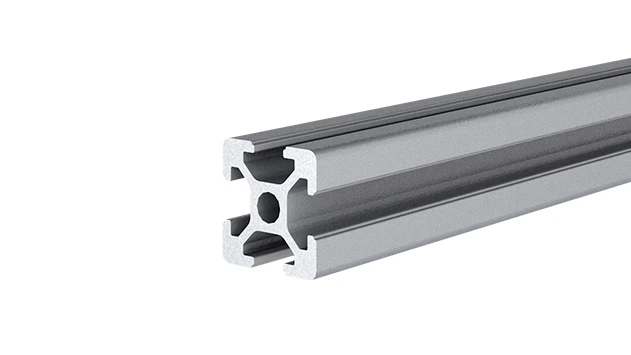
2020 EU Standard Aluminum Profile
2020 is a 2.00 x 2.00CM fractional 20 series square extrusion T-slot profile with four open T-slots, one on each 2.00 face. The profile has align-a-grooves to assist in aligning connecting profiles.
In the world of manufacturing, where precision and reliability can make or break a production line, aluminum profiles stand as unsung heroes. These versatile structures form the backbone of workbenches, conveyor systems, material racks, and countless other industrial setups. But behind their sleek, functional design lies a web of standards—guidelines that ensure consistency, safety, and compatibility across borders. For manufacturers, suppliers, and engineers, understanding the nuances between these standards isn't just a matter of compliance; it's about building systems that work seamlessly, whether they're assembled in a factory in Berlin or a workshop in Detroit.
Two of the most influential standards in this space are the 2020 EU Standard for aluminum profiles and the US ASTM (American Society for Testing and Materials) standards. While both aim to ensure quality, they diverge in subtle yet critical ways—from material composition to dimensional tolerances, and even the accessories that accompany them. In this article, we'll dive into these differences, exploring how they impact everything from the strength of an aluminum extrusion profile to the fit of aluminum profile accessories on a production floor.
Why Standards Matter: Beyond Compliance
Before we compare the specifics, let's step back and ask: why do these standards exist in the first place? Imagine a scenario where a supplier in Italy ships a batch of 2020 EU standard aluminum profile to a customer in Texas, only to find that the profiles don't align with the ASTM-compliant brackets the customer already has. The result? Delays, rework, and frustrated teams on both sides. Standards prevent this chaos by setting common benchmarks for quality, performance, and compatibility.
For manufacturers, standards ensure that the aluminum extrusion profile they produce meets the mechanical demands of its intended use—whether it's supporting heavy machinery on a factory floor or forming the frame of a lightweight assembly line. For suppliers, adhering to recognized standards builds trust; a buyer in France knows that a 2020 EU standard aluminum profile will perform as expected, just as a buyer in Ohio trusts ASTM-certified products. And for end-users, standards translate to safer, more reliable systems that reduce downtime and maintenance costs.
Material Composition: The Building Blocks of Difference
At the heart of any aluminum profile is its material composition. Aluminum alone is soft and malleable, so manufacturers mix it with other elements—alloys—to enhance its strength, corrosion resistance, or ductility. Both the EU 2020 standard and ASTM specify which alloys are acceptable for different applications, but their definitions and allowable limits can vary.
Take 6061 aluminum, a popular alloy used in everything from workbenches to conveyor frames. The 2020 EU standard, for instance, might specify stricter limits on trace elements like iron or copper to ensure better corrosion resistance—critical for profiles used in humid or industrial environments. ASTM, on the other hand, might prioritize flexibility in alloy composition to accommodate a wider range of manufacturing processes, such as high-speed extrusion or welding.
Another example is the inclusion of magnesium. The 2020 EU standard for structural aluminum profiles often mandates a minimum magnesium content to boost tensile strength, making the profiles better suited for load-bearing applications like material racks or heavy-duty workbenches. ASTM standards, while still requiring strength, may allow for slightly lower magnesium levels in non-critical applications, balancing performance with cost-effectiveness.
A Closer Look: 2020 EU vs. ASTM Alloy Specifications
To illustrate, let's compare the 6063 alloy—a common choice for aluminum extrusion profiles due to its excellent extrudability and surface finish. The 2020 EU standard EN 755-2 specifies that 6063 aluminum must contain 0.45-0.9% silicon, 0.1-0.3% magnesium, and no more than 0.1% copper. ASTM B221, the corresponding standard for aluminum extrusions, allows for a slightly broader range: 0.2-0.6% silicon, 0.45-0.9% magnesium, and up to 0.2% copper. This difference might seem minor, but for manufacturers, it can affect how the alloy flows during extrusion, how it responds to heat treatment, and even how it interacts with aluminum profile accessories like connectors or end caps.

Dimensional Tolerances: Precision in Every Millimeter
If material composition is about what's inside the profile, dimensional tolerances are about how it's shaped. Even a fraction of a millimeter can mean the difference between a profile that slides smoothly into a connector and one that requires force—risking damage to both the profile and the accessory. Here, the 2020 EU standard and ASTM take slightly different approaches to precision.
The 2020 EU standard, particularly EN 755-9, is known for its tight tolerances on critical dimensions like width, thickness, and straightness. For a 2020 EU standard aluminum profile with a nominal width of 40mm, the allowable deviation might be ±0.1mm. This level of precision is ideal for applications where profiles must align perfectly, such as in automated assembly lines where components move at high speeds. Tighter tolerances also ensure that aluminum profile accessories—like T-slot nuts or brackets—fit consistently, reducing the need for on-site adjustments.
ASTM standards, such as ASTM B221, tend to offer more flexibility in tolerances. For the same 40mm width, ASTM might allow a deviation of ±0.2mm. This isn't a compromise on quality; rather, it reflects the diverse needs of the US market, where some applications prioritize cost and ease of manufacturing over ultra-tight precision. For example, a hand trolley used in a warehouse might not require the same dimensional accuracy as a high-precision conveyor system, so a slightly wider tolerance range can lower production costs without sacrificing performance.
Straightness: A Critical Factor for Assembly
Straightness is another area where the two standards diverge. The 2020 EU standard often specifies a maximum bow (vertical deviation) of 0.5mm per meter for structural profiles, ensuring that long sections of aluminum extrusion profile don't warp during installation. ASTM, while still requiring straightness, may allow up to 1mm per meter in certain cases. For end-users, this can mean that EU-standard profiles are easier to align when building large structures like multi-level racks, while ASTM profiles might require additional shimming or adjustment in such scenarios.
Surface Treatments: Protecting and Enhancing the Profile
Aluminum profiles don't just need to be strong and precise—they also need to withstand the wear and tear of industrial environments. Surface treatments like anodizing, powder coating, or chromating protect against corrosion, improve aesthetics, and even enhance grip. Here again, the 2020 EU standard and ASTM have distinct requirements.
Anodizing, a process that creates a protective oxide layer on the aluminum surface, is a case in point. The 2020 EU standard EN 12373-6 specifies minimum anodizing thicknesses based on the application: 10μm for indoor use (like office furniture frames) and 20μm for outdoor or industrial use (like factory workbenches). It also mandates strict quality control, including tests for adhesion, corrosion resistance, and color consistency across batches.
ASTM D3933, the standard for anodic coatings on aluminum, is more performance-based. Instead of dictating thickness, it specifies minimum corrosion resistance—for example, requiring that the coating pass a 1000-hour salt spray test for marine environments. This approach gives manufacturers more flexibility in choosing anodizing methods (e.g., sulfuric acid vs. hard anodizing) as long as the end result meets the performance criteria.
Powder coating, another common treatment, shows similar differences. The 2020 EU standard EN 13438 sets strict limits on film thickness (usually 60-80μm) and requires uniform coverage, even in hard-to-reach areas like T-slots—critical for ensuring that aluminum profile accessories like bolts or brackets don't corrode when in contact with the profile. ASTM F1970, while also requiring durability, allows for slightly thicker or thinner coatings depending on the application, such as 40-120μm for decorative vs. industrial use.
Mechanical Properties: Strength, Ductility, and Performance
Ultimately, an aluminum profile is only as good as its ability to perform under stress. Mechanical properties like tensile strength, yield strength, and elongation determine how much weight a profile can carry, how much it can bend before breaking, and how well it absorbs impact. Here, the 2020 EU standard and ASTM set clear benchmarks, but their priorities differ.
The 2020 EU standard EN 755-2 places a strong emphasis on minimum tensile strength for structural profiles. For example, a 2020 EU standard aluminum profile in the T6 temper (heat-treated for maximum strength) typically requires a tensile strength of at least 240 MPa and a yield strength of 215 MPa. These values ensure that the profile can handle heavy loads, making it suitable for applications like conveyor supports or material rack b (3 row and 3 floor) setups.
ASTM B221, by contrast, often specifies a range of mechanical properties based on the alloy and temper. For 6061-T6 extrusions, ASTM requires a minimum tensile strength of 207 MPa and yield strength of 172 MPa—slightly lower than the EU standard but still more than sufficient for most non-critical applications. This flexibility allows manufacturers to tailor the profile's properties to specific needs; for example, a lower-strength, higher-ductility profile might be preferred for applications that require bending or forming, such as custom-shaped workbenches.
Elongation: The Ability to Bend Without Breaking
Elongation, a measure of how much a profile can stretch before fracturing, is another key difference. The 2020 EU standard often requires higher elongation (e.g., 8% for 6063-T5 profiles) to ensure that the profile can withstand minor impacts without cracking—important in busy factories where carts or tools might bump into the structure. ASTM standards, while still requiring adequate elongation, may allow for slightly lower values (e.g., 6% for 6063-T5), prioritizing strength over ductility in certain cases.
Aluminum Profile Accessories: Compatibility Across Standards
An aluminum profile is rarely used alone; it's part of a system, connected by brackets, secured by bolts, and finished with end caps. These aluminum profile accessories are the glue that holds the system together, and their design is heavily influenced by the standards of the profile itself.
Take T-slot design, a defining feature of most aluminum extrusion profiles. The 2020 EU standard EN 606 specifies the dimensions of T-slots, including slot width, depth, and the radius of the slot corners. For a 40x40mm 2020 EU standard aluminum profile, the T-slot might be 8mm wide with a 1mm radius, designed to work seamlessly with EU-standard T-slot nuts and bolts. ASTM, which doesn't have a dedicated T-slot standard, often follows industry conventions—for example, a 40x40mm ASTM profile might have a 9mm slot with a 0.8mm radius. While these differences seem small, they can mean that an EU-standard T-slot nut won't fit snugly in an ASTM profile, leading to loose connections or stripped threads.
End caps are another example. The 2020 EU standard EN 755-11 specifies the dimensions and material of end caps, requiring them to snap or press-fit securely into the profile to prevent dust, debris, or moisture from entering the T-slots. Aluminum profile fixings like these are often made from durable plastics or rubber, with precise tolerances to match the profile's inner dimensions. ASTM-compliant end caps, while still functional, may have looser tolerances, relying more on friction or adhesive to stay in place—acceptable for low-vibration applications but potentially problematic in high-movement setups like conveyor systems.
Connectors and Brackets: Design for Precision
Connectors, which join two or more profiles at angles (90°, 45°, etc.), are critical for structural integrity. 2020 EU standard connectors, such as the 90° aluminum profile connector, are designed with tight tolerances to ensure a flush, rigid joint. They often feature precision-machined surfaces and locking mechanisms (like set screws or cam levers) that distribute stress evenly across the profile. ASTM connectors, while still strong, may use simpler designs—for example, bolt-through brackets that rely on the strength of the bolt rather than the precision of the connector itself. This can make ASTM systems easier to assemble but potentially less rigid than their EU counterparts.
Applications: Where Each Standard Shines
Understanding the differences between the 2020 EU standard and ASTM isn't just about compliance—it's about choosing the right standard for the job. Let's explore where each standard tends to dominate and why.
2020 EU Standard Aluminum Profile: Precision and Consistency
The EU standard is often preferred in industries where precision and consistency are non-negotiable: automotive manufacturing, aerospace, and pharmaceutical production, to name a few. In a German car factory, for example, a 2020 EU standard aluminum profile might form the frame of an assembly line workbench, where every component must align to within a millimeter to ensure that robots can install parts accurately. The tight tolerances and strict material standards reduce variability, minimizing the risk of errors in the production process.
The EU standard is also popular in Europe and parts of Asia, where cross-border trade relies on harmonized standards. A supplier in Poland can ship 2020 EU standard aluminum profile to a customer in Spain with confidence, knowing that the profiles and their accessories will be compatible with the customer's existing systems.
ASTM Standards: Flexibility and Cost-Effectiveness
ASTM standards are widely used in North America and in industries that value flexibility and cost-effectiveness: construction, consumer goods, and small-scale manufacturing. In a U.S. warehouse, for instance, an ASTM-compliant aluminum profile might be used to build a lightweight material rack, where the priority is to maximize storage space at a reasonable cost. The broader tolerances and flexible alloy compositions make ASTM profiles easier to source and cheaper to produce, without sacrificing the strength needed for the application.
ASTM is also favored in industries with rapidly evolving designs, such as custom furniture or prototype development. The flexibility in accessory design allows manufacturers to experiment with new connectors or brackets without being tied to strict dimensional standards.
A Comparative Overview: Key Differences at a Glance
To summarize the differences between the 2020 EU standard aluminum profile and ASTM standards, let's look at a comparison table:
| Aspect | 2020 EU Standard (EN 755, EN 12020, etc.) | ASTM Standards (B221, B241, etc.) |
|---|---|---|
| Material Composition | Strict limits on alloy elements (e.g., Si, Mg, Cu) for consistency. | Broader ranges to accommodate diverse manufacturing processes. |
| Dimensional Tolerances | Tighter (e.g., ±0.1mm on width for structural profiles). | Broader (e.g., ±0.2mm on width for non-critical applications). |
| Surface Treatments | Specifies thickness and uniformity (e.g., 20μm anodizing for industrial use). | Performance-based (e.g., 1000-hour salt spray test for corrosion resistance). |
| Mechanical Properties | Higher minimum tensile strength and elongation for ductility. | Balances strength and flexibility; may prioritize strength in some cases. |
| Accessories | Precision-designed (e.g., T-slots, end caps) for tight compatibility. | Industry-conventional designs with looser tolerances for flexibility. |
| Typical Applications | High-precision industries (automotive, aerospace, pharmaceuticals). | Cost-sensitive or flexible industries (construction, consumer goods, warehousing). |
Conclusion: Navigating the Standards Landscape
The choice between 2020 EU standard aluminum profile and ASTM standards isn't about which is "better"—it's about which is better for the job. The EU standard offers precision, consistency, and strict quality control, making it ideal for applications where every detail matters. ASTM, with its flexibility and focus on performance, is perfect for industries that need to balance cost, speed, and adaptability.
For global manufacturers and suppliers, understanding these differences is key to avoiding costly mistakes. A supplier in China exporting to both Europe and the U.S. must ensure that their 2020 EU standard aluminum profile meets EN specs for European customers and ASTM specs for American ones—including not just the profile itself, but also the aluminum profile accessories that accompany it. For engineers, it means checking not just the profile's material and dimensions, but also the compatibility of accessories like connectors, brackets, and end caps.
At the end of the day, both standards share a common goal: to ensure that aluminum profiles are safe, reliable, and fit for purpose. Whether it's a 2020 EU standard aluminum profile supporting a robotic assembly line in Germany or an ASTM profile holding inventory in a U.S. warehouse, these standards are the foundation of modern manufacturing—quietly ensuring that the systems we rely on work, day in and day out.