- Company Articles
- Industry articles
- Industry standards
- 2020 EU Standard Aluminum Profile: Long-Term Cost Savings for Manufacturers

2020 EU Standard Aluminum Profile: Long-Term Cost Savings for Manufacturers
Related Product
2020 EU Standard Aluminum Profile
2020 is a 2.00 x 2.00CM fractional 20 series square extrusion T-slot profile with four open T-slots, one on each 2.00 face. The profile has align-a-grooves to assist in aligning connecting profiles.
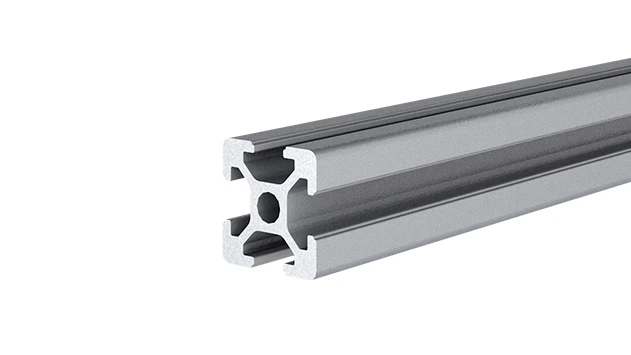
In today's fast-paced manufacturing landscape, where profit margins are tighter than ever and market demands shift overnight, the quest for efficiency has become more than just a goal—it's a survival strategy. Every decision, from production line design to material selection, carries ripple effects that can either drain resources or fuel growth. For years, manufacturers have relied on traditional materials like steel, wood, or generic plastic to build workbenches, material racks, and production cells. But here's the hard truth: these choices often come with hidden costs—costs that add up over time, eating into profits and limiting flexibility. Enter the 2020 EU standard aluminum profile : a yet transformative solution that's quietly revolutionizing how smart manufacturers approach facility design and long-term cost management.
At first glance, aluminum might seem like just another metal, but the 2020 EU standard profile isn't just any aluminum. Engineered to meet rigorous European union standards for quality, safety, and sustainability, this 20x20mm modular system combines strength, flexibility, and durability in a way that traditional materials simply can't match. Whether you're running a small workshop or a large-scale production facility, understanding how this profile can reduce costs over the long haul could be the difference between falling behind and staying ahead. Let's dive into why the 2020 EU standard aluminum profile is more than an upgrade—it's an investment in your company's future.
What Makes the 2020 EU Standard Aluminum Profile Stand Out?
Before we explore the cost-saving benefits, let's clarify what exactly the 2020 EU standard aluminum profile is. At its core, it's a precision-engineered extruded aluminum product, shaped into a 20mm x 20mm square tube through the aluminum extrusion profile process—a method where raw aluminum is heated and pushed through a die to create consistent, uniform cross-sections. What sets the 2020 EU standard apart is its compliance with strict EU regulations, which govern everything from material purity to dimensional accuracy and environmental impact. This isn't just about meeting a label; it's about ensuring that every piece of profile you install is built to last, perform, and minimize harm to both workers and the planet.
The 20x20mm dimensions might seem small, but don't let size fool you. This profile is a workhorse. Its hollow, lightweight design belies impressive structural integrity—thanks to aluminum's natural strength-to-weight ratio, which rivals steel in many applications while weighing up to 40% less. And unlike steel, aluminum resists corrosion naturally, even in humid or industrial environments, eliminating the need for costly coatings or treatments. Add in the fact that it's 100% recyclable (with recycled aluminum retaining 95% of its original properties) and you've got a material that aligns with both fiscal and environmental responsibility.
Durability: The Foundation of Long-Term Savings
When manufacturers think about costs, the initial price tag often takes center stage. But in reality, the true cost of a material is measured over its entire lifecycle. Let's compare the 2020 EU aluminum profile to two common alternatives: steel and wood.
| Material | Initial Cost (per meter) | Maintenance Needs (10 Years) | Expected Lifespan | 10-Year Total Cost (Estimated) |
|---|---|---|---|---|
| Steel (20x20mm square tube) | $8–$12 | Annual painting, rust removal, replacement of corroded sections | 5–7 years (in humid/industrial settings) | $45–$60 (initial + maintenance + replacement) |
| Wood (2x2" pine) | $3–$5 | Sealing, sanding, replacement due to warping/rot | 2–3 years (in workshop conditions) | $65–$85 (frequent replacements + labor) |
| 2020 EU Aluminum Profile | $10–$15 | None (no painting, rustproof, minimal cleaning) | 15+ years (with proper use) | $10–$15 (one-time purchase, no replacements) |
The table tells a clear story: while steel and wood may cost less upfront, their high maintenance needs and short lifespans make them far more expensive over a decade. Steel, for example, requires regular painting to prevent rust—each coat adding labor and material costs— and even then, it's prone to corrosion in damp environments, leading to weakened structures that need replacement. Wood, meanwhile, warps with humidity, rots with exposure to spills, and attracts pests, meaning you'll be replacing workbenches or racks every few years. The 2020 EU aluminum profile? It's virtually maintenance-free. A quick wipe with a damp cloth is all it takes to keep it looking and performing like new, and its corrosion resistance ensures it won't degrade, even in harsh industrial settings. Over 15+ years, that translates to zero replacement costs and minimal upkeep—savings that add up exponentially.
Real-World Example: A Small Electronics Manufacturer's Experience
Consider the case of a small electronics assembly shop in Germany that switched from steel workbenches to 2020 EU aluminum profile workbenches five years ago. Their old steel benches, installed in 2010, had already required two rounds of repainting (costing €800 total) and three bench replacements (€350 each) due to rust weakening the frames. In 2018, they invested €1,200 in aluminum profile workbenches (including aluminum profile accessories like brackets and shelf supports). Today, those benches still look brand-new, with no signs of corrosion, and the shop hasn't spent a cent on maintenance. By year 10, they'll have saved an estimated €2,500 compared to sticking with steel—and that's just for workbenches. Multiply that across racks, conveyor systems, and safety barriers, and the savings become staggering.

Flexibility: The Hidden Cost of "One-Size-Fits-All" Solutions
In manufacturing, change is the only constant. A product line that's profitable today might need to be retooled tomorrow. A sudden spike in demand could require adding a new work cell. A shift to leaner processes might call for rearranging workflows to eliminate bottlenecks. The problem with traditional materials like steel or wood is that they're rigid—once you build something, modifying it often means starting from scratch. Custom steel fabrication, for example, requires welding, cutting, and repainting, which isn't just time-consuming; it's expensive. Wood, while easier to cut, lacks the structural integrity to be safely repurposed multiple times. This rigidity forces manufacturers into a costly cycle: build, use, discard, rebuild.
The 2020 EU standard aluminum profile shatters this cycle with its modular design. Thanks to a wide range of aluminum profile accessories —think connectors, brackets, hinges, and end caps—you can assemble, disassemble, and reassemble the profile into virtually any configuration without specialized tools or skills. Need to add a shelf to a workbench? Snap on a bracket. Want to reconfigure a material rack to hold larger parts? Swap out a few connectors and adjust the length. Even more complex systems, like conveyor rails or safety enclosures, can be modified in hours instead of days. This isn't just convenience—it's cost reduction through adaptability.
Supporting Lean Manufacturing Principles
For manufacturers embracing lean system methodologies, this flexibility is a game-changer. Lean manufacturing thrives on eliminating waste—including the waste of time and resources tied to inflexible infrastructure. With aluminum profiles, you can design workspaces that adapt to your processes, not the other way around. For example, a production line that once required custom steel frames to hold jigs can now be reconfigured in a morning using modular aluminum profiles, allowing workers to test new layouts and optimize flow without disrupting operations for days. This agility reduces downtime, speeds up process improvements, and ensures that your facility can evolve as your business does—without the need for expensive renovations.
Take a mid-sized automotive parts supplier in France, for instance. They used to build custom wooden racks for each new part design, spending €500–€1,000 per rack and discarding them when the part was phased out. After switching to aluminum profiles, they now reuse the same base racks, simply adding or removing dividers (using profile accessories) to fit new parts. In 2022 alone, this saved them €12,000 in material costs and cut lead time for new rack designs from two weeks to two days. As their production manager put it: "We're no longer building for today—we're building for whatever tomorrow brings."
Lightweight Strength: Reducing Labor and Installation Costs
Heavy materials don't just cost more to buy—they cost more to handle, install, and move. Steel, for example, requires teams of workers or forklifts to maneuver, increasing the risk of injury and slowing down installation. Wood, while lighter than steel, is still bulky and prone to splintering, making it awkward to transport and assemble. The 2020 EU aluminum profile, by contrast, weighs just 0.7 kg per meter (for a 20x20mm wall thickness of 1.5mm), making it easy for a single worker to carry and install. This lightness translates directly to lower labor costs and faster setup times.
Consider installation: a steel workbench might take two workers three hours to assemble and bolt into place. An aluminum profile workbench of the same size? One worker can put it together in under an hour using nothing more than a hex key and the profile's modular accessories. No welding, no heavy lifting, no specialized tools. For a facility installing 10 new workbenches, that's a savings of 55 labor hours—time that can be redirected to more productive tasks, like training or process improvement. And when you need to move a bench or rack to a new location? No need for a forklift; two workers can carry it with ease, eliminating the cost of equipment rental or downtime waiting for machinery.
Lightweight doesn't mean flimsy, either. The 2020 EU profile's hollow design is engineered for strength, with internal ribs (in some variants) that distribute weight evenly. It can support up to 50kg per linear meter when properly braced—more than enough for most workshop applications, from holding tools to supporting assembly components. This combination of light weight and high strength is why industries from aerospace to electronics are adopting aluminum profiles: they get the job done without the unnecessary bulk.
Sustainability: Compliance as a Cost-Saver
In today's regulatory environment, sustainability isn't just a buzzword—it's a legal and financial imperative. Governments across Europe are cracking down on waste, carbon emissions, and non-recyclable materials, with fines for non-compliance reaching into the tens of thousands of euros. The 2020 EU standard aluminum profile isn't just compliant; it's a sustainability asset. Made from 100% recyclable aluminum (and often containing recycled content itself), it aligns with circular economy goals, reducing your facility's carbon footprint and making it easier to meet EU waste reduction targets.
But sustainability isn't just about avoiding fines—it's about tapping into cost-saving opportunities. For example, many EU countries offer tax incentives or grants for businesses that invest in eco-friendly infrastructure. By choosing aluminum profiles over non-recyclable materials, you might qualify for these programs, offsetting initial costs. Additionally, aluminum's long lifespan means less waste going to landfills, which can reduce waste disposal fees. And when the day finally comes to replace a profile system (decades from now), the aluminum can be recycled, putting money back in your pocket through scrap metal sales. Traditional materials like wood or steel? Wood ends up as landfill waste, and steel recycling, while possible, often yields lower returns and requires more energy to process.
Aluminum Profile Accessories: The Glue That Holds the System Together
A modular system is only as good as its accessories, and the 2020 EU standard aluminum profile doesn't disappoint in this department. Aluminum profile accessories —including connectors, end caps, T-slot nuts, and hinges—are designed to work seamlessly with the profile, turning a simple 20x20mm tube into a versatile building block. What makes these accessories so valuable is their precision: each connector is engineered to fit snugly into the profile's T-slot, creating a secure, rattle-free joint that can be tightened or loosened repeatedly without stripping. This means you can disassemble and reassemble components dozens of times without losing structural integrity—a feature that's impossible with welded steel or nailed wood.
Take the humble corner connector, for example. Instead of welding two steel tubes at a 90-degree angle (a time-consuming, permanent process), you can attach two aluminum profiles with a simple corner bracket and a hex bolt. If you later need to change the angle to 45 degrees, just swap the bracket—no cutting, grinding, or repainting required. Similarly, end caps snap into place to cover sharp edges (improving safety) and prevent dust buildup inside the profile, while T-slot nuts allow you to add shelves, hooks, or tools anywhere along the profile's length, without drilling holes. These accessories don't just save time during installation; they turn the profile into a system that can adapt to any need, eliminating the cost of custom fabrication.
Long-Term Cost Savings: Beyond the Numbers
When we talk about long-term cost savings, it's easy to focus on dollars and cents—but the 2020 EU standard aluminum profile offers intangible benefits that are just as valuable. For starters, it improves worker morale. A clean, organized, and adaptable workspace is more pleasant to work in, reducing turnover and increasing productivity. Workers no longer have to struggle with heavy, outdated equipment or make do with ill-fitting workbenches; instead, they have tools that work with them, not against them. Studies have shown that ergonomic, flexible workspaces can boost productivity by up to 15%—a gain that translates directly to higher output and revenue.
Then there's the competitive advantage. In industries where speed to market is critical, the ability to reconfigure production lines quickly can mean the difference between winning a contract and losing it. A manufacturer using aluminum profiles can pivot to a new product line in days, while a competitor stuck with rigid steel infrastructure might take weeks or months. This agility allows you to seize opportunities faster, respond to customer demands more effectively, and stay ahead of trends—all of which drive long-term growth.
Is the 2020 EU Standard Aluminum Profile Right for Your Facility?
At this point, you might be wondering: is this profile suitable for my specific needs? The answer is almost certainly yes. While the 20x20mm size is ideal for smaller applications like workbenches, tool racks, and light-duty conveyor systems, the EU standard aluminum profile family includes larger sizes (like 30x30mm or 40x40mm) for heavier loads. Whether you're in automotive, electronics, pharmaceuticals, or logistics, there's a profile size and accessory combination that fits your workflow.
To determine if it's a fit, start small. replace one steel workbench or material rack with an aluminum profile system and track the costs: installation time, maintenance needs, and adaptability. Chances are, you'll be hooked. As one manufacturer put it after their first aluminum profile project: "We didn't realize how much time we were wasting on fixing and replacing old equipment until we stopped having to do it."
Conclusion: Investing in the Future, One Profile at a Time
The 2020 EU standard aluminum profile isn't just a material—it's a mindset shift. It's about moving beyond short-term cost-cutting and embracing long-term value. While traditional materials might offer lower upfront prices, they come with hidden costs that compound over time: maintenance, replacements, lost productivity, and missed opportunities. The 2020 EU profile, by contrast, delivers durability, flexibility, and sustainability in a single package, reducing costs at every stage of its lifecycle.
For manufacturers ready to stop putting out fires and start building for the future, the choice is clear. The 2020 EU standard aluminum profile isn't just an expense—it's an investment that pays dividends for years to come. So, the next time you're planning a facility upgrade or building a new workbench, ask yourself: Are you paying for today, or investing in tomorrow? With aluminum profiles, the answer is both—and that's the smartest cost-saving strategy of all.