- Company Articles
- Industry articles
- Industry standards
- 2020 EU Standard Aluminum Profile: Mechanical Properties & Performance Metrics

2020 EU Standard Aluminum Profile: Mechanical Properties & Performance Metrics
Related Product
2020 EU Standard Aluminum Profile
2020 is a 2.00 x 2.00CM fractional 20 series square extrusion T-slot profile with four open T-slots, one on each 2.00 face. The profile has align-a-grooves to assist in aligning connecting profiles.
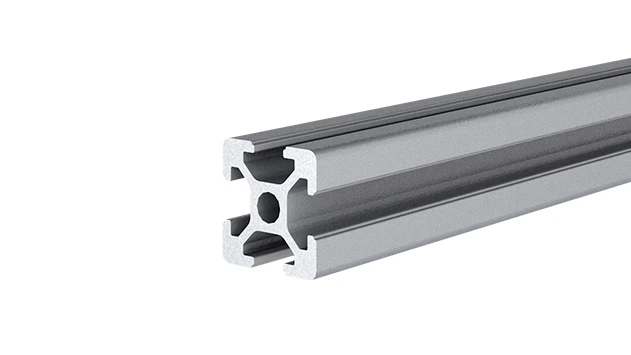
Walk into any modern factory, warehouse, or assembly line, and you'll likely spot it: that sleek, silver framework holding up workbenches, guiding conveyor belts, or forming the backbone of modular storage racks. It's the aluminum profile —a quiet workhorse that keeps operations running smoothly. But not all aluminum profiles are created equal. The 2020 EU Standard set a new bar for quality, durability, and performance, making it a go-to choice for manufacturers aiming to build efficient, long-lasting systems. Let's dive into what makes this standard stand out, from its mechanical strength to real-world applications that keep production floors humming.
Why Standards Matter: The Backbone of Reliable Manufacturing
Imagine trying to assemble a puzzle where every piece comes from a different brand—edges don't align, sizes are off, and nothing fits quite right. That's what manufacturing was like before standardized materials. The 2020 EU Standard for aluminum profiles changed that by defining strict benchmarks for everything from material composition to dimensional accuracy. For businesses, this means consistency: whether you're ordering a single aluminum extrusion profile or a truckload, you know it will perform the same way, every time. This consistency is especially critical for lean system setups, where even a tiny mismatch can throw off workflow efficiency.
Mechanical Properties: More Than Just "Strong"—Built to Perform
When we talk about mechanical properties, we're asking: How does this aluminum profile hold up under stress? Will it bend under heavy tools? Crack when jostled? The 2020 EU Standard answers these questions with precise metrics that matter for real-world use. Let's break down the key ones:
Tensile Strength: Pulling Power You Can Trust
Tensile strength measures how much pulling force a material can handle before breaking. For the 2020 EU Standard, most aluminum profiles clock in at 120–180 MPa (megapascals). To put that in perspective: a profile with 150 MPa tensile strength can support the weight of about 15 small cars before giving way. That's why it's the top choice for load-bearing structures like workbench frames, where tools, parts, and even workers lean on it daily.
Yield Strength: Bounce-Back Ability
Yield strength is about resilience. It's the point at which the profile will permanently bend—no bouncing back. EU 2020 profiles typically have a yield strength of 80–120 MPa. Think of it like a diving board: if you jump lightly, it flexes and returns to shape (that's below yield strength). But if you overload it, it stays bent. For assembly line rails or conveyor supports, this matters—you want a profile that flexes under temporary stress (like a heavy box sliding by) but snaps back to keep operations on track.
Elongation: Stretching Without Breaking
Elongation is the percentage a profile can stretch before fracturing. EU 2020 standards require 8–15% elongation for most grades. Why does this matter? Imagine a workbench bolted to the floor during an earthquake (extreme, but bear with us). A profile with good elongation will bend slightly rather than shatter, protecting both the bench and whatever's on it. In daily use, it means less cracking from sudden impacts—like a dropped wrench or a pallet slamming into a rack.
Hardness: Scratch, Dent, and Wear Resistance
Hardness (measured via the Brinell scale) tells us how well the profile resists indentation. EU 2020 profiles range from 40–60 HB (Brinell Hardness). For context, a HB of 50 means it's harder than pure aluminum (which is around 25 HB) but still malleable enough to be cut or drilled on-site. This balance is key: hard enough to withstand scrapes from tools or parts, but not so brittle that it chips when modified.
| Mechanical Property | EU 2020 Standard Range | Why It Matters in the Factory |
|---|---|---|
| Tensile Strength | 120–180 MPa | Supports heavy loads on workbenches and racks |
| Yield Strength | 80–120 MPa | Resists permanent bending under temporary stress |
| Elongation | 8–15% | Prevents cracking from impacts or sudden loads |
| Brinell Hardness | 40–60 HB | Stands up to daily scrapes and tool contact |

Performance Metrics: Built for the Factory Floor, Not Just the Lab
Mechanical properties tell us how a profile tests —performance metrics tell us how it lives in a busy factory. The 2020 EU Standard doesn't just focus on strength; it ensures the profile thrives in harsh, real-world conditions.
Corrosion Resistance: Fighting the Elements
Factories are messy places. Oil spills, humidity, chemical cleaners—all of these can eat away at metal over time. Aluminum naturally resists corrosion thanks to a thin oxide layer, but the EU 2020 Standard takes it further. Profiles are treated with anodizing (an electrolytic process that thickens this oxide layer) or powder coating, making them 30% more resistant to rust and degradation than non-standard alternatives. This is a game-changer for facilities near coasts (salty air) or with high-moisture environments, like food processing plants.
Thermal Conductivity: Staying Cool Under Pressure
Ever left a metal spoon in a hot pot? It gets scorching fast. Aluminum is a great conductor of heat, but the 2020 Standard optimizes this property for safety. Profiles used in electronics assembly or near heat sources (like ovens) have controlled thermal conductivity—they dissipate heat quickly enough to prevent overheating, but not so fast that they become a burn hazard. This balance is crucial for workbenches where workers handle heat-sensitive components.
Dimensional Stability: No Surprises, Even Over Time
Temperature changes, humidity, and even aging can cause materials to expand, shrink, or warp. The EU 2020 Standard ensures aluminum profiles maintain their shape within ±0.1mm per meter over a wide temperature range (-40°C to 80°C). For precision setups—like conveyor tracks that guide small parts—this stability prevents jams and misalignments. Imagine a roller track where the profile warps by just 0.5mm: parts might get stuck, slowing down production. With EU 2020, that's a problem of the past.
Beyond the Profile: The Role of Aluminum Profile Accessories
A profile is only as good as the parts that connect it. Aluminum profile accessories —joints, brackets, end caps, and connectors—are the unsung heroes that turn a simple extrusion into a fully functional system. The 2020 EU Standard extends to these accessories too, ensuring they fit seamlessly with the profiles and enhance performance. For example:
- Joints: EU-standard joints have precision-machined threads that lock into the profile's T-slots, reducing wobble by up to 50% compared to generic alternatives. This is critical for workbenches that need to stay stable during assembly tasks.
- End Caps: These plastic or rubber caps seal the ends of profiles, preventing dust, debris, or moisture from getting inside. Over time, this reduces internal corrosion and keeps the profile structurally sound.
- Connectors: Designed to distribute weight evenly across the profile, these accessories prevent stress points that could lead to cracking. For heavy-duty racks holding pallets of materials, this means fewer accidents and longer lifespan.
Real-World Impact: How EU 2020 Profiles Transform Workflows
Let's bring this down to earth with a scenario: A small electronics manufacturer wants to upgrade their assembly line to a lean system. They need workbenches that can hold 50kg of tools, conveyor tracks that guide circuit boards smoothly, and storage racks that fit into tight spaces. By choosing 2020 EU Standard aluminum profiles and accessories, they get:
- Faster setup: Profiles and accessories snap together with minimal tools, cutting assembly time by 40% compared to welding steel frames.
- Flexibility: Need to reconfigure the workbench next month? Just loosen the joints, move the profile, and re-tighten—no need to buy new parts.
- Longevity: The factory estimates the system will last 15+ years (double the lifespan of their old steel setup), reducing replacement costs.
This isn't just a "nice-to-have"—it's a competitive advantage. With a reliable, adaptable infrastructure, the manufacturer can scale production, reduce downtime, and focus on what matters most—making quality products.
Choosing the Right Profile: It's Not One-Size-Fits-All
While the 2020 EU Standard sets a high bar, not every profile is right for every job. Consider these factors when selecting:
- Load capacity: Heavier loads (like automotive parts) need profiles with higher tensile strength (160–180 MPa).
- Environment: Wet or corrosive settings require anodized or coated profiles.
- Space: Tight areas might benefit from slimmer profiles (like 20x20mm) with compact accessories.
Suppliers often provide free material selection guides, so don't hesitate to ask for help. Remember: the best profile is the one that meets your specific needs without overcomplicating things.
Final Thoughts: Building for the Future
The 2020 EU Standard aluminum profile isn't just a material—it's a commitment to quality, efficiency, and resilience. For manufacturers, it's the difference between a setup that needs constant fixing and one that grows with your business. From the workbench where your team builds products to the conveyor that moves them out the door, these profiles are the foundation of modern manufacturing. And with the right accessories and a focus on lean principles, they're not just building structures—they're building success.