- Company Articles
- Industry articles
- Industry standards
- 2020 EU Standard Aluminum Profile: Surface Finish Options for Industrial Applications

2020 EU Standard Aluminum Profile: Surface Finish Options for Industrial Applications
Related Product
2020 EU Standard Aluminum Profile
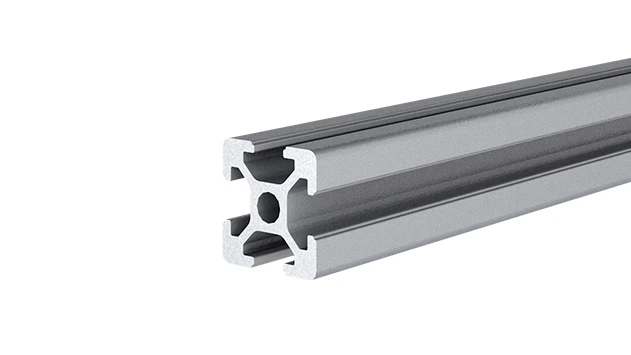
2020 is a 2.00 x 2.00CM fractional 20 series square extrusion T-slot profile with four open T-slots, one on each 2.00 face. The profile has align-a-grooves to assist in aligning connecting profiles.
Introduction: The Backbone of Modern Industry
Walk through any factory, warehouse, or manufacturing plant today, and you'll notice a common thread: sleek, modular structures that seem to adapt effortlessly to their surroundings. From workbenches where intricate assemblies take shape to material racks organizing components with military precision, these structures are the unsung heroes of industrial efficiency. More often than not, they're built from aluminum profiles—and not just any aluminum profiles, but those that meet the rigorous 2020 EU Standard. These profiles aren't just pieces of metal; they're the building blocks of productivity, and their surface finish plays a starring role in how well they perform.
Why does the 2020 EU Standard matter? Think of it as a promise. A promise that the aluminum profile you're using has been extruded to exact dimensions, crafted from high-quality alloys (typically 6063 or 6061, chosen for their excellent balance of strength and extrudability), and tested to meet strict safety and environmental benchmarks. In an industry where precision and reliability can mean the difference between a smooth production run and costly downtime, that promise is invaluable. And when it comes to surface finishes, the standard ensures that treatments are not only durable but also compliant with regulations like REACH and RoHS, keeping workers safe and minimizing environmental impact.
In this article, we're going to dive deep into the world of surface finishes for 2020 EU Standard Aluminum Profiles. We'll explore the most popular options, how they're applied, and why they matter for different industrial applications. Whether you're designing a workbench for a electronics assembly line or a material rack for a automotive plant, understanding these finishes will help you make choices that boost longevity, functionality, and even aesthetics. Let's get started.
Understanding the 2020 EU Standard Aluminum Profile
Before we jump into surface finishes, let's take a moment to appreciate what makes the 2020 EU Standard Aluminum Profile stand out. This isn't just about "meeting a standard"—it's about engineering profiles that work smarter, last longer, and integrate seamlessly into complex systems. Let's break down the key elements:
Material Composition: Most 2020 EU standard profiles are made from aluminum alloys like 6063. Why 6063? It's a favorite in extrusion because it flows smoothly through dies, allowing for intricate shapes with tight tolerances. It also offers excellent corrosion resistance and weldability, which is crucial when building structures that need to hold up under stress. The standard specifies minimum levels of key elements like magnesium and silicon, ensuring consistent mechanical properties across batches.
Extrusion Precision: Imagine trying to build a puzzle where the pieces are slightly warped or the edges don't align—that's what happens when profiles don't meet extrusion tolerances. The 2020 EU Standard sets strict limits on dimensional accuracy, from the width and height of the profile to the thickness of its walls. This precision ensures that when you connect two profiles with aluminum profile accessories like connectors or brackets, they fit together like a glove, no wiggling or gaps.
Quality Control: From the moment the aluminum billet is heated to the final inspection of the extruded profile, the standard mandates rigorous quality checks. This includes testing for defects like cracks, porosity, or uneven wall thickness, as well as verifying mechanical properties like tensile strength and yield strength. For surface treatments, it also ensures that finishes are applied uniformly, with no holidays (uncoated spots) or excessive thickness variations.
In short, the 2020 EU Standard Aluminum Profile is designed to be reliable, versatile, and ready to tackle the demands of modern industry. Now, let's turn our attention to the surface finishes that take these profiles from "good" to "great."

Surface Finish Options: More Than Just Looks
When it comes to aluminum profiles, the surface finish isn't just about making them look nice (though that's a bonus). It's about protecting the metal, enhancing its performance, and ensuring it fits the unique needs of its application. Let's explore the most common finishes used with 2020 EU standard profiles, how they work, and where they shine.
Anodizing: The Durable Workhorse
If you've ever handled an aluminum part that feels smooth yet slightly textured, with a matte silver or gold hue, chances are it's anodized. Anodizing is one of the oldest and most trusted surface treatments for aluminum, and for good reason: it transforms the surface of the metal into a hard, protective layer that's actually part of the aluminum itself.
Here's how it works: The aluminum profile is submerged in an electrolyte bath (usually sulfuric acid) and connected to an electric current as the anode. This triggers a chemical reaction where oxygen ions bond with the aluminum, forming a layer of aluminum oxide (Al₂O₃). Unlike paint or plating, which sits on top of the metal, this oxide layer is integral—meaning it won't chip, peel, or flake off, even with heavy use.
There are different types of anodizing, but two stand out for industrial use: sulfuric acid anodizing (the most common) and hard anodizing . Sulfuric acid anodizing produces a layer 5–20 microns thick, offering excellent corrosion resistance and a range of aesthetic options (think clear, black, or even dyed colors). Hard anodizing, on the other hand, creates a thicker layer (20–100 microns) with extreme hardness—ideal for parts that need to withstand abrasion or high temperatures.
So, where does anodized 2020 EU standard aluminum profile excel? Think applications where durability and corrosion resistance are non-negotiable. For example, in automotive manufacturing, anodized profiles might be used in assembly line fixtures that are exposed to oils, coolants, and constant mechanical stress. In the electronics industry, they're perfect for enclosures or heat sinks, where the oxide layer's insulating properties help dissipate heat. Even in marine environments, where saltwater is a relentless enemy, anodized profiles hold their own better than untreated aluminum.
Powder Coating: Color, Texture, and Toughness
If anodizing is the "durable workhorse," powder coating is the "creative chameleon" of surface finishes. Want a bright red profile for a safety zone? A textured black finish for a sleek machinery panel? Powder coating delivers—all while packing a punch in terms of durability.
The process starts with a dry powder, typically made of resin and pigment, which is electrostatically charged and sprayed onto the aluminum profile. The charged powder adheres to the surface like a magnet, creating an even layer. The profile is then baked in an oven (usually at 180–200°C), where the powder melts and cures into a hard, smooth coating. The result? A finish that's not only vibrant but also resistant to scratches, chips, and UV rays.
One of the biggest advantages of powder coating is its versatility. Unlike anodizing, which is limited to earthy tones or dyed shades, powder coating offers virtually unlimited color options—from bold primaries to subtle pastels. Textures range from glossy to matte, and even hammered or wrinkled finishes for added grip or aesthetic appeal. It's also eco-friendly: since it's a dry process, there are no volatile organic compounds (VOCs) released, making it compliant with EU environmental regulations like REACH.
Industrial applications for powder-coated 2020 EU standard profiles are endless. Take workbenches , for example—those central hubs of productivity in factories. A powder-coated workbench top resists scratches from tools, stains from oils, and daily wear and tear, keeping it looking professional for years. Material racks, too, benefit from powder coating: color-coding racks by product type (blue for electronics, green for mechanical parts) makes inventory management a breeze, while the tough finish ensures the racks stand up to the weight of heavy components.
Electrophoresis: The Smooth Operator
For applications where a mirror-like finish or uniform color is critical, electrophoresis (also called electrocoating) is the way to go. This process creates a smooth, thin layer that adheres tightly to every nook and cranny of the aluminum profile—even complex extrusions with intricate T-slots or hollow sections.
Electrophoresis works by suspending pigmented resin particles in water and charging them. The aluminum profile is dipped into the bath and acts as the cathode, attracting the charged particles. Once deposited, the profile is baked to cure the resin, resulting in a finish that's not only smooth but also incredibly consistent. Unlike powder coating, which can have slight variations in texture, electrophoresis delivers a uniform look across large batches—perfect for when visual consistency matters, like in architectural trim or high-end machinery panels.
While electrophoresis isn't as thick as powder coating or as hard as anodizing, it offers excellent corrosion resistance and is highly decorative. It's often used as a base coat under other finishes, but on its own, it's ideal for indoor applications where aesthetics and moderate durability are key. Think of cleanrooms in pharmaceutical facilities, where every surface must be smooth and easy to sanitize, or display racks in retail settings where products need to shine against a sleek backdrop.
Mechanical Finishing: Texture and Grip
Sometimes, the best finish isn't about adding a layer—it's about reshaping the surface itself. Mechanical finishing techniques like brushing, polishing, or sandblasting alter the texture of the aluminum profile to enhance grip, hide fingerprints, or create a specific aesthetic.
Brushing involves running abrasive belts or pads over the profile to create fine, parallel lines. This not only adds a subtle, industrial-chic look but also hides minor scratches, making it a popular choice for panels or handles. Sandblasting uses high-pressure air to blast abrasive particles (like sand or glass beads) onto the surface, creating a matte, uniform texture that's non-slip—great for steps or workbench edges where grip is important. Polishing , on the other hand, uses buffing wheels to create a shiny, reflective finish, often used for decorative accents or high-visibility parts.
Mechanical finishes are often paired with other treatments: for example, a brushed aluminum profile might be anodized afterward to enhance corrosion resistance while preserving the textured look. In industrial settings, they're commonly used for parts that need both functionality and visual appeal, like control panels or machine guards.
Comparing the Finishes: A Quick Reference
| Finish Type | Process Overview | Key Benefits | Best For | EU Compliance Notes |
|---|---|---|---|---|
| Anodizing | Electrolytic oxidation forms an integral aluminum oxide layer | Corrosion-resistant, scratch-proof, no chipping | Outdoor use, heavy machinery, marine environments | Complies with EN 12373-6; REACH-compliant electrolytes |
| Powder Coating | Electrostatic powder application + oven curing | Wide color range, UV stable, eco-friendly (no VOCs) | Workbenches, material racks, color-coded systems | Meets RoHS standards; low VOC emissions |
| Electrophoresis | Electrodeposition of pigmented resin particles | Smooth, uniform finish, excellent for complex shapes | Architectural trim, cleanrooms, decorative panels | Complies with EU water discharge regulations |
| Mechanical Finishing | Abrasive processes (brushing, sandblasting, polishing) | Enhanced grip, hides scratches, customizable texture | Handles, control panels, non-slip surfaces | No chemical treatments; fully compliant with EU safety standards |
Choosing the Right Finish: It's All About the Application
With so many finishes to choose from, how do you pick the right one for your project? The answer lies in asking a few key questions about the profile's "life" in the industrial environment:
Where will the profile be used? Indoor or outdoor? If it's outdoors, anodizing or powder coating with UV stabilizers is a must to resist sun and rain. For indoor use in a cleanroom, electrophoresis or a smooth powder coat might be better for easy cleaning.
What conditions will it face? Will it be exposed to chemicals, oils, or moisture? Anodizing's corrosion resistance shines here. If it's just going to see light use, like a display rack, mechanical finishing or electrophoresis might be sufficient.
What's the aesthetic goal? Do you need color-coding for organization? Powder coating is your friend. Want a sleek, modern look? Electrophoresis or brushed mechanical finishing could work. For a classic industrial vibe, anodized silver is timeless.
What's the budget? Anodizing and powder coating are generally cost-effective for large runs, while electrophoresis might be pricier but worth it for high-end applications. Mechanical finishing can vary in cost depending on the texture desired.
Remember, the 2020 EU Standard ensures that no matter which finish you choose, you're getting a quality product. The key is to match the finish's strengths to your project's needs.
Accessories: Complementing the Finish
A great surface finish deserves great accessories to protect and enhance it. Aluminum profile accessories like end caps, connectors, and rubber strips not only make installation easier but also help maintain the finish's integrity over time.
Take aluminum profile rubber strip , for example. These flexible strips fit snugly into the T-slots of aluminum profiles, creating a barrier against dust, debris, and moisture that could degrade the finish. They also cushion the edges, preventing dents from tools or parts and reducing noise when components are placed on the profile. Available in colors like black, grey, or yellow, they can even complement the finish—yellow rubber strips on a black powder-coated workbench add a pop of visibility without clashing.
End caps are another essential accessory. They cover the exposed ends of extruded profiles, hiding rough edges and preventing water or dirt from entering hollow sections—critical for preserving anodized or powder-coated finishes. Made from plastic or aluminum, they're easy to snap into place and come in colors that match or contrast with the profile's finish.
Connectors, too, play a role in protecting the finish. High-quality connectors with smooth edges won't scratch the profile during assembly, ensuring that the finish remains intact even when building complex structures like material racks or conveyor systems.
Conclusion: The Perfect Finish for Every Project
The 2020 EU Standard Aluminum Profile is more than just a piece of metal—it's a foundation for industrial innovation. And its surface finish? That's the secret sauce that turns a functional profile into a high-performance, long-lasting component. Whether you choose anodizing for its rugged durability, powder coating for its color and versatility, electrophoresis for its smooth elegance, or mechanical finishing for texture and grip, you're investing in a finish that's been tested to meet the highest standards of quality and compliance.
As you embark on your next project—whether it's building a workbench, designing a material rack, or creating a custom conveyor system—remember to consider the finish as carefully as you consider the profile itself. Pair it with the right accessories, and you'll have a system that not only works hard but looks great doing it. After all, in the world of industry, efficiency and durability shouldn't have to sacrifice style.
So go ahead—explore the options, ask questions, and choose the finish that fits your vision. With 2020 EU Standard Aluminum Profiles, the possibilities are as endless as the industries they serve.