- Company Articles
- Industry articles
- Industry standards
- 2020 EU Standard Aluminum Profile: Tolerance Specifications for Precision Engineering

2020 EU Standard Aluminum Profile: Tolerance Specifications for Precision Engineering
Related Product
2020 EU Standard Aluminum Profile
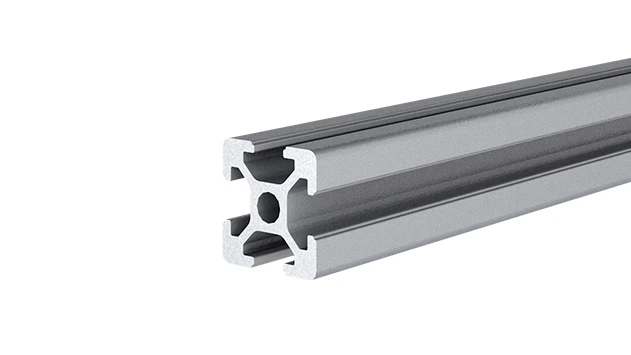
2020 is a 2.00 x 2.00CM fractional 20 series square extrusion T-slot profile with four open T-slots, one on each 2.00 face. The profile has align-a-grooves to assist in aligning connecting profiles.
Introduction: The Unsung Hero of Modern Manufacturing
Walk into any factory, workshop, or tech lab today, and you'll likely spot them—sleek, silver frames holding up conveyor belts, sturdy workbenches assembling smartphones, or lightweight racks organizing tools. These are aluminum profiles, the backbone of modern manufacturing. But not all profiles are created equal. Among the most trusted in precision-critical industries is the 2020 EU standard aluminum profile . Its 20x20mm dimensions might seem unassuming, but hidden within those measurements is a world of engineering rigor: tolerance specifications that turn raw aluminum into a building block for reliability, efficiency, and innovation.
In engineering, "tolerance" isn't just a buzzword—it's the difference between a product that works seamlessly and one that fails. It's the allowable variation in size, shape, or finish that ensures parts fit, function, and last. For the 2020 EU standard profile, these tolerances are (strict) but practical, balancing precision with real-world manufacturing needs. Whether you're building a medical device assembly line or a consumer electronics production station, understanding these specs isn't just helpful—it's essential. Let's dive into what makes this profile a cornerstone of precision engineering.
What Is the 2020 EU Standard Aluminum Profile?
First, let's clarify: the "2020" in its name refers to its cross-sectional dimensions—20mm in width and 20mm in height. It's part of a family of EU-standardized aluminum extrusion profiles, each designed for specific load, space, and precision requirements. What sets the EU standard apart? Unlike generic profiles, it adheres to strict European norms (EN standards) for material quality, dimensional consistency, and safety. This means whether you source it from a supplier in Germany, Italy, or China, a 2020 EU profile will behave predictably—critical for global supply chains.
The material itself is typically 6063-T5 aluminum alloy, chosen for its excellent combination of strength, corrosion resistance, and machinability. T5 tempering (artificial aging) gives it a balance of hardness and ductility, making it rigid enough for structural use but flexible enough to withstand minor impacts—ideal for dynamic environments like factory floors. But even the best alloy is useless without tight tolerances. Let's break down the key specs that define this profile's precision.

Tolerance Specifications: The Nuts and Bolts of Precision
Tolerances for the 2020 EU standard aluminum profile cover three main areas: dimensional accuracy, straightness/flatness, and surface finish. Each plays a unique role in ensuring the profile works as intended, whether it's supporting a workbench or integrating with aluminum profile accessories like connectors or end caps.
1. Dimensional Tolerances: Getting the Size Right
At its core, the 2020 profile is defined by its 20x20mm cross-section, but real-world manufacturing can't produce perfect 20.000mm measurements every time. EU standards (EN 755-9, specifically) set clear limits for how much variation is acceptable. Let's break down the critical dimensions:
| Parameter | Tolerance (EN 755-9) | Why It Matters |
|---|---|---|
| Width (A) | ±0.15mm (for profiles ≤30mm) | Ensures compatibility with accessories like 2020 aluminum profile end cap and T-slot nuts, preventing loose fits or jamming. |
| Height (B) | ±0.15mm (for profiles ≤30mm) | Maintains structural symmetry; critical for load distribution in frames or racks. |
| Wall Thickness (t) | ±10% of nominal thickness (typically 1.2-1.5mm for 2020) | Affects strength and weight. Too thin, and the profile bends under load; too thick, and it adds unnecessary weight. |
| T-Slot Width (C) | ±0.1mm | The T-slot is where accessories connect (e.g., bolts, brackets). Inconsistent slot width leads to loose or stuck connections. |
For example, if a profile's nominal wall thickness is 1.2mm, the actual thickness can range from 1.08mm to 1.32mm. This 10% buffer accounts for minor variations in the extrusion die wear or cooling rates, but stays tight enough to ensure structural consistency across batches.
2. Straightness and Flatness: No Bends, No Warps
Imagine building a workbench with a warped profile—the surface would slope, tools would slide, and precision assembly would be impossible. That's why straightness and flatness tolerances are non-negotiable. EN 755-9 specifies:
- Straightness (per meter): ≤0.5mm/m. This means over a 1-meter length, the profile can deviate from a perfect straight line by no more than 0.5mm. For longer lengths (e.g., 2 meters), the total deviation is capped at 1.0mm.
- Flatness (cross-section): ≤0.1mm across the width. Ensures the profile's faces are parallel, so when two profiles are bolted together, there's no gap or twist.
These specs are tested using precision straightedges or laser measurement tools. A profile that bends more than 0.5mm per meter might still be usable for low-stress applications, but in industries like aerospace or semiconductor manufacturing, even minor warping can throw off alignment, leading to product defects or equipment downtime.
3. Surface Finish: More Than Just Looks
Surface finish tolerances aren't about aesthetics—though a smooth, uniform surface is certainly a plus. They're about performance. EN 12206-1 sets standards for:
- Roughness (Ra): ≤1.6μm for mill finish (unpolished). A lower Ra value (smoother surface) reduces friction, which is critical if parts slide along the profile (e.g., in roller conveyors).
- Defects: No cracks, pits, or scratches deeper than 0.03mm. These can act as stress concentrators, weakening the profile over time, or trap contaminants in cleanroom environments.
- Color consistency: For anodized profiles, color variation (ΔE) must be ≤3 CIELAB units. Important for brand uniformity in visible applications (e.g., retail displays).
In medical device manufacturing, for instance, a rough surface could harbor bacteria, violating sterility standards. In electronics, a scratch might damage delicate wiring run along the profile. Even in automotive assembly, a smooth finish ensures tools glide easily, reducing operator fatigue.
Why Tolerances Matter in Real-World Applications
Tight tolerances might sound like overkill, but they translate directly to better products, happier customers, and lower costs. Let's look at three industries where the 2020 EU profile's precision shines:
1. Electronics Manufacturing: Precision for Delicate Components
When assembling circuit boards or smartphones, every millimeter counts. A workbench built with 2020 EU profiles must stay level to prevent tiny components from rolling off. The profile's straightness tolerance (≤0.5mm/m) ensures the work surface remains flat, while consistent T-slot widths let manufacturers attach ESD (electrostatic discharge) mats or tool holders without wobble. Even the surface finish matters here—smooth aluminum reduces static buildup, protecting sensitive chips from electrostatic damage.
2. Automotive Assembly Lines: Speed and Reliability
Car factories run 24/7, and downtime costs millions. Conveyor systems built with 2020 profiles (often paired with roller track and accessories ) rely on tight dimensional tolerances to keep parts moving smoothly. If a profile's T-slot is too narrow, the roller brackets jam; too wide, and the rollers wobble, causing parts to shift. The 2020's ±0.1mm T-slot tolerance ensures every bracket fits snugly, reducing maintenance stops and keeping production lines on schedule.
3. Medical Equipment: Safety First
Medical carts, surgical tool racks, and diagnostic machine frames demand both precision and cleanliness. The 2020 EU profile's surface finish (Ra ≤1.6μm) is easy to sanitize, while its dimensional consistency ensures carts roll straight (no tipping) and tool racks align perfectly (no misplaced instruments). Even the wall thickness tolerance plays a role—too thin, and a cart might bend under the weight of medical devices; too thick, and it becomes cumbersome for nurses to maneuver.
Aluminum Extrusion Profile: How Tolerances Are Built In
Creating a 2020 EU standard profile with such tight tolerances isn't magic—it's meticulous engineering. The process starts long before the aluminum billet hits the extrusion press:
1. Die Design: The Blueprint for Precision
The extrusion die is a steel mold that shapes molten aluminum into the 20x20mm profile. To achieve ±0.15mm dimensional tolerances, die makers use CNC machining with accuracy down to 0.001mm. They also account for "die swell"—the tendency of aluminum to expand slightly after exiting the die. By designing the die with slightly smaller dimensions (e.g., 19.85mm width instead of 20mm), they compensate for this expansion, ensuring the final profile hits the target size.
2. Extrusion Process: Controlling the Flow
Aluminum billets (cylindrical blocks of 6063 alloy) are heated to ~500°C (soft enough to flow, but not melt). A hydraulic press pushes the billet through the die at controlled speeds (typically 5-10 meters per minute). Too fast, and the profile warps; too slow, and the aluminum cools unevenly, causing internal stresses. Modern presses use real-time sensors to monitor speed, temperature, and pressure, adjusting on the fly to keep tolerances in check.
3. Cooling and Aging: Setting the Shape
After extrusion, the hot profile is quenched (cooled rapidly with water or air) to lock in the T5 temper. Uneven cooling can cause warping, so cooling tunnels are designed with uniform airflow. The profile is then aged (heated to 170°C for 6-8 hours) to strengthen the alloy. Throughout this process, quality control teams measure key dimensions every 30 minutes, rejecting batches that drift beyond tolerance limits.
Aluminum Profile Accessories: Tolerances Don't Stop at the Profile
A profile is only as good as the accessories that connect it. Aluminum profile accessories —from connectors to end caps—must meet the same EU tolerance standards to ensure compatibility. For example:
- 90° Aluminum Profile Connectors: These L-shaped brackets join two 2020 profiles at right angles. Their bolt holes must align perfectly with the profile's T-slots, requiring hole position tolerances of ±0.05mm.
- 2020 Aluminum Profile End Cap: Snaps onto the end of the profile to cover sharp edges. Its inner dimensions must match the profile's outer width/height within ±0.1mm to stay secure without cracking.
- T-Slot Rubber Seal Cover: Fits into the T-slot to prevent dust or debris buildup. Its thickness tolerance (±0.05mm) ensures it stays in place without bulging or slipping out.
Reputable suppliers test accessories alongside profiles, ensuring a "plug-and-play" experience. A connector that's even 0.2mm too wide won't fit into a 2020 profile's T-slot, turning a 10-minute assembly job into a frustrating hour of filing and adjusting.
2020 vs. Other EU Profiles: When to Choose Which
The 2020 profile is part of a family of EU-standard profiles, including 3030 EU standard aluminum profile (30x30mm) and 4040 EU standard aluminum profile (40x40mm). Each has its niche, and their tolerance specs reflect their intended use:
| Profile | Key Use Case | Notable Tolerance Difference |
|---|---|---|
| 2020 EU | Light-duty, compact applications: electronics workbenches, small racks, 3D printer frames. | Tightest T-slot tolerance (±0.1mm) for precision accessory fit in small spaces. |
| 3030 EU | Medium load: conveyor frames, shelving, machine guards. | Wider width/height tolerance (±0.2mm) but higher wall thickness (1.5-2.0mm) for added strength. |
| 4040 EU | Heavy-duty: industrial workstations, automotive assembly lines, structural supports. | Straightness tolerance to ≤1.0mm/m (still strict, but balances strength and weight for larger spans). |
For example, a 4040 profile might be used for a conveyor frame carrying 50kg boxes, where straightness ≤1.0mm/m is acceptable because the frame's weight and cross-section resist bending. A 2020 profile, by contrast, needs ≤0.5mm/m straightness because it's often used in lightweight, high-precision setups (e.g., a drone assembly jig) where even minor warping throws off alignment.
Choosing a Supplier: Trust, but Verify
Not all "2020 EU standard" profiles are created equal. To ensure you're getting the tolerances you pay for, look for suppliers who:
- Certify to EN 755-9 and EN 12206-1: These are the official EU standards for aluminum profiles. Ask for test reports or certificates of compliance.
- Have in-house quality labs: Suppliers with coordinate measuring machines (CMMs) or laser scanners can verify dimensional tolerances on-site, rather than relying on third-party testing (which adds delays and costs).
- Offer sample testing: A reputable supplier will send free samples so you can measure dimensions, check straightness, and test accessory fit before placing a bulk order.
Remember: tight tolerances cost more, but they save money in the long run. A profile that's out of spec might seem cheaper upfront, but it leads to assembly delays, wasted accessories, and higher scrap rates. In precision engineering, "close enough" rarely is.
Conclusion: Precision That Powers Progress
The 2020 EU standard aluminum profile is more than just a 20x20mm piece of metal. It's a testament to the power of tolerance engineering—the idea that small, consistent variations can unlock big possibilities. From the die maker's CNC machine to the factory worker assembling a smartphone, every stakeholder relies on those ±0.15mm tolerances to do their job better, faster, and safer.
So the next time you see a sleek aluminum frame in a workshop, take a closer look. Chances are, it's a 2020 EU profile, quietly delivering the precision that makes modern manufacturing possible. And behind every dimension, every straight edge, every smooth surface, there's a story of engineering care—one that turns raw aluminum into a tool for progress.