- Company Articles
- Industry articles
- Industry standards
- 2020 EU Standard Aluminum Profile vs. ISO Standards: What Manufacturers Need to Know

2020 EU Standard Aluminum Profile vs. ISO Standards: What Manufacturers Need to Know
Related Product
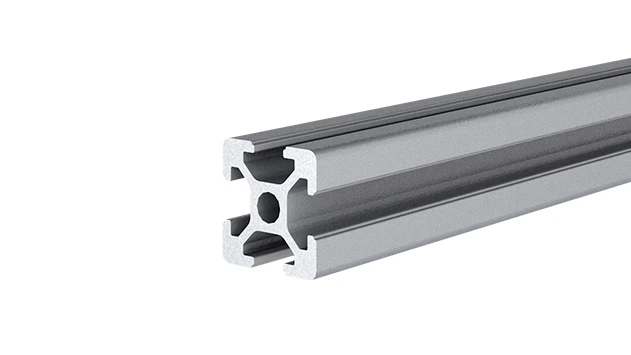
2020 EU Standard Aluminum Profile
2020 is a 2.00 x 2.00CM fractional 20 series square extrusion T-slot profile with four open T-slots, one on each 2.00 face. The profile has align-a-grooves to assist in aligning connecting profiles.
In the world of manufacturing, where precision meets practicality, aluminum profiles have become the unsung heroes of countless production lines. From automotive assembly floors to electronics workshops, these versatile structures form the backbone of workbenches, conveyor systems, and material racks. But here's the catch: not all aluminum profiles are created equal. Behind every smooth extrusion and sturdy joint lies a web of standards—guidelines that ensure compatibility, safety, and quality. For manufacturers, navigating these standards isn't just a box-ticking exercise; it's the difference between seamless operations and costly delays, between global market access and missed opportunities.
Two sets of standards stand out in this landscape: the 2020 EU Standard Aluminum Profile and the internationally recognized ISO Standards. While both aim to uphold quality, their nuances can leave even seasoned manufacturers scratching their heads. What exactly do these standards entail? How do they differ? And most importantly, which one should guide your next production run? Let's dive in—no jargon, no fluff, just the insights you need to make informed decisions.
Understanding the 2020 EU Standard Aluminum Profile: More Than Just a "European" Stamp
When we talk about the 2020 EU Standard Aluminum Profile, we're referring to a set of regulations refined and updated by the European Committee for Standardization (CEN) to align with the region's evolving manufacturing needs. Think of it as Europe's way of saying, "This is how we build things here—safe, efficient, and built to last." But what makes this standard unique?
Key Focus Areas of the 2020 EU Standard
- Material Purity & Durability: The EU standard places a premium on aluminum alloys, specifying minimum levels of elements like magnesium and silicon to ensure profiles can withstand heavy loads and resist corrosion—critical for industries like aerospace and food processing where longevity is non-negotiable.
- Precision Tolerances: Ever tried fitting a square peg into a round hole? That's what happens when tolerances are off. The 2020 EU standard tightens up dimensional accuracy, especially for aluminum extrusion profiles used in automated systems, where even a 0.1mm (deviation) can throw off conveyor alignment or workbench stability.
- Sustainability: Europe's green agenda shines through here. The standard mandates reduced energy consumption during extrusion and encourages the use of recycled aluminum, making it a favorite for manufacturers aiming to meet EU carbon neutrality goals.
- Compatibility with Accessories: From brackets to connectors, aluminum profile accessories must play well with the profiles themselves. The EU standard defines universal fitting dimensions, so a joint bought in Germany works seamlessly with a profile sourced from Spain—no more "this part only fits that brand" headaches.
For manufacturers operating within the EU or exporting to the region, compliance isn't optional. CE marking—a symbol indicating adherence to EU standards—is legally required for aluminum profiles sold in the European Economic Area (EEA). Without it, products risk being held at customs or, worse, recalled for non-compliance.
Demystifying ISO Standards: The Global Language of Aluminum Profiles
If the EU standard is Europe's rulebook, ISO standards are the global playbook. Developed by the International Organization for Standardization (ISO), these guidelines are designed to harmonize manufacturing practices across borders. For aluminum profiles, relevant ISO standards include ISO 7559 (tolerances for extruded profiles), ISO 6892 (mechanical testing of metals), and ISO 10249 (surface treatment specifications). But unlike the EU's prescriptive approach, ISO standards often set minimum benchmarks, leaving room for regional adaptations.
What ISO Standards Prioritize
- Global Compatibility: ISO standards are all about interoperability. A profile meeting ISO 7559 should fit accessories from Brazil to Japan, making it ideal for multinational manufacturers with supply chains spanning continents.
- Cost-Effectiveness: By setting baseline requirements rather than strict upper limits, ISO allows manufacturers to balance quality with affordability. For example, while the EU standard might demand a specific surface finish for all profiles, ISO lets manufacturers choose finishes based on end-use—saving costs for low-stress applications like retail displays.
- Performance Testing: ISO 6892, for instance, outlines standardized methods for testing tensile strength and elongation, ensuring that a "high-strength" profile in China means the same thing as a "high-strength" profile in Canada. This consistency builds trust between buyers and suppliers.
- Flexibility for Emerging Markets: ISO standards are regularly updated to include new technologies, such as lightweight alloys or 3D-printed accessories, making them adaptable for manufacturers in fast-growing regions like Southeast Asia or Africa.
For many manufacturers, ISO compliance is a strategic choice. It opens doors to markets where EU standards aren't mandatory but global quality benchmarks are expected. Think of it as a passport—one that lets your aluminum profiles travel the world with minimal red tape.

Head-to-Head: 2020 EU Standard vs. ISO Standards
To truly understand how these standards stack up, let's break down their differences in key areas that matter most to manufacturers. The table below compares critical factors, from dimensional tolerances to sustainability requirements:
| Criteria | 2020 EU Standard Aluminum Profile | ISO Standards (e.g., ISO 7559, ISO 6892) |
|---|---|---|
| Dimension Tolerances | Tighter (±0.1mm for critical sections of aluminum extrusion profiles ) | Baseline (±0.3mm for most profiles; stricter options available) |
| Material Composition | Specific alloy requirements (e.g., minimum 0.6% magnesium for structural profiles) | General guidelines; allows for regional alloy variations |
| Surface Finish | Mandatory anodization or powder coating for corrosion resistance | Performance-based (e.g., "must withstand 500 hours of salt spray"); finish type not specified |
| Sustainability | Requires 30% recycled content; limits energy use during extrusion | No specific recycled content mandates; focuses on energy efficiency in testing protocols |
| Accessory Compatibility | Defines universal dimensions for aluminum profile accessories (e.g., T-slot widths, bracket hole spacing) | General compatibility guidelines; leaves detailed specs to manufacturers |
| Compliance Marking | CE marking required for EEA sales | ISO certification voluntary but often requested by buyers |
What This Means for Manufacturers: Real-World Implications
Let's cut to the chase: which standard should your factory follow? The answer depends on your business goals, target markets, and even your day-to-day operations. Here's how to decide:
If You Export to the EU…
The 2020 EU standard isn't just a recommendation—it's a legal requirement. Skipping CE marking could result in fines or product seizures. But compliance has perks: EU buyers often pay a premium for profiles that meet regional standards, viewing them as more reliable. Plus, the tight tolerances and accessory compatibility make EU-standard profiles a breeze to integrate into existing lean system setups, from workbenches to material flow racks.
If You Sell Globally…
ISO standards are your best bet. They offer a middle ground that satisfies most international buyers without the strict (and sometimes costly) requirements of the EU standard. For example, a profile meeting ISO 7559 can be sold in both India and the U.S. with minimal adjustments. Just be prepared to provide additional documentation for markets with stricter local rules—like the EU, where you'll still need to supplement ISO compliance with EU-specific testing.
Cost Considerations: Balancing Quality and Budget
Let's talk numbers. Producing EU-standard profiles typically costs 10-15% more than ISO-compliant ones, thanks to tighter tolerances, specific alloys, and sustainability measures. For small manufacturers, this can be a stretch. But think of it as an investment: EU markets are among the most lucrative, and the premium for CE-marked products often offsets the extra production costs. For budget-conscious operations, ISO offers flexibility—you can opt for stricter tolerances only when needed, keeping costs low for non-critical applications.
The Role of Aluminum Profile Accessories
Here's a common pitfall: manufacturers focus on the profiles but overlook the accessories. A EU-standard profile paired with non-compliant brackets or connectors is a recipe for disaster. Both the EU and ISO standards emphasize accessory compatibility, but the EU goes a step further by dictating exact dimensions. For example, a T-slot on a 2020 EU standard profile must measure 8mm wide, ensuring that any EU-compliant bracket slides in perfectly. ISO, on the other hand, specifies that T-slots should "allow for tool-free installation," leaving the exact width up to manufacturers. This means ISO accessories might require slight modifications to work with EU profiles—and vice versa.
Pro tip: If you're straddling both standards, look for suppliers that offer "hybrid" accessories—designed to fit both EU and ISO profiles. These often come with adjustable brackets or universal connectors, saving you the hassle of stocking separate parts for different markets.
Future-Proofing Your Production: Trends to Watch
Standards aren't static. Both the EU and ISO are constantly evolving to keep up with new technologies and market demands. Here's what to keep an eye on:
- Sustainability Takes Center Stage: The EU is already pushing for 50% recycled content in aluminum profiles by 2030, and ISO is expected to follow with similar guidelines. Manufacturers that invest in recycling infrastructure now will have a competitive edge.
- Digitalization and Traceability: Both standards are moving toward blockchain-based tracking, allowing buyers to verify a profile's entire lifecycle—from raw material sourcing to extrusion. This transparency will be critical for brands focused on ethical manufacturing.
- Lightweighting: As industries like electric vehicles and drones demand lighter components, both standards will likely update material specs to include high-strength, low-weight alloys. Manufacturers should start testing these alloys now to stay ahead.
Conclusion: Choosing the Right Standard for Your Business
At the end of the day, there's no "better" standard—only the right one for your needs. The 2020 EU Standard Aluminum Profile is ideal for manufacturers targeting Europe or prioritizing sustainability and precision. ISO standards, meanwhile, offer global flexibility and cost savings for broad market reach. Whichever you choose, remember that compliance is a journey, not a destination. Stay updated on revisions, invest in quality testing, and don't overlook the small stuff—like aluminum profile accessories —that can make or break your product's performance.
In the fast-paced world of manufacturing, aluminum profiles are more than just parts—they're the foundation of efficiency, safety, and innovation. By understanding the nuances of EU and ISO standards, you're not just building better profiles; you're building a stronger, more competitive business. And in the end, that's the standard that truly matters.