- Company Articles
- Industry articles
- Industry standards
- 2020 EU Standard Aluminum Profile vs. Previous Norms: Key Updates Explained

2020 EU Standard Aluminum Profile vs. Previous Norms: Key Updates Explained
Related Product
2020 EU Standard Aluminum Profile
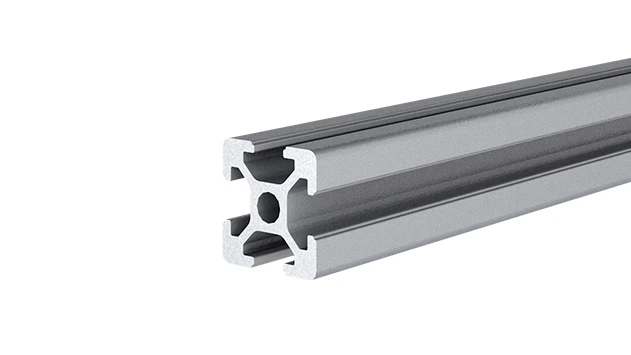
2020 is a 2.00 x 2.00CM fractional 20 series square extrusion T-slot profile with four open T-slots, one on each 2.00 face. The profile has align-a-grooves to assist in aligning connecting profiles.
If you've ever walked through a manufacturing plant, visited a workshop, or even assembled a DIY project, chances are you've encountered aluminum profiles. These unassuming yet versatile components are the unsung heroes of modern industry—supporting everything from workbench surfaces to conveyor systems, from material racks to automated machinery. But like any critical tool, aluminum profiles evolve, and in 2020, the EU introduced a set of updated standards that changed the game for manufacturers, suppliers, and end-users alike. Let's dive into what these changes mean, why they matter, and how they stack up against the norms we relied on before.
First, Let's Talk About Aluminum Profiles: Why They're So Important
Before we jump into the standards, let's ground ourselves in why aluminum profiles deserve all this attention. Unlike solid metal bars or generic pipes, aluminum extrusion profiles are engineered with precision. Their hollow, T-slot design (you might hear them called "T-groove aluminum pipe") allows for easy attachment of accessories—think brackets, panels, wheels, or aluminum profile end cap components—without welding or drilling. This flexibility makes them ideal for building custom structures: a sturdy workbench for an assembly line, a lightweight conveyor track, or a modular storage rack that can be reconfigured in minutes.
For decades, the EU has set standards for these profiles through the EN (European Norm) system, ensuring consistency across manufacturers. But prior to 2020, these standards had gaps. Imagine ordering aluminum extrusion profile components from two different suppliers and finding they don't fit together because their tolerances were off by a millimeter. Or discovering that a profile's surface finish corrodes faster than expected in a humid factory. These inconsistencies cost time, money, and frustration. The 2020 updates aimed to fix that—and then some.
A Look Back: The "Old Days" of EU Aluminum Profile Standards
If you were in the industry before 2020, you might recall the EN 755 standards, which governed aluminum extrusions for general structural use. While these norms were a step forward, they left room for interpretation. Let's break down the most common pain points:
1. Loose Dimensional Tolerances
Tolerances—how much a profile's actual dimensions can deviate from the specified size—were often broad. For example, a 20x20mm profile might measure 19.8mm from one supplier and 20.3mm from another. On paper, this seems minor, but when you're trying to slide a bracket into a T-slot or align multiple profiles into a frame, those fractions of a millimeter add up. End-users often had to file edges, use shims, or even redesign structures to make parts fit—wasting hours of labor.
2. Inconsistent Material Quality
Previous standards allowed for a range of aluminum alloys and tempers (heat treatments), but they didn't always specify minimum strength requirements for structural applications. This meant some profiles might bend under loads they were "rated" for, while others were over-engineered (and overpriced) for simpler tasks. Suppliers sometimes cut corners by using lower-grade alloys to reduce costs, leaving manufacturers to guess whether a profile would hold up in their workflow.
3. Limited Focus on Environmental Impact
Sustainability wasn't front and center in pre-2020 norms. While aluminum is inherently recyclable, the standards didn't mandate recycled content percentages or restrict harmful coatings (like certain chromate finishes) that could leach chemicals during production or disposal. As companies began prioritizing eco-friendly practices, this lack of regulation became a hurdle.
4. Accessory Compatibility Headaches
Aluminum profile accessories —things like connectors, hinges, and end caps—were a particular frustration. Since profiles varied slightly in slot size or wall thickness, an end cap that fit perfectly on Brand A's profile might wobble on Brand B's. Suppliers often had to stock multiple versions of the same accessory, and end-users faced "buy one brand only" lock-ins to avoid compatibility issues.

The 2020 update: What Changed, and Why It Matters
In 2020, the EU rolled out revised standards (officially EN 755-2:2020) with a clear goal: to make aluminum profiles more reliable, sustainable, and user-friendly. These weren't minor tweaks—they were overhauls designed to address the pain points we just discussed. Let's unpack the key updates:
1. Tighter Dimensional Tolerances: Precision You Can Count On
The 2020 standards introduced stricter tolerance classes, particularly for critical dimensions like T-slot width, wall thickness, and overall profile straightness. For example, the tolerance for a T-slot opening (where accessories attach) was reduced from ±0.3mm to ±0.15mm in many cases. What does this mean for you? If you order a 40x40mm profile from Supplier X and another from Supplier Y, they'll fit the same brackets, the same end caps, and align perfectly when building a frame. No more "file to fit" or last-minute design changes.
2. Mandatory Material Testing and Strength Guarantees
Gone are the days of guessing whether a profile can handle the load. The 2020 norms now require manufacturers to test batches of extrusions for tensile strength, yield strength, and elongation (how much a profile can stretch before breaking). For structural profiles, minimum values are clearly defined: for example, a 6063-T6 alloy (common in profiles) must have a minimum yield strength of 110 MPa. This gives engineers and end-users confidence that a profile will perform as expected, reducing the risk of structural failures in applications like workbenches or material racks.
3. A Harder Line on Sustainability
Sustainability is no longer optional. The 2020 standards push for higher recycled aluminum content—many profiles now contain 70% or more recycled material, up from 50% or less previously. They also restrict the use of hazardous substances in surface treatments, banning chromate conversion coatings (which contain toxic hexavalent chromium) in favor of eco-friendly alternatives like anodizing or powder coating. For companies aiming to meet EU environmental regulations (like REACH or RoHS), these changes make compliance far easier.
4. Standardized T-Slots and Accessory Compatibility
Perhaps the most user-centric update: the 2020 norms standardized T-slot dimensions across common profile sizes. Whether you're buying a 20x20mm, 30x30mm, or 40x40mm profile, the slot width, depth, and corner radii are now consistent. This means aluminum profile accessories —from bolts to brackets to those ever-important end caps—work seamlessly across brands. A small change, but one that eliminates the need to stock "Brand A only" accessories and makes it easier to mix and match components for custom projects.
By the Numbers: Previous Norms vs. 2020 Standards
To see the impact of these changes, let's compare key metrics side by side:
| Feature | Pre-2020 EN 755 Standards | 2020 EN 755-2 Standards | Impact |
|---|---|---|---|
| T-slot Width Tolerance | ±0.3mm | ±0.15mm | 50% tighter tolerance, reducing accessory fit issues |
| Minimum Recycled Content | Not specified (average 50%) | Recommended 70%+ for structural profiles | Lower carbon footprint, aligns with EU sustainability goals |
| Yield Strength (6063-T6 Alloy) | Not mandated (common range: 90-110 MPa) | Mandatory minimum: 110 MPa | More consistent load-bearing capacity |
| Surface Finish Requirements | Basic anodizing/painting allowed; chromate coatings permitted | Ban on chromate coatings; stricter adhesion/ corrosion resistance tests | Safer for workers, better durability in harsh environments |
| Accessory Compatibility | Slot dimensions varied by manufacturer | Standardized slot widths for common profile sizes (20x20, 30x30, 40x40, etc.) | Cross-brand accessory use; reduced inventory costs |
What This Means for You: Suppliers, Manufacturers, and End-Users
The 2020 updates aren't just about compliance—they're about creating a more efficient, reliable, and sustainable ecosystem. Let's break down the benefits for different stakeholders:
For Aluminum Profile Suppliers
Initially, adapting to the new standards required investment: upgrading extrusion dies for tighter tolerances, testing materials more rigorously, and switching to eco-friendly coatings. But the payoff? Suppliers now compete on quality and service rather than cutting corners. With standardized specs, they can also scale production more efficiently, knowing their profiles will work with a wider range of accessories and systems.
For Manufacturers (e.g., Workbench Builders, Conveyor Makers)
If you build products using aluminum profiles—say, assembling workbenches for factories or modular racks for warehouses—the 2020 standards are a game-changer. Tighter tolerances mean faster assembly times (no more filing or shimming), and standardized accessories reduce the number of "special order" parts you need to stock. Plus, the guaranteed material strength lets you design lighter, more efficient structures without sacrificing durability. For example, a workbench frame that once required 40x40mm profiles might now work with 30x30mm profiles, cutting material costs.
For End-Users (e.g., Factory Managers, DIY Enthusiasts)
At the end of the day, you're the one using these profiles. Whether you're setting up a home workshop or managing a production line, the 2020 standards mean less frustration and more reliability. Need to replace a damaged profile? Grab any brand that meets the 2020 norms, and it will fit your existing accessories. Concerned about sustainability? You can trust that your profiles have a lower environmental impact. And with better surface finishes, your structures will stand up to years of wear and tear—no more premature rust or peeling paint.
Common Myths About the 2020 Standards
Change can spark confusion, so let's debunk a few myths:
Myth #1: "2020 Profiles Are Significantly More Expensive"
It's true that initial production costs rose for suppliers, but competition and economies of scale have brought prices back in line with pre-2020 levels. Plus, the savings from reduced labor (faster assembly, no rework) and lower accessory costs often offset any small price increases.
Myth #2: "Older Profiles Are Now Obsolete"
Not necessarily. If you have existing structures built with pre-2020 profiles, they'll still work—they just might not be compatible with new 2020 accessories. Many suppliers still stock older profiles for replacement purposes, though most recommend upgrading to 2020 standards for new projects.
Myth #3: "The Changes Are Only Relevant for EU-Based Businesses"
While the standards are EU-specific, many global suppliers have adopted them voluntarily. Why? Because the benefits—tighter tolerances, sustainability, compatibility—are universal. If you source profiles from outside the EU, ask if they meet EN 755-2:2020; chances are, the answer is yes.
Final Thoughts: Embracing the Future of Aluminum Profiles
The 2020 EU standard for aluminum profiles isn't just an update—it's a leap forward. By addressing the inconsistencies of the past and prioritizing precision, sustainability, and user-friendliness, these norms have made aluminum extrusion profiles more reliable and versatile than ever. Whether you're a supplier, a manufacturer, or someone who just needs a sturdy workbench, the message is clear: the 2020 standards aren't something to fear—they're something to embrace.
So the next time you pick up an aluminum extrusion profile or snap on an aluminum profile end cap , take a moment to appreciate the thought that went into making it fit, function, and last. After all, great tools are built on great standards—and the 2020 norms are setting the bar high.