- Company Articles
- Industry articles
- Industry standards
- 2020 EU Standard Aluminum Profile vs. Steel: Weight-Strength Comparison

2020 EU Standard Aluminum Profile vs. Steel: Weight-Strength Comparison
Related Product
2020 EU Standard Aluminum Profile
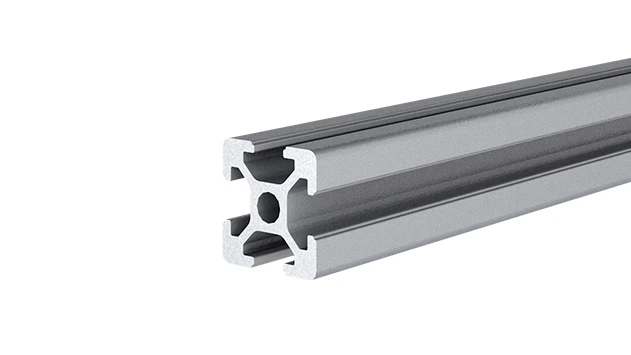
2020 is a 2.00 x 2.00CM fractional 20 series square extrusion T-slot profile with four open T-slots, one on each 2.00 face. The profile has align-a-grooves to assist in aligning connecting profiles.
Walk through any modern factory, warehouse, or assembly plant, and you'll notice a silent but critical player in every workflow: the materials that build the infrastructure. From the workbench where an operator assembles circuit boards to the material rack storing components, the choice of material impacts everything—efficiency, safety, cost, and even employee morale. In recent years, one material has been steadily gaining ground against the long-reigning champion of industrial construction: aluminum. Specifically, the
2020 EU standard aluminum profile
has emerged as a versatile alternative to traditional steel, sparking debates about which material truly delivers the best balance of weight and strength. Let's dive into this comparison, exploring why so many manufacturers are making the switch, and whether aluminum might be the right fit for your operations.
What Is the 2020 EU Standard Aluminum Profile?
First, let's get clear on what we're talking about. The
2020 EU standard aluminum profile
is a specific type of extruded aluminum product designed to meet strict European union standards for quality, dimensional accuracy, and performance. The "2020" refers to its cross-sectional dimensions: typically 20mm by 20mm, making it a compact yet robust option for a wide range of applications. Unlike generic aluminum bars, these profiles are engineered with precision—often featuring T-slots along their length that allow for easy attachment of
aluminum profile accessories
like brackets, end caps, and connectors. This design is a game-changer for modular construction; instead of welding or drilling, you can assemble, disassemble, and reconfigure structures in minutes, which aligns perfectly with lean manufacturing principles.
The EU standards ensure consistency across manufacturers, meaning you can source
2020 EU standard aluminum profile
from different suppliers and still expect the same fit and function. This reliability is crucial for businesses that need to scale or adapt their setups quickly. Additionally, these profiles are usually made from high-grade aluminum alloys (like 6063 or 6061), which offer excellent strength-to-weight ratios and corrosion resistance—two properties that set aluminum apart from steel in many scenarios.
Steel: The Traditional Workhorse
For decades, steel has been the go-to material for industrial structures. Its reputation is well-earned: steel is strong, durable, and relatively inexpensive compared to high-performance alloys. Carbon steel, in particular, has been a staple for building heavy-duty workbenches, material racks, and conveyor frames. Its high tensile strength means it can handle heavy loads without bending or warping, making it ideal for applications where raw power is non-negotiable—think of a steel rack holding tons of automotive parts or a steel conveyor transporting cast iron components.
But steel has its drawbacks. Its density is significantly higher than aluminum (about 7.85 g/cm³ for steel vs. 2.7 g/cm³ for aluminum), which translates to weight. A steel workbench of the same size as an aluminum one will be much heavier, making it harder to move, reposition, or transport. This weight also impacts installation: steel structures often require heavy machinery or multiple workers to assemble, increasing labor costs and setup time. And let's not forget corrosion; unless coated or made from stainless steel, steel is prone to rust, especially in humid or industrial environments, which means ongoing maintenance to prevent degradation.

Weight vs. Strength: The Core of the Debate
The heart of the aluminum vs. steel discussion lies in their weight-strength tradeoff. Steel is stronger in absolute terms, but aluminum offers a superior strength-to-weight ratio. Let's break this down with hard numbers. Below is a comparison table of key metrics for the
2020 EU standard aluminum profile
(using alloy 6063-T5, a common choice) and mild carbon steel (the most widely used steel variant in industrial settings):
| Metric | 2020 EU Standard Aluminum Profile (6063-T5) | Mild Carbon Steel (S235JR) |
|---|---|---|
| Density (g/cm³) | 2.7 | 7.85 |
| Tensile Strength (MPa) | 180-220 | 370-500 |
| Yield Strength (MPa) | 110-160 | 235 |
| Weight per Meter (20x20mm profile, 1mm wall) | ≈0.2 kg/m | ≈0.49 kg/m |
| Modulus of Elasticity (GPa) | 69 | 200 |
| Corrosion Resistance | High (natural oxide layer) | Low (prone to rust without coating) |
| Thermal Conductivity (W/m·K) | ≈201 | ≈45 |
Let's unpack this. Steel has a higher tensile strength (370-500 MPa vs. aluminum's 180-220 MPa), meaning it can withstand more force before breaking. But look at the weight per meter: the aluminum profile is less than half the weight of steel for the same dimensions. When you calculate strength-to-weight ratio (tensile strength divided by density), aluminum pulls ahead. For example, aluminum's ratio is roughly 67-81 MPa/(g/cm³), while steel's is about 47-64 MPa/(g/cm³). In practical terms, this means you can build a structure with aluminum that's just as strong as steel but significantly lighter.
Take a simple example: a workbench frame. If you build it with 2020 aluminum profiles, the total weight might be 15 kg, making it easy for two workers to move across the shop floor. A steel frame of the same strength would likely weigh 35-40 kg, requiring a forklift or extra manpower. In lean manufacturing environments, where adaptability is key—reconfiguring assembly lines for new products, moving workstations to reduce bottlenecks—this weight difference translates directly to time saved and reduced physical strain on employees.
Practical Applications: Where Aluminum Shines (and Where Steel Still Rules)
Aluminum's Sweet Spots
The
2020 EU standard aluminum profile
excels in applications where weight, modularity, and corrosion resistance are priorities. Here are a few scenarios where it outperforms steel:
1. Workbenches and Assembly Stations:
Modern factories often need workbenches that can be adjusted, expanded, or relocated. Aluminum profiles, paired with
aluminum profile accessories
like quick-connect brackets and removable end caps, make reconfiguration a breeze. A lightweight aluminum workbench also reduces the risk of workplace injuries from lifting, and its corrosion resistance ensures it stays looking new even in humid or chemical-exposed environments.
2. Material Racks and Trolleys:
Material handling is another area where aluminum shines. A turnover trolley built with 2020 aluminum profiles is easy to push around the shop, even when loaded with components. Steel trolleys of the same capacity would be bulkier and harder to maneuver, slowing down workflows. Plus, aluminum's T-slots allow for custom shelving or dividers using simple accessories, eliminating the need for welding.
3. Lean Manufacturing Systems:
Lean principles emphasize minimizing waste, and aluminum profiles align perfectly with this goal. Their modular design reduces material waste (no cutting steel to exact lengths on-site), and their lightweight nature reduces energy use in transportation and installation. Many suppliers also offer pre-cut profiles and standardized accessories, further streamlining the building process.
When Steel Still Makes Sense
That said, steel isn't obsolete. There are cases where its raw strength and lower upfront cost make it the better choice:
1. Ultra-Heavy Loads:
If you're storing 500kg pallets or mounting heavy machinery, steel's higher absolute strength is non-negotiable. An aluminum rack might bend under such loads, even with thick-walled profiles.
2. Outdoor or Extreme Environments:
While aluminum resists corrosion, stainless steel (a type of steel) offers superior protection in harsh outdoor conditions, saltwater environments, or areas with extreme temperature fluctuations.
3. Low-Cost, One-Time Builds:
For simple, static structures that won't need modification, steel's lower material cost can be appealing. However, this advantage often disappears when factoring in labor (welding vs. bolt-together aluminum) and long-term maintenance (painting, rust removal).
Beyond Weight and Strength: The Hidden Benefits of Aluminum Profiles
The weight-strength comparison is critical, but aluminum offers other advantages that make it a smart long-term investment:
1. Modularity and Customization:
The T-slots in
2020 EU standard aluminum profiles
are a game-changer. With
aluminum profile accessories
like sliding nuts, brackets, and hinges, you can add shelves, tool holders, or even conveyor tracks to a basic frame in minutes. Need to adjust the height of a workbench? Just loosen a few bolts and reposition the crossbars. Steel, on the other hand, often requires cutting, welding, or drilling to modify—processes that are time-consuming and irreversible.
2. Corrosion Resistance:
Aluminum naturally forms a thin oxide layer when exposed to air, protecting it from rust and corrosion. This means aluminum profiles require no painting or coating, saving on maintenance costs. In contrast, steel needs regular treatments (like powder coating or galvanizing) to prevent rust, especially in damp industrial settings.
3. Thermal and Electrical Conductivity:
While not always a primary concern, aluminum's high thermal conductivity can be an advantage in applications like heat sinks or temperature-controlled environments. Its electrical conductivity also makes it useful for grounding or static control in electronics manufacturing.
4. Sustainability:
Aluminum is 100% recyclable, and recycling it uses just 5% of the energy required to produce new aluminum. For companies focused on sustainability goals, this is a significant plus. Steel is also recyclable, but aluminum's lower embodied energy gives it an edge in green manufacturing initiatives.
Cost: The Elephant in the Room
Let's address the cost question head-on. Upfront, aluminum profiles are more expensive than steel. A meter of 2020 EU standard aluminum profile might cost $8-12, while a similar steel bar could be $4-6. But this is a classic case of "penny wise, pound foolish." When you factor in the full lifecycle costs, aluminum often comes out ahead:
Labor Savings:
Assembling aluminum profiles with
aluminum profile accessories
(bolts, brackets, end caps) is faster and requires fewer skills than welding steel. A team can build an aluminum workbench in an hour; a steel one might take half a day.
Transportation Costs:
Lighter aluminum structures cost less to ship, both from the supplier and within your facility.
Maintenance Savings:
No painting, no rust removal, no replacement of corroded parts. Aluminum profiles last longer with minimal upkeep.
Adaptability:
When your needs change, you can disassemble and reuse aluminum profiles. Steel structures are often cut or welded into place, making them hard to repurpose—meaning you'll pay to build new ones sooner.
Many manufacturers report that the higher upfront cost of aluminum is recouped within 1-2 years through these savings. For example, a food processing plant in Germany switched to aluminum profiles for their material racks and saw a 30% reduction in annual maintenance costs, along with faster reconfiguration times for seasonal product lines.
Real-World Success Stories
To bring this to life, let's look at a few examples of businesses that made the switch to
2020 EU standard aluminum profiles
and never looked back:
Electronics Manufacturer:
A company producing smartphones needed flexible assembly lines to accommodate frequent product updates. They replaced steel workbenches with aluminum ones, reducing line reconfiguration time from 8 hours to 2 hours. The lighter workbenches also reduced operator fatigue, leading to a 15% increase in assembly speed.
Automotive Supplier:
A tier-1 auto parts supplier built material racks using 2020 aluminum profiles. The racks were 40% lighter than steel equivalents, making them easier to move with forklifts and reducing warehouse traffic jams. They also used aluminum's T-slots to add custom dividers, cutting down on part damage during storage.
Pharmaceutical Lab:
A lab needed cleanroom workstations that could withstand frequent sanitization. Aluminum's corrosion resistance and smooth, easy-to-clean surface made it ideal. They paired the profiles with aluminum honeycomb panels for a lightweight, hygienic setup that met strict FDA standards.
Choosing the Right Material for Your Needs
So, how do you decide between
2020 EU standard aluminum profile
and steel? Start by asking these questions:
1. What's the maximum load the structure will bear?
If it's under 500kg, aluminum is likely sufficient. Over 1000kg, consider steel.
2. Will the structure need to be moved or reconfigured?
If yes, aluminum's lightweight and modularity are critical.
3. What's the environment like?
Humid, corrosive, or cleanroom? Aluminum's resistance to rust and easy cleaning make it better here.
4. What's your long-term plan?
If you anticipate growth or changing needs, aluminum's reusability will save money down the line.
For most modern manufacturing, warehousing, and assembly operations, the answer leans toward aluminum. The
2020 EU standard aluminum profile
offers the perfect balance of strength, weight, and flexibility, supported by a wide range of
aluminum profile accessories
that make customization simple. It's not just a material—it's a tool for building more efficient, adaptable, and sustainable operations.
Final Thoughts: The Future of Industrial Construction
Steel has served us well for over a century, but the industrial landscape is changing. Today's manufacturers need agility, efficiency, and sustainability—three areas where the
2020 EU standard aluminum profile
excels. Its strength-to-weight ratio, modular design, and low maintenance make it more than just an alternative to steel; it's a upgrade.
Of course, every business is unique. If you're still on the fence, consider a small-scale trial: build a single aluminum workbench or material rack and compare it to your existing steel setup. Chances are, you'll be surprised by how much lighter, easier to use, and longer-lasting it is. And with suppliers offering everything from pre-cut profiles to specialized accessories, getting started has never been simpler.
In the end, the choice between aluminum and steel isn't about picking a winner—it's about choosing the material that aligns with your goals. For those looking to build for the future—leaner, faster, and more adaptable—aluminum is leading the way.