- Company Articles
- Industry articles
- Industry standards
- 2020 EU Standard Aluminum Profile vs. Traditional Steel Racks: Weight Reduction Benefits

2020 EU Standard Aluminum Profile vs. Traditional Steel Racks: Weight Reduction Benefits
Related Product
2020 EU Standard Aluminum Profile
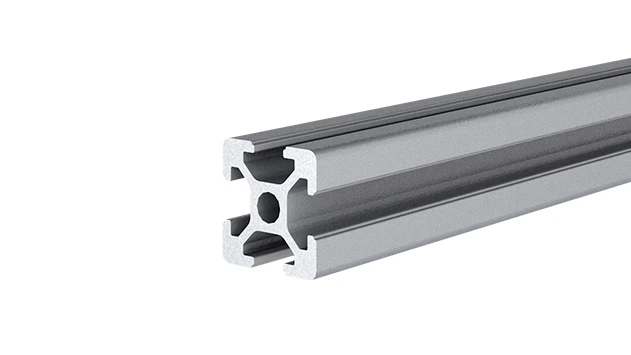
2020 is a 2.00 x 2.00CM fractional 20 series square extrusion T-slot profile with four open T-slots, one on each 2.00 face. The profile has align-a-grooves to assist in aligning connecting profiles.
Walk into any busy manufacturing plant or warehouse, and you'll quickly notice a common theme: every detail matters. The way materials flow, the speed of setup, the ease of reconfiguring workspaces—these elements shape productivity, safety, and even employee morale. For decades, traditional steel racks and workbenches have been the default choice, prized for their sturdiness. But here's the thing: "sturdy" often came with a hidden cost—weight. Heavy steel structures are hard to move, tricky to install, and can slow down the very workflows they're meant to support. Enter the 2020 EU standard aluminum profile —a modern solution that's changing the game by putting weight reduction at the forefront without sacrificing strength. Let's dive into how this aluminum extrusion profile stacks up against traditional steel racks, and why that matters for your operations.
The Hidden Burden of Traditional Steel Racks
Steel has long been the go-to for industrial storage and workspaces, and for good reason. It's tough, can handle heavy loads, and feels "reliable." But let's talk about that reliability in practical terms. A typical steel rack section—say, a 6-foot-tall unit with shelves—can weigh upwards of 80 pounds. Installing it? You'll need at least two people, maybe a forklift for larger units. Once it's in place, moving it? Forget it. Steel racks are permanent fixtures, which sounds good until your workflow changes, or you need to reorganize the floor layout to accommodate a new product line. Then, that "permanence" becomes a bottleneck.
And let's not overlook the little things. Even smaller steel components, like workbench frames or mobile trolleys, add up. A steel workbench might weigh 150 pounds empty—try moving that across the shop floor with a few tools on it. The casters (those small wheels at the bottom) take a beating, too. Heavy steel puts constant stress on caster wheels, leading to frequent replacements and wobbly, unsafe setups. Over time, all that extra weight translates to higher labor costs, more downtime for repairs, and a workspace that feels rigid instead of responsive.
What Makes 2020 EU Standard Aluminum Profile a Game-Changer?
Now, let's shift gears to the 2020 EU standard aluminum profile. First, let's clarify what "EU standard" means here. These aren't just any aluminum pieces—they're precision-engineered, extruded profiles built to strict European standards for consistency, strength, and safety. The "2020" refers to their dimensions: 20mm x 20mm, a versatile size that's become a staple for everything from lightweight racks to workbench frames. But the real star here is the aluminum extrusion profile process itself. Extrusion involves pushing molten aluminum through a die to create complex, uniform shapes—think of it like squeezing toothpaste through a tube, but with extreme precision. This process lets manufacturers create profiles with hollow cores, reinforced edges, and custom cross-sections, all while keeping weight low.
So, how much lighter are we talking? Let's get specific. A 2020 EU standard aluminum profile, 1 meter long, weighs roughly 0.5 kg. Compare that to a similar steel profile of the same size and length, which might weigh 2.5 kg—that's a 80% weight reduction! Even larger aluminum profiles, like 40mm x 40mm, still clock in at a fraction of steel's weight. For example, a 40x40 aluminum extrusion profile weighs about 1.2 kg per meter, while a steel equivalent could hit 5 kg. That difference isn't just numbers on a scale—it's transformative for how work gets done.

Lightweight Doesn't Mean Weak: Strength and Durability
You might be thinking, "Sure, aluminum is lighter, but can it really hold up to the daily grind of a manufacturing floor?" Great question—and the answer is a resounding yes. Here's why: Aluminum alloys used in these profiles (like 6063-T5, a common choice) are surprisingly strong. While pure aluminum is soft, adding elements like magnesium and silicon creates alloys with impressive tensile strength—often 200 MPa or more. That's more than enough to handle the loads of typical warehouse operations: boxes, tools, even small machinery parts.
Durability is another win. Unlike steel, aluminum doesn't rust. It forms a natural oxide layer that protects it from corrosion, making it ideal for humid environments, food processing facilities, or even outdoor use. Steel, on the other hand, needs regular painting or coating to prevent rust, adding maintenance costs over time. And because aluminum profiles are extruded, they have consistent wall thickness and no weak points—unlike steel, which can have seams or welds that fail under stress.
Don't just take our word for it. Many industries with high safety standards—like automotive manufacturing and aerospace—rely on aluminum extrusion profiles for critical components. If it's strong enough for car frames and aircraft parts, it's more than strong enough for your warehouse racks.
Aluminum vs. Steel: A Side-by-Side Breakdown
| Feature | 2020 EU Standard Aluminum Extrusion Profile | Traditional Steel Rack | Key Advantage |
|---|---|---|---|
| Weight (per meter, 20x20mm) | ~0.5 kg | ~2.5 kg | 80% lighter, easier to handle |
| Tensile Strength | 200-250 MPa | 300-400 MPa (higher, but overkill for most uses) | Aluminum meets 90% of industrial load needs with less weight |
| Corrosion Resistance | High (natural oxide layer) | Low (requires coating/painting) | Aluminum lasts longer in humid/damp environments |
| Installation Time (per 10ft rack) | 1-2 people, ~30 minutes | 2-3 people, ~1 hour | Aluminum cuts installation time by 50% |
| Caster Wheel Lifespan | 3-5 years (low stress) | 1-2 years (high stress) | Aluminum doubles caster durability |
Installation and Labor: Time (and Money) Back in Your Pocket
Let's talk about the human side of weight reduction: labor. Remember that 80% weight difference we mentioned earlier? It turns a two-person job into a one-person task. Imagine your team needs to set up a new row of racks. With steel, you'd need a forklift to move the sections, two workers to align and bolt them, and maybe a third to hold parts in place. With aluminum profiles, one worker can carry 10-foot sections by hand, slot them together (many EU standard profiles use T-slot designs for tool-free assembly), and have the rack up in half the time.
Take workbenches, for example. A typical steel workbench frame might require four people to carry and position. With an aluminum frame? One person can lift it, wheel it into place (thanks to those now-happy caster wheels), and secure it in minutes. That's not just faster—it's safer. Lighter materials mean fewer strained backs, fewer dropped tools, and a lower risk of workplace injuries. Over a year, those saved hours add up to thousands of dollars in labor costs, not to mention happier, more productive employees.
And when it's time to reconfigure? No problem. Aluminum profiles are modular—you can take them apart, add extensions, or repurpose them for new projects with minimal effort. A steel rack, once bolted to the floor, might as well be concrete. With aluminum, your workspace can evolve as your needs do, whether that's adding a new shelf for seasonal inventory or moving a workbench to accommodate a new assembly line.
Lean System Friendly: Flexibility Meets Efficiency
Modern manufacturing thrives on lean system principles—eliminating waste, streamlining workflows, and adapting quickly to change. Aluminum profiles fit this ethos perfectly. Let's say you run a small electronics assembly line. Your workbenches need to be close to the conveyor belt one week, then shifted 10 feet left the next to make room for a new machine. With steel workbenches, that's a major project. With aluminum, you can unbolt the sections, carry them over, and reassemble in under an hour. No forklifts, no overtime, no disruption to production.
Mobile setups are where aluminum really shines. Think about material trolleys—those carts that move parts from storage to the assembly line. A steel trolley might weigh 100 pounds empty, making it hard to push and prone to damaging floors. An aluminum trolley with the same load capacity? Maybe 30 pounds. Employees can move it with one hand, even when fully loaded. That speed and ease translate to faster material delivery, fewer delays, and a smoother workflow overall.
Even small details, like adjustable shelving, become easier with aluminum. T-slot designs let you add or remove shelves in seconds, using nothing but a hex key. Need to raise a shelf by 2 inches to fit taller boxes? No problem. With steel, you'd be drilling new holes or buying a whole new shelf. Aluminum turns "maybe later" into "done in 5 minutes."
Real-World Impact: A Small Manufacturer's Success Story
Let's ground this in a real example. Take "TechWorks," a fictional but representative small electronics manufacturer with 50 employees. A year ago, their shop floor was cluttered with steel racks and workbenches. Installing a new steel rack took 3 people 2 hours, and moving a workbench required a forklift and a team of 4. Their lean system efforts were stuck—they couldn't reconfigure fast enough to keep up with changing orders.
Then, they switched to 2020 EU standard aluminum profiles. Here's what happened:
- Installation time for new racks dropped from 2 hours to 30 minutes, and now only needs 1 person.
- Workbench mobility improved—employees could reposition workbenches themselves, cutting setup time for new projects by 40%.
- Caster wheel replacements fell from once every 3 months to once a year, saving $1,200 annually on parts.
- Employee feedback was overwhelmingly positive: "I don't dread moving equipment anymore," one assembler noted. "It feels like the shop floor finally works with us, not against us."
TechWorks isn't an anomaly. Companies across industries—from automotive to food packaging—are reporting similar wins. The common thread? Weight reduction isn't just about making things lighter; it's about making workflows smarter, employees happier, and businesses more agile.
Cost: Upfront vs. Long-Term Value
We won't sugarcoat it: Aluminum profiles often cost more upfront than steel. A 2020 EU standard aluminum profile might run $5-8 per meter, while steel could be $2-3. But that's only part of the story. Let's crunch the numbers over 5 years for a typical 10-rack warehouse setup:
- Initial material cost: Aluminum ($4,000) vs. Steel ($2,000) – Aluminum is $2,000 more upfront.
- Labor for installation: Aluminum (10 racks x 1 person x 0.5 hours = 5 hours, $20/hour = $100) vs. Steel (10 racks x 2 people x 1 hour = 20 hours, $20/hour = $400) – Aluminum saves $300.
- Caster wheel replacements: Aluminum (1 set/year x $50 = $250 total) vs. Steel (4 sets/year x $50 = $1,000 total) – Aluminum saves $750.
- Reconfiguration labor: Aluminum (2 reconfigs/year x 2 hours = 20 hours, $20/hour = $400) vs. Steel (2 reconfigs/year x 8 hours = 80 hours, $20/hour = $1,600) – Aluminum saves $1,200.
- Total 5-year cost: Aluminum ($4,000 + $100 + $250 + $400 = $4,750) vs. Steel ($2,000 + $400 + $1,000 + $1,600 = $5,000) – Aluminum is cheaper over time.
And that's not counting intangibles: fewer workplace injuries, faster time-to-market for new products, and happier employees. When you factor in all these, aluminum profiles become the more cost-effective choice for any business planning to stay agile and grow.
The Verdict: Lighter, Smarter, Better
Traditional steel racks have served us well, but they're a product of a time when "sturdy" was the only priority. Today, manufacturing and warehousing demand more—flexibility, efficiency, and adaptability. The 2020 EU standard aluminum profile delivers on all three, thanks to its game-changing weight reduction, impressive strength, and seamless integration with lean system workflows.
Whether you're setting up a new workspace, upgrading old racks, or just looking to make daily operations smoother, aluminum extrusion profiles are worth the investment. They're not just lighter—they're smarter. And in a world where every second and every dollar counts, smart wins.
So, next time you walk through your warehouse or shop floor, take a look at those steel racks and workbenches. Imagine how much easier, faster, and more efficient things could be if they were 80% lighter. With aluminum profiles, you don't have to imagine—it's already here.