- Company Articles
- Industry articles
- Industry standards
- 2020 National Standard Profile Applications in Medical Device Manufacturing Workstations

2020 National Standard Profile Applications in Medical Device Manufacturing Workstations
Related Product
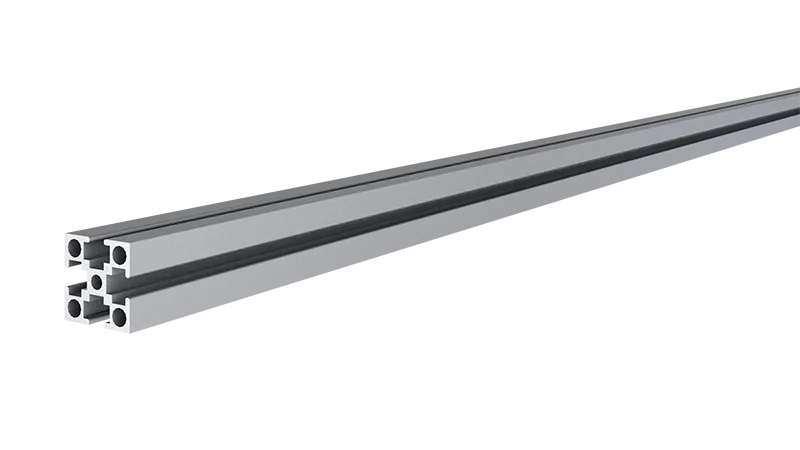
2020 National Standard Profile
45° external bending joint, used for 45° external connection of two aluminum pipes.
The Critical Role of Workstations in Medical Device Manufacturing
In the world of medical device manufacturing, precision isn't just a goal—it's a necessity. Every component, from a tiny sensor in a pacemaker to a large housing for diagnostic equipment, demands consistent quality, strict adherence to regulatory standards, and an environment that minimizes risk. At the heart of this process lies the workstation: the physical space where assembly, testing, and packaging come to life. But in an industry where product lines evolve rapidly, compliance requirements grow stricter, and production volumes fluctuate, traditional fixed workstations often fall short. They're rigid, hard to clean, and ill-equipped to adapt to new tools or changing workflows. This is where modern solutions, built on flexible frameworks like aluminum profiles, are transforming the landscape.
Medical device manufacturing workstations face unique challenges. First, there's the need for electrostatic discharge (ESD) protection : many components, such as microchips or sensitive circuits, are damaged by static electricity. Second, cleanliness is non-negotiable—surfaces must resist corrosion, prevent bacterial growth, and withstand frequent sanitization. Third, ergonomics plays a role in both worker safety and productivity; adjustable heights, tool accessibility, and layout flexibility reduce fatigue and errors. Finally, adaptability is key. A workstation that assembles a surgical tool today might need to reconfigure for a new implant design next month. Rigid workbenches simply can't keep up.
Enter aluminum profiles—a material that has become synonymous with modularity and durability in industrial settings. Among the various profiles available, the 2020 National Standard Profile has emerged as a standout choice for medical device workstations. Its compact size, compatibility with accessories, and balance of strength and versatility make it ideal for addressing the industry's unique demands. In this article, we'll explore how this profile is reshaping workstations, from ESD-safe assembly lines to lean manufacturing systems, and why it's become a go-to solution for manufacturers aiming to stay agile and compliant.
Why Aluminum Profiles? The Foundation of Modern Workstations
Aluminum has long been favored in industrial applications for its winning combination of properties: it's lightweight yet strong, resistant to corrosion, and easy to machine. When extruded into profiles—long, uniform shapes with internal channels (often called "T-slots")—it becomes even more powerful. These T-slots allow for quick attachment of accessories like brackets, shelves, lights, and casters, turning a simple frame into a fully functional workstation in hours, not days. Unlike welded steel or wooden workbenches, aluminum profiles offer tool-less customization : no drilling, welding, or specialized skills required to reconfigure a setup.
But not all aluminum profiles are created equal. National standards ensure consistency in dimensions, material quality, and performance, making it easier for manufacturers to source compatible components and scale their operations. The 2020 National Standard Profile is a prime example of this standardization. Measuring 20mm in width and 20mm in height, it's considered a "small" profile, but don't let its size fool you. Its design prioritizes rigidity, with wall thicknesses optimized for load-bearing, and its T-slot geometry is engineered to work seamlessly with a wide range of aluminum profile accessories , from connectors to end caps. This balance of size, strength, and compatibility makes it particularly well-suited for medical device workstations, where space is often limited, and precision is paramount.
Key Advantage: Unlike larger profiles (e.g., 4040 or 3030), the 2020 National Standard Profile excels in applications where a compact footprint is critical. Medical device assembly often involves intricate, small-scale work—think assembling catheter components or mounting tiny sensors—and a bulky workstation frame would only hinder precision. The 2020 profile provides the structural support needed without overwhelming the workspace.

2020 National Standard Profile: Design, Specs, and Compatibility
To understand why the 2020 National Standard Profile is a game-changer for medical workstations, let's dive into its technical details. As defined by national standards, this profile features a square cross-section (20mm x 20mm) with two parallel T-slots running along each side. The slots are typically 6mm wide, designed to accept standard M5 or M6 bolts, which means accessories from different suppliers are often interchangeable—a huge plus for manufacturers looking to avoid vendor lock-in.
Material-wise, the 2020 profile is usually made from 6063-T5 aluminum alloy, a heat-treated grade known for its excellent corrosion resistance and mechanical properties. This alloy can withstand repeated cleaning with harsh disinfectants (a must in medical settings) and resists pitting or tarnishing over time. Its tensile strength of around 180 MPa ensures it can support the weight of tools, fixtures, and materials common in assembly tasks, while its low density (2.7 g/cm³) keeps the overall workstation lightweight enough for easy repositioning when needed.
But what truly sets the 2020 profile apart is its compatibility with aluminum profile accessories . From simple angle brackets to complex sliding mechanisms, the ecosystem of components designed for this profile is vast. For example: corner connectors allow for 90° joints without welding; end caps seal the profile's ends to prevent dust buildup; panel mounts attach flat surfaces like workbenches or toolboards; and caster wheels add mobility for flexible floor layouts. This modularity means a single 2020 profile frame can be reconfigured into a standing workbench, a seated assembly station, or a mobile cart—all with minimal effort.
| Feature | 2020 National Standard Profile | 3030 Standard Profile | 4040 Standard Profile |
|---|---|---|---|
| Dimensions (W x H) | 20mm x 20mm | 30mm x 30mm | 40mm x 40mm |
| Typical Wall Thickness | 1.5mm–2.0mm | 2.0mm–3.0mm | 2.5mm–4.0mm |
| Max Load Capacity (Per Meter) | 50–80 kg | 100–150 kg | 200–300 kg |
| Best For | Compact workstations, ESD-sensitive tasks, small-part assembly | Medium-duty workbenches, material racks, tool storage | Heavy-duty assembly lines, large equipment frames |
| Accessory Compatibility | Wide range (M5/M6 bolts, standard connectors) | Extensive (larger brackets, heavier-duty wheels) | Industrial-grade (high-load casters, structural brackets) |
Application 1: Building ESD-Safe Workstations for Sensitive Components
One of the most critical applications of the 2020 National Standard Profile in medical manufacturing is the creation of ESD workstations . Many medical devices, such as neurostimulators or implantable defibrillators, contain microelectronics that are highly susceptible to electrostatic discharge. A single static spark—often imperceptible to humans—can damage these components, leading to product failures or, worse, patient harm. ESD workstations must therefore dissipate static charges safely, preventing buildup on surfaces or tools.
Aluminum profiles, by nature, are conductive, but the 2020 National Standard Profile takes this a step further. When combined with ESD-specific accessories, it forms a grounded system that channels static electricity away from sensitive parts. Here's how it works: the profile itself is connected to a grounding cable via a conductive bracket, ensuring any charge on the frame is directed to earth. Work surfaces, typically made of ESD-safe laminate or rubber, are then mounted to the profile using conductive adhesives or bolts, creating a continuous path to ground. Even accessories like tool hooks or bin holders can be made from conductive materials, ensuring every part of the workstation contributes to ESD protection.
Consider a scenario where a manufacturer produces hearing aids—tiny devices with delicate circuit boards. Their assembly workstation, built on 2020 profiles, includes: a height-adjustable frame (using telescopic profile extensions), an ESD mat surface, grounded tool holders, and a built-in ionizer mount (attached via profile brackets). If the product line switches to a new model with different testing equipment, the workstation can be reconfigured in hours: add a shelf for the new tester using angle brackets, adjust the height to accommodate seated vs. standing work, and reposition the ionizer—all without replacing the entire frame. This flexibility is invaluable in an industry where product lifecycles are short and customization is common.
Application 2: Lean System Integration for Streamlined Workflows
Lean manufacturing principles—focused on eliminating waste, improving efficiency, and maximizing value—have become a cornerstone of modern medical device production. A key tenet of lean is workplace organization : ensuring tools, materials, and processes are arranged to minimize motion, reduce errors, and speed up production. The 2020 National Standard Profile, with its modular design, is inherently aligned with this philosophy, making it a natural fit for lean system implementation.
Take, for example, the concept of "5S" (Sort, Set in Order, Shine, Standardize, Sustain). In a 5S-compliant workstation, every tool has a designated place, and workflows are optimized to reduce unnecessary steps. With 2020 profiles, manufacturers can build custom shadow boards (using panel mounts and hooks) to organize tools visually, ensuring operators can grab what they need in seconds. Material racks, built from the same profiles, can be positioned at arm's length from the assembly area, eliminating time wasted walking to retrieve parts. Even waste bins can be integrated into the workstation frame, keeping the area clean and organized.
Another lean principle is continuous improvement , which requires workstations to evolve based on operator feedback. Suppose a team notices that workers are repeatedly reaching across the bench to access a soldering iron. With a 2020 profile workstation, solving this is simple: add an extension arm (using a swivel joint and extra profile length) to mount the iron closer to the assembly point. No need for a new workstation—just a few new accessories and 30 minutes of reconfiguration. This ability to adapt on the fly reduces downtime and empowers teams to take ownership of their workspace.
Real-World Example: A mid-sized medical device company producing insulin pumps recently transitioned its assembly line to 2020 profile workstations. By integrating lean principles—using the profiles to build kanban racks for just-in-time material delivery, ESD-safe work surfaces for circuit assembly, and modular tool holders—the company reduced production time per unit by 18% and cut errors by 22% in the first six months. Operators reported less fatigue due to better ergonomics, and the IT team noted fewer ESD-related component failures. The key? The 2020 profile's flexibility allowed the company to test and refine layouts quickly, without the cost of custom fabrication.
Application 3: Custom Workbench Design for Ergonomics and Compliance
At the core of any medical device workstation is the workbench itself—the surface where the actual assembly happens. Traditional workbenches are often one-size-fits-all, with fixed heights and minimal adjustability. But in medical manufacturing, where operators may spend 8+ hours a day at the bench, ergonomics directly impacts productivity and worker health. The 2020 National Standard Profile solves this by enabling fully customizable workbench designs that adapt to individual operators and tasks.
Height adjustability is a prime example. Using telescopic 2020 profile legs with locking collars, workbenches can be raised or lowered to accommodate seated or standing work, or to fit operators of different heights. This reduces strain on the back, neck, and shoulders, lowering the risk of repetitive stress injuries. For tasks requiring precision (like), the bench can be lowered to seated height, allowing operators to steady their hands; for heavier assembly work, raising it to standing height reduces bending.
Compliance with regulatory standards is another area where 2020 profile workbenches shine. Medical device manufacturers must adhere to strict guidelines, such as ISO 13485 for quality management or FDA 21 CFR Part 820 for good manufacturing practices (GMP). These standards require documentation of workstation design, validation of cleaning procedures, and traceability of materials. Aluminum profiles simplify compliance: their smooth, non-porous surfaces are easy to clean and validate (no cracks or crevices for bacteria to hide), and since the profiles and accessories are off-the-shelf, material certificates and test reports are readily available from suppliers. This documentation trail is critical during audits, where proving every component meets safety standards is non-negotiable.
Material Handling and Storage: Extending the Profile's Reach
Beyond the workstation itself, the 2020 National Standard Profile excels in material handling and storage—key components of efficient medical manufacturing. From raw material racks to finished product carts, the profile's modularity makes it easy to build custom solutions that integrate seamlessly with workstations, creating a cohesive workflow.
For example, turnover trolleys built from 2020 profiles can transport components between workstations without damaging sensitive parts. Adding caster wheels (via caster mounts) makes these trolleys mobile, while adjustable shelves (using sliding brackets) allow them to carry everything from small bins of screws to larger subassemblies. Since the trolleys use the same profiles as the workstations, they can be customized to fit through narrow aisles or under overhead storage, maximizing space efficiency.
Storage racks, too, benefit from the 2020 profile's design. In cleanrooms or sterile environments, open shelving can collect dust, but enclosed cabinets built from the profiles (using panel mounts and transparent acrylic doors) keep materials protected while still allowing visibility. For ESD-sensitive components, conductive shelves and grounding cables can be integrated, preventing static buildup during storage. Even specialized storage, like racks for delicate glass syringes, can be built with foam inserts and dividers mounted to the profile frame, ensuring items are held securely and organized.
Future Trends: Innovations in 2020 Profile Applications
As medical device manufacturing continues to evolve, so too do the applications of the 2020 National Standard Profile. One emerging trend is the integration of smart technologies into workstation design. For instance, sensors mounted to profile frames (using bracket accessories) can monitor temperature, humidity, or ESD levels in real time, alerting operators to issues before they affect production. LED lighting, attached via profile-mounted strips, can be programmed to change color based on workflow stages (e.g., green for "ready for assembly," red for "quality check needed"), improving communication on the line.
Sustainability is another growing focus. Aluminum is 100% recyclable, and the 2020 profile's modularity means components can be reused or repurposed when a workstation is retired. This reduces waste and aligns with the medical industry's increasing emphasis on environmental responsibility. Some manufacturers are even exploring recycled aluminum alloys for profile production, further lowering the carbon footprint of workstation systems.
Finally, the rise of personalized medicine is driving demand for smaller, more flexible production runs. The 2020 profile's ability to quickly reconfigure workstations makes it ideal for low-volume, high-mix manufacturing, where a single line might produce multiple device variants in a day. As medical device companies shift toward personalized products, the profile's role in enabling agile production will only grow.
Conclusion: The 2020 Profile as a Catalyst for Excellence
In the fast-paced, highly regulated world of medical device manufacturing, the 2020 National Standard Profile is more than just a building material—it's a catalyst for excellence. Its unique combination of size, strength, and modularity addresses the industry's most pressing needs: adaptability to changing workflows, compliance with strict regulations, protection of sensitive components, and support for lean manufacturing principles. By integrating this profile into workstations, ESD systems, and material handling solutions, manufacturers can create environments that are not only efficient but also empower workers to do their best work.
As we've explored, the 2020 profile's value lies in its ecosystem: the wide range of aluminum profile accessories that extend its capabilities, the compatibility with ESD and lean systems, and the ease with which it adapts to new challenges. Whether you're building a simple assembly bench or a complex cleanroom workstation, this profile provides a foundation that grows with your needs—no welding, no custom fabrication, just endless possibilities.
For medical device manufacturers looking to stay competitive in a rapidly evolving industry, the message is clear: the future of manufacturing workstations isn't rigid or one-size-fits-all. It's flexible, modular, and built on solutions like the 2020 National Standard Profile. By embracing this technology, companies can not only meet today's demands but also position themselves to innovate tomorrow.