- Company Articles
- Industry articles
- Industry standards
- 2020 National Standard Profile Compliance Checklist for 3C Electronics Manufacturers

2020 National Standard Profile Compliance Checklist for 3C Electronics Manufacturers
Related Product
2020 National Standard Profile
45° external bending joint, used for 45° external connection of two aluminum pipes.
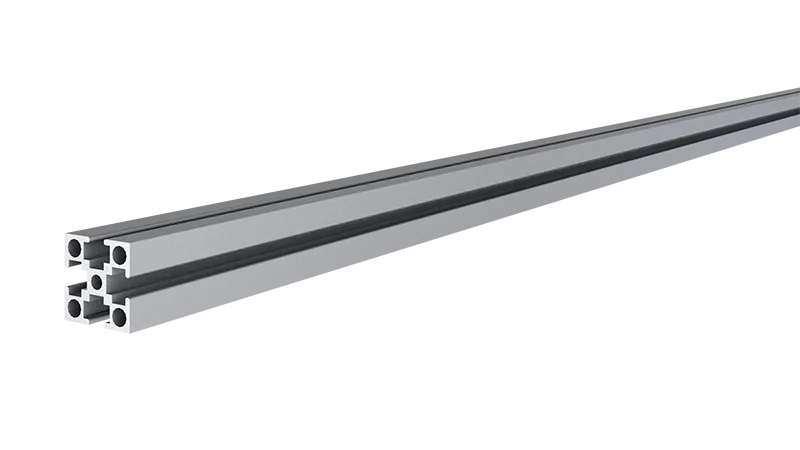
In the fast-paced world of 3C electronics manufacturing—where precision, efficiency, and safety are non-negotiable—the tools and infrastructure you rely on can make or break your production line. At the heart of this infrastructure lies a critical component: aluminum profiles. These unassuming structures form the backbone of workbenches, material racks, conveyor systems, and assembly lines, ensuring everything from circuit boards to smartphones moves seamlessly through production. But not all aluminum profiles are created equal. The 2020 National Standard Profile sets strict guidelines for material quality, dimensional accuracy, and performance—guidelines that directly impact your factory's productivity, product quality, and even regulatory standing. This checklist is your guide to navigating compliance, ensuring your aluminum profiles and (accessories) meet the mark, and your operations run smoother than ever.
1. Material Composition: The Foundation of Compliance
The first step in compliance is verifying that your aluminum extrusion profile meets the material standards outlined in the 2020 National Standard. This isn't just about using "aluminum"—it's about using the right grade, alloy, and purity to ensure strength, durability, and resistance to the wear and tear of a busy factory floor.
Start by checking the alloy composition. The 2020 standard specifies that structural aluminum profiles for 3C manufacturing should primarily use 6061 or 6063 alloys, known for their excellent balance of strength, weldability, and corrosion resistance. These alloys contain precise percentages of magnesium (0.4-0.8%) and silicon (0.2-0.6%), which enhance their mechanical properties. Ask your supplier for a material certificate (such as a mill test report) confirming the alloy grade and chemical composition. Avoid profiles with excessive impurities—even small amounts of iron or copper can weaken the material over time, leading to bent workbenches or unstable racks.
Next, examine the temper designation. Most 3C applications require profiles in the T5 or T6 temper, which undergo heat treatment to increase hardness. A T5 temper (cooled from extrusion and artificially aged) offers sufficient strength for light to medium loads, while T6 (solution heat-treated and artificially aged) is ideal for heavy-duty equipment like load-bearing material racks. Using a softer temper (like O, annealed) could result in profiles deforming under the weight of components, risking production delays and safety hazards.
Start by checking the alloy composition. The 2020 standard specifies that structural aluminum profiles for 3C manufacturing should primarily use 6061 or 6063 alloys, known for their excellent balance of strength, weldability, and corrosion resistance. These alloys contain precise percentages of magnesium (0.4-0.8%) and silicon (0.2-0.6%), which enhance their mechanical properties. Ask your supplier for a material certificate (such as a mill test report) confirming the alloy grade and chemical composition. Avoid profiles with excessive impurities—even small amounts of iron or copper can weaken the material over time, leading to bent workbenches or unstable racks.
Next, examine the temper designation. Most 3C applications require profiles in the T5 or T6 temper, which undergo heat treatment to increase hardness. A T5 temper (cooled from extrusion and artificially aged) offers sufficient strength for light to medium loads, while T6 (solution heat-treated and artificially aged) is ideal for heavy-duty equipment like load-bearing material racks. Using a softer temper (like O, annealed) could result in profiles deforming under the weight of components, risking production delays and safety hazards.
Real-World Impact: A 3C manufacturer in Guangdong once opted for a cheaper, non-compliant aluminum profile with a lower magnesium content. Within six months, their workbenches began warping under the weight of assembly tools, causing components to misalign during soldering. The result? A 15% increase in defective circuit boards and a costly recall. Upgrading to 6063-T6 profiles aligned with the 2020 standard resolved the issue, cutting defects by 90%.
2. Dimensional Accuracy: Precision in Every Millimeter
In 3C manufacturing, where components are measured in micrometers, even the smallest deviation in aluminum profile dimensions can throw off an entire production line. The 2020 National Standard Profile leaves no room for guesswork, specifying strict tolerances for width, height, wall thickness, and straightness.
To assess dimensional compliance, start with cross-sectional measurements. Using a caliper or micrometer, check the profile's width and height against the standard. For example, a common 2020 national standard profile for workbenches is the 3030 national standard profile A, which should measure 30mm x 30mm with a wall thickness of 1.5mm ± 0.1mm. A profile that's 29.8mm wide might seem "close enough," but when paired with aluminum profile accessories like 90° connectors, this 0.2mm gap can lead to loose joints, wobbly structures, and even safety risks.
Straightness is another critical factor. The 2020 standard requires profiles to have a straightness tolerance of ≤ 0.5mm per meter. A bent profile might look minor, but when used in a conveyor system or linear guide rail, it can cause jams, uneven material flow, and premature wear on rollers. Lay the profile on a flat surface and check for gaps—if you can slide a 0.5mm feeler gauge under any part of the profile, it's out of compliance.
The table below summarizes key dimensional requirements for common 2020 national standard profiles:
To assess dimensional compliance, start with cross-sectional measurements. Using a caliper or micrometer, check the profile's width and height against the standard. For example, a common 2020 national standard profile for workbenches is the 3030 national standard profile A, which should measure 30mm x 30mm with a wall thickness of 1.5mm ± 0.1mm. A profile that's 29.8mm wide might seem "close enough," but when paired with aluminum profile accessories like 90° connectors, this 0.2mm gap can lead to loose joints, wobbly structures, and even safety risks.
Straightness is another critical factor. The 2020 standard requires profiles to have a straightness tolerance of ≤ 0.5mm per meter. A bent profile might look minor, but when used in a conveyor system or linear guide rail, it can cause jams, uneven material flow, and premature wear on rollers. Lay the profile on a flat surface and check for gaps—if you can slide a 0.5mm feeler gauge under any part of the profile, it's out of compliance.
The table below summarizes key dimensional requirements for common 2020 national standard profiles:
| Profile Type | Nominal Dimensions (W x H, mm) | Wall Thickness (mm) | Straightness Tolerance (mm/m) | Common Application |
|---|---|---|---|---|
| 2020 national standard profile | 20 x 20 | 1.2 ± 0.1 | ≤ 0.5 | Light-duty workbenches, small material racks |
| 3030 national standard profile A | 30 x 30 | 1.5 ± 0.1 | ≤ 0.5 | Medium-duty workbenches, assembly line frames |
| 3060 national standard profile A | 30 x 60 | 1.8 ± 0.15 | ≤ 0.5 | Heavy-duty material racks, conveyor supports |

2. Surface Treatment: Protecting Against the Factory Environment
3C factories are harsh environments. Dust, humidity, and occasional chemical exposure (from cleaning agents or flux residues) can take a toll on aluminum profiles. The 2020 National Standard mandates specific surface treatments to protect profiles and ensure longevity—treatments that also impact aesthetics and functionality.
Anodization is the most common treatment for aluminum extrusion profiles in 3C manufacturing, and the 2020 standard requires a minimum anodized film thickness of 8-10 microns. This oxide layer acts as a barrier against corrosion and wear, preventing rust spots that could contaminate sensitive electronics. To test thickness, use an eddy current meter—simply place the probe on the profile's surface, and ensure the reading falls within the 8-10 micron range. Avoid profiles with uneven anodization (visible as patchy or discolored areas), as these weak spots will degrade first.
For profiles used in ESD-sensitive areas (like circuit board assembly), the surface treatment must also meet electrostatic discharge requirements. The 2020 standard specifies a surface resistivity of 10⁶-10⁹ ohms/sq for ESD-compliant profiles, which helps dissipate static charges and protect components from damage. Ask your supplier for an ESD test report, and verify with a resistivity meter if needed.
Finally, check for surface defects. The standard prohibits cracks, pits, or scratches deeper than 0.03mm, as these can harbor bacteria or dust, compromising cleanroom standards. Run a gloved hand along the profile—any rough edges or indentations are red flags.
Anodization is the most common treatment for aluminum extrusion profiles in 3C manufacturing, and the 2020 standard requires a minimum anodized film thickness of 8-10 microns. This oxide layer acts as a barrier against corrosion and wear, preventing rust spots that could contaminate sensitive electronics. To test thickness, use an eddy current meter—simply place the probe on the profile's surface, and ensure the reading falls within the 8-10 micron range. Avoid profiles with uneven anodization (visible as patchy or discolored areas), as these weak spots will degrade first.
For profiles used in ESD-sensitive areas (like circuit board assembly), the surface treatment must also meet electrostatic discharge requirements. The 2020 standard specifies a surface resistivity of 10⁶-10⁹ ohms/sq for ESD-compliant profiles, which helps dissipate static charges and protect components from damage. Ask your supplier for an ESD test report, and verify with a resistivity meter if needed.
Finally, check for surface defects. The standard prohibits cracks, pits, or scratches deeper than 0.03mm, as these can harbor bacteria or dust, compromising cleanroom standards. Run a gloved hand along the profile—any rough edges or indentations are red flags.
4. Aluminum Profile Accessories: Ensuring Compatibility and Safety
Aluminum profiles rarely work alone—they rely on aluminum profile accessories like connectors, end caps, and hinges to form functional structures. The 2020 National Standard doesn't just regulate the profiles themselves; it also sets guidelines for these accessories, ensuring they fit securely and perform reliably.
Start with connectors. A common issue in non-compliant setups is using generic connectors that don't match the profile's T-slot dimensions. The 2020 standard specifies that T-slot widths should be consistent with profile size—for example, a 2020 national standard profile has a T-slot width of 6mm, while a 3030 profile uses 8mm. Mismatched connectors (like using a 6mm connector in an 8mm slot) will result in loose joints, leading to wobbly workbenches or racks that shift during use. Check that your connectors are labeled for the specific profile type (e.g., "2020 profile compatible") and test-fit them—they should slide into the T-slot smoothly but require gentle pressure to remove, indicating a snug fit.
End caps are another critical accessory. These plastic or metal caps seal the ends of profiles, preventing dust and debris from accumulating inside and protecting workers from sharp edges. The 2020 standard requires end caps to have a tight, interference fit—they shouldn't fall off when the profile is tilted or shaken. Avoid cheap, flimsy end caps that crack easily; opt for those made from high-density polyethylene (HDPE) or nylon, which offer better durability.
Hinges and brackets, used to create movable structures like fold-down workbench extensions, must also meet strength requirements. The standard specifies that hinges should withstand at least 50,000 cycles of opening and closing without failure. Test this by repeatedly moving the hinge through its range of motion—if it starts to loosen or creak after a few hundred cycles, it's not compliant.
Start with connectors. A common issue in non-compliant setups is using generic connectors that don't match the profile's T-slot dimensions. The 2020 standard specifies that T-slot widths should be consistent with profile size—for example, a 2020 national standard profile has a T-slot width of 6mm, while a 3030 profile uses 8mm. Mismatched connectors (like using a 6mm connector in an 8mm slot) will result in loose joints, leading to wobbly workbenches or racks that shift during use. Check that your connectors are labeled for the specific profile type (e.g., "2020 profile compatible") and test-fit them—they should slide into the T-slot smoothly but require gentle pressure to remove, indicating a snug fit.
End caps are another critical accessory. These plastic or metal caps seal the ends of profiles, preventing dust and debris from accumulating inside and protecting workers from sharp edges. The 2020 standard requires end caps to have a tight, interference fit—they shouldn't fall off when the profile is tilted or shaken. Avoid cheap, flimsy end caps that crack easily; opt for those made from high-density polyethylene (HDPE) or nylon, which offer better durability.
Hinges and brackets, used to create movable structures like fold-down workbench extensions, must also meet strength requirements. The standard specifies that hinges should withstand at least 50,000 cycles of opening and closing without failure. Test this by repeatedly moving the hinge through its range of motion—if it starts to loosen or creak after a few hundred cycles, it's not compliant.
Pro Tip: When sourcing accessories, look for suppliers who specialize in 2020 national standard profile components. Many low-cost suppliers offer "universal" accessories that claim to fit multiple profile sizes, but these often cut corners on material thickness or design, leading to compatibility issues down the line. Stick to brands that explicitly list compliance with the 2020 standard.
5. Load-Bearing Capacity: Testing for Real-World Use
A profile that looks compliant on paper may still fail in the factory if it can't handle the loads it's expected to bear. The 2020 National Standard includes strict load-bearing requirements, ensuring profiles and their assemblies (like workbenches or material racks) can support the weight of components, tools, and equipment without deforming.
For workbenches, the standard specifies a minimum static load capacity of 200kg per square meter for medium-duty use (e.g., assembly stations) and 300kg/m² for heavy-duty use (e.g., stations with machinery). To test this, place weighted objects (like sandbags) evenly across the workbench surface and measure deflection after 24 hours. The deflection should not exceed 1.5mm per meter of length—any more indicates the profile is bending under stress.
Material racks, used to store components like PCBs or batteries, have even higher requirements. A typical 3060 national standard profile A rack with three shelves should support at least 50kg per shelf without sagging. Test each shelf individually, gradually adding weight until you reach the rated capacity, and check for bending or twisting in the vertical supports. Remember, overloading non-compliant racks isn't just a productivity issue—it's a safety risk; a collapsed rack could damage expensive components or injure workers.
Don't forget dynamic loads, either. Profiles used in conveyor systems or roller tracks must withstand repeated impacts from moving parts. The 2020 standard requires these profiles to handle a dynamic load of 50kg with a maximum deflection of 0.5mm under cyclic loading (10,000 cycles). Work with your supplier to conduct fatigue testing, or request third-party certification for dynamic load capacity.
For workbenches, the standard specifies a minimum static load capacity of 200kg per square meter for medium-duty use (e.g., assembly stations) and 300kg/m² for heavy-duty use (e.g., stations with machinery). To test this, place weighted objects (like sandbags) evenly across the workbench surface and measure deflection after 24 hours. The deflection should not exceed 1.5mm per meter of length—any more indicates the profile is bending under stress.
Material racks, used to store components like PCBs or batteries, have even higher requirements. A typical 3060 national standard profile A rack with three shelves should support at least 50kg per shelf without sagging. Test each shelf individually, gradually adding weight until you reach the rated capacity, and check for bending or twisting in the vertical supports. Remember, overloading non-compliant racks isn't just a productivity issue—it's a safety risk; a collapsed rack could damage expensive components or injure workers.
Don't forget dynamic loads, either. Profiles used in conveyor systems or roller tracks must withstand repeated impacts from moving parts. The 2020 standard requires these profiles to handle a dynamic load of 50kg with a maximum deflection of 0.5mm under cyclic loading (10,000 cycles). Work with your supplier to conduct fatigue testing, or request third-party certification for dynamic load capacity.
6. Documentation and Traceability: Proving Compliance When It Matters
Compliance isn't just about having the right profiles—it's about being able to prove it. Regulatory audits, customer inspections, and internal quality control all require documentation that your aluminum extrusion profile and accessories meet the 2020 National Standard. Without proper paperwork, even compliant components could be flagged as non-compliant, leading to delays or fines.
Start with the supplier's quality certificate. Reputable suppliers will provide a certificate of compliance (CoC) stating that the profiles meet the 2020 standard, including details like batch number, alloy grade, temper, and surface treatment. Keep these CoCs on file for at least five years (the typical retention period for manufacturing records).
Traceability is equally important. Each profile should have a batch number or barcode that links back to its production date, raw material source, and testing results. This allows you to track down issues quickly if a batch of profiles fails—for example, if multiple workbenches warp, you can identify if they all came from the same batch and address the problem with your supplier.
Finally, conduct regular internal audits. Set a schedule (quarterly or bi-annually) to review your documentation, spot-check profiles and accessories, and verify that your supplier is still meeting the standard. Compliance is an ongoing process, not a one-time check—suppliers may change their manufacturing processes or source cheaper materials without notice, so staying vigilant is key.
Start with the supplier's quality certificate. Reputable suppliers will provide a certificate of compliance (CoC) stating that the profiles meet the 2020 standard, including details like batch number, alloy grade, temper, and surface treatment. Keep these CoCs on file for at least five years (the typical retention period for manufacturing records).
Traceability is equally important. Each profile should have a batch number or barcode that links back to its production date, raw material source, and testing results. This allows you to track down issues quickly if a batch of profiles fails—for example, if multiple workbenches warp, you can identify if they all came from the same batch and address the problem with your supplier.
Finally, conduct regular internal audits. Set a schedule (quarterly or bi-annually) to review your documentation, spot-check profiles and accessories, and verify that your supplier is still meeting the standard. Compliance is an ongoing process, not a one-time check—suppliers may change their manufacturing processes or source cheaper materials without notice, so staying vigilant is key.
Conclusion: Compliance as a Competitive Advantage
Navigating the 2020 National Standard Profile requirements might seem like a daunting task, but it's an investment that pays dividends. Compliant aluminum profiles and accessories reduce downtime, improve product quality, and ensure your factory meets regulatory standards—all while creating a safer, more efficient workspace for your team.
Remember, compliance isn't just about avoiding penalties; it's about building a production line you can trust. When your workbenches stay level, your material racks hold steady, and your conveyor systems run smoothly, you're not just meeting standards—you're setting your factory up for success in a competitive 3C market. So take the time to verify material composition, check dimensions, test accessories, and document everything. Your bottom line (and your peace of mind) will thank you.
Remember, compliance isn't just about avoiding penalties; it's about building a production line you can trust. When your workbenches stay level, your material racks hold steady, and your conveyor systems run smoothly, you're not just meeting standards—you're setting your factory up for success in a competitive 3C market. So take the time to verify material composition, check dimensions, test accessories, and document everything. Your bottom line (and your peace of mind) will thank you.