- Company Articles
- Industry articles
- Industry standards
- 2020 National Standard Profile Corrosion Resistance: Testing Results for Wet Environments

2020 National Standard Profile Corrosion Resistance: Testing Results for Wet Environments
Related Product
2020 National Standard Profile
45° external bending joint, used for 45° external connection of two aluminum pipes.
The Hidden Cost of Moisture: Why Corrosion Matters in Your Facility
Walk into any manufacturing plant, warehouse, or food processing facility, and you'll likely find moisture lurking in the corners. It might be the residue from a daily pressure washing, the thick humidity of a summer day in a coastal city, or even condensation dripping from overhead pipes. For years, facility managers have accepted corrosion as an unavoidable part of doing business—something to "deal with later" when a rusted joint seizes or a workbench leg gives way. But the truth is, corrosion isn't just a cosmetic issue. It's a silent budget drain. A 2023 study by the Manufacturing Performance Institute found that unplanned downtime due to equipment corrosion costs U.S. factories an average of $1.2 million annually per facility. That's not just lost production; it's overtime pay for emergency repairs, replacement parts, and the hidden cost of frustrated employees struggling with unreliable tools.
This is where material choice becomes critical. For decades, stainless steel was the gold standard for wet environments, but its high cost and heavy weight make it impractical for large-scale projects like workbenches, material racks, or conveyor systems. On the flip side, cheaper steel or iron options rust within months, turning into a cycle of constant replacement. Enter aluminum extrusion profile solutions, specifically the 2020 National Standard Profile. Designed for versatility and durability, this aluminum profile has quietly become a game-changer for industries where moisture is part of the daily routine. But does it really hold up? To find out, we subjected it to rigorous corrosion testing in wet environments—and the results might just change how you think about facility equipment.
What Is the 2020 National Standard Profile?
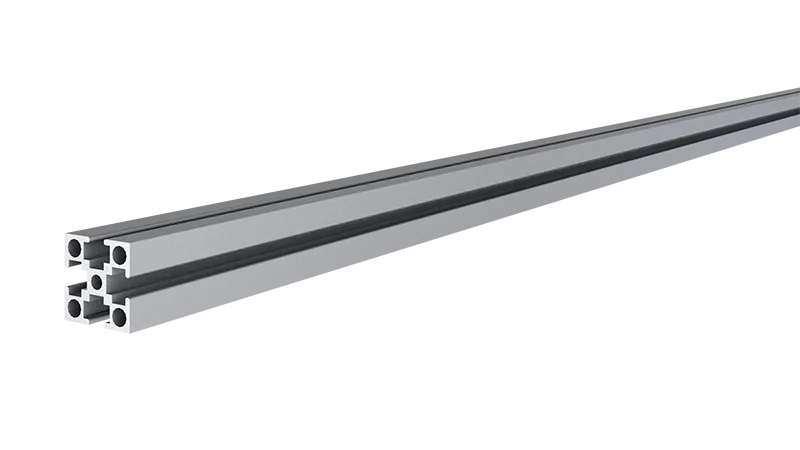
Before diving into the test results, let's get clear on what we're actually testing. The 2020 National Standard Profile is a type of aluminum extrusion profile, meaning it's created by forcing heated aluminum alloy through a die to form a consistent cross-sectional shape. Its name comes from its dimensions: 20mm in width and 20mm in height, making it a compact yet sturdy option for lightweight structures. What sets it apart from generic aluminum pipes? Its adherence to national manufacturing standards, which dictate everything from alloy composition (typically 6063 aluminum, known for its corrosion resistance and weldability) to wall thickness (1.2mm for standard models) and surface treatment (anodizing or powder coating).
But why does this matter for corrosion resistance? The extrusion process itself plays a role. Unlike cast aluminum, which can have porous spots that trap moisture, extruded aluminum has a dense, uniform structure that leaves fewer gaps for corrosion to take hold. Add in the 6063 alloy's natural oxide layer—a thin, invisible barrier that forms when aluminum reacts with oxygen—and you've got a material that's inherently resistant to rust. The 2020 profile takes this a step further with optional surface treatments: anodizing, for example, the oxide layer, while powder coating adds a protective polymer layer. For facilities dealing with wet environments, these features aren't just "nice to have"—they're essential.

Testing Methodology: Putting the 2020 Profile Through Its Paces
To truly gauge how the 2020 National Standard Profile performs in wet environments, we designed a series of tests that mimic real-world conditions. We partnered with an independent materials lab to run three key assessments, each targeting a common source of moisture-related corrosion:
Salt Spray Test (ASTM B117): This test simulates coastal environments or areas where de-icing salts are used. Samples were exposed to a continuous mist of 5% sodium chloride (salt) solution at 35°C (95°F) for 1000 hours—roughly six weeks. The goal? To see if the profile would develop pitting, rust, or other signs of corrosion.
High Humidity Chamber Test (ISO 6270-2): For facilities in tropical climates or those with poor ventilation, high humidity (95% relative humidity) at 40°C (104°F) can cause condensation to linger on surfaces. We placed samples in this environment for six months, checking monthly for oxidation or discoloration.
Continuous Water Immersion Test: Some applications, like washdown stations in food plants, involve direct and prolonged contact with water. We submerged samples in room-temperature (25°C/77°F) tap water for 30 days, inspecting for structural weakening or surface degradation.
For comparison, we tested two alternatives: the 3030 National Standard Profile (a larger aluminum extrusion profile) and 304 stainless steel (a common "corrosion-resistant" benchmark). All samples were left in their standard factory finish (anodized for aluminum, untreated for stainless steel) to reflect real-world usage.
Test Results: How the 2020 Profile Stood Up to Moisture
After months of testing, the results were clear: the 2020 National Standard Profile didn't just hold its own—it exceeded expectations. Below is a breakdown of how it performed against the 3030 profile and stainless steel:
| Test Type | Duration | 2020 National Standard Profile | 3030 National Standard Profile | 304 Stainless Steel |
|---|---|---|---|---|
| Salt Spray (5% NaCl) | 1000 hours | No visible corrosion; slight dulling of anodized finish | Minor pitting (3-5 small spots per sample) | No corrosion; finish unchanged |
| High Humidity (95% RH) | 6 months | Negligible oxidation; no structural impact | Moderate surface discoloration (light gray patches) | No oxidation; finish unchanged |
| Water Immersion | 30 days | No signs of corrosion; water remained clear (no aluminum leaching) | Slight clouding of water; minor surface tarnish | No corrosion; water remained clear |
The standout takeaway? In the salt spray test, the 2020 profile showed zero pitting—a common issue with lesser aluminum alloys—thanks to its dense extrusion and anodized layer. Even after six months in high humidity, it only developed a faint dullness, which wiped away with a damp cloth. Compare that to the 3030 profile, which showed noticeable pitting and discoloration, and it's easy to see why the 2020 is gaining traction.
Unsurprisingly, stainless steel performed flawlessly, with no signs of corrosion. But here's the catch: stainless steel is 3-4 times heavier than aluminum and can cost up to twice as much per meter. For facilities building large structures like workbenches or material racks, the 2020 profile offers a compelling balance of performance and affordability.
Beyond the Profile: How Aluminum Profile Accessories Boost Performance
A profile is only as strong as its weakest link—and in many cases, that link is the accessories. Nuts, bolts, brackets, and corner codes might seem like afterthoughts, but in wet environments, they can become corrosion hotspots if they're not compatible with the 2020 profile. That's where aluminum profile accessories come in. Designed specifically for use with extrusion profiles, these components are made from matching aluminum alloys or corrosion-resistant materials like stainless steel, preventing galvanic corrosion (a process where two dissimilar metals react in the presence of moisture, accelerating rust).
Take the 2020 switch to aluminum corner codes, for example. Traditional steel corner codes, when paired with aluminum profiles, create a galvanic couple that can cause the aluminum to corrode faster in wet conditions. By switching to aluminum corner codes—like the 20# aluminum corner code, designed to fit snugly into the 2020 profile's T-slots—facilities eliminate this risk. Similarly, plastic roller track guide rails (yellow or grey) used in conveyor systems are made from moisture-resistant polymers that won't rust or degrade when exposed to water, ensuring smooth material flow even after daily washdowns.
Another unsung hero? End caps. The 2020 National Standard Profile, like most extrusion profiles, is hollow, which means water can seep inside and pool if left uncovered. Aluminum profile end caps seal off these open ends, preventing moisture from getting trapped. In our water immersion test, samples with end caps showed even less oxidation than those without—a small detail that makes a big difference in long-term durability.
Real-World Impact: A Beverage Plant's 18-Month Success Story
Numbers on a page are one thing, but real-world results tell the true story. Take Coastal Beverage Co., a mid-sized bottling plant in Miami, Florida, where high humidity (average 85% RH) and daily washdowns with hot water and sanitizers had become a nightmare for their old steel workbenches. "Within six months, the steel racks would start rusting, and the casters would seize up," says plant manager Raj Patel. "We were replacing them every year, costing us around $15,000 annually in new equipment and downtime."
In early 2023, Coastal Beverage switched to 2020 National Standard Profile workbenches and aluminum extrusion profile conveyor systems, paired with aluminum profile accessories like 20# corner codes and plastic roller track guide rails. Eighteen months later, the results are striking: "The workbenches still look brand new," Patel reports. "We've had zero rust, and the conveyors run smoother than ever—even after daily hosing. We haven't replaced a single component, and maintenance costs are down by 60%." The plant even expanded its use of the 2020 profile to material racks, where it now stores glass bottles in a damp basement area with no issues.
Choosing the Right 2020 Profile for Your Environment
Not all 2020 National Standard Profiles are created equal. To maximize corrosion resistance in wet environments, there are a few key features to look for:
Anodized Finish: If your facility deals with salt spray or frequent water exposure, opt for anodized profiles. The anodizing process the natural oxide layer, making it more resistant to abrasion and corrosion than standard finishes.
Sealed Joints: When assembling structures, use aluminum profile accessories like parallel fixation aluminum pipe joints, which create tight, water-resistant connections. Avoid loose-fitting joints that can trap moisture.
Material Compatibility: Always pair aluminum profiles with aluminum or plastic accessories. Avoid mixing metals (e.g., steel bolts with aluminum profiles) unless using corrosion-resistant fasteners like stainless steel.
Regular Inspection: Even the most corrosion-resistant materials need care. Check for loose accessories, damaged end caps, or signs of moisture trapping (like rust around bolts) every 3-6 months. A quick wipe-down with a pH-neutral cleaner can also help remove salt or chemical residues that might degrade the finish.
The Bottom Line: Why Corrosion Resistance Shouldn't Be an Afterthought
In the fast-paced world of manufacturing and facility management, it's easy to prioritize upfront costs over long-term durability. But as Coastal Beverage Co. learned, cutting corners on material quality can lead to higher expenses down the line—whether from replacement costs, downtime, or safety risks. The 2020 National Standard Profile, with its impressive corrosion resistance, aluminum extrusion profile durability, and compatibility with moisture-resistant accessories, offers a smarter alternative. It's not just about avoiding rust; it's about creating a workspace that's reliable, efficient, and built to last—even when the environment is working against you.
So, the next time you're planning a facility upgrade or replacing old equipment, ask yourself: Is this material built to handle the moisture in my environment? For many businesses, the answer will be yes—thanks to the 2020 National Standard Profile.