- Company Articles
- Industry articles
- Industry standards
- 2020 National Standard Profile Cost Analysis: Long-Term Savings for Warehouses

2020 National Standard Profile Cost Analysis: Long-Term Savings for Warehouses
Related Product
2020 National Standard Profile
45° external bending joint, used for 45° external connection of two aluminum pipes.
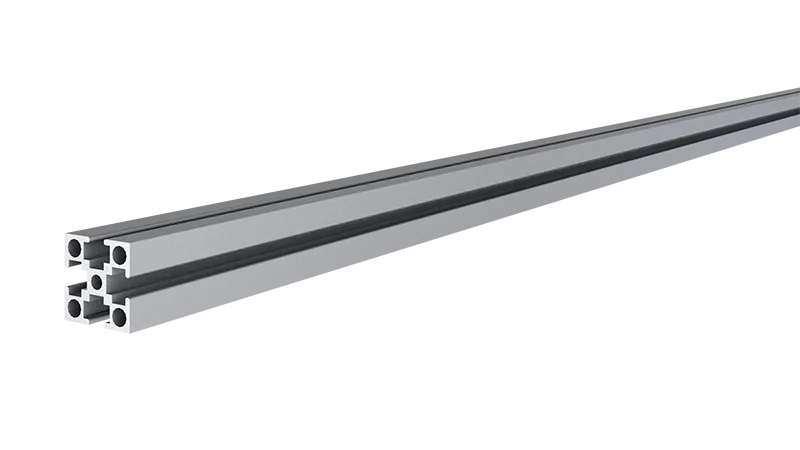
In the fast-paced world of warehousing, where every square foot and every minute counts, the choice of infrastructure materials can make or break operational efficiency. For years, warehouse managers have grappled with a common dilemma: how to balance upfront costs with long-term durability and flexibility. Wooden racks warp, steel structures rust, and makeshift setups collapse under the weight of daily use—all while eating into budgets through constant repairs and replacements. But what if there was a solution that didn't just patch the problem, but transformed how warehouses operate, saving money not just today, but for years to come? Enter the 2020 national standard profile —a game-changer in warehouse design that's quietly revolutionizing the industry, one modular component at a time.
This article isn't just about another industrial material. It's about investing in a system that grows with your business, reduces hidden costs, and turns your warehouse from a static storage space into a dynamic, cost-efficient hub. We'll dive into the nitty-gritty of why the 2020 national standard profile stands out, break down the numbers behind its long-term savings, and explore real-world applications that prove its value—from workbenches that adapt to your team's needs to material racks that maximize every inch of space. Let's start by understanding what makes this profile more than just a "profile" and why it's becoming the backbone of modern warehouse management.
What Is the 2020 National Standard Profile, Anyway?
If you're new to the term, "2020 national standard profile" might sound like just another industry buzzword. But in reality, it's a meticulously engineered aluminum extrusion designed to solve one of warehousing's biggest headaches: inconsistency. Unlike generic aluminum pipes or off-the-shelf steel rails, this profile adheres to strict national standards, ensuring uniformity in size, strength, and compatibility across all components. Think of it as the LEGO of industrial infrastructure—every piece, from the smallest bracket to the longest rail, is designed to fit together seamlessly, no guesswork required.
At its core, the 2020 profile is defined by its dimensions: 20mm x 20mm, with precision-engineered T-slots running along its length. These slots aren't just for show—they're the secret to its flexibility. Whether you need to attach a shelf, mount a tool holder, or secure a conveyor belt, the T-slots allow for quick, tool-free adjustments using standardized aluminum profile accessories like bolts, nuts, and brackets. No more drilling custom holes or welding pieces together; if your workflow changes next month, you can reconfigure your setup in hours, not days.
But what really sets it apart is the material itself: high-grade aluminum. Unlike steel, aluminum resists corrosion, so you won't find rust eating away at your racks after a few years of humid warehouse conditions. It's also lightweight—about a third the weight of steel—making installation and reconfiguration a one-person job, not a two-man lift. And despite its lightness, it's surprisingly strong: a single 2020 profile rail can support up to 50kg of evenly distributed weight, making it ideal for everything from small parts storage to heavy equipment mounting.
The Upfront Cost Myth: Why "Cheap" Often Ends Up Expensive
Let's get real: when you're comparing warehouse materials, the first number that jumps out is the upfront cost. Wooden racks might cost half as much as aluminum ones, and generic steel pipes might seem like a budget-friendly alternative. But here's the problem with focusing only on the initial price tag: it ignores the hidden costs that creep in over time. Repairs, replacements, downtime, and inefficiency—these are the silent budget killers that turn "cheap" into "costly" faster than you might think.
| Material | Initial Cost (per linear meter) | Average Lifespan | Annual Maintenance Cost | Total Cost Over 10 Years |
|---|---|---|---|---|
| Wooden Racks | $15 | 2-3 years | $10 (repairs, painting) | $150 (3 replacements + maintenance) |
| Generic Steel Pipes | $30 | 5-6 years | $15 (rust treatment, welding) | $135 (2 replacements + maintenance) |
| 2020 National Standard Profile | $45 | 10+ years | $2 (cleaning, minor part replacement) | $65 (1 initial + maintenance) |
The table above tells a clear story: while the 2020 profile has a higher upfront cost, its longevity and minimal maintenance needs make it the cheapest option over a 10-year period. Let's break that down. A wooden rack might cost $15 per meter today, but you'll replace it 3 times in a decade, plus spend $10 annually on repairs—adding up to $150. Steel lasts longer, but rust and welding repairs still push the total to $135. The 2020 profile? Just $45 upfront, plus $20 in maintenance over 10 years, totaling $65. That's a 57% savings compared to steel and 56% compared to wood.
But numbers alone don't tell the whole story. Think about downtime: when a wooden shelf collapses or a steel bracket rusts through, you're not just paying for replacement parts—you're losing hours of productivity while your team cleans up the mess and rebuilds the structure. With aluminum, those scenarios are rare. And because aluminum profile accessories are standardized, you can keep a small inventory of spare brackets or bolts on hand, so repairs take 15 minutes, not half a day.

From Workbenches to Material Racks: Real-World Savings in Action
Let's move beyond spreadsheets and talk about how the 2020 national standard profile transforms day-to-day warehouse operations. Two of the most common applications are workbench setups and storage racks, both of which offer tangible savings when built with aluminum profiles.
The Adaptive Workbench: No More One-Size-Fits-All
A typical warehouse workbench is a static piece of furniture: built to a fixed height, with a single surface, and maybe a few shelves bolted on. If your team's needs change—say, you start assembling taller products or need more tool storage—you either live with the inefficiency or buy a whole new bench. Not with a 2020 profile workbench.
Imagine a workbench where the height can be adjusted by simply loosening a few T-slot bolts and sliding the legs up or down. Need a second tier for tools? Snap on a shelf using angle brackets. Want to add a light bar or a power strip? Run them through the T-slots to keep cords organized. Because the frame is modular, you can even extend the length by adding more profile sections if your team grows. Over time, this adaptability means you never have to replace a workbench again—you just upgrade it. A traditional wooden or steel workbench might cost $200 and last 5 years; a 2020 profile bench costs $300 upfront but can be reconfigured indefinitely, saving you $400 over 10 years (two replacements) plus the cost of lost productivity during transitions.
Material Rack B (3 Row and 3 Floor): Maximizing Space, Minimizing Waste
Storage racks are the backbone of any warehouse, and Material Rack B (3 row and 3 floor) is a perfect example of how 2020 profiles optimize space. Traditional racks are often built to generic dimensions, leaving gaps between shelves that waste vertical space. Material Rack B, however, uses 2020 profiles to create custom shelf heights and widths, ensuring every inch is used.
Let's say you store boxes of varying sizes: some 12 inches tall, others 18 inches. A standard rack might have fixed 16-inch gaps, forcing you to either cram the taller boxes (risking damage) or leave empty space above the shorter ones. With Material Rack B, you adjust each shelf's height in 20mm increments using T-slot brackets, so every box fits perfectly. Over time, this adds up: a 10-meter section of traditional racking might hold 50 boxes, while the same space with a custom 2020 profile rack holds 65—an increase of 30% storage capacity without expanding your warehouse footprint. For a warehouse paying $10 per square foot in rent, that's a savings of $150 per month for every 10 meters of racking.
And when your product line changes? No problem. If you start stocking bulkier items next year, you can remove a shelf or two, or even reconfigure the entire rack into a different layout using the same profile sections and aluminum profile accessories . No need to buy new racks—just repurpose what you already have.
Lean System Integration: Aligning with Modern Warehouse Efficiency
In today's competitive landscape, warehouses are adopting lean system principles to eliminate waste and streamline workflows. The 2020 national standard profile isn't just a building material—it's a lean tool. Its modularity, adaptability, and precision align perfectly with core lean concepts like 5S (Sort, Set in Order, Shine, Standardize, Sustain) and continuous improvement.
Take "Set in Order," for example. A lean warehouse needs every tool, part, and product to have a designated place. With 2020 profiles, you can build custom shadow boards, tool holders, and part bins that fit your exact inventory, ensuring nothing is misplaced. When a new part is added, you simply attach a new bin using T-slot accessories—no drilling or cutting required. This reduces time spent searching for items by up to 25%, according to lean manufacturing studies, translating to hours of saved labor each week.
Continuous improvement is another area where aluminum profiles shine. In a traditional setup, changing a workflow—like rearranging a production line or reconfiguring a packing station—requires significant downtime and labor. With 2020 profiles, your team can experiment with new layouts in a fraction of the time. Want to test a U-shaped production line instead of a straight one? Disassemble the old setup and rebuild it in a day using the same components. If it doesn't work, switch back just as quickly. This agility allows warehouses to implement small, iterative improvements that add up to big efficiency gains over time—without the cost of new equipment.
Even the T-slots themselves support lean practices. By routing cables, hoses, and tools through the slots, you eliminate clutter on the floor and work surfaces, reducing trip hazards and making cleaning (the "Shine" step of 5S) faster and easier. A cleaner, more organized workspace isn't just safer—it also boosts employee morale and productivity, which studies show can increase output by up to 10%.
The Verdict: Long-Term Savings That Go Beyond Dollars
When you invest in 2020 national standard profile infrastructure, you're not just buying aluminum rails and brackets—you're investing in a warehouse that grows with your business, adapts to change, and minimizes waste in every form. The upfront cost might make you pause, but the numbers don't lie: over 10 years, you'll save thousands on replacements, maintenance, and downtime. And the intangible benefits—like a more efficient team, a safer workspace, and the flexibility to take on new opportunities—are priceless.
Whether you're building a new warehouse from scratch or upgrading an existing one, consider this: the materials you choose today will shape your operational costs for years to come. Wooden racks and generic steel might feel like a bargain now, but they'll cost you in the long run. The 2020 national standard profile, with its durable aluminum construction, modular design, and endless adaptability, is an investment that pays dividends every day—one T-slot bolt at a time.
So, what's stopping you? Take a walk through your warehouse today. Look at the racks that are starting to rust, the workbenches that don't quite fit your needs, and the space that's going unused. Then imagine replacing all of it with a system that works as hard as your team does. That's the power of the 2020 national standard profile—and it's time to start saving.