- Company Articles
- Industry articles
- Industry standards
- 2020 National Standard Profile Cost-Benefit Analysis: Initial Investment vs Lifespan

2020 National Standard Profile Cost-Benefit Analysis: Initial Investment vs Lifespan
Related Product
2020 National Standard Profile
45° external bending joint, used for 45° external connection of two aluminum pipes.
The Industrial Dilemma: Cheap Now or Smart Later?
If you've ever run a workshop, managed a factory floor, or even just set up a small production space, you know the pressure: budgets are tight, and every dollar spent feels like a trade-off. Do you splurge on something durable that might save money later, or cut corners now to keep costs low? It's a question that haunts many operations managers, especially when it comes to foundational equipment—like the structures that hold your tools, materials, and workbenches. Today, we're zeroing in on one solution that's quietly changing this calculus: the 2020 national standard profile . Let's unpack why its initial price tag might make you pause, but its lifespan could make it one of the smartest investments you'll ever make.
First Things First: What Even Is a 2020 National Standard Profile?
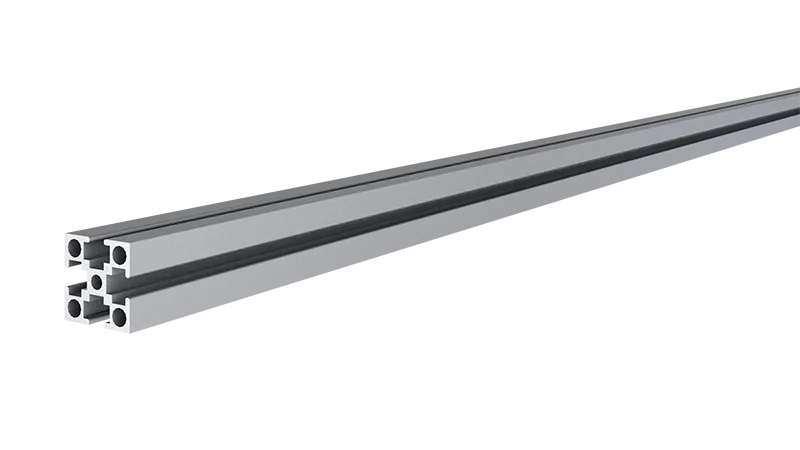
Before we dive into costs and lifespans, let's make sure we're all on the same page. The 2020 national standard profile is a type of aluminum extrusion profile—a lightweight, rigid structural component designed to be strong, versatile, and consistent. Think of it as the building block for everything from workbenches to material racks, assembly lines to storage systems. The "2020" refers to its cross-sectional dimensions (typically 20mm x 20mm), and "national standard" means it meets strict quality and size guidelines, so you know exactly what you're getting, no surprises.
But here's the kicker: it's not just the profile itself that matters. What makes this system so powerful is the ecosystem around it— aluminum profile accessories like connectors, end caps, brackets, and hinges. These little pieces turn a simple aluminum tube into a modular, adaptable structure. Need a workbench that can be adjusted in height? Add a few brackets. Want to turn a static rack into a mobile trolley? Swap out feet for casters. It's like industrial Lego, but built to last.

The Initial Investment: What You'll Pay Upfront
Let's talk numbers—because that's where most people get stuck. There's no sugarcoating it: 2020 national standard profile and its accessories cost more upfront than, say, flimsy plastic shelving or basic steel pipes. But "more" doesn't always mean "too much." Let's break down the costs step by step.
1. The Profile Itself
Aluminum, by nature, is pricier than plastic or low-grade steel. You might pay $8–$12 per meter for a quality 2020 profile, compared to $3–$5 for plastic tubing or $5–$8 for mild steel. But here's why that matters: aluminum is lighter than steel (easier to handle and install), resistant to rust (no need for painting or coatings), and rigid enough to support heavy loads without bending. A 2020 profile can easily hold 50–80kg per linear meter, which means you won't have to overbuild just to be safe.
2. Accessories Add Up (But They're Worth It)
You can't build much with just the profile—you need aluminum profile accessories to connect, support, and finish the structure. A basic connector might cost $1–$3, end caps $0.50–$1, and brackets $2–$5. For a simple workbench (we'll get to that later), you might need 10–15 accessories, adding $20–$50 to the total cost. It sounds like a lot, but these accessories are what make the system modular. If you need to reconfigure your workbench next year, you can just unscrew the connectors and rearrange—no need to buy a whole new bench.
3. Installation: Time = Money
Here's where the 2020 system starts to claw back some of that upfront cost: it's incredibly easy to install . Unlike steel, which often requires welding or drilling, aluminum profiles use friction-fit or bolt-on accessories. A basic workbench can be assembled by two people in under an hour, no special tools needed. Compare that to steel, which might require a welder (costing $50–$100/hour) or plastic, which often needs glue or flimsy screws that strip easily. Labor savings alone can cut 10–20% off the total initial cost.
Example: Building a Basic Workbench
Let's put this into context with a real-world example: a simple workbench, 1.2 meters long and 0.6 meters deep. To build it with 2020 profile, you'd need:
- 4 meters of 2020 profile ($8/meter = $32)
- 8 corner connectors ($2 each = $16)
- 4 end caps ($0.50 each = $2)
- 1 plywood or aluminum top ($40–$60)
- 4 adjustable feet ($5 each = $20)
Total: ~$110–$130. Compare that to a prefab plastic workbench ($80–$100) or a steel workbench ($150–$200). Suddenly, the 2020 option is right in the middle—more than plastic, but less than steel, and way more adaptable.
The Lifespan: How Long Will It Actually Last?
Now, let's fast-forward. You've paid $130 for your 2020-based workbench. How long until you need to replace it? Spoiler: longer than you might think.
1. Aluminum's Secret Weapon: Corrosion Resistance
Steel rusts. Plastic cracks. Aluminum? It forms a thin layer of oxide when exposed to air, which actually protects it from further corrosion. Even in humid workshops or warehouses near the coast (where salt air eats through steel), a 2020 profile will stay shiny and strong for years. I've seen systems in food processing plants—where water and cleaning chemicals are everywhere—still going strong after 12 years. Try that with mild steel, and you'd be replacing rusted parts every 2–3 years.
2. No Fatigue, No Fuss
Plastic degrades over time, especially under UV light or heat. Leave a plastic workbench in a sunny loading dock, and it'll become brittle and crack within 3–5 years. Steel, if not maintained, will bend or warp under constant use. Aluminum? It's fatigue-resistant. That means even if you're loading and unloading tools, materials, or products every day, the profile won't weaken or deform. I visited a electronics factory last year that was still using 2020-based assembly stations installed in 2010—13 years of daily use, and they looked almost new.
3. Maintenance: Set It and Forget It
The best part? You barely have to maintain it. Wipe down the profiles with a damp cloth every few months to remove dust. Tighten a loose connector if it gets wobbly (which happens maybe once a year). That's it. No painting, no rust treatment, no replacing cracked parts. Compare that to steel, which needs annual painting ($50–$100 per workbench) or plastic, which often can't be repaired—you just have to replace the whole thing when it breaks.
So, how long can you expect it to last? With basic care, 10–15 years is realistic. Some heavy-duty setups in low-stress environments (like storage racks) have lasted 20+ years. That's 3–5 times longer than plastic and 1.5–2 times longer than unmaintained steel.
Cost-Benefit Analysis: The Numbers That Matter
Enough theory—let's put this into a side-by-side comparison. Let's say you need 10 workbenches for your factory. We'll compare 2020 national standard profile with two common alternatives: plastic and mild steel. We'll look at initial cost, lifespan, annual maintenance, and total cost over 10 years (a typical equipment lifecycle).
| Material | Initial Cost per Workbench | Estimated Lifespan (Years) | Annual Maintenance Cost | Total Cost for 10 Workbenches Over 10 Years |
|---|---|---|---|---|
| 2020 National Standard Profile | $120 | 12 | $5 (occasional accessory replacement) | $1,200 (initial) + $500 (maintenance over 10 years) = $1,700 |
| Plastic | $90 | 4 | $0 (no maintenance, but no repairs possible) | replace every 4 years: 3 sets x $900 = $2,700 |
| Mild Steel | $180 | 8 | $20 (painting, rust treatment) | $1,800 (initial) + $2,000 (maintenance) + $900 (replace 5 workbenches after 8 years) = $4,700 |
The results are clear: over 10 years, plastic costs 59% more than 2020 profile, and steel costs a whopping 176% more. Even if you only keep the workbenches for 8 years, the 2020 system still comes out ahead. And remember, this doesn't include intangibles like downtime (no waiting for replacement plastic workbenches) or adaptability (reconfiguring the 2020 system instead of buying new when your needs change).
Real-World Story: A Small Manufacturer's Experience
Let's hear from someone who's been there. Mike runs a small electronics assembly shop in Ohio with 15 employees. Five years ago, he was faced with the same dilemma: plastic workbenches for $80 each or 2020 aluminum for $120. He went with plastic to save money upfront.
"By year 3, half the plastic benches were cracked or wobbly," he told me. "The legs would snap if someone leaned on them too hard, and the shelves sagged under the weight of our tools. We had to replace 7 benches that year, costing $560. Then, last year, we needed to rearrange our floor plan to add a new assembly line. The plastic benches were too flimsy to move—we had to build new ones from scratch."
Fed up, Mike switched to 2020 national standard profile workbenches last year. "Yes, we paid $120 each, but we built them ourselves in a day. Now, if we need to move a bench, two people can lift it. If we need to add a shelf, we just bolt on a bracket. And they look professional—our clients comment on how organized the shop is now. I wish I'd done it sooner."
Final Verdict: Invest Now, Save Later
At the end of the day, the 2020 national standard profile isn't just a purchase—it's an investment. It costs more upfront, but its lifespan, low maintenance, and adaptability mean it pays for itself in 3–4 years, and keeps saving you money long after that. Whether you're building workbenches, material racks, or assembly lines, this system is built to grow with your business, not hold it back.
So, the next time you're staring at a budget spreadsheet, remember: cheap now can cost you more later. Smart now? That's how you build a business that lasts.