- Company Articles
- Industry articles
- Industry standards
- 2020 National Standard Profile Dimensional Accuracy: Ensuring Interchangeability in Parts

2020 National Standard Profile Dimensional Accuracy: Ensuring Interchangeability in Parts
Related Product
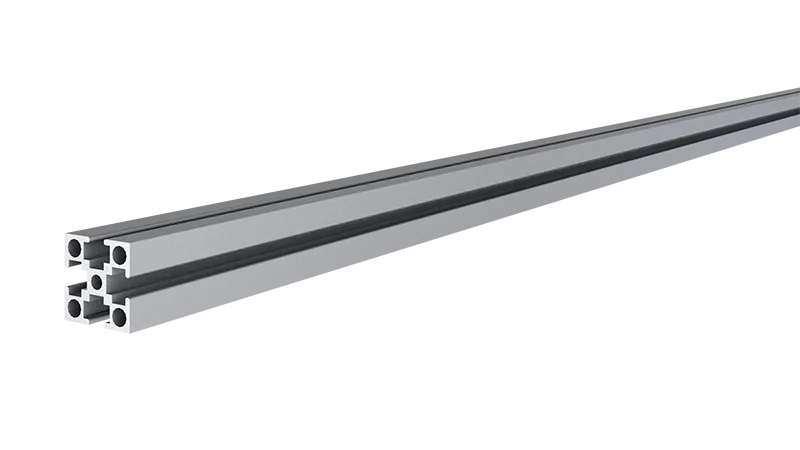
2020 National Standard Profile
45° external bending joint, used for 45° external connection of two aluminum pipes.
Walk into any modern manufacturing facility, and you'll likely see a symphony of moving parts—conveyors hum, assembly lines flow, and workbenches stand sturdy, each component working in harmony. But behind this seamless operation lies a quiet hero: standardization. Specifically, the precision of profiles like the 2020 National Standard Profile, whose dimensional accuracy isn't just a technical specification—it's the glue that holds modular systems together. In this article, we'll dive into why getting those measurements right matters, how it ensures parts from different suppliers fit like puzzle pieces, and why accessories like 90° aluminum profile connectors and aluminum profile rubber strips depend on this precision to perform.
What Even Is a 2020 National Standard Profile?
First things first: let's demystify the term. A "2020 National Standard Profile" refers to an aluminum extrusion with a specific cross-sectional size—typically 20mm by 20mm—manufactured to strict national standards. These profiles are the backbone of modular systems, used to build everything from workbenches and material racks to machine guards and production line fixtures. What sets them apart from generic aluminum extrusions? Consistency. National standards dictate not just the outer dimensions but also details like wall thickness, slot size, and surface finish, ensuring that any 2020 profile from any certified supplier will behave the same way.
Think of it like LEGOs for adults. When you buy a LEGO brick, you don't worry if it will connect to another brick from a different set—they just work. That's the promise of the 2020 National Standard Profile. But unlike LEGOs, which are toys, these profiles support industrial operations, where a misfit part could halt production, compromise safety, or even damage expensive equipment. That's why dimensional accuracy isn't just a nice-to-have; it's make-or-break.
Why Dimensional Accuracy Isn't Just About "Being Precise"
Let's talk numbers. The national standard for 2020 profiles typically specifies tolerances as tight as ±0.1mm for key dimensions. That's about the thickness of a human hair. Why so strict? Because when you're building a structure—say, a workbench with shelves and tool holders—every component relies on the profile's dimensions to align correctly. A slot that's 0.2mm too narrow might prevent a bracket from sliding in; a profile that's 0.3mm too wide could throw off the entire frame's squareness.
Consider a simple example: attaching a 90° aluminum profile connector to two 2020 profiles to form a right angle. The connector has two sleeves that fit over the ends of the profiles. If the profiles are even slightly oversized, the sleeves won't slide on; if they're undersized, the connection will be loose, wobbling under load. Either way, the structure loses stability. And this is just one connector—multiply that by dozens of connections in a typical assembly, and small inaccuracies add up fast.
But it's not just about fit. Dimensional accuracy also impacts functionality. Take aluminum profile rubber strips, those small, flexible strips that line the slots of the profile. They're designed to seal gaps, reduce vibration, or protect wires and hoses routed through the slots. If the slot width is off by even 0.1mm, the rubber strip might not seat properly—either it's too loose and falls out, or too tight and tears when installed. Suddenly, a tiny measurement error becomes a real-world problem: a workbench that vibrates excessively, or exposed wires that get damaged.

Interchangeability: The Hidden Benefit of Tight Tolerances
Here's the big payoff: dimensional accuracy enables interchangeability. In manufacturing, "interchangeability" means that parts from different suppliers can be swapped without modification. If your factory uses 2020 profiles from Supplier A and needs a replacement, you can order the same profile from Supplier B, and it will fit perfectly with your existing connectors, brackets, and accessories. This isn't just convenient—it's a game-changer for efficiency and cost savings.
Imagine a scenario where interchangeability doesn't exist. Suppose you build a production line using non-standard profiles from a single supplier. If that supplier goes out of business, raises prices, or faces delays, you're stuck. You'd have to redesign the entire line with new profiles, replacing every connector and accessory in the process. That's downtime, lost revenue, and a massive headache. With standardized 2020 profiles, you're not locked into one supplier. Competition keeps prices in check, and you have backup options if supply chains get disrupted.
Interchangeability also fuels innovation. Engineers can experiment with new designs knowing that the basic building blocks (the profiles) are reliable. They can mix and match accessories from different manufacturers—maybe a heavy-duty caster from one, a specialized workbench top from another—without worrying about compatibility. This flexibility lets factories adapt quickly to changing needs, whether that's reconfiguring a line for a new product or scaling up production.
How Do Manufacturers Ensure This Accuracy?
Achieving ±0.1mm tolerances isn't easy. It starts with the extrusion process. Aluminum billets are heated to precise temperatures (around 500°C) and forced through a steel die under high pressure. The die itself is machined to microscopic precision, and even slight wear can throw off dimensions, so dies are regularly inspected and replaced. After extrusion, profiles are cooled rapidly to lock in shape, then cut to length with saws that use laser guides for accuracy.
But the process doesn't end there. Every batch of profiles undergoes rigorous testing. Coordinate measuring machines (CMMs) scan the cross-section, checking dimensions like width, height, and slot depth. Surface finish is inspected for scratches or irregularities that might affect how accessories adhere. Even the straightness of the profile is measured—no one wants a warped beam when building a level workbench.
Suppliers also invest in quality control systems to catch errors early. Statistical process control (SPC) tracks key metrics over time, flagging trends that might indicate a problem with the die, extrusion speed, or cooling process. This proactive approach ensures that inaccuracies are fixed before profiles ever leave the factory.
2020 vs. Other Profiles: Why Size Matters
You might be wondering: why 20mm by 20mm? Why not 30mm or 40mm? The answer lies in versatility. The 2020 profile strikes a balance between strength and compactness, making it ideal for light to medium-duty applications. For heavier loads, larger profiles like the 3030 National Standard Profile A (30mm x 30mm) are used. But even here, dimensional accuracy remains critical—if a 3030 profile is out of spec, it won't pair correctly with its own set of accessories, just like the 2020.
To illustrate, let's compare key dimensions of the 2020 and 3030 National Standard Profile A using a table:
| Dimension | 2020 National Standard Profile | 3030 National Standard Profile A |
|---|---|---|
| Width (mm) | 20.0 ±0.1 | 30.0 ±0.1 |
| Height (mm) | 20.0 ±0.1 | 30.0 ±0.1 |
| Wall Thickness (mm) | 1.5 ±0.1 | 2.0 ±0.1 |
| Slot Width (mm) | 6.0 ±0.05 | 8.0 ±0.05 |
Notice that even as the size increases, the tolerances stay tight. A 3030 profile with a slot width of 8.1mm instead of 8.0mm might not seem like much, but it would cause problems with 8mm-wide accessories designed for that slot. The consistency across sizes is what makes mixing profiles (e.g., using 2020 for light components and 3030 for structural supports) possible in the same system.
Real-World Impact: When Accuracy Saves the Day
Let's ground this in a real example. A small electronics manufacturer in Guangdong recently expanded its production line to meet demand for smart home devices. They needed to build 10 new workbenches, each equipped with ESD (electrostatic discharge) protection, tool rails, and material racks. The engineering team specified 2020 National Standard Profiles for the frames, along with 90° aluminum profile connectors, aluminum profile rubber strips for cable management, and ESD workbench tops.
Here's where interchangeability shined: the team ordered profiles from two suppliers to meet the tight deadline. Half the profiles came from Supplier X, half from Supplier Y. When the parts arrived, the assembly crew didn't need to sort them—they just started building. Every connector slid onto every profile with zero force, the rubber strips fit perfectly into the slots, and the workbenches aligned square on the first try. The entire project was completed three days ahead of schedule, and the workbenches have been running smoothly for six months with no issues.
Contrast that with a horror story I heard from a friend in automotive manufacturing. Their plant used non-standard profiles for a line of material trolleys. When a key supplier faced a production delay, they sourced replacement profiles from a new vendor. The new profiles were slightly wider—just 0.5mm—but that was enough to prevent the existing casters from fitting. The trolleys couldn't roll, production slowed, and the plant had to order custom-machined adapters at a steep cost. All because of a tiny deviation from the standard.
The Future of Standardized Profiles: What's Next?
As manufacturing becomes more automated and globalized, the demand for standardized, interchangeable parts will only grow. We're already seeing trends like tighter tolerances (some advanced profiles now specify ±0.05mm) and integration with digital tools. For example, 3D modeling software can now automatically generate designs using 2020 profiles, with libraries of standard accessories built in, ensuring that virtual models match real-world assemblies perfectly.
Sustainability is another driver. Standardized profiles are easier to recycle and reuse, as they can be disassembled and repurposed into new structures instead of being scrapped. A factory that upgrades its production line can take apart the old 2020 profile frames and rebuild them into storage racks or workbenches for another department—no need to buy new materials.
And let's not forget customization. Even with strict standards, there's room for variation. Suppliers now offer 2020 profiles with specialized coatings (like anodized finishes for corrosion resistance) or custom slot configurations, all while maintaining the core dimensional accuracy that ensures interchangeability. It's the best of both worlds: consistency where it matters, flexibility where it helps.
Final Thoughts: Precision That Powers Productivity
At the end of the day, the 2020 National Standard Profile's dimensional accuracy is about more than measurements on a spec sheet. It's about trust—trust that your parts will fit, your systems will work, and your operations will run smoothly. It's the foundation of modular manufacturing, enabling factories to adapt, innovate, and compete in a fast-paced global market.
So the next time you walk past a workbench, a material rack, or a production line, take a closer look. Chances are, there's a 2020 National Standard Profile holding it all together—quietly, reliably, and with the precision that makes modern manufacturing possible. And when you do, remember: those tight tolerances, those standardized dimensions, and those interchangeable accessories aren't just technical details. They're the unsung heroes keeping the world of production moving forward.