- Company Articles
- Industry articles
- Industry standards
- 2020 National Standard Profile Environmental Benefits: Recyclability & Sustainability

2020 National Standard Profile Environmental Benefits: Recyclability & Sustainability
Related Product
2020 National Standard Profile
45° external bending joint, used for 45° external connection of two aluminum pipes.
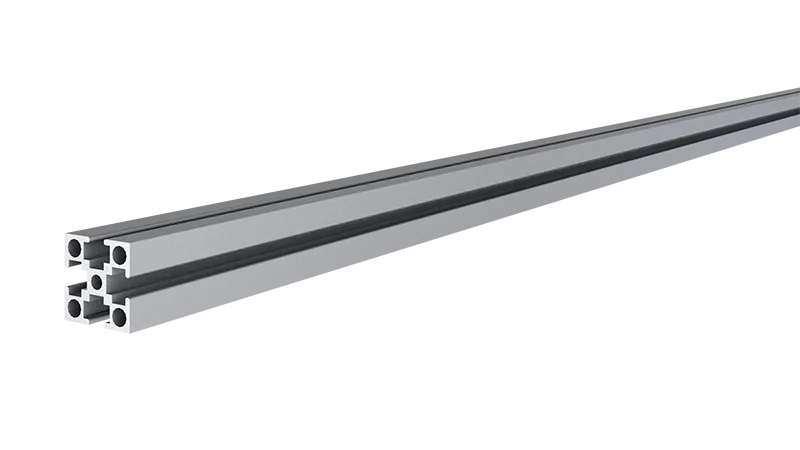
In today's manufacturing landscape, the push for sustainability isn't just a trend—it's a responsibility. Every choice, from the materials we use to the way we design production lines, leaves a footprint on our planet. For businesses looking to align efficiency with eco-consciousness, one material has emerged as a standout: the 2020 National Standard Profile. This aluminum extrusion profile isn't just a tool for building workstations, racks, or conveyors; it's a statement about prioritizing the environment without compromising on performance. Let's dive into why this profile, and its accompanying aluminum profile accessories, are redefining what it means to be sustainable in manufacturing.
What Makes the 2020 National Standard Profile Unique?
First, let's clarify what we mean by "2020 National Standard Profile." This term refers to a specific aluminum extrusion profile designed to meet rigorous national standards set in 2020, focusing on consistency, durability, and environmental impact. Unlike generic aluminum products, this profile is engineered with sustainability in mind from the start. Its composition—high-grade aluminum alloy—strikes a balance between strength and lightness, making it ideal for everything from workbenches to material racks. But what truly sets it apart is how it's made and how it performs over time.
Aluminum extrusion, the process used to create this profile, involves pushing heated aluminum through a die to form specific cross-sectional shapes. This method is inherently efficient: it minimizes material waste, uses less energy than casting or forging, and allows for intricate designs that serve multiple purposes. For example, the 2020 National Standard Profile often features T-slots—longitudinal grooves that let users attach accessories like brackets, shelves, or guides without welding or drilling. This modularity isn't just convenient for manufacturers; it's a cornerstone of its sustainability.
Recyclability: Aluminum's Superpower
When we talk about environmental benefits, recyclability is often the first topic that comes up—and for good reason. The 2020 National Standard Profile shines here because aluminum, by nature, is infinitely recyclable. Unlike plastics or even some metals, aluminum can be melted down and reused repeatedly without losing quality. This isn't just a theoretical advantage; it's a proven one. According to the Aluminum Association, nearly 75% of all aluminum ever produced is still in use today. That's a staggering statistic, and it's a testament to how recycling aluminum reduces the need for mining bauxite ore, a process that disrupts ecosystems and releases significant greenhouse gases.
Let's break down the numbers. Producing aluminum from recycled material (secondary aluminum) uses just 5% of the energy required to make it from raw ore (primary aluminum). Think about that: for every ton of recycled aluminum, we save roughly 14,000 kWh of energy—enough to power an average home for over a year. This energy savings directly translates to lower carbon emissions: recycling aluminum cuts CO2 output by about 90% compared to primary production. For manufacturers using the 2020 National Standard Profile, this means choosing a material that, even at the end of its life, won't end up in a landfill. Instead, it can be collected, melted, and transformed into new profiles, accessories, or even entirely different products.
But recyclability isn't just about the material itself—it's about design. The 2020 National Standard Profile's modularity makes it easier to disassemble and recycle. Unlike welded steel structures, which often require cutting or grinding to separate components, this aluminum profile uses aluminum profile accessories like bolts, brackets, and connectors that can be easily unscrewed. This means when a workstation or rack reaches the end of its useful life, each part can be sorted and recycled individually, maximizing the amount of material that gets reused.
| Material | Recyclability Rate | Energy Use (MJ/kg)* | Carbon Footprint (kg CO2/kg)* | Lifespan (Average) |
|---|---|---|---|---|
| 2020 National Standard Aluminum Profile | 100% (infinite) | 2.5 (recycled) | 0.1 (recycled) | 15–20+ years |
| Steel (Mild) | 80–90% (finite cycles) | 6.3 (recycled) | 0.7 (recycled) | 10–15 years |
| Plastic (PVC/ABS) | 5–10% (limited cycles) | 60–80 (virgin) | 3–4 (virgin) | 3–5 years |
| Wood (Hardwood) | Biodegradable (not recyclable for same use) | Variable (high for processing) | Variable (high deforestation impact) | 5–8 years (in industrial use) |
*Data sourced from industry averages; recycled material values shown where applicable.

Sustainability Beyond Recycling: Durability and Lean Systems
Recyclability is crucial, but sustainability is about more than just end-of-life disposal. It's about how a product performs during its lifecycle, how much waste it generates, and how it contributes to efficient, low-impact operations. Here, the 2020 National Standard Profile excels in two key areas: durability and integration with lean systems.
Durability might seem like a basic requirement, but in the context of sustainability, it's a game-changer. A product that lasts longer reduces the need for frequent replacements, which in turn cuts down on material use, manufacturing energy, and transportation emissions. The 2020 National Standard Profile is built to last. Its aluminum alloy resists corrosion, even in humid or industrial environments, and its structural design (reinforced by aluminum profile accessories like corner codes and gussets) can withstand heavy loads and daily wear and tear. For example, a workbench made with this profile might serve a factory floor for 15–20 years, whereas a plastic or wooden alternative might need replacement every 3–5 years. Over time, that longevity adds up to significant resource savings.
Then there's lean system integration. Lean manufacturing is all about minimizing waste—whether that's time, materials, or energy. The 2020 National Standard Profile aligns perfectly with lean principles because of its modularity and adaptability. In a lean system, production lines need to be flexible to meet changing demands. A workstation that can be reconfigured in hours instead of days, or a material rack that can be expanded without buying entirely new components, reduces downtime and waste. Aluminum profile accessories like adjustable brackets, swivel casters, and quick-connect joints make this flexibility possible. For instance, if a manufacturer needs to rearrange their assembly line to accommodate a new product, they can disassemble their existing 2020 profile workstations and rebuild them in the new layout—no need to purchase new equipment or discard the old one.
This adaptability also reduces overproduction, another key waste in lean systems. Instead of ordering custom-built racks or workbenches for each project, manufacturers can stock a few standard 2020 National Standard Profile lengths and aluminum profile accessories, then assemble what they need on-site. This "build-as-you-go" approach cuts down on excess inventory and the associated storage costs and material waste.
Aluminum Profile Accessories: Small Parts, Big Impact
We've mentioned aluminum profile accessories a few times, but they deserve their own spotlight. These small components—things like brackets, connectors, end caps, and rubber strips—might seem insignificant, but they play a huge role in the 2020 National Standard Profile's sustainability story. Like the profile itself, many accessories are made from recycled aluminum or other eco-friendly materials, and they're designed with reusability in mind.
Take, for example, the 2020 switch to aluminum corner codes. These small L-shaped brackets are used to join profile sections at 90-degree angles. Unlike traditional iron corner codes, which can rust or become brittle over time, aluminum corner codes are corrosion-resistant and lightweight. They're also reusable: if you take apart a structure, the corner codes can be cleaned and used again in another assembly. The same goes for T-slot rubber seal covers, which protect the profile's grooves from dust and debris. These covers are often made from recycled rubber, and when they wear out, they can be recycled again.
Even the way accessories are packaged contributes to sustainability. Many suppliers of 2020 National Standard Profile and its accessories use minimal, recyclable packaging—think cardboard boxes instead of plastic bubble wrap, or biodegradable tape instead of PVC-based options. This attention to detail shows that sustainability is a holistic effort, from the raw material to the final delivery.
Real-World Impact: A Hypothetical Case Study
To put all this into perspective, let's imagine a small electronics manufacturer—let's call them "GreenTech"—that decides to switch from steel workbenches and plastic racks to the 2020 National Standard Profile and aluminum profile accessories. Before the switch, GreenTech's factory had workbenches that were welded steel, heavy, and difficult to move. When they needed to expand, they'd buy new steel workbenches, and the old ones would often end up in a scrapyard (if they were lucky) or a landfill. Their plastic material racks cracked easily in the factory's humidity, requiring replacement every 4–5 years.
After switching to 2020 National Standard Profile workbenches and aluminum profile accessories, GreenTech noticed immediate changes. The aluminum workbenches were lighter, so they could be moved with ease using swivel casters (another accessory), reducing the need for heavy machinery during reconfigurations. When they expanded their production line, they reused 80% of their existing profile lengths and accessories, saving nearly $10,000 on new equipment. Over the next five years, they didn't need to replace a single aluminum rack, whereas they would have replaced two sets of plastic racks in that time. And when one workbench finally showed signs of wear after 12 years, they disassembled it, sent the aluminum profile to a recycler, and used the proceeds to buy new profile lengths—closing the loop on the material's lifecycle.
GreenTech's story is hypothetical, but it's based on real benefits that manufacturers experience when switching to sustainable materials like the 2020 National Standard Profile. The numbers add up: lower costs, less waste, and a smaller environmental footprint.
Looking Ahead: The Future of Sustainable Manufacturing
As environmental regulations tighten and consumers demand more eco-friendly products, the role of materials like the 2020 National Standard Profile will only grow. We're already seeing trends toward "circular manufacturing," where products are designed to be reused, repaired, or recycled from the start. Aluminum extrusion profiles, with their recyclability, durability, and modularity, are perfectly positioned to lead this shift.
Innovation in aluminum profile design is also ongoing. New alloys are being developed to make profiles even lighter and stronger, while advanced extrusion techniques are reducing energy use during production. Accessories are becoming more specialized, too—like ESD (electrostatic discharge) safe components for electronics manufacturing, or heat-resistant brackets for high-temperature environments—expanding the profile's applications without sacrificing sustainability.
For manufacturers, the message is clear: choosing the 2020 National Standard Profile isn't just good for the planet—it's good for business. It reduces costs, improves flexibility, and aligns with the growing consumer and regulatory focus on sustainability. In a world where every decision matters, this aluminum extrusion profile and its accompanying accessories offer a practical, proven way to build a more sustainable future.
Conclusion: More Than a Profile—A Commitment
The 2020 National Standard Profile is more than just a piece of aluminum. It's a tool for change—a way for manufacturers to reduce their environmental impact while improving efficiency and durability. Its recyclability, energy efficiency, and integration with lean systems make it a standout choice in the push for sustainable manufacturing. And when paired with thoughtfully designed aluminum profile accessories, it becomes a complete solution that embodies the principles of the circular economy.
As we move forward, the question isn't whether sustainable materials like this profile are "worth it"—it's how quickly we can adopt them. Every factory that switches to the 2020 National Standard Profile, every manufacturer that chooses recyclable aluminum over disposable plastics, takes a step toward a greener, more resilient industry. And in the end, that's not just good for business—that's good for all of us.