- Company Articles
- Industry articles
- Industry standards
- 2020 National Standard Profile for Material Racks: Load Capacity & Safety Standards

2020 National Standard Profile for Material Racks: Load Capacity & Safety Standards
Related Product
2020 National Standard Profile
45° external bending joint, used for 45° external connection of two aluminum pipes.
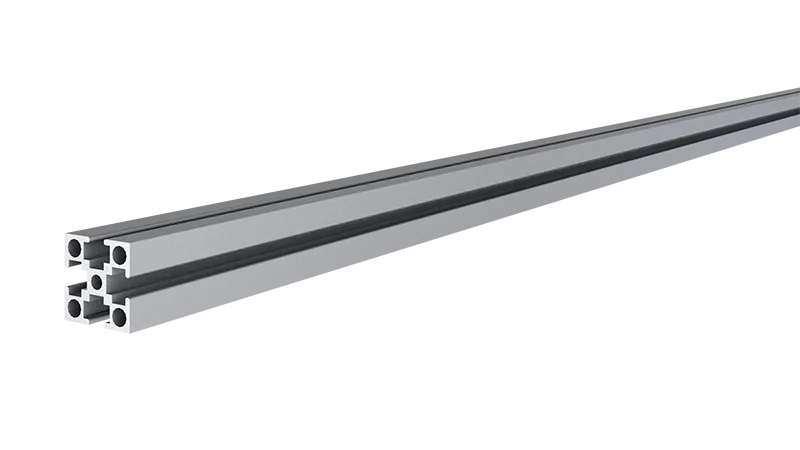
Walk into any modern factory, warehouse, or production facility, and you'll notice a silent workhorse keeping operations running smoothly: material racks. These unassuming structures hold everything from raw components to finished products, acting as the backbone of inventory management and workflow efficiency. But not all material racks are created equal. In 2020, a pivotal update to national standards reshaped how these racks are designed, built, and used—setting new benchmarks for load capacity, safety, and compatibility. Whether you're a small manufacturer just starting out or a seasoned plant manager looking to upgrade your storage systems, understanding the 2020 national standard profile is key to creating a space that's not only productive but also safe for your team.
Why Standards Matter: The Story Behind the 2020 update
Before diving into the specifics, let's take a step back. Why do material rack standards exist in the first place? Imagine a scenario where every supplier builds racks to their own specs: one might use thin steel that bends under heavy loads, another might skimp on stability, and a third might design shelves that don't fit standard storage bins. The result? Chaos. Workers waste time adapting to inconsistent systems, safety risks skyrocket, and upgrading or expanding becomes a logistical nightmare. That's where national standards come in—they're the rulebook that ensures uniformity, reliability, and safety across the industry.
The 2020 update wasn't just a minor tweak; it was a response to evolving manufacturing needs. As factories adopted more automated processes and leaner workflows, the demands on material racks grew. Heavier, bulkier components became common, and the need for racks that could integrate with conveyor systems, workbench setups, and even robotics became critical. Additionally, past incidents—some tragic—highlighted gaps in older standards, particularly around load limits and structural integrity. The 2020 standard was designed to close those gaps, creating a framework that balances strength, flexibility, and user safety.
Breaking Down the 2020 National Standard Profile
At its core, the 2020 national standard profile is a comprehensive set of guidelines covering everything from material selection to assembly, load testing, and safety features. Let's break down its key components:
1. Material Specifications: Durability from the Ground Up
Gone are the days of using flimsy materials to cut costs. The 2020 standard mandates specific material grades for racks, with a strong emphasis on aluminum and steel alloys known for their strength-to-weight ratio. Aluminum, in particular, has become a favorite thanks to its corrosion resistance and modularity—hence the rise in popularity of aluminum profile accessories like brackets, connectors, and end caps. These accessories aren't just add-ons; they're integral to the rack's structural integrity, ensuring that joints stay tight and shelves remain level even under constant use.
For example, the standard specifies minimum thicknesses for steel tubes (1.2mm for light-duty racks, up to 2.0mm for heavy-duty) and aluminum profiles (typically 1.5mm to 3.0mm, depending on load requirements). This might sound technical, but it translates to real-world durability: a rack built to 2020 standards can withstand years of daily use without warping or weakening.
2. Load Capacity: More Than Just a Number
Load capacity is often the first thing people look at when buying a material rack, but the 2020 standard goes beyond slapping a "500kg per shelf" label on a product. It defines two critical types of load:
- Static Load: The weight a rack can hold when stationary (e.g., stored inventory that doesn't move often).
- Dynamic Load: The weight it can handle when items are being loaded or unloaded (e.g., a worker placing a box on the shelf, or a conveyor feeding parts onto a rack).
The standard requires manufacturers to test both, with dynamic load capacity typically set at 75% of static load to account for sudden impacts or shifts. Let's take a concrete example: the material rack b (3 row and 3 floor) , a popular configuration under the 2020 standard. Designed with three rows and three floors, it's engineered for medium-duty use in electronics or automotive parts storage. Its static load capacity? 600kg per floor, with a dynamic load of 450kg per floor. That means you can safely stack 600kg of components on a shelf when they're at rest, but you'll want to keep it under 450kg when actively loading or unloading to prevent strain on the structure.
| Rack Type | Configuration | Static Load (per floor) | Dynamic Load (per floor) | Common Use Case |
|---|---|---|---|---|
| Light-Duty | 2 rows, 2 floors | 300kg | 225kg | Small parts, tools |
| Medium-Duty | Material rack b (3 row and 3 floor) | 600kg | 450kg | Electronics components, automotive parts |
| Heavy-Duty | 4 rows, 4 floors | 1000kg | 750kg | Metal sheets, machinery parts |
3. Safety Standards: Protecting Workers and Inventory
The 2020 standard doesn't just care about whether a rack can hold weight—it cares about how it holds that weight, and what happens if something goes wrong. Here are some of its key safety mandates:
- Stability Requirements: Racks must have a base width of at least 50% of their height to prevent tipping. For taller racks (over 2 meters), anti-tip brackets or anchoring to the floor/wall is mandatory.
- Load Distribution: Shelves must be designed to spread weight evenly. No more overloading one corner of a shelf—this leads to uneven stress and potential collapse.
- Anti-Slip Features: Shelves must have textured surfaces or rubber mats to prevent items from sliding during loading/unloading. This is especially critical for dynamic load scenarios.
- Visibility: Racks over 1.5 meters tall must have high-visibility markings (e.g., yellow or orange strips) to alert workers to their presence, reducing collision risks.
Perhaps most importantly, the standard requires regular load testing. Manufacturers must test prototype racks to 150% of their rated static load for 24 hours—if the rack bends more than 0.1% of its height (e.g., 2mm for a 2-meter rack), it fails. This rigorous testing ensures that real-world performance matches the advertised specs.

Real-World Application: The Material Rack B (3 Row and 3 Floor)
To see the 2020 standard in action, let's take a closer look at the material rack b (3 row and 3 floor) , a configuration that's become a staple in electronics and small-part manufacturing. Designed with three vertical rows and three horizontal floors, it's compact enough for tight spaces (typically 1200mm wide x 600mm deep x 1800mm tall) but spacious enough to hold hundreds of components.
What makes it stand out? For starters, its modular design. Using aluminum profile accessories like T-slot connectors and adjustable brackets, workers can reconfigure the shelves in minutes—no welding or special tools needed. Need to add a divider to separate different part numbers? Just slot in an aluminum partition. Want to lower a shelf to fit taller boxes? Loosen the brackets, adjust, and tighten. This flexibility aligns perfectly with lean manufacturing principles, where adaptability is key to reducing waste.
In terms of load capacity, as we saw earlier, the material rack b handles 600kg per floor statically and 450kg dynamically. To put that in perspective, that's about 30 large boxes of circuit boards (each ~20kg) per shelf, or 90 boxes total. And because it's built to 2020 standards, you can trust that those shelves won't sag over time—even with daily loading and unloading.
Integrating with Lean Systems: More Than Just Storage
Material racks aren't just about storing things—they're about making work easier. That's why the 2020 standard emphasizes compatibility with lean system principles, which focus on eliminating waste and streamlining workflows. Here's how a 2020-compliant rack contributes to a leaner operation:
- 5S Organization: The rack's uniform design makes it easy to label shelves (Sort), keep inventory in designated spots (Set in Order), and maintain cleanliness (Shine). No more hunting for lost parts!
- Just-In-Time (JIT) Inventory: By holding the right amount of stock at the point of use (e.g., next to a workbench ), racks reduce the need for large central warehouses, cutting down on transportation waste.
- Ergonomics: The standard mandates shelf heights between 300mm (for bottom shelves) and 1500mm (for top shelves), ensuring workers don't have to bend or stretch excessively—reducing fatigue and injury risks.
For example, imagine a production line where workers assemble small appliances. A material rack b positioned next to each workbench holds all the necessary components (screws, wires, plastic parts) at arm level. This setup eliminates time spent walking to a distant warehouse, keeps the workbench clutter-free, and ensures parts are always available when needed—all hallmarks of a lean system.
Aluminum Profile Accessories: The Unsung Heroes of Modularity
We've mentioned aluminum profile accessories a few times, but they deserve their own spotlight. These small, often overlooked components are what make 2020-standard racks so versatile. Let's explore some of the most common ones and how they enhance functionality:
- Connectors: T-slot connectors, corner brackets, and parallel joints allow you to join aluminum profiles at any angle (90°, 45°, 135°). They're secured with bolts or spring-loaded pins, making assembly quick and tool-free.
- End Caps: These plastic or rubber caps fit over the ends of aluminum profiles, preventing sharp edges (a safety win!) and keeping dust out of the T-slots.
- Shelf Supports: Adjustable brackets that slide into T-slots, letting you set shelf heights in 10mm increments. Perfect for accommodating items of different sizes.
- Label Holders: Magnetic or clip-on holders that attach to shelves, making it easy to display part numbers, barcodes, or safety warnings.
The beauty of these accessories is that they're interchangeable across different rack models. A bracket used on a material rack b can also be used on a heavy-duty steel rack or even a workbench , reducing the need to stock multiple types of parts. This standardization lowers costs and simplifies maintenance—if a bracket breaks, you can replace it in minutes with a generic part from any supplier.
Common Misconceptions About 2020-Standard Racks
Despite the benefits, there are still myths floating around about 2020-compliant material racks. Let's debunk a few:
- "They're too expensive." It's true that upfront costs are higher than non-compliant racks, but the long-term savings are significant. A 2020-standard rack lasts 2-3 times longer than a cheap alternative, and fewer accidents mean lower insurance premiums and workers' comp claims.
- "We don't need them—our old racks work fine." Maybe, but "fine" isn't "safe." Older racks may have hidden damage (e.g., stress cracks in welds) or inadequate load capacity. A single collapse could cost thousands in damaged inventory or lost productivity—not to mention the risk of injury.
- "Modularity means they're not strong." Nothing could be further from the truth. Modern aluminum profile accessories are engineered to create rigid joints that rival welded connections. In fact, modular racks often handle dynamic loads better than fixed ones, as the flexibility of the joints absorbs shocks.
Best Practices for Maintaining 2020-Standard Material Racks
A rack built to 2020 standards is durable, but it still needs care to perform at its best. Here are some tips for maintenance:
- Inspect Regularly: Check for loose bolts, bent shelves, or damaged accessories (e.g., cracked brackets) at least once a month. Tighten or replace parts as needed.
- Load Properly: Never exceed the rated load capacity, and distribute weight evenly across shelves. Avoid overloading the top shelf (it raises the center of gravity, increasing tip risk).
- Clean Often: Wipe down shelves and accessories to remove dust, oil, or debris. This prevents corrosion and keeps anti-slip surfaces effective.
- Train Your Team: Make sure workers know how to adjust shelves safely, load racks correctly, and report damage. A little training goes a long way in preventing misuse.
Conclusion: Investing in Safety and Efficiency
The 2020 national standard profile for material racks isn't just a set of rules—it's a commitment to building safer, more efficient workplaces. By prioritizing durable materials, rigorous load testing, and smart design, these racks do more than store inventory: they support lean systems, reduce waste, and protect the people who keep your operation running.
Whether you're upgrading an existing facility or setting up a new one, choosing 2020-compliant racks—like the material rack b (3 row and 3 floor) —and pairing them with quality aluminum profile accessories is an investment that pays off in the long run. And when integrated with tools like ergonomic workbench setups, they become part of a seamless workflow that makes every day on the job a little easier.
At the end of the day, manufacturing is about people and products. A reliable, safe material rack ensures both are treated with the care they deserve.