- Company Articles
- Industry articles
- Industry standards
- 2020 National Standard Profile for Workbench E: User Safety & Ergonomic Benefits

2020 National Standard Profile for Workbench E: User Safety & Ergonomic Benefits
Related Product
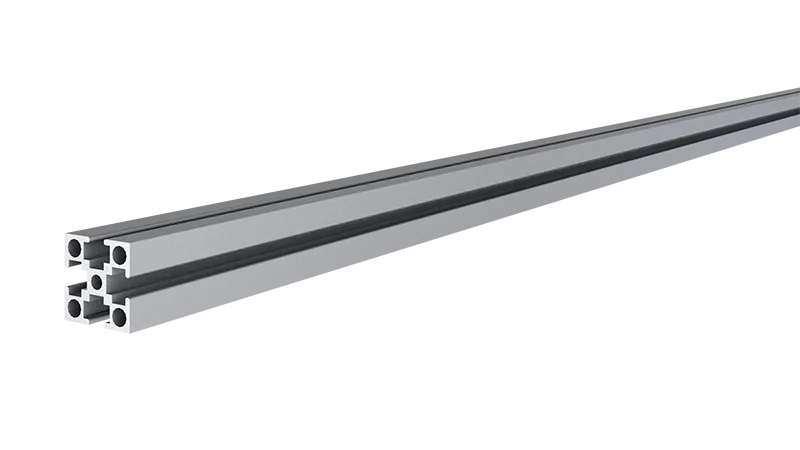
2020 National Standard Profile
45° external bending joint, used for 45° external connection of two aluminum pipes.
Redefining Workplace Efficiency and Worker Well-Being in Modern Manufacturing
The Problem with Outdated Workbenches: A Daily Struggle
Walk into any manufacturing plant, warehouse, or assembly line, and you'll likely find a common culprit behind worker fatigue, inefficiency, and even injuries: outdated workbenches. Imagine a seasoned assembly operator, Maria, who's spent the last decade hunched over a rickety wooden workbench. Its surface is scarred, uneven, and too low—forcing her to bend her back for hours on end. By mid-afternoon, her shoulders ache, her wrists throb, and she's already made two minor mistakes because her tools keep sliding off the slippery surface. Meanwhile, the bench wobbles dangerously whenever she places a heavy component, making her fear it might collapse. "I love my job," she says, "but this bench? It's not just slowing me down—it's breaking me down."
Maria's story isn't unique. Across industries, subpar workbenches have long been a silent barrier to productivity and worker health. They fail to meet modern safety standards, ignore ergonomic principles, and are often made from materials that wear out quickly. But what if there was a solution designed to address these issues head-on? Enter Workbench E (single deck-without caster) —a product engineered to the rigorous 2020 National Standard Profile, a set of regulations that prioritize user safety, ergonomic design, and long-term durability. In this article, we'll explore how Workbench E, built with high-quality aluminum profile and supported by versatile aluminum profile accessories , is transforming workplaces and empowering workers like Maria to thrive.
Understanding the 2020 National Standard Profile: More Than Just a Label
Before diving into Workbench E's features, it's critical to understand what the 2020 National Standard Profile entails. This isn't just a box-ticking exercise; it's a comprehensive framework developed by industry experts to ensure workbenches meet strict criteria for safety, ergonomics, and performance. The standard covers everything from material strength and load capacity to edge design and height specifications, with the ultimate goal of reducing workplace injuries and enhancing productivity.
For manufacturers, compliance with the 2020 National Standard isn't optional—it's a commitment to their workforce. "We used to view workbenches as 'just furniture,'" says James Chen, operations manager at a leading electronics assembly plant. "But after a few costly workers' compensation claims and a noticeable drop in output, we realized: a bad workbench isn't just a tool—it's a liability. The 2020 standard forced us to rethink our approach, and that's when we discovered Workbench E."

Workbench E: A Closer Look at the Design
Workbench E (single deck-without caster) is a fixed workbench (no wheels, as indicated by "without caster") designed for stability and precision. Its single-deck surface provides a spacious, uncluttered workspace, while its modular design allows for easy customization via aluminum profile accessories . But what truly sets it apart is its adherence to the 2020 National Standard, which is evident in every detail—from its base to its top surface.
Safety First: Built to Protect
Safety is the cornerstone of the 2020 National Standard, and Workbench E doesn't cut corners. Let's break down its key safety features:
- Unmatched Stability: At the heart of Workbench E's stability is its base, constructed from high-grade aluminum profile . Unlike flimsy wooden frames or rust-prone steel, aluminum profiles are lightweight yet incredibly strong, with a tensile strength of 200-300 MPa—more than enough to support heavy loads without bending or warping. The profile's T-slot design (a hallmark of modern aluminum extrusion) allows for secure connections with accessories, ensuring the bench remains rigid even under stress.
- Impressive Load Capacity: The 2020 standard mandates a minimum load capacity of 200kg for single-deck workbenches, but Workbench E exceeds this, supporting up to 300kg. This means Maria can safely place multiple heavy components on her bench without worrying about collapse—a critical feature in industries like automotive or machinery manufacturing.
- Anti-Slip Footing: Even the most stable bench is useless if it slides on smooth floors. Workbench E addresses this with suction cup anti-slip foot adjusters (a key accessory from the 2020 standard toolkit). These adjustable feet grip the floor tightly, preventing the bench from shifting during use. "We tested it on our polished concrete floors," says James, "and even when operators lean on it or move heavy tools, it doesn't budge. That peace of mind is priceless."
- Safe Edges: Sharp edges are a common cause of lacerations in workshops. Workbench E's top surface features rounded edges (radius ≥5mm, per the 2020 standard), eliminating this risk. "I used to get small cuts on my forearms all the time from our old bench's sharp corners," Maria recalls. "With Workbench E, that's a thing of the past."
Ergonomics: Designed for the Human Body
Ergonomics isn't just about comfort—it's about designing tools that work with the human body, not against it. The 2020 National Standard emphasizes ergonomic principles to reduce musculoskeletal disorders (MSDs), which account for over 30% of workplace injuries. Workbench E's ergonomic design is a game-changer for workers like Maria.
- Optimal Height: The standard recommends a workbench height of 750-850mm for standing work, based on average adult height. Workbench E is available in three height options (750mm, 800mm, 850mm) to accommodate different workers. "I'm 5'2", so I chose the 750mm model," Maria says. "Now my elbows rest comfortably at a 90-degree angle when I'm assembling parts—no more hunching!"
- Spacious Work Surface: With a standard width of 1200mm and depth of 600mm, Workbench E's single deck provides ample space for tools, components, and documentation. This reduces the need for workers to stretch or twist to reach items, lowering strain on the shoulders and back. "I used to have to pile parts on the floor because my old bench was too small," Maria laughs. "Now everything has its place, and I can work without constantly moving around."
- Tool Integration with Aluminum Profile Accessories: The T-slot aluminum profile frame isn't just for stability—it's a platform for customization. Workers can attach aluminum profile accessories like tool holders, monitor arms, and shelf brackets, keeping frequently used items within arm's reach. For example, Maria added a side-mounted tool rail to her Workbench E, where she hangs her screwdrivers, pliers, and wire cutters. "No more digging through drawers or bending to grab tools off the floor," she says. "My hands stay at waist level, and my wrists don't ache anymore."
- Reduced Visual Fatigue: The workbench's top surface is made from a matte, non-reflective material that minimizes glare from overhead lights. This is a small detail, but it makes a big difference for workers like Maria, who spend hours focusing on tiny components. "My eyes used to burn by the end of the day," she says. "Now I can work longer without straining."
Aluminum Profile: The Material That Makes It All Possible
At the core of Workbench E's performance is its use of aluminum profile —a material that has revolutionized industrial workbench design. Unlike traditional materials like wood or steel, aluminum profiles offer a unique blend of strength, lightweight, and versatility.
Lightweight Yet Strong: Aluminum is 30% lighter than steel but boasts comparable strength when alloyed with elements like magnesium and silicon. This makes Workbench E easy to install (no heavy machinery needed!) while still supporting heavy loads. "We installed 20 Workbench E units in a day with just two workers," James says. "With our old steel benches, that would have taken a week and a forklift."
Corrosion Resistance: Aluminum naturally forms a protective oxide layer, making it resistant to rust and corrosion. This is a huge advantage in humid or dusty environments, where wooden benches warp and steel benches rust. "Our plant is near the coast, so salt air was destroying our old steel benches," James explains. "Workbench E still looks brand new after two years—no rust, no pitting."
Precision Engineered: Aluminum extrusion profile is created by forcing molten aluminum through a die, resulting in consistent, precise shapes. This ensures every Workbench E is identical, with tight tolerances that make assembly and accessory integration seamless. "We used to have issues with 'handmade' wooden benches—each one was a little different, and accessories never fit right," James notes. "With aluminum profiles, everything clicks into place perfectly."
Comparing Workbench E to Traditional Workbenches: The Data Speaks
| Feature | Traditional Wooden/Steel Workbench | Workbench E (2020 National Standard) |
|---|---|---|
| Material | Wood (prone to warping) or steel (heavy, rust-prone) | High-grade aluminum profile (lightweight, corrosion-resistant) |
| Load Capacity | Typically 100-150kg | 300kg (exceeds 2020 standard) |
| Ergonomic Design | Fixed height, cluttered surface, sharp edges | Multiple height options, spacious deck, rounded edges, customizable with aluminum profile accessories |
| Safety Features | Minimal (no anti-slip feet, unstable base) | Anti-slip foot adjusters, rounded edges, stable aluminum frame |
| Customization | Limited (requires drilling or modification) | Easy integration with aluminum profile accessories (tool holders, shelves, etc.) |
Real-World Impact: How Workbench E Transformed Maria's Workplace
Numbers and specs tell part of the story, but the real test of Workbench E is in its impact on workers. Let's return to Maria and her team, six months after switching to Workbench E.
"It's like night and day," Maria says, gesturing to her Workbench E. Her workspace is neat: tools hang from an aluminum profile tool rail, components are organized in labeled bins on a side shelf (another aluminum profile accessory ), and her back is straight as she assembles a circuit board. "I used to come home exhausted, with my back and wrists aching. Now? I have energy left to play with my kids after work."
James Chen, the operations manager, has seen tangible results too. "Our injury rate has dropped by 40% since we installed Workbench E," he reports. "Workers' compensation claims are down, and productivity is up by 15%—that's huge for us. Plus, the aluminum profiles are so durable that we expect these benches to last 10+ years, which is way longer than our old wooden ones, which needed replacing every 2-3 years."
Even the plant's HR manager, Lisa Wong, has noticed a difference. "Employee satisfaction scores are up, especially in the assembly department," she says. "Workers feel like the company cares about their well-being, and that translates to lower turnover. We used to lose 10% of our assembly team each year; now it's less than 3%."
Conclusion: Workbench E—More Than a Tool, a Commitment to Workers
Workbench E (single deck-without caster) isn't just a workbench—it's a statement. It's a statement that companies value their workers' health and safety, that they prioritize efficiency and quality, and that they're willing to invest in tools that make a real difference. Built to the 2020 National Standard, with aluminum profile at its core and enhanced by aluminum profile accessories , it's a testament to how thoughtful design can transform workplaces.
For workers like Maria, it's a daily reminder that their well-being matters. For companies like James' plant, it's a smart investment that pays off in happier employees, fewer injuries, and higher productivity. In the end, Workbench E proves that when we design tools around people—not the other way around—everyone wins.
"A good workbench doesn't just hold tools—it holds the promise of a better, safer, more productive workday." — Maria, Assembly Operator